Activated carbon works by trapping odor molecules on its porous surface through chemical and physical adsorption. When air passes through, the carbon’s extensive surface area captures a wide range of smells, especially organic odors like pet or cooking smells. Its effectiveness depends on the quality of the carbon and environmental factors like humidity and airflow. If you want to discover how to optimize your filter’s performance and longevity, keep exploring this topic further.
Key Takeaways
- Activated carbon’s porous structure provides a large surface area for trapping odor molecules through physical adsorption and chemical reactions.
- Odor molecules attach to activated carbon’s active sites, securely neutralizing smells rather than just masking them.
- Effectiveness depends on the carbon’s quality, surface area, and environmental factors like humidity and airflow.
- Regular maintenance and timely replacement are essential to prevent saturation and maintain odor filtration efficiency.
- Activated carbon filters are especially effective for organic odors, such as pet smells and cooking fumes, in both household and industrial settings.
What Is Activated Carbon and How Does It Absorb Odors?
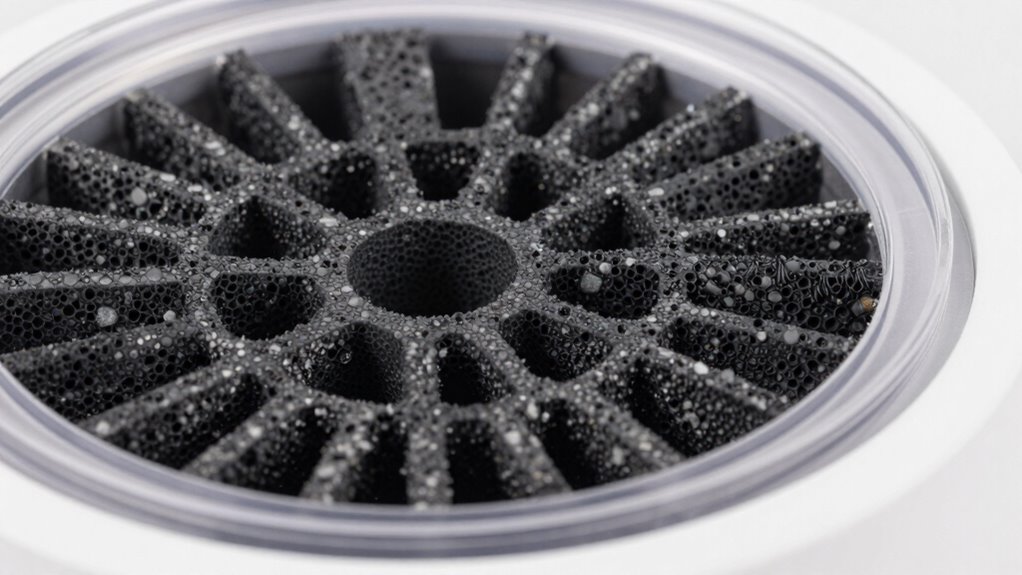
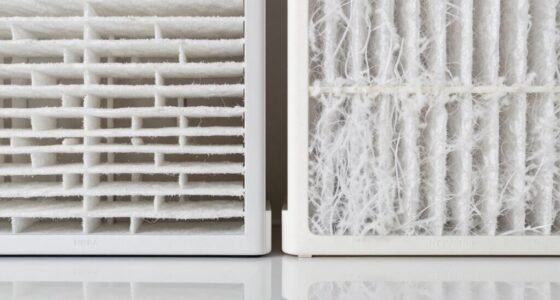
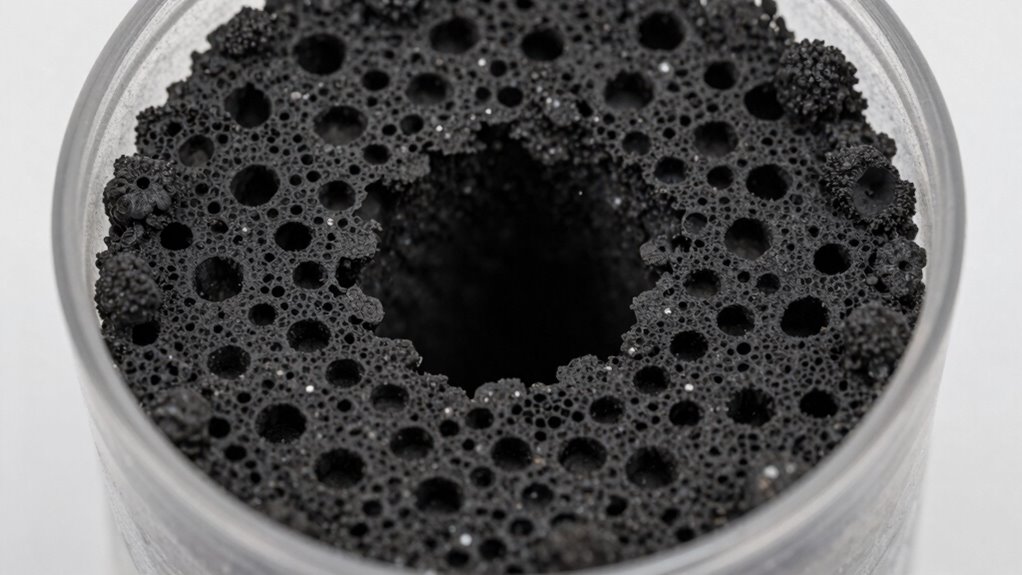
Activated carbon is a highly porous material that effectively traps odors and impurities from the air or liquids. Its porous structure provides a vast surface area, enabling it to attract and hold molecules through a process called chemical adsorption. This interaction makes activated carbon especially efficient at removing a wide range of odors, from cooking smells to pollutants. The porous structure is key, as it offers numerous active sites for chemical adsorption to occur, ensuring that odors are captured and neutralized. The porosity of activated carbon plays a crucial role in its ability to trap contaminants effectively, making it an essential material in odor filtration and purification systems. Additionally, advanced manufacturing techniques enhance the surface area of activated carbon, further increasing its capacity to adsorb contaminants. The chemical bonds formed during adsorption are strong enough to hold the odor molecules securely, preventing their release back into the environment. This combination of porosity and chemical interactions creates a robust adsorption mechanism, making activated carbon a powerful and versatile odor filter. Moreover, the adsorption capacity of activated carbon can be improved through specific treatments, extending its effectiveness over time.
What Types of Odor Filters Use Activated Carbon?

You’ll find activated carbon in many odor filters, like air purification devices that keep your indoor air fresh. Personal odor absorbers also use it to help manage smells on the go. These filters rely on activated carbon’s ability to trap and neutralize odors effectively. Some advanced models incorporate activated carbon filters designed specifically for high-performance odor removal. Additionally, understanding early detection signs of odors can help improve filter maintenance and effectiveness. Recognizing how odor molecules interact with activated carbon can guide users in choosing the right filtration system.
Air Purification Devices
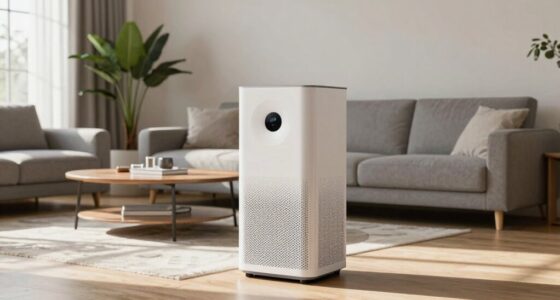
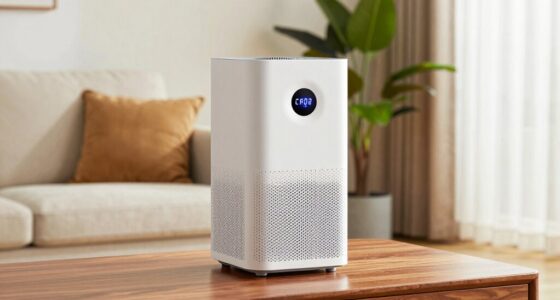
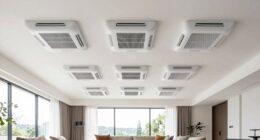
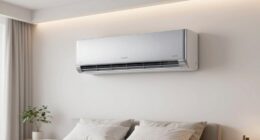
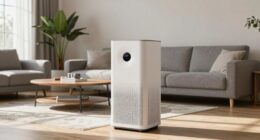
Air purification devices often rely on activated carbon filters to effectively remove odors from the environment. These devices typically contain beds of carbon granules, which provide a large surface area for adsorption. The extensive surface area allows the activated carbon to trap a wide range of odor molecules, making the filters highly efficient. You’ll find activated carbon in various air purifiers, including standalone units and integrated HVAC systems. When air passes through these filters, molecules of unpleasant smells adhere to the carbon’s porous surface, neutralizing odors rather than just masking them. This process guarantees fresher, cleaner indoor air. The design of these devices maximizes contact between air and carbon, ensuring that odors are absorbed quickly and effectively, providing a healthier environment for you. Additionally, understanding the importance of air purification technology can help consumers make informed decisions about the products they choose. Incorporating adsorption mechanisms into air filtration systems enhances odor removal capabilities, making them more effective for a wider range of smells. Moreover, ongoing research into filter materials continues to improve the efficiency and longevity of activated carbon filters.
Personal Odor Absorbers
Personal odor absorbers leverage activated carbon filters to keep you smelling fresh throughout the day. These compact devices are popular for everyday use, such as in deodorant sprays, car air fresheners, and wearable patches. They work by adsorbing odors directly from your environment or body, providing a natural, chemical-free solution. You can also find DIY applications like homemade odor absorbers that incorporate activated carbon in small pouches or filters. Beyond personal use, activated carbon plays a significant role in industrial uses, such as manufacturing odor-control systems for waste management, water treatment, and air purification in large facilities. By integrating activated carbon into these products, odor absorbers effectively trap volatile compounds, ensuring a fresher, cleaner atmosphere. Activated carbon functions by adsorbing a wide variety of odor-causing molecules, making it a versatile and effective odor control solution in both personal and industrial applications. Additionally, its large surface area allows it to adsorb many different types of odors simultaneously, enhancing its effectiveness across various environments. The porous structure of activated carbon is what gives it such high adsorption capacity, making it ideal for both small-scale and large-scale odor control solutions. Understanding its adsorption process helps in selecting the right activated carbon for specific odor mitigation needs.
How Effective Is Activated Carbon at Removing Different Odors?
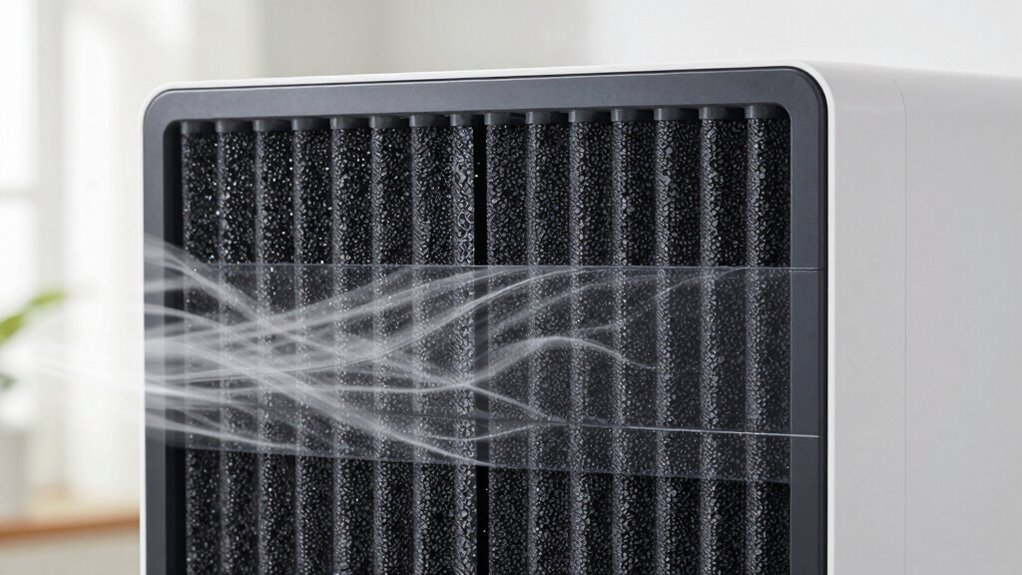
Activated carbon is highly effective at removing a wide range of odors due to its porous structure and large surface area, which trap scent molecules through adsorption. When odors come into contact with activated carbon, chemical adsorption occurs, leading to odor neutralization. Its effectiveness varies depending on the molecule’s size and properties, making it excellent for organic odors like smoke, pet smells, and cooking fumes. Here’s a quick comparison:
| Odor Type | Effectiveness | Notes |
|---|---|---|
| Organic odors | Very effective | Strong adsorption capacity |
| Chemical fumes | Moderate to high | Depends on chemical composition |
| Moisture & mold | Less effective | Best for dry odors |
This table shows activated carbon’s versatility in odor removal, but its performance can depend on factors like exposure time and odor strength. Additionally, understanding the porous structure of activated carbon helps explain its high adsorption capacity. Proper maintenance, such as regular replacement or regeneration, is essential to sustain its adsorption capacity over time. Recognizing the importance of surface area can help optimize its usage for different odor removal needs. Moreover, factors like exposure time significantly influence how effectively activated carbon can eliminate odors.
What Factors Influence How Well Activated Carbon Filters Perform?

The effectiveness of activated carbon filters depends on several key factors that determine how well they can trap and neutralize odors. Environmental conditions play a significant role, as humidity and airflow influence how efficiently the filter absorbs contaminants. High humidity can clog pores and reduce adsorption, while poor airflow limits contact with odors. Filter maintenance is equally important; over time, the activated carbon becomes saturated and loses its ability to adsorb odors. Regular replacement or regeneration keeps the filter functioning at peak performance. Additionally, the quality and amount of activated carbon used impact results. Choosing a filter suited for your environment and maintaining it properly ensures maximum odor removal. Staying aware of these factors helps you maximize your filter’s performance and longevity. Proper installation also plays a crucial role in optimizing odor control by ensuring even airflow and effective contact with the filter media.
How Can You Maximize the Lifespan and Effectiveness of Your Carbon Filter?
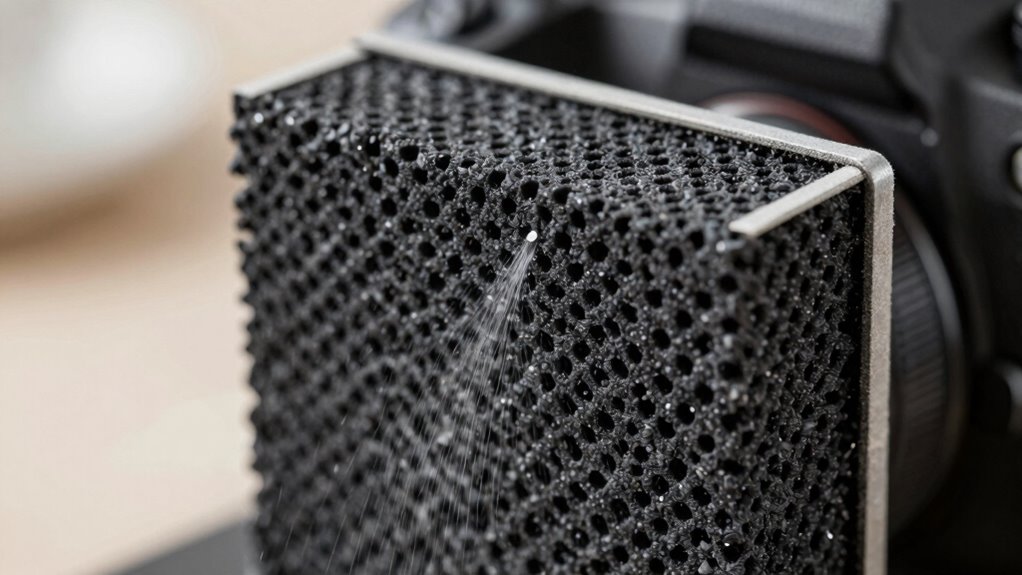
To maximize the lifespan and effectiveness of your carbon filter, it’s essential to perform regular maintenance and monitor its condition. Start by checking the filter’s performance periodically; if odors persist or airflow decreases, it’s time for a filter replacement. Store unused filters properly to prevent contamination—keep them in airtight containers or sealed plastic bags away from moisture and dust. Additionally, follow manufacturer guidelines on lifespan, replacing filters before they become saturated. Keep your filter clean by avoiding exposure to pollutants and contaminants when not in use. Finally, set reminders for routine replacements and proper storage to ensure maximum odor absorption. These practices help extend your filter’s efficiency and save you money in the long run.
Do Activated Carbon Filters Work for Pet Odors and Other Common Smells?
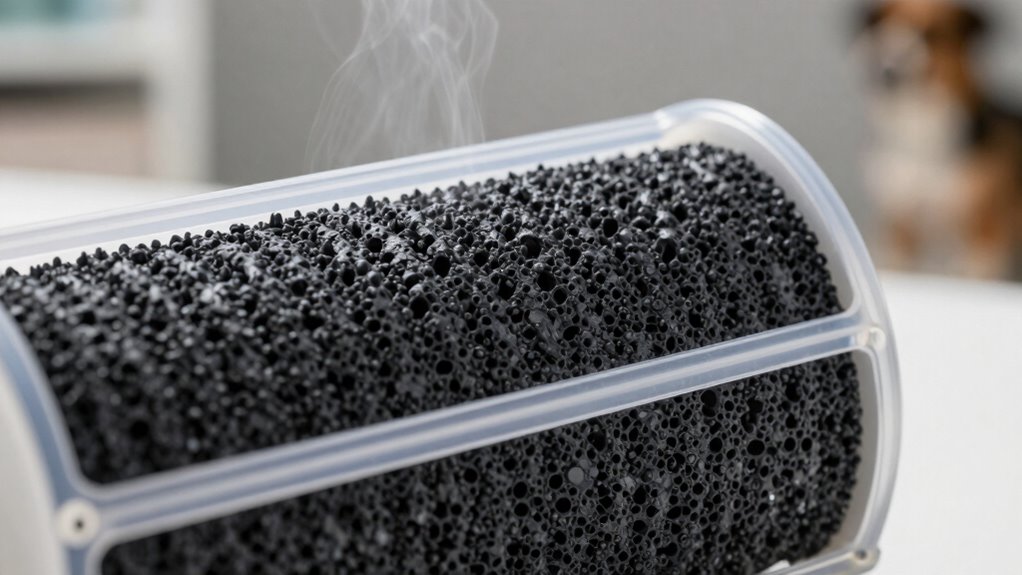
If you’re dealing with pet odors or common household smells, activated carbon filters can be highly effective. They work through chemical reactions between the odor molecules and the material properties of the carbon. The porous structure of activated carbon provides a large surface area, allowing it to adsorb a wide range of volatile compounds responsible for odors. When odor molecules come into contact with the filter, they attach to the carbon’s surface via physical adsorption and chemical reactions, neutralizing unwanted smells. This process is especially effective for pet odors, which often consist of complex organic compounds. Keep in mind, the effectiveness depends on factors like the material properties of the carbon and the concentration of odors, but overall, activated carbon filters do a good job tackling common household smells.
Frequently Asked Questions
Can Activated Carbon Filters Remove Airborne Viruses?
Activated carbon filters are not effective for viral filtration or removing airborne viruses. While they excel at odor absorption, their filter efficacy against viruses is limited because viruses are much smaller than the pores in activated carbon. To effectively remove airborne viruses, you should use HEPA filters, which are designed to trap tiny particles like viruses, providing much better protection in indoor air quality.
How Often Should I Replace My Activated Carbon Filter?
Did you know that activated carbon filters typically last between 3 to 6 months? You should replace your filter once you notice a decline in odor control or if it becomes visibly dirty. To extend its lifespan, follow replacement tips like checking manufacturer recommendations and avoiding exposure to moisture. Regular replacement guarantees your air remains fresh and odors are effectively absorbed, keeping your space healthier and more comfortable.
Are There Environmental Impacts of Disposing Used Carbon Filters?
You should be aware that disposing of used carbon filters can pose environmental challenges. Their environmental disposal often involves recycling challenges because activated carbon isn’t always biodegradable or easy to process safely. To minimize impact, consider recycling programs or proper disposal methods. By doing so, you help reduce landfill waste and prevent potential pollution from chemicals or contaminants trapped in the filters. Always check local guidelines for responsible disposal options.
Do Different Brands of Activated Carbon Vary in Odor Absorption?
Ever wonder if your chosen brand really makes a difference? Different brands of activated carbon can vary in odor absorption because of inconsistencies in brand quality and production processes. You might find that some have higher adsorptive capacity, meaning they trap more odors effectively. Brand consistency is key—so, selecting reputable brands guarantees you get reliable odor control, preventing surprises when you need it most. Don’t settle—choose wisely for the best results.
Can Activated Carbon Filters Be Used in Industrial or Commercial Settings?
Yes, activated carbon filters are suitable for industrial applications and commercial usage. You can use them to control odors, purify air, and remove contaminants in factories, warehouses, and commercial spaces. They’re versatile and effective at large scales, making them ideal for maintaining air quality and safety standards. Just guarantee you select the right type and size of filter for your specific industrial or commercial needs to maximize odor absorption and filtration efficiency.
Conclusion
Don’t worry if activated carbon filters seem too good to be true—they do work, but they do have limits. By choosing the right filter and maintaining it properly, you can effectively reduce odors in your home. Remember, while they excel at neutralizing many smells, heavy or persistent odors might need additional solutions. With consistent care, your activated carbon filter can keep your space smelling fresh and inviting without breaking the bank or requiring complex maintenance.