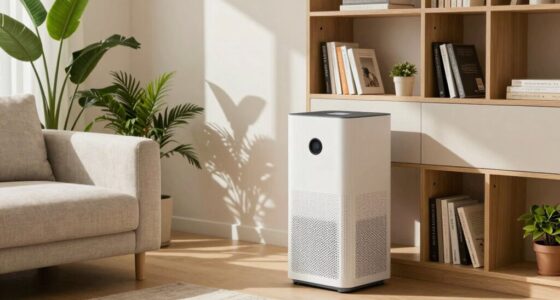
A claimed coverage of 1,000 sq ft can be misleading because factors like ceiling height, room layout, airflow, and filter quality greatly impact a purifier’s real effectiveness. Larger coverage doesn’t mean better cleaning if the purifier isn’t powerful enough or placed correctly. Noise and maintenance also matter more than just the advertised square footage. If you want to understand how to choose the right size for your space, there’s more to contemplate beyond the claims.
Key Takeaways
- Square footage claims often overlook ceiling height and room volume, leading to overestimating coverage.
- CADR ratings must match room size; high coverage claims with low CADR can be ineffective.
- Room layout, furniture, and airflow impact purifier efficiency regardless of advertised coverage.
- Overpowered units may produce excessive noise or require frequent filter changes, reducing real-world performance.
- Effective sizing depends on matching purifier capacity to actual room volume, not just square footage.
As an affiliate, we earn on qualifying purchases.
Why Square Footage Claims Can Be Misleading When Choosing an Air Purifier

While manufacturers often advertise air purifiers as suitable for specific square footage, these claims can be misleading. The size alone doesn’t guarantee ideal air quality, especially if the device isn’t designed for your room’s unique conditions. A purifier rated for 1,000 square feet might struggle in a space with high ceilings or heavy pollution, reducing its effectiveness. Additionally, noise levels can vary widely; a larger-capacity purifier might produce more sound, disrupting your comfort. Relying solely on square footage can cause you to choose a unit that either underperforms or is unnecessarily loud. Instead, consider your room’s actual air quality needs and noise preferences to find a purifier that truly fits your space and lifestyle. Proper air purifier maintenance and understanding filter replacement schedules are also crucial for optimal performance. Recognizing air quality factors beyond just size can help ensure you select the most effective device for your environment, especially since room layout can significantly influence how well an air purifier works. Being aware of air circulation within your space can further enhance the purifier’s efficiency and overall air quality.
CADR rated air purifier for large rooms
As an affiliate, we earn on qualifying purchases.
As an affiliate, we earn on qualifying purchases.
How Do Room Height and Ceiling Volume Impact Purifier Performance?

Room height and ceiling volume considerably influence how effectively an air purifier cleans the air. A higher ceiling increases the room volume, meaning more air needs filtering. If you choose a purifier based solely on square footage, it might not account for ceiling height, resulting in insufficient air cleaning. For rooms with tall ceilings, the actual volume of air is much larger, so a purifier rated for standard ceiling heights won’t perform at its best. Conversely, in rooms with low ceilings, a smaller purifier may suffice even if the square footage seems large. Understanding ceiling height helps you select an air purifier capable of handling the entire room volume. Additionally, air circulation plays a critical role in ensuring the purifier effectively distributes clean air throughout the space. Proper airflow distribution is essential for optimal purification efficiency and maintaining indoor air quality. Ensuring adequate air exchange rate allows the purifier to effectively circulate and clean all the air in your space. Recognizing the impact of room volume can help you choose a unit that truly meets your indoor air quality needs. Moreover, considering airflow patterns can enhance the overall effectiveness of the purifier in different room configurations.
quiet air purifier for living room
As an affiliate, we earn on qualifying purchases.
As an affiliate, we earn on qualifying purchases.
What Does CADR Rating Really Mean for Your Space?
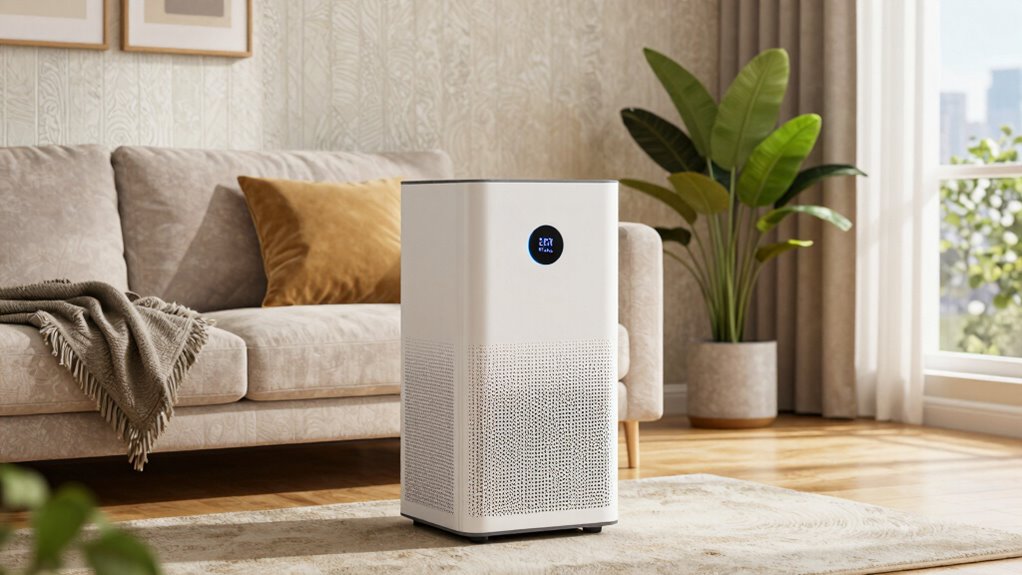
Understanding CADR numbers helps you see how well an air purifier cleans the air in your space. When choosing a model, you need to take into account if its ratings match your room size for effective performance. Knowing what CADR really means ensures you get real-world results that keep your air clean. Additionally, host discounts and promo codes can help you find affordable options for high-quality air purifiers. Recognizing the air quality standards associated with CADR ratings ensures you select an effective purifier for your specific needs. Being aware of support vs. boundaries in care routines can also influence how you prioritize air quality measures in shared spaces. Understanding air exchange rates can further optimize your air purification strategy by indicating how often your space’s air is refreshed. Familiarity with testing protocols used for CADR ratings can further improve your confidence in the product’s performance.
Understanding CADR Numbers
CADR, or Clean Air Delivery Rate, is a key metric that tells you how effectively an air purifier can clean the air in your space. It measures the volume of filtered air, in cubic feet per minute, that removes specific pollutants like dust, smoke, and pollen. A higher CADR generally means faster improvement in air quality. When comparing purifiers, look beyond the number itself—consider how often you’ll need to replace or clean the filters, as a higher CADR can sometimes lead to shorter filter lifespan if not maintained properly. Remember, a high CADR isn’t just about speed; it’s about maintaining a healthy, clean environment efficiently. Understanding what CADR numbers mean helps you choose a unit that balances air quality improvements with filter longevity. Additionally, selecting a purifier with an appropriate size capacity ensures optimal performance for your specific space.
Room Size Compatibility
To guarantee your air purifier effectively cleans the air in your space, it’s essential to match its CADR rating to the size of your room. A higher CADR indicates better airflow and filtration capacity, which directly impacts air quality. If the CADR is too low for your room, you won’t see significant improvements, no matter what the packaging claims. Conversely, too high a rating can lead to unnecessary noise levels, disrupting your comfort. Understanding room size compatibility ensures you select an air purifier that balances effective air cleaning with acceptable noise levels. This way, you optimize air quality without sacrificing peace and quiet, making your environment healthier and more comfortable. Always compare the CADR to your room’s square footage for best results. Additionally, considering air exchange rates can help you better assess the purifier’s efficiency in your specific space. Recognizing the magical realm of air purifiers can further aid in making an informed choice tailored to your needs. For example, knowing how air quality indicators work can help you better evaluate the effectiveness of your purifier over time. Moreover, understanding filter replacement cycles can ensure consistent performance and optimal air purification. Keeping track of air purifier maintenance routines can also extend the device’s lifespan and maintain its effectiveness.
Real-World Effectiveness
While a high CADR rating suggests strong airflow and filtration, it doesn’t automatically guarantee noticeable improvements in your air quality. Factors like room layout, occupant activities, and pollutant sources influence an air purifier’s effectiveness. Even with a top-rated purifier, poor maintenance, such as neglecting filter changes, can reduce performance and diminish air quality benefits. It’s essential to understand that real-world results depend on proper use and upkeep. Simply choosing a model with a large CADR doesn’t ensure your space will be cleaner or healthier. Regular purifier maintenance and realistic expectations are key to achieving the best possible air quality. Focus on how well your purifier fits your environment, not just its advertised ratings. Additionally, understanding environmental considerations can help you select a cleaner and more sustainable indoor space. Recognizing air quality metrics is also crucial for assessing the true impact of your purifier over time. For example, considering pollutant sources within your space can help tailor your air purification approach more effectively.
air purifier with adjustable airflow
As an affiliate, we earn on qualifying purchases.
As an affiliate, we earn on qualifying purchases.
How Does Room Layout and Airflow Affect Purifier Effectiveness?
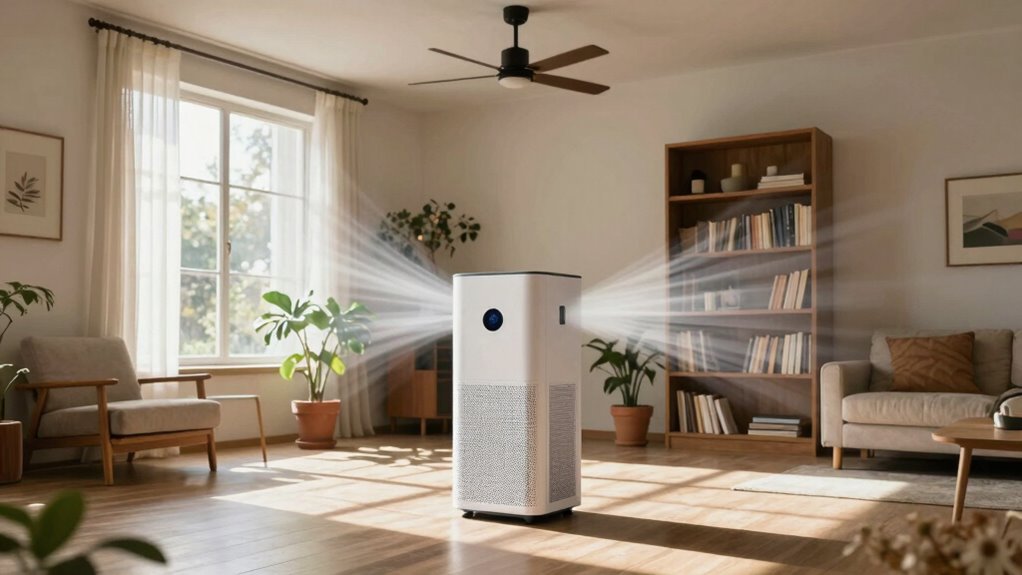
Room layout and airflow play crucial roles in how effectively your air purifier cleans the air. Airflow patterns determine how well air circulates through the room, influencing pollutant removal. If furniture blocks vents or creates dead zones, contaminated air may linger, reducing purifier efficiency. Room shape also impacts airflow; irregular or cramped spaces can cause uneven distribution, making it harder for the purifier to reach all areas. Strategically placing your purifier near airflow sources, like vents or open spaces, maximizes coverage. Keep furniture arranged to promote smooth airflow and avoid obstructions. Understanding your room’s airflow patterns and shape helps you position your purifier for ideal performance, ensuring cleaner air throughout the space instead of just in one corner.
Why Larger Coverage Claims Don’t Guarantee Better Air Quality
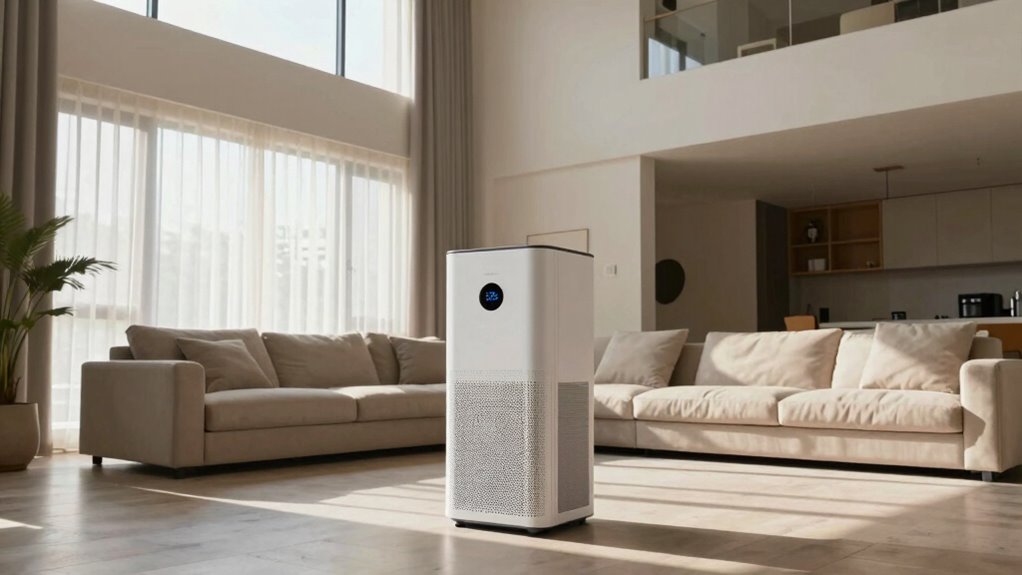
Just because a purifier claims to cover a larger area doesn’t mean it will clean your air better. Room size and the purifier’s power need to match for ideal results, or the claims can be misleading. Always check the actual performance rather than just the coverage number.
Room Size vs. Purifier Power
Many air purifiers boast large coverage areas, but bigger isn’t always better when it comes to air quality. A purifier rated for 1,000 sq ft might struggle in a smaller room or produce high noise levels if overmatched. More power doesn’t mean better filtration if the filter needs frequent replacement or if noise becomes disruptive.
| Room Size | Purifier Power |
|---|---|
| Small room | Less power, quieter |
| Large room | More power, potential noise |
| Overpowered | Frequent filter replacements |
| Underpowered | Ineffective air cleaning |
Choosing the right power guarantees efficient air cleaning without excessive noise or maintenance, regardless of coverage claims.
Coverage Claims Can Be Overstated
While larger coverage claims might seem appealing, they don’t always translate to better air quality. A bigger coverage number can be misleading because it doesn’t account for factors like filter replacement frequency or noise levels. If an air purifier claims to cover 1,000 sq ft but doesn’t have a strong filter or produces loud noise, its actual effectiveness drops. Keep these points in mind:
- Higher coverage claims often rely on weaker filters that need frequent replacement.
- Overstated coverage may lead to choosing units with higher noise levels, disrupting your comfort.
- Actual performance depends on proper filter maintenance, not just the advertised coverage area.
Don’t be swayed solely by big claims—focus on filter quality and noise levels to ensure cleaner air.
How to Properly Size an Air Purifier for Your Room
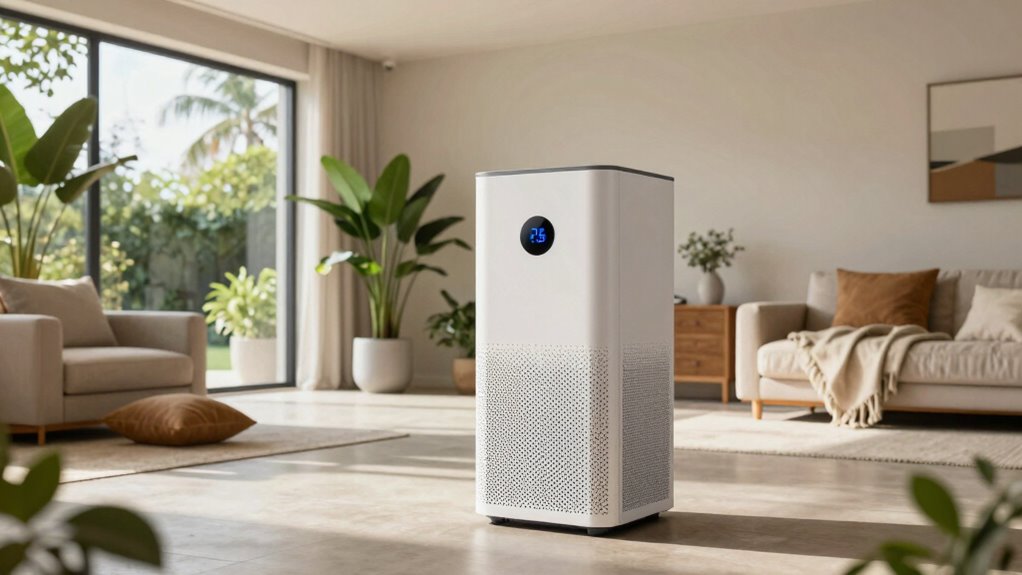
Choosing the right size air purifier for your room is essential to effectively improve air quality. Start by measuring your space’s square footage and checking the Clean Air Delivery Rate (CADR) recommended for that size. Don’t rely solely on coverage claims; instead, verify that the purifier’s technology suits your needs, whether for dust, allergens, or odors. Proper sizing ensures the device can run efficiently and filter the air adequately. Also, consider filter maintenance—an overpowered unit with infrequent filter changes can be ineffective. Regularly replacing filters keeps the purifier working at its best. Remember, a correctly sized air purifier paired with proper maintenance provides cleaner air and better health benefits without wasting energy or money.
Common Mistakes When Relying on Coverage Claims

Relying solely on coverage claims can lead you astray because the number often doesn’t tell the full story about an air purifier’s effectiveness. A large coverage number doesn’t guarantee improved air quality if the filter efficiency isn’t high enough for your needs. Mistakes to avoid include:
Relying solely on coverage claims can be misleading; filter efficiency and room factors matter more.
- Assuming a “1000 sq ft” claim means it’ll clean that space effectively, ignoring factors like air quality and pollutant types.
- Overlooking the purifier’s filter efficiency, which impacts how well it removes airborne contaminants.
- Relying only on advertised coverage without considering room layout, ceiling height, or airflow, which can hinder performance.
Key Factors Beyond Square Footage to Consider When Buying
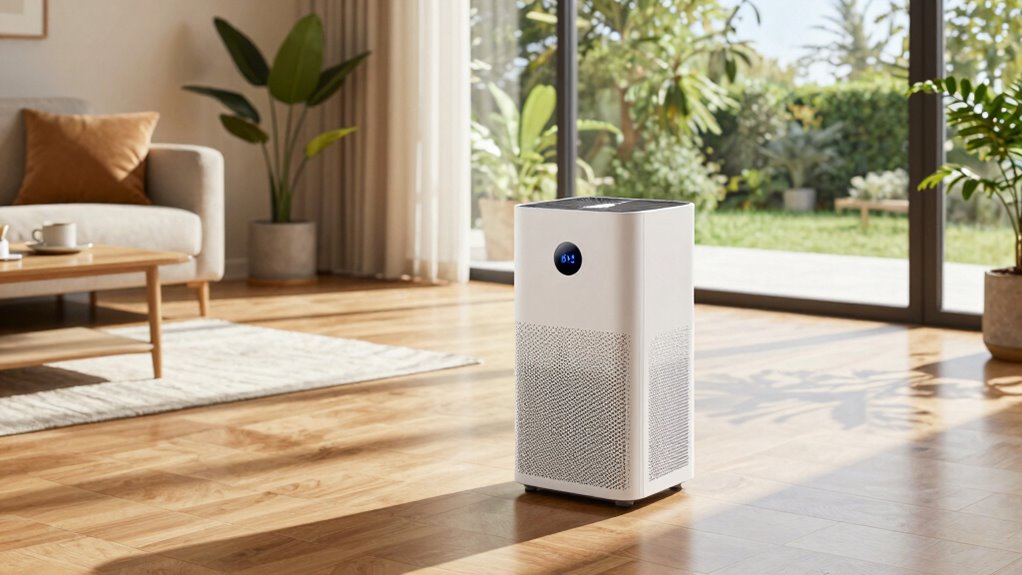
When selecting an air purifier, there are several important factors beyond just the square footage that you need to contemplate. One key aspect is filter lifespan; a longer-lasting filter reduces maintenance frequency and saves you money over time. Consider how often you’ll need to replace filters and the overall cost. Noise levels are also vital, especially if you plan to run the purifier in a bedroom or workspace. A unit that operates quietly ensures it won’t disturb your sleep or concentration. Additionally, think about energy efficiency—an energy-saving model can cut electricity costs. Finally, check for features like adjustable fan speeds or smart controls, which can enhance convenience. Focusing on these factors ensures your chosen purifier effectively meets your specific needs, beyond just coverage claims.
Tips to Verify Actual Air Purifier Performance in Your Home
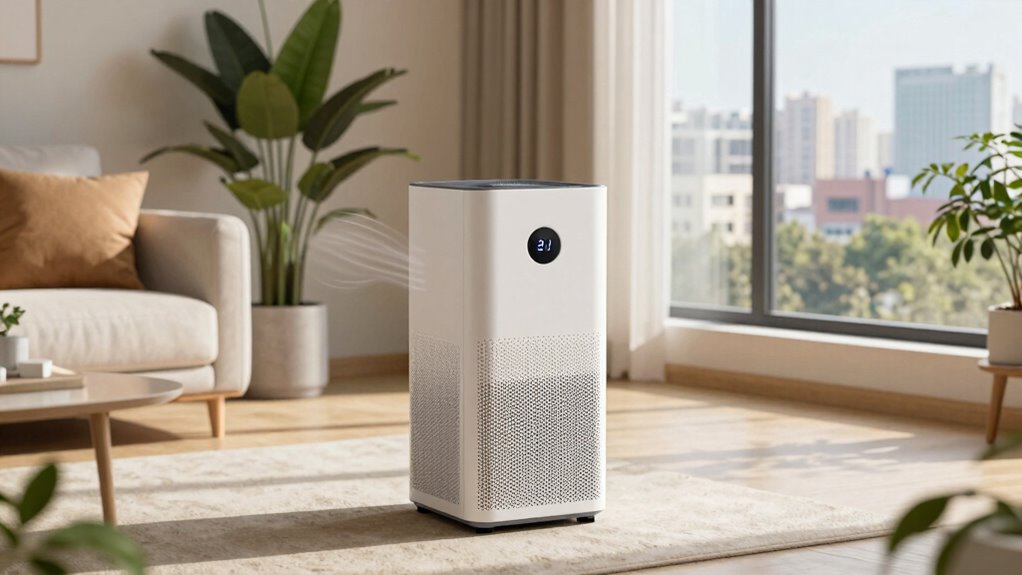
To make certain your air purifier performs as expected, it’s crucial to verify its effectiveness directly in your home environment. First, monitor the noise levels during operation to ensure it isn’t disruptive. Second, regularly check and maintain the filter to keep it functioning optimally; a clogged filter reduces performance. Third, use air quality monitors to measure changes in pollutants or allergens before and after running the purifier. This helps confirm it’s cleaning the air as advertised. Remember, filter maintenance is key to sustained performance, and noise levels can affect your comfort. By actively evaluating these factors, you’ll ensure your air purifier truly improves your indoor air quality, rather than just looking good on paper.
Frequently Asked Questions
How Does Air Purifier Noise Level Affect Usability in Different Environments?
You should consider noise levels because they directly impact usability in various environments. In quiet settings like bedrooms or offices, low noise levels enhance comfort and focus, making the purifier more adaptable. Conversely, higher noise levels might be acceptable in busier spaces like kitchens or gyms. Choosing an air purifier with adjustable noise settings guarantees better environment adaptability, so you can enjoy clean air without disruption wherever you are.
Can Multiple Air Purifiers Outperform a Single High-Capacity Unit?
Imagine a team working together, each bringing unique strength—that’s what multi-unit configurations do. Multiple air purifiers often outperform a single high-capacity unit by covering more areas efficiently. They boost air quality and offer better control. Plus, this setup can be more cost-effective, letting you target specific spaces rather than overspending on one large purifier. So, yes, spreading the effort often beats relying on just one powerhouse.
How Often Should Filters Be Replaced for Optimal Performance?
You should replace your filters every 3 to 6 months for maximum performance, depending on usage and air quality. Check your filter’s lifespan regularly and follow the manufacturer’s recommended replacement schedule. If you notice reduced airflow or odors lingering, it’s time to change the filter sooner. Consistent replacements ensure your air purifier effectively cleans the air, keeping your space healthier and fresh.
Do Air Purifiers Remove All Types of Airborne Pollutants Effectively?
Think of your air purifier as a knight in shining armor, but even it has limits. HEPA filters excel at capturing allergens and tiny particles, while VOC removal tackles odors and chemicals. However, no purifier removes every airborne pollutant completely. You need a combination of filters and proper ventilation for best results. Remember, understanding HEPA effectiveness and VOC removal helps you choose the right device for cleaner air.
What Maintenance Practices Ensure Consistent Air Purifier Efficiency?
To keep your air purifier working efficiently, you should regularly replace filters as recommended by the manufacturer, usually every 3 to 6 months. Also, check if your device requires calibration or filter cleaning to guarantee peak performance. Consistent maintenance, including timely filter replacement and calibration, prevents clogging and ensures your purifier effectively removes airborne pollutants. Stay proactive, and your air quality stays consistently clean and healthy.
Conclusion
Don’t let misleading coverage claims be the shiny lure that blinds you. Think of choosing an air purifier like fitting a key to a lock—you need the right size, airflow, and room dynamics to open clean, fresh air. Always dig deeper than the surface promises. By understanding the real factors at play, you’ll find the perfect fit—like a key designed specifically for your lock—ensuring your space truly breathes easier.