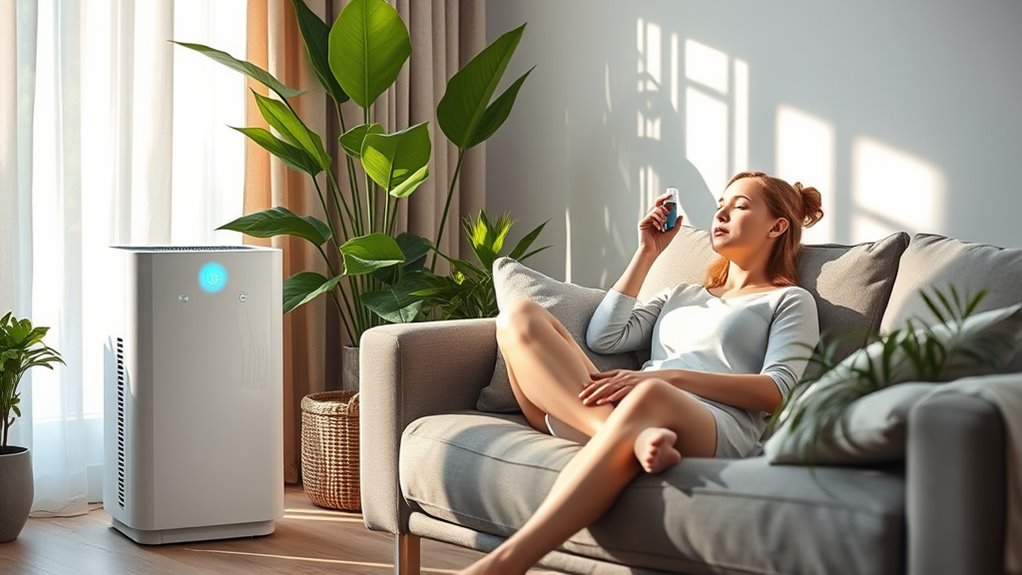
Using an air purifier with a HEPA filter can greatly reduce indoor allergens like dust mites, pet dander, and mold spores, which are common asthma triggers. Regular filter maintenance guarantees the device stays effective, helping you breathe easier and decrease asthma symptoms. Combining air purifiers with good cleaning habits and controlling humidity levels enhances your indoor air quality. Keep exploring to discover more practical tips for creating a healthier environment that supports asthma management.
Key Takeaways
- Evidence shows HEPA-filter air purifiers can reduce indoor allergens, potentially decreasing asthma symptom frequency.
- Regular filter maintenance (every 3-6 months) is crucial to sustain purifier effectiveness and allergen removal.
- Placing air purifiers in high-use rooms like bedrooms enhances indoor air quality for asthma management.
- Combining air purifiers with other allergen control measures improves overall indoor air health.
- Professional guidance and adherence to manufacturer recommendations optimize air purifier benefits for asthma relief.
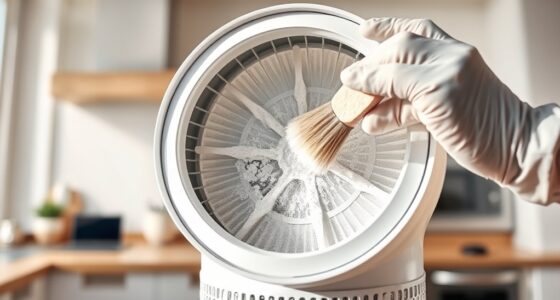
If you have asthma, reducing indoor air pollutants can make a significant difference in managing your symptoms. One of the most effective ways to do this is by using an air purifier, especially if you’re sensitive to indoor allergens like dust mites, pet dander, mold spores, or pollen that can enter your home. These allergens are common triggers, and an air purifier can help minimize their presence, improving your overall air quality. However, simply purchasing a device isn’t enough; proper filter maintenance is essential. Regularly changing or cleaning filters ensures your purifier functions at peak efficiency, capturing more pollutants and preventing the buildup of dust or mold that could worsen your asthma. Neglecting filter maintenance means the device becomes less effective over time, allowing indoor allergens to circulate freely and potentially trigger asthma attacks.
When choosing an air purifier, focus on models equipped with HEPA filters, because they are proven to trap particles as small as 0.3 microns—covering many indoor allergens. Once you’ve selected a suitable purifier, make it a habit to check and replace filters according to the manufacturer’s recommendations, which can vary from every three to six months. This routine not only keeps your air purifier working at its best but also reduces the risk of mold growth or bacterial buildup on the filters, both of which can negatively impact indoor air quality. If you have pets, additional filters or higher-grade filters might be beneficial, as pet dander is particularly persistent. Remember, an air purifier isn’t a set-it-and-forget-it solution; consistent filter maintenance is key to maintaining a cleaner indoor environment that supports your asthma management.
Beyond filter maintenance, it’s important to control indoor allergens by cleaning your home regularly. Use a vacuum cleaner with a HEPA filter, wash bedding frequently in hot water, and reduce humidity levels to prevent mold growth. These steps, combined with a well-maintained air purifier, create a cleaner, healthier space. Avoid the temptation to skip filter replacements or use low-quality filters, as this can undermine your efforts. Instead, stay vigilant about routine maintenance, and consider placing the purifier in areas where you spend most of your time, like your bedroom or living room, to maximize its benefits. By actively managing indoor allergens through diligent filter care and cleaning practices, you’ll create a safer environment that helps lessen your asthma symptoms and improves your quality of life. Incorporating proper filtration technology can significantly enhance indoor air quality and your overall health.
Frequently Asked Questions
Do Air Purifiers Help With All Types of Asthma Triggers?
Air purifiers can help reduce many asthma triggers, but they don’t eliminate all. They improve indoor air quality by filtering out dust, pet dander, and pollen, which are common triggers. However, some triggers like tobacco smoke or certain chemicals may require additional measures. Incorporate indoor plants cautiously, as they can sometimes worsen air quality if not maintained properly. Always combine air purifiers with good cleaning habits for the best asthma management.
Can Air Purifiers Eliminate Airborne Mold Spores Effectively?
You might be surprised to learn that air purifiers with HEPA filters can eliminate up to 99.97% of airborne mold spores. While they don’t completely eradicate mold, effective mold removal combined with air filtration markedly reduces spores in your environment. This helps lessen asthma triggers and improves air quality. Regular maintenance and proper placement of your air purifier maximize its ability to keep indoor air cleaner and safer from mold-related asthma symptoms.
What Is the Best Placement for an Air Purifier in a Room?
You should place your air purifier in a central spot within the room, ensuring it’s away from walls and furniture that might block airflow. Consider your room size when choosing the purifier’s location—larger rooms need placement closer to the center or in high-traffic areas. Keep it elevated off the floor, like on a table or shelf, to maximize circulation and effectiveness in filtering airborne particles.
How Often Should Filters Be Replaced for Optimal Asthma Relief?
Think of your air purifier’s filters as the lungs of your device—crucial for clean air. You should replace filters every 6 to 12 months, depending on usage and filter lifespan. Regular replacement keeps the purifier working like a well-oiled machine, ensuring peak asthma relief. Don’t wait for signs of reduced performance; stay proactive with timely filter replacements to keep indoor air fresh and safe for you.
Are There Specific Air Purifier Features Recommended for Allergy Sufferers?
You should look for air purifiers with HEPA filters and activated carbon filters. HEPA filters trap tiny allergens like pollen, pet dander, and dust mites, while activated carbon absorbs odors and airborne chemicals. These features help reduce allergy symptoms effectively. Make sure the purifier is appropriately sized for your space, and replace filters regularly to maintain peak performance and allergen removal.
Conclusion
Considering the evidence, using air purifiers can substantially improve your indoor air quality and potentially ease asthma symptoms. They’re a helpful tool in managing your environment, but they shouldn’t replace medical advice or prescribed treatments. Are you ready to take proactive steps toward cleaner air and better breathing? Remember, while air purifiers can make a difference, consulting your healthcare provider ensures you’re making the best choices for your health.