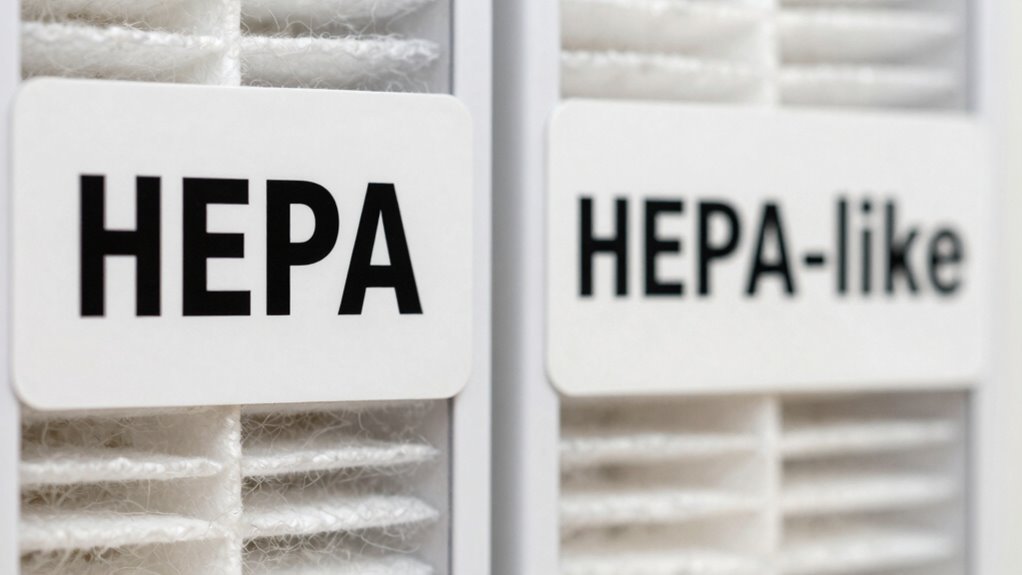
When comparing HEPA and ‘HEPA-like’ filters, you should know that genuine HEPA filters meet strict standards, trapping at least 99.97% of 0.3-micron particles, verified by certifications like EN 1822 or ASTM F2299. In contrast, ‘HEPA-like’ labels often don’t meet these standards and may only filter larger particles. To guarantee you’re getting true filtration, look for verified certifications and clear specifications—there’s more to uncover if you keep looking.
Key Takeaways
- Genuine HEPA filters meet strict standards (≥99.97% at 0.3 microns), while ‘HEPA-like’ labels often lack certification and proven performance.
- ‘HEPA-like’ claims can be misleading; they typically do not meet the same rigorous testing and certification standards as true HEPA filters.
- Always verify certification labels from recognized agencies (e.g., EN 1822, ASTM F2299) to confirm genuine HEPA performance.
- Vague marketing claims like “HEPA-like” can give false assurance, risking reduced indoor air quality and ineffective filtration.
- Properly certified HEPA filters are tested for specific particle sizes; ‘HEPA-like’ filters may only trap larger particles, not viruses or fine allergens.
What Is a Genuine HEPA Filter and How Does It Work?

A genuine HEPA filter is a high-efficiency air filter designed to capture at least 99.97% of particles as small as 0.3 microns. This high level of filter efficiency is achieved through strict manufacturing processes that meet established certification standards, such as those set by the U.S. Department of Energy or the European EN 1822 standard. When you see a true HEPA label, it means the filter has been tested and verified to meet these rigorous criteria. Unlike less efficient filters, genuine HEPA filters can trap tiny airborne pollutants, allergens, and pathogens effectively. Understanding these certification standards helps you distinguish authentic filters from lower-quality alternatives, ensuring you get the maximum protection and air purification performance. StyleGuru.org Additionally, verifying certification standards can help consumers identify authentic HEPA filters and avoid misleading labels, which is essential for maintaining air quality. Proper certification ensures the filter’s filter efficiency is up to the claimed standard, providing reliable protection in various environments. For example, some products labeled as “HEPA-like” may not meet these strict performance benchmarks, potentially compromising air quality.
What Does ‘HEPA-Like’ Mean? Understanding Filter Labels

Ever wonder what “HEPA-like” really means on air purifier labels? It’s a term used in filter terminology that can be confusing. Labeling standards for air filters aren’t strictly regulated, so “HEPA-like” doesn’t guarantee the filter meets genuine HEPA performance. Instead, it indicates that the filter may only partially resemble true HEPA filters, often capturing less than 99.97% of particles as small as 0.3 microns. Manufacturers use these vague labels to suggest high performance without adhering to strict standards. As a buyer, you should be cautious. Understanding filter terminology and labeling standards helps you avoid misleading claims. Always look for clear, verified specifications like “True HEPA” to ensure your air purifier delivers the filtration you need. Additionally, recognizing Free Floating particles can help you better assess filter effectiveness in real-world conditions.
How Do Genuine HEPA Filters Differ From ‘HEPA-Like’ Alternatives?
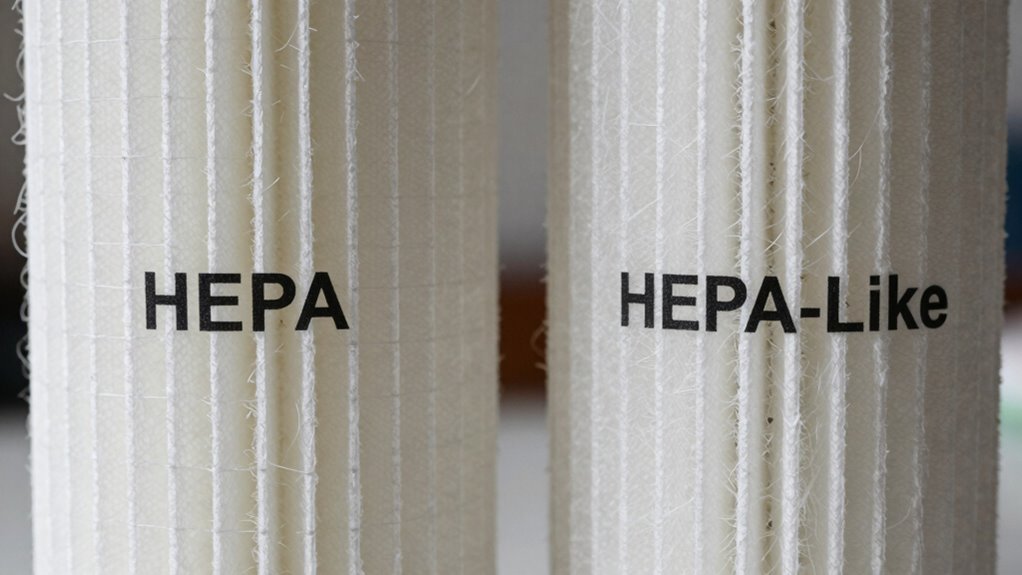
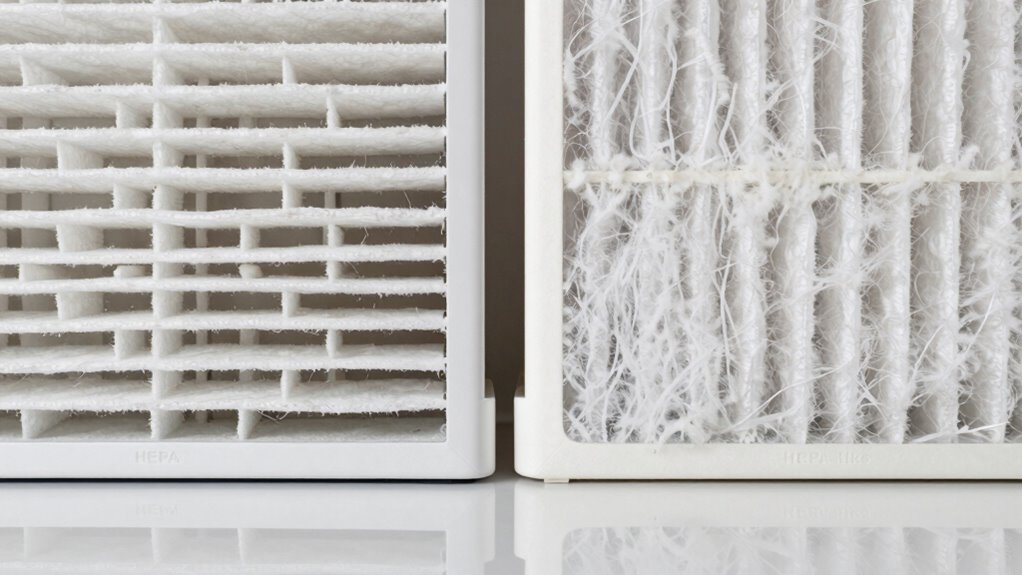
Genuine HEPA filters differ from ‘HEPA-like’ alternatives primarily in their proven ability to capture at least 99.97% of airborne particles as small as 0.3 microns. This performance relies on strict certification standards and high-quality filter material. Genuine HEPA filters undergo rigorous testing to meet these standards, ensuring consistent effectiveness. Certification standards are essential in verifying a filter’s performance and reliability. In contrast, ‘HEPA-like’ filters often lack standardized certification and may use inferior filter material, reducing their efficiency. To understand these differences, consider the table below:
| Feature | Genuine HEPA Filters | ‘HEPA-Like’ Alternatives |
|---|---|---|
| Certification Standards | Certified to meet strict standards | Often uncertified or loosely labeled |
| Filter Material | High-quality, dense fibers | Lower-grade fibers, less dense |
Additionally, filter certification plays a crucial role in validating a filter’s claimed capabilities, helping consumers avoid misleading labels. This distinction ensures you’re getting reliable filtration when you choose genuine HEPA filters.
How to Read Filter Specifications and Spot Authentic HEPA Filters
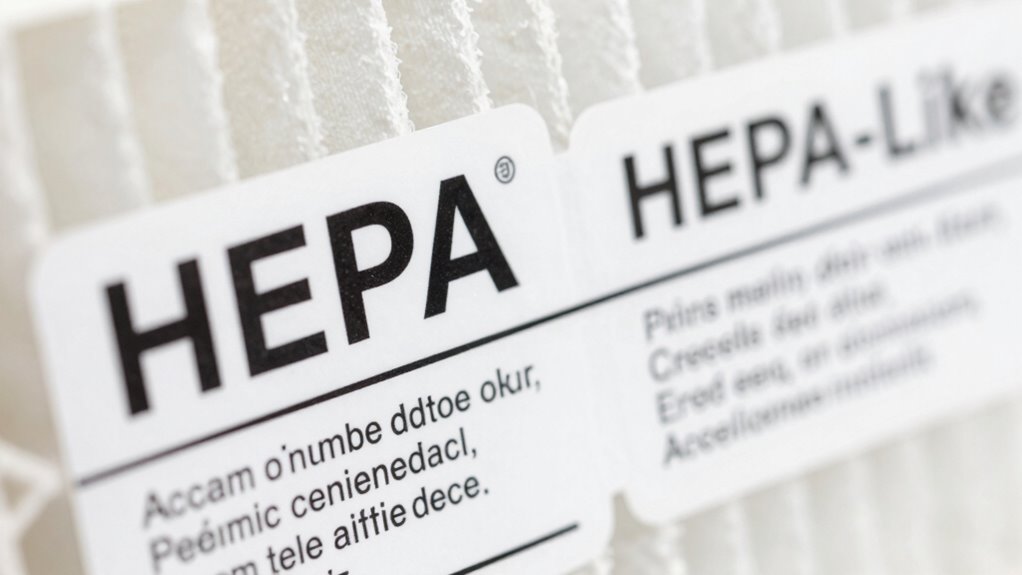
To identify authentic HEPA filters, you need to carefully examine their specifications and labeling. Check the filter efficiency rating, which should state at least 99.97% for 0.3-micron particles, confirming compliance with strict certification standards. Look for labels that specify adherence to industry standards like EN 1822 or ASTM F2299, which verify that the filter meets recognized performance benchmarks. Be cautious of vague claims or generic labels such as “HEPA-like,” which often don’t meet true HEPA standards. Authentic HEPA filters will clearly display their certification details, including the level of filtration efficiency and relevant standards. By scrutinizing these labels and specifications, you can confidently distinguish genuine HEPA filters from imitations or lower-quality alternatives.
How Do HEPA and ‘HEPA-Like’ Air Purifiers Perform in Real-World Use?
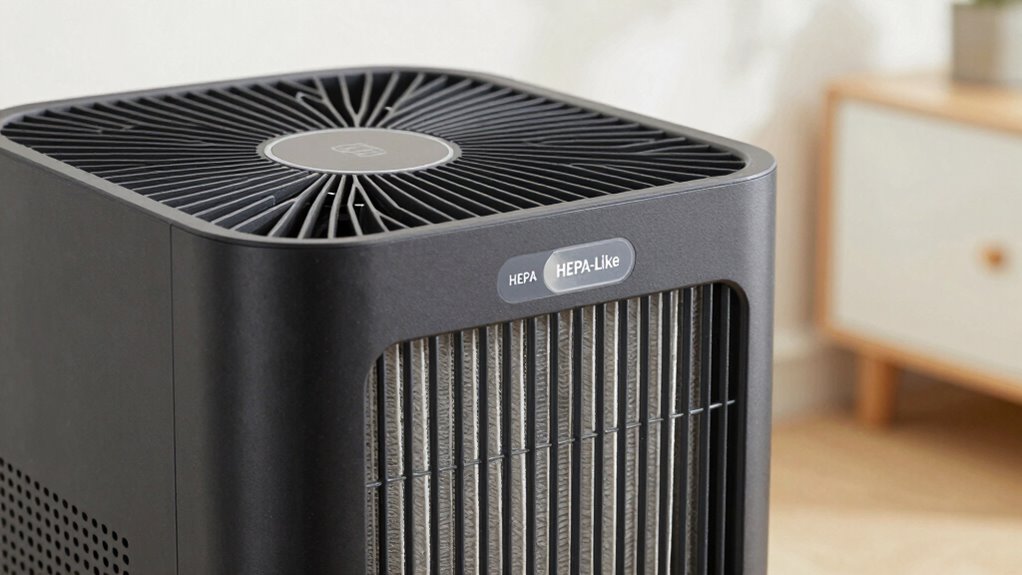
While HEPA filters are known for their high efficiency, their real-world performance can vary based on factors like room size, filter maintenance, and air circulation. In larger spaces, even a true HEPA filter may struggle to improve air quality quickly if the purifier isn’t appropriately sized or if filters aren’t changed regularly. ‘HEPA-like’ purifiers often use less advanced filter technology, which may reduce their effectiveness in capturing airborne particles. You might notice a difference in air quality, especially if the device isn’t suited to your environment. Proper placement, regular filter replacement, and choosing a purifier with sufficient airflow are key to maximizing performance. Additionally, understanding the vetted differences between wave and wind filtration methods can help you select a more effective air purifier. Recognizing filter efficiency in real-world conditions is essential to ensure your air purifier truly enhances indoor air quality. Ultimately, understanding how these filters operate in real-world conditions helps you find an air purifier that truly improves your indoor air quality.
Common Mistakes When Buying Air Purifiers Based on Labels

Many shoppers rely heavily on labels and claims when choosing an air purifier, but this approach can lead to costly mistakes. Labels may emphasize features like CADR ratings or “HEPA-like” labels, which can be misleading. Relying solely on these claims can cause you to overlook important factors like air purifier maintenance and filter replacement schedules. Some filters may appear effective but require frequent, costly replacements that reduce overall value. Others might have low-quality filters that don’t last, making the device less effective over time. Always check the manufacturer’s recommended maintenance routines and replacement intervals. Furthermore, understanding the filter lifespan and how it relates to your indoor air quality needs can help you make a more informed decision. Additionally, be aware that microplastics in dust can impact indoor air quality, making the choice of a high-quality filter even more critical. Considering the long-term costs associated with filter replacements and maintenance is essential to ensure your investment remains effective and affordable over time. Moreover, being aware of the AI developments in healthcare can influence future expectations for air purification technology and its role in improving indoor environments. Staying informed about technological innovations can help you select devices that incorporate advanced features for better air quality management.
How Marketing Tricks Can Mislead You About HEPA Filters

Marketing claims can make HEPA filters seem more effective than they really are, so you might be misled by flashy words or vague promises. Different brands also use varying standards to label their filters, making it harder to compare quality. Knowing what to watch out for helps you avoid falling for these tricks and choose genuinely effective options. For example, understanding the regional standards and reputations in different regions can help you better assess local products and services, including air filters, by recognizing regional standards and reputations. Additionally, being aware of filter labeling standards can assist you in deciphering the true effectiveness of a filter beyond marketing claims. Familiarity with performance metrics can also help you evaluate filters based on actual tested efficiencies rather than marketing jargon. Moreover, being informed about testing protocols ensures that you are comparing filters based on standardized and reliable data.
Misleading Marketing Claims
Have you ever noticed how some HEPA filter advertisements promise near-perfection in air purification? They often highlight impressive claims without referencing filter standards or certification labels. These marketing messages can be misleading, making you think the filter will eliminate 100% of airborne particles. In reality, many filters labeled as “HEPA-like” or similar don’t meet strict standards, even if they appear similar in marketing. Some companies use vague terms to suggest high efficiency without backing it up with recognized certification labels. This tricks you into believing you’re getting top-tier filtration when, in fact, the product may fall short. Always check the filter standards and look for official certification labels to verify you’re buying a genuine HEPA filter that performs as promised. Filtering standards are essential to ensure the filter’s effectiveness and authenticity.
Varying Filter Standards
Because not all filters labeled as “HEPA” meet the same standards, it’s easy to be misled by varying performance claims. Different manufacturers may use inconsistent filter standards, making it hard to judge true efficiency. Certification labels, like those from the U.S. Department of Energy or European standards, indicate a filter’s ability to trap particles at specific sizes, typically 0.3 microns. However, some products carry vague or misleading labels like “HEPA-like” or “HEPA-type,” which don’t meet rigorous standards. This variation can lead you to believe a filter is more effective than it really is. Always check for reliable certification labels to verify a filter’s true performance. Relying on these standards helps you select filters that genuinely improve air quality, rather than just appear to do so.
What Should You Look For When Choosing an Effective Air Purifier?
When choosing an effective air purifier, it’s essential to contemplate the filter type and its ability to capture pollutants. Look for units that have undergone rigorous filter testing to ensure they meet performance standards. Certification standards like AHAM or CADR ratings can help verify the purifier’s effectiveness in removing particles from the air. Avoid models with vague claims or misleading labels, such as “HEPA-like,” which may not deliver true HEPA filtration. Instead, check for clear documentation showing the filter’s efficiency, ideally capturing at least 99.97% of particles as small as 0.3 microns. A reputable purifier will also list its tested and certified filtration capabilities, giving you confidence in its ability to improve your indoor air quality.
Risks of Relying on ‘HEPA-Like’ Filters for Indoor Air Quality

Relying on ‘HEPA-like’ filters can give a false sense of security, but these claims often overstate their effectiveness. Many products use misleading product branding that suggests they meet HEPA standards without proper filter certification. This can cause you to believe you’re reducing airborne pollutants effectively when, in reality, the filter may only capture larger particles or perform poorly against viruses and fine allergens. Without proper certification, you can’t be sure of a filter’s true performance. Relying on these labels risks leaving your indoor air quality compromised, especially if you’re vulnerable to allergies or respiratory issues. To protect yourself, verify the filter’s certification and look beyond product branding to ensure it meets the rigorous standards of true HEPA filtration.
Expert Tips to Ensure You’re Getting True HEPA Filtration

To make sure you’re getting true HEPA filtration, start by checking the certification labels on your air purifier. Recognize genuine HEPA features, like proper sealing and filter design, to verify you’re not misled. Confirming these details helps you trust that your air cleaner is truly effective.
Verify Certification Labels
Checking the certification labels on HEPA filters is the most straightforward way to confirm you’re getting genuine filtration. Certification labels indicate the filter’s compliance with established filter standards, ensuring it meets performance claims. To verify authenticity:
- Look for official certification symbols like the HEPA or CE mark.
- Check for specific standards such as UL 900 or EN 1822, indicating strict filter standards.
- Read the label carefully for detailed information, including test results and certification body.
Avoid filters with vague labels or generic claims like “HEPA-like.” Genuine HEPA filters will clearly display certification labels confirming they meet recognized standards. This simple step helps guarantee you’re purchasing a filter that performs as advertised and protects your indoor air quality effectively.
Recognize Genuine HEPA Features
After verifying certification labels, it’s important to learn how to identify genuine HEPA filters through their features. Genuine HEPA filters deliver consistent filter performance by meeting strict certification standards, typically capturing at least 99.97% of particles as small as 0.3 microns. Look for tightly pleated media, which maximizes surface area and improves filtration efficiency. Authentic HEPA filters often have a durable frame that maintains integrity under use. You should also notice that genuine filters are labeled with recognized certification standards, such as those from the U.S. Department of Energy or the Institute of Environmental Sciences and Technology. Being familiar with these features helps guarantee you’re investing in a filter that truly meets the high standards of HEPA filtration, rather than a misleading imitation.
Frequently Asked Questions
Are ‘Hepa-Like’ Filters Effective Against All Indoor Pollutants?
‘HEPA-like’ filters aren’t as effective as true HEPA filters for all indoor pollutants. They may remove larger particles like dust and pollen but often fall short on smaller pollutants such as bacteria, viruses, and volatile organic compounds. If you want reliable pollutant removal across a broad spectrum, look for filters with proven HEPA certification. This guarantees better filter effectiveness and better protection against a wide range of indoor pollutants.
Can ‘Hepa-Like’ Filters Be Certified by Official Standards?
Think of ‘HEPA-like’ filters as a paper umbrella in a rainstorm—helpful but not always reliable. They can’t be officially certified by standards like HEPA certification, so their label accuracy is questionable. Without adherence to certification standards, these filters don’t guarantee high filtration efficiency. You should look for genuine HEPA labels if you want proven performance, rather than relying on potentially misleading ‘HEPA-like’ claims.
How Long Do Genuine HEPA Filters Typically Last?
Genuine HEPA filters generally last around 6 to 12 months, depending on usage and air quality. You should monitor the filter’s condition regularly to determine the right replacement frequency. Over time, filter lifespan decreases as it traps more particles, reducing efficiency. To guarantee ideal air purification, replace your HEPA filter as recommended by the manufacturer, usually once a year or sooner if it appears dirty or airflow decreases considerably.
Are There Specific Brands Known for Genuine HEPA Filters?
Think of genuine HEPA filters as the gold standard in air purification. You can trust brands like Honeywell, IQAir, and Blueair for authentic filters that meet strict certification standards such as HEPA H13 or H14. These brands prioritize brand authenticity, ensuring you get true HEPA filtration. Always check for proper certification labels—this guarantees you’re investing in a product that genuinely captures 99.97% of particles.
Do ‘Hepa-Like’ Filters Pose Health Risks When Used Long-Term?
Using ‘HEPA-like’ filters long-term can pose health risks due to potential chemical exposure from cheaper materials or incomplete filtration. You might unknowingly breathe in airborne pollutants or chemical residues, which could impact your respiratory health over time. To protect yourself, opt for genuine HEPA filters verified for safety and efficiency, reducing the risk of long-term health issues and ensuring cleaner indoor air.
Conclusion
Think of choosing a true HEPA filter like picking a reliable compass in a foggy forest. If you trust a fake, you might wander off course, missing the safety and clean air you need. Always read labels carefully and look for genuine certifications. Your indoor air quality depends on it — don’t let false labels lead you astray. With the right filter, you’ll breathe easier, knowing you’re on the right path.