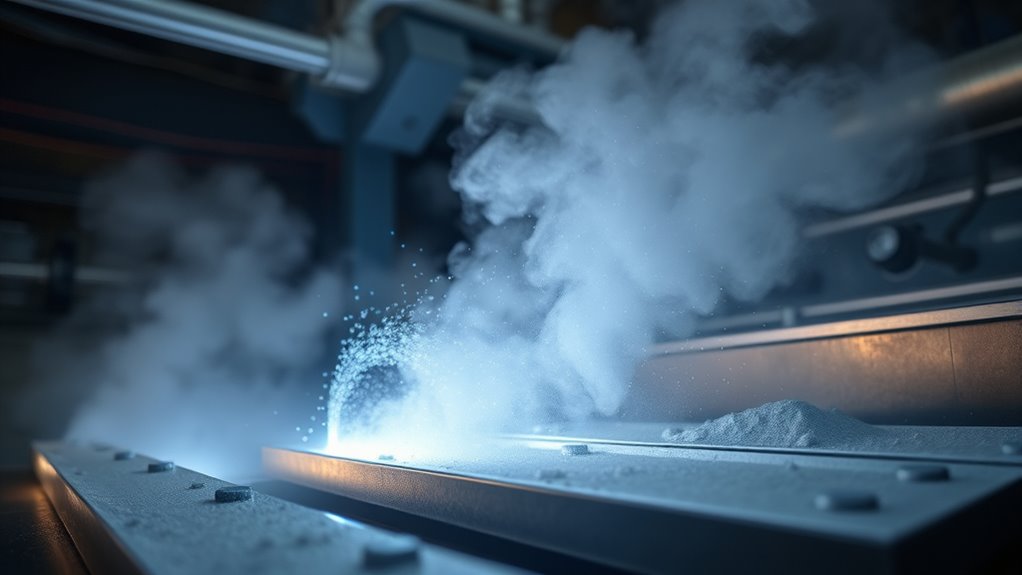

Electrostatic precipitators clean air by charging particles in exhaust gases with high-voltage electrodes. These charged particles are then attracted to oppositely charged collection plates, where they form a layer that is periodically removed. This process captures tiny particles, reducing pollutants released into the atmosphere. Designed for continuous operation in heavy-duty industries, precipitators help meet environmental standards efficiently. To understand the detailed inner workings, keep exploring how this technology keeps our air cleaner.
Key Takeaways
- Gas passes through high-voltage electrodes that charge airborne particles in the precipitator.
- Charged particles are attracted to and collect on oppositely charged plates.
- Collected particles form a layer on the plates, which are periodically cleaned via mechanical rapping or vibration.
- Continuous operation ensures efficient removal of fine particles and maintains air quality.
- Regular maintenance of electrodes and plates sustains optimal electric fields and system performance.
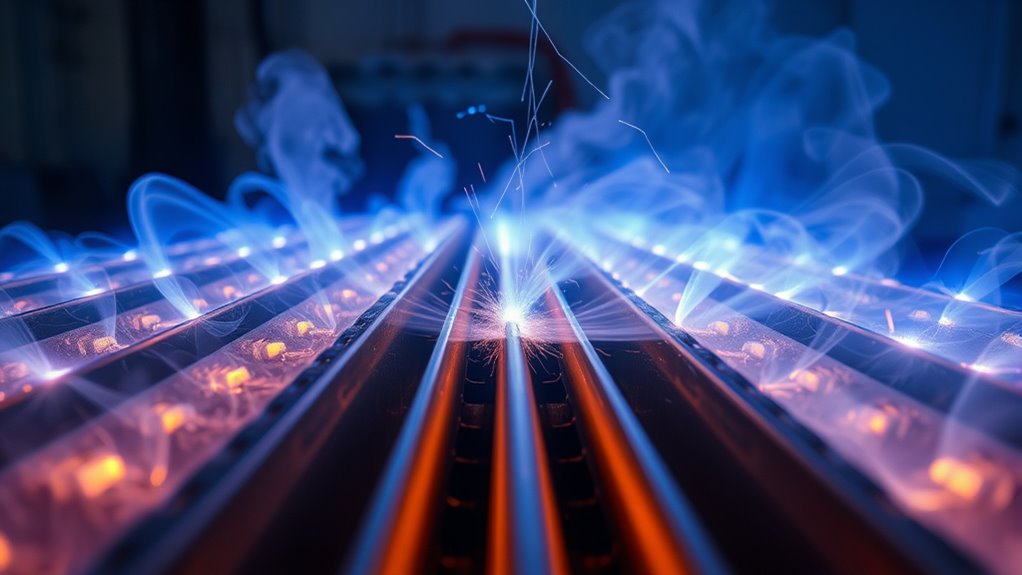
Electrostatic precipitators are vital devices used to remove fine particles from exhaust gases in various industrial processes. If you’re involved in industries like power generation, cement manufacturing, or metal smelting, understanding how these devices work can help you appreciate their role in emission control and pollution reduction. Basically, electrostatic precipitators capture airborne particles before they escape into the atmosphere, making air cleaner and safer.
Electrostatic precipitators remove fine particles from industrial exhaust gases to reduce emissions and protect air quality.
The core mechanism of an electrostatic precipitator involves charging particles in the exhaust stream. As the gas passes through the device, it encounters a series of high-voltage electrodes that generate a strong electric field. These electrodes impart a negative or positive charge to the particles suspended in the gas. Once charged, the particles are attracted to oppositely charged collection plates, which are usually grounded. As the particles migrate toward these plates, they form a layer that can be periodically rapped off or washed away, ensuring the precipitator maintains its efficiency over time.
You’ll find that electrostatic precipitators excel at handling large volumes of gases with high particulate concentrations, making them ideal for heavy-duty industrial settings. Their design allows continuous operation, which means they don’t require frequent shutdowns for cleaning, unlike some other filtration methods. This continuous operation not only enhances efficiency but also ensures consistent emission control, helping industries meet strict environmental regulations.
Pollution reduction achieved through electrostatic precipitators is significant because they can capture tiny particles—often less than 1 micrometer in diameter—that are otherwise difficult to remove. These fine particles, known as PM (particulate matter), are major contributors to air pollution and health problems. By effectively removing these particles, electrostatic precipitators reduce the release of harmful pollutants into the atmosphere, ultimately improving air quality and protecting public health.
Maintenance is straightforward but crucial. Regular inspection of the collection plates and electrodes ensures that the electric field remains strong and that dust buildup doesn’t diminish performance. Over time, collected ash and dust need to be removed, which is typically done through mechanical rapping or vibration. Proper maintenance not only sustains emission control but also prolongs the lifespan of the precipitator.
industrial electrostatic precipitator
As an affiliate, we earn on qualifying purchases.
As an affiliate, we earn on qualifying purchases.
Frequently Asked Questions
What Maintenance Is Required for Electrostatic Precipitators?
You need to regularly perform electrode cleaning to guarantee the precipitator functions efficiently. This involves removing accumulated ash and dust from the electrodes, which helps maintain proper electrical performance. Additionally, you should manage ash disposal properly, safely removing it from the collection hoppers. Regular inspections and maintenance of power supplies and insulators are also essential to prevent malfunctions and prolong the lifespan of your electrostatic precipitator.
How Efficient Are Electrostatic Precipitators Compared to Other Filters?
Electrostatic precipitators are incredibly efficient, often surpassing traditional filters in removal of fine particles. Their filter efficiency can reach up to 99%, making them a powerhouse in air cleaning. Compared to other filters, their comparative performance shines, especially in large-scale industrial settings. You’ll find they excel at capturing dust, smoke, and other pollutants, making your air remarkably cleaner. They’re truly a game-changer in air purification technology.
Can Electrostatic Precipitators Remove Gases or Only Particles?
Electrostatic precipitators mainly remove particles through particle filtration, but they’re not designed for gas removal. You won’t find them effectively eliminating gases like sulfur dioxide or volatile organic compounds. If you need to target gases, consider other air cleaning methods like scrubbers or activated carbon filters. While they excel at capturing fine particles, electrostatic precipitators don’t address gaseous pollutants, so choose your air purification system accordingly.
What Are the Common Challenges Faced by Electrostatic Precipitators?
You’ll face challenges like ionization issues, which reduce the efficiency of charging particles, and ash accumulation, leading to blockages and higher maintenance needs. Over time, these problems can decrease your precipitator’s performance. Regular cleaning, monitoring ionization levels, and adjusting operational parameters help you overcome these hurdles, ensuring your electrostatic precipitator continues cleaning effectively and maintains ideal airflow and pollutant removal.
Are Electrostatic Precipitators Environmentally Friendly?
Electrostatic precipitators are surprisingly eco-friendly, especially compared to outdated methods, but they still have an environmental impact. While they efficiently reduce air pollution, they use electricity and can produce waste that needs proper disposal. If you’re seeking truly green solutions, consider renewable alternatives like filters or scrubbers. Overall, electrostatic precipitators are a step forward, but balancing their benefits with environmental concerns is essential for a healthier planet.
air pollution control electrostatic precipitator
As an affiliate, we earn on qualifying purchases.
As an affiliate, we earn on qualifying purchases.
Conclusion
Now that you understand how electrostatic precipitators work, you can see how they act like silent guardians, sweeping away airborne pollutants with precision. They’re like invisible nets, catching the dirt and dust before it reaches you, keeping the air cleaner and healthier. So, next time you breathe easier, remember these mighty machines working behind the scenes—quiet heroes transforming the air you breathe into something fresher, brighter, and safer.
electrostatic dust collector
As an affiliate, we earn on qualifying purchases.
As an affiliate, we earn on qualifying purchases.
industrial air cleaner
As an affiliate, we earn on qualifying purchases.
As an affiliate, we earn on qualifying purchases.