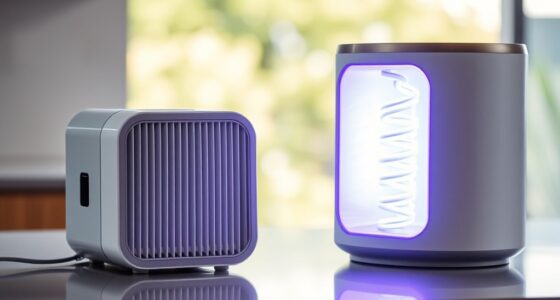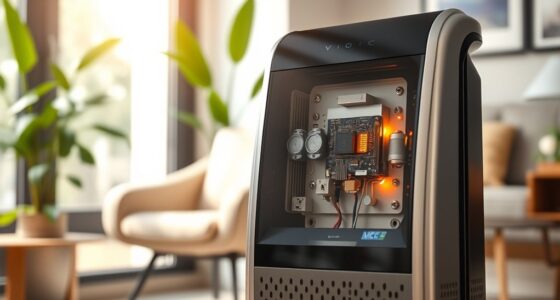
Smartphone apps for tracking indoor air quality connect seamlessly with Bluetooth or Wi-Fi-enabled sensors placed around your home. These apps display real-time pollutant levels, historical data, and send alerts when air quality worsens. They also allow you to visualize trends and sometimes automate responses, like turning on air purifiers. Proper sensor placement boosts accuracy, giving you reliable insights. Keep exploring to discover how these apps can help you create a healthier living space.

Get home appliances delivered free with Prime
- Fast, free delivery on millions of items
- Prime Video, Amazon Music and more included
- Member-only deals all year
Key Takeaways
- Many apps integrate with Bluetooth or Wi-Fi air quality sensors to monitor indoor pollutant levels in real time.
- They provide easy-to-understand visualizations and historical data to identify air quality trends over time.
- Instant alerts notify users of high pollutant concentrations, prompting quick corrective actions.
- Apps often enable automation, such as activating air purifiers when pollution spikes are detected.
- Proper sensor placement, guided by app recommendations, ensures accurate indoor air quality monitoring.

Have you ever wondered how clean the air inside your home really is? If so, you’re not alone. Many people are becoming more conscious of indoor air quality and how it impacts health and comfort. Thankfully, modern technology makes it easier than ever to monitor and improve the air you breathe. One of the most effective tools is the use of air quality sensors paired with smartphone apps. These sensors detect pollutants, humidity levels, and other airborne factors, providing real-time data that you can access directly from your device. The key to making these sensors truly useful is seamless app integration, which allows you to track air quality trends over time, receive alerts when levels spike, and even get personalized suggestions for improving your environment. With just a few taps on your smartphone, you can stay informed about what’s happening in your home, without needing to be an expert in air quality science.
When choosing an air quality sensor, look for one that easily connects to your smartphone via Bluetooth, Wi-Fi, or other wireless technologies. The best sensors come with dedicated apps that are simple to install and use. Once set up, these apps display data in a clear, intuitive way—showing you current air quality levels, historical graphs, and alerts if something needs your attention. For example, if the sensor detects high levels of volatile organic compounds (VOCs) or particulate matter (PM), the app can notify you instantly. This immediate feedback empowers you to take quick action, like opening windows, turning on an air purifier, or adjusting your heating and cooling systems. Effective sensor placement is crucial to ensure accurate readings across different rooms and areas of your home.
The integration of air quality sensors with apps also allows for automation. Many systems can be programmed to trigger specific responses based on sensor readings. For instance, your app might be set to automatically activate a purifier when pollution levels rise or to log data for future analysis. This automation saves you time and effort, ensuring your indoor environment is consistently safe and comfortable. Additionally, app integration often enables you to connect multiple sensors across different rooms, giving you a comprehensive view of your entire home’s air quality. With this information at your fingertips, you can identify problem areas and take targeted measures to improve airflow, reduce pollutants, or increase ventilation.
indoor air quality sensor with app
As an affiliate, we earn on qualifying purchases.
As an affiliate, we earn on qualifying purchases.
Frequently Asked Questions
How Accurate Are Indoor Air Quality Smartphone Apps?
Indoor air quality smartphone apps’ accuracy varies, depending on sensor calibration and app reliability. You might find some apps fairly precise if paired with well-calibrated sensors, but others could give misleading data if sensors aren’t calibrated properly. Keep in mind, these apps often rely on external sensors or your phone’s built-in sensors, which may not be as accurate as professional equipment. Always verify with trusted devices for critical decisions.
Do These Apps Require Additional Hardware Sensors?
You might think these apps need external sensors, but some can work with your phone’s built-in features. However, for more accurate readings, external sensors are often recommended, especially since calibration requirements can vary. These sensors connect via Bluetooth or Wi-Fi, providing better data. Keep in mind, without proper calibration, even external sensors can give misleading results, so investing in quality and regular calibration is key.
Are Indoor Air Quality Apps Suitable for Commercial Buildings?
Indoor air quality apps can be suitable for commercial buildings, especially when integrated with building automation systems. They help monitor employee health by providing real-time data on air conditions, allowing you to address issues promptly. While these apps often rely on hardware sensors, some can connect to existing building sensors. Using them enhances overall air quality management and creates a healthier, more productive environment for your employees.
Can These Apps Detect Specific Pollutants Like VOCS?
Did you know that VOCs (volatile organic compounds) are among the most common indoor pollutants? These apps can often detect VOCs, but their pollutant specificity varies. While some provide basic VOC detection, they may not identify specific pollutants accurately. Rely on apps with advanced sensors if you need precise VOC detection, as many consumer-grade apps focus on general air quality rather than detailed pollutant analysis.
How Often Do Indoor Air Quality Apps Update Their Data?
Indoor air quality apps typically update data every few minutes to hourly, helping you monitor changes in air quality. Regular updates alert you when to perform air filter maintenance or improve ventilation. By staying aware of real-time data, you can take prompt actions like increasing ventilation or replacing filters, ensuring healthier indoor air. Consistent updates empower you to maintain a safer, cleaner environment effectively.
As an affiliate, we earn on qualifying purchases.
Conclusion
Now that you know how these apps can reveal hidden pollutants in your home, imagine what you might discover next. Could your indoor air be more harmful than you think? As technology advances, new features are emerging that could transform your health and comfort. Don’t wait until symptoms worsen—stay alert and keep monitoring. The real question is, are you ready to take control before unseen dangers take hold? The next breakthrough might be just a tap away.
As an affiliate, we earn on qualifying purchases.
smart air purifier with app control
As an affiliate, we earn on qualifying purchases.
As an affiliate, we earn on qualifying purchases.
Fall yard work Picks
leaf blowers
As an affiliate, we earn on qualifying purchases.