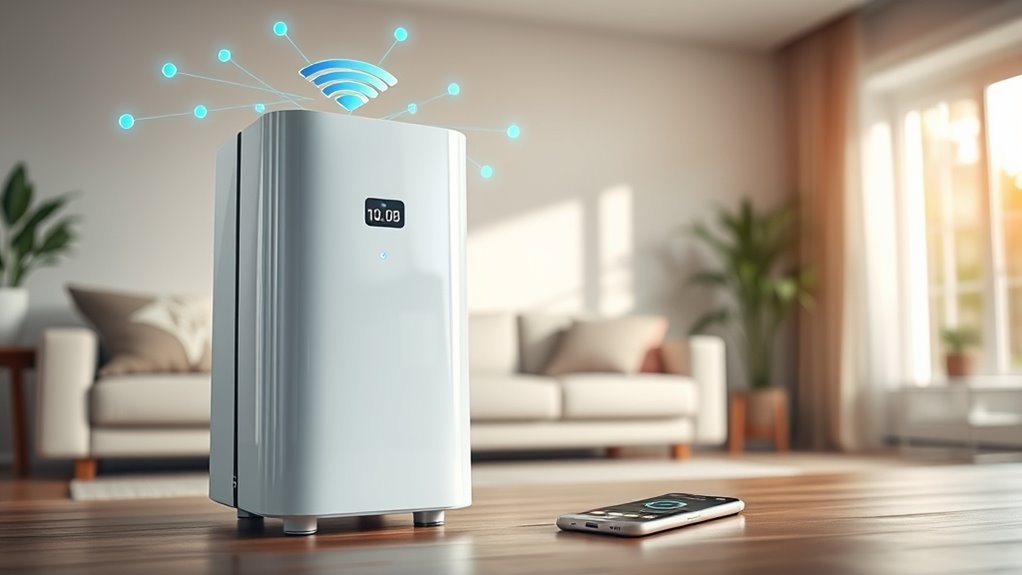

By leveraging IoT connectivity in air purifiers, you get real-time data on air quality, humidity, and temperature immediately after activation. These sensors automatically monitor pollution levels and adjust filtration without manual input, ensuring cleaner indoor air. Your device can analyze cloud data to detect patterns and provide personalized alerts or control options through smart apps. Staying informed with continuous insights helps maintain healthier environments effortlessly—exploring further reveals how these smart features optimize your air quality even more.
Key Takeaways
- IoT connectivity enables real-time sensor data collection on pollutants, humidity, and temperature for precise indoor air quality monitoring.
- Sensor data is securely transmitted to the cloud for analysis, pattern recognition, and trend identification over time.
- Continuous environmental data allows air purifiers to automatically adjust filtration levels proactively based on air quality fluctuations.
- Users receive real-time insights and control options via connected apps, enhancing personalized and proactive air quality management.
- Data-driven insights improve overall indoor air quality and health outcomes by supporting routine, preventive, and tailored interventions.
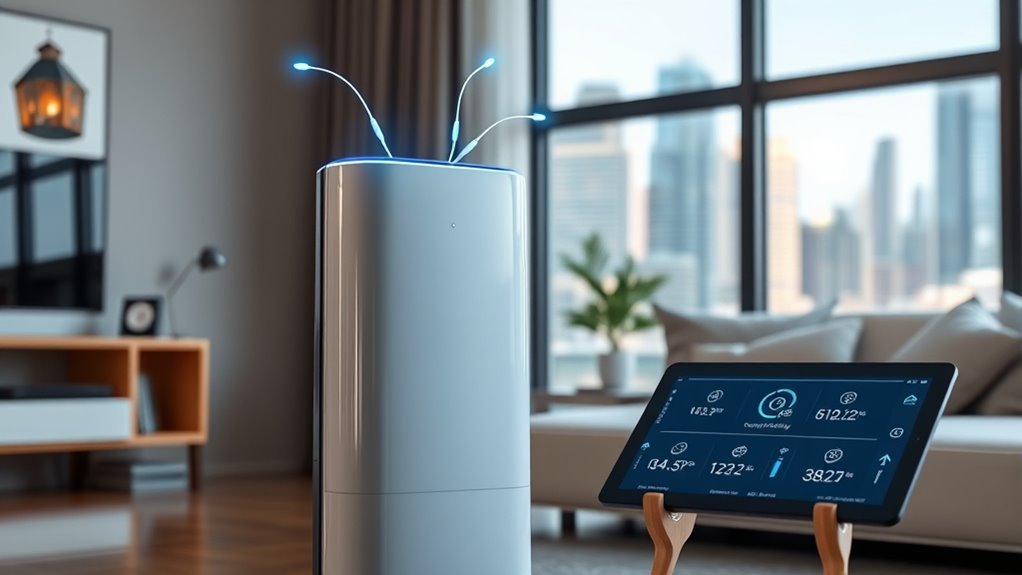
Smart air purifiers equipped with IoT connectivity are transforming how you monitor and control indoor air quality. Instead of relying solely on manual adjustments or basic indicators, these devices harness smart sensor integration to gather real-time data on pollutants, humidity, temperature, and other air quality parameters. As soon as you turn on the purifier, it begins collecting precise information about your environment, allowing for immediate and more accurate responses to changing conditions. This integration means the device isn’t just reacting blindly; it’s making informed decisions based on the data it continuously gathers through its sensors.
Smart air purifiers with IoT use sensors for real-time air quality monitoring and immediate, data-driven responses.
Once the sensors collect this data, cloud data analysis kicks in to provide a broader perspective. Your air purifier transmits the sensor information to the cloud through a secure internet connection. Using sophisticated algorithms, the cloud processes this data to identify patterns, detect fluctuations, and predict future air quality trends. This analysis isn’t limited to instant feedback; it creates a thorough record of your indoor environment over time. With access to this historical data, you can better understand what influences your air quality—whether seasonal changes, specific activities, or external pollution sources—and adjust your routines accordingly.
The combination of smart sensor integration and cloud data analysis offers a level of control that’s both proactive and personalized. For instance, if the sensors detect a spike in airborne particles, the purifier can automatically increase its filtration level without you needing to intervene. Simultaneously, cloud analytics might reveal that certain times of day or specific activities tend to worsen air quality, prompting you to take preventive measures. Many IoT-enabled purifiers also sync with your smartphone or smart home system, providing you with easy access to real-time data, alerts, and control options from anywhere. You can adjust settings, view historical air quality graphs, or schedule purification cycles—all through an intuitive app.
This interconnected system not only improves indoor air quality but also enhances your overall comfort and health. By leveraging smart sensor integration and cloud data analysis, your air purifier becomes more than just a device—it evolves into an intelligent assistant that learns from your environment. You gain peace of mind knowing that your indoor air is being constantly monitored and optimized, freeing you from the guesswork and manual adjustments that traditional purifiers require. Understanding air quality and how it’s monitored is essential for maximizing the benefits of IoT-enabled devices. Ultimately, IoT connectivity turns your air purifier into a smart, responsive, and data-driven solution for maintaining a healthier indoor space.
Frequently Asked Questions
How Secure Is Data Transmitted via Iot-Enabled Air Purifiers?
The data transmitted via IoT-enabled air purifiers is generally secure if proper measures are in place. You should verify the device uses data encryption to protect your information and access control to restrict who can view or modify data. Manufacturers often implement these security features, but it’s wise to keep firmware updated and use strong, unique passwords to further safeguard your data from potential breaches.
Can Iot Air Purifiers Operate Offline or Without Internet?
IoT air purifiers generally require an internet connection for full functionality, but some models offer offline functionality through local control options. You can operate these purifiers without internet access, using physical controls or a local network. This setup lets you manage settings directly on the device or via a local app. Keep in mind, offline operation may limit remote monitoring and updates, but it ensures you maintain control even without internet.
What Privacy Measures Protect User Data From Iot-Connected Purifiers?
You’re protected through robust privacy measures like data encryption, which safeguards your information during transmission and storage. User authentication ensures only authorized individuals access your device and data. Manufacturers often implement these security features to prevent unauthorized access and data breaches. By staying informed about your air purifier’s privacy settings and updates, you can enjoy smart benefits while safeguarding your personal data effectively.
How Does Iot Connectivity Affect the Energy Efficiency of Air Purifiers?
Imagine your air purifier as a vigilant guardian, adjusting its pace with ambient air quality. IoT connectivity boosts energy efficiency by enabling smart energy management and adaptive power control. It detects when rooms are empty or air quality improves, automatically dialing down power. This smart system conserves energy, reduces waste, and guarantees peak performance, making your purifier both eco-friendly and responsive to your environment.
Are There Compatibility Issues Between Different Iot Device Brands?
Yes, compatibility issues can arise between different IoT device brands. You might face challenges with brand interoperability because each brand may use different protocols or lack support for common standards. To avoid this, guarantee devices follow protocol standardization and support universal standards like Zigbee or Z-Wave. This way, your air purifier and other smart devices work seamlessly together, making your smart home more efficient and user-friendly.
Conclusion
By integrating IoT connectivity into air purifiers, you’re not just improving air quality—you’re gaining real-time insights and control at your fingertips. Imagine a healthier, smarter home that adapts to your needs effortlessly. Isn’t it worth taking that step toward a cleaner, safer environment? Embrace the future of air purification today, and let technology work for your well-being. After all, shouldn’t your health be a priority in this connected world?