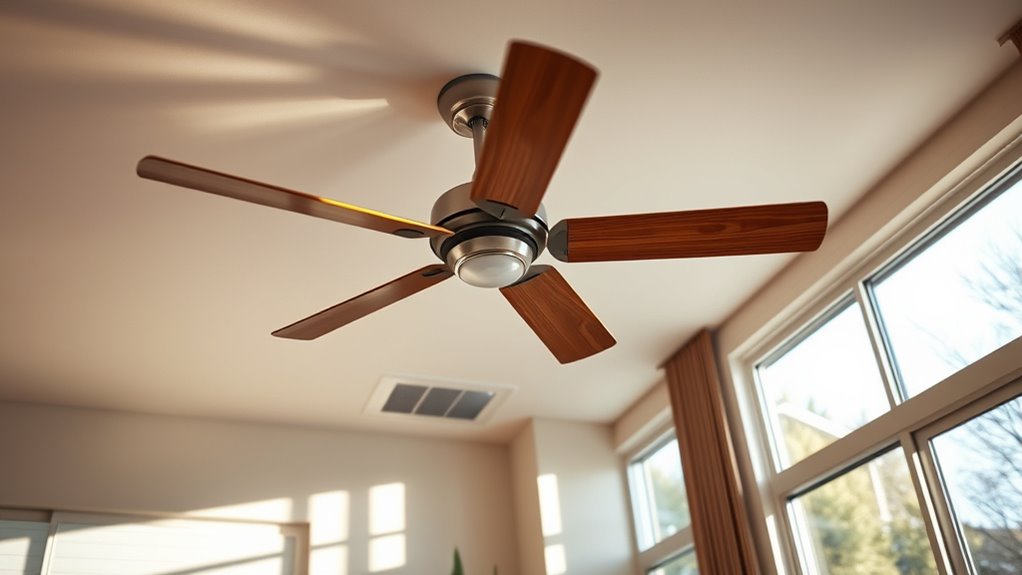

Using ceiling fans with your HVAC system helps improve air circulation, allowing you to set higher or lower thermostat temperatures without sacrificing comfort. Fans reduce the workload on your heating and cooling units, leading to lower energy bills and less system wear. Modern fans are energy-efficient and quiet, making them an economical choice. Smart thermostats enhance this effect by adjusting settings automatically. Keep exploring to discover more ways to maximize your home’s efficiency with ceiling fans and HVAC integration.
Key Takeaways
- Ceiling fans improve air circulation, enabling higher or lower thermostat settings without sacrificing comfort.
- Using fans reduces HVAC workload, leading to lower energy consumption and utility bills.
- Modern fans with energy-efficient motors operate quietly and consume less power, enhancing overall savings.
- Smart thermostats coordinate with fans to optimize temperature, occupancy, and system efficiency automatically.
- Fans help distribute conditioned air evenly, preventing hot or cold spots and reducing HVAC cycling.
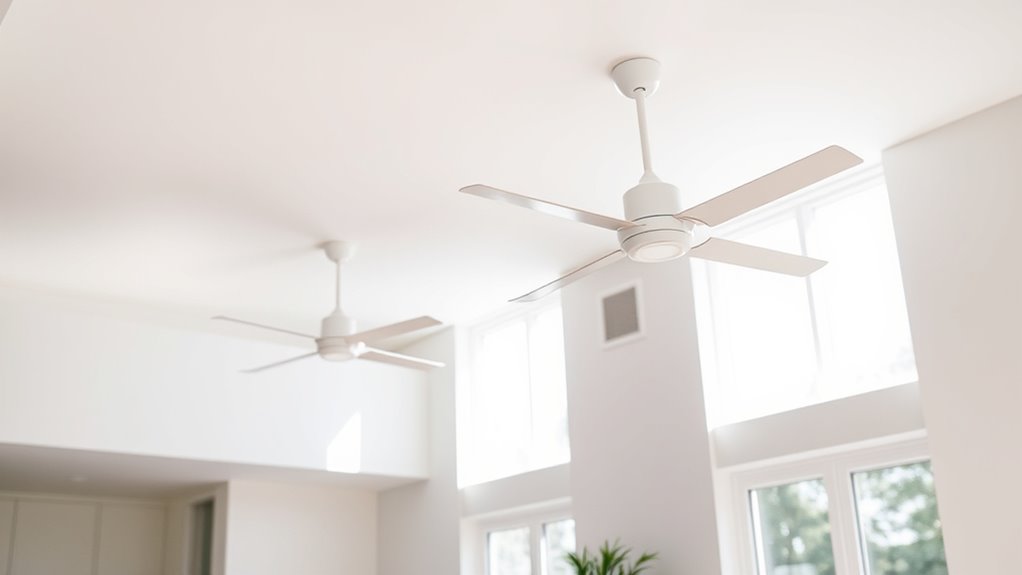
Adding ceiling fans to your HVAC system can boost efficiency and comfort by helping distribute conditioned air more effectively. When you pair ceiling fans with your heating and cooling system, you can feel more comfortable while using less energy. For example, using a smart thermostat to control your HVAC system allows you to set precise temperatures and schedules, reducing unnecessary operation. With a ceiling fan circulating air, you can set your thermostat a few degrees higher in summer or lower in winter without sacrificing comfort. This synergy means your HVAC doesn’t have to work as hard, cutting down energy consumption and lowering utility bills. Modern fans come equipped with energy-efficient motors, which use less electricity while providing smooth, quiet operation. Since energy-efficient motors draw less power, running a ceiling fan becomes even more economical. When the fan runs alongside your HVAC, it helps maintain a consistent temperature throughout the room, reducing hot or cold spots that might cause your system to cycle more frequently. This steady airflow prevents your HVAC from turning on and off repeatedly, saving energy and prolonging the system’s lifespan. Smart thermostats play a vital role in optimizing this setup. They learn your schedule, detect when you’re home or away, and adjust temperatures accordingly. When integrated with ceiling fans, smart thermostats can coordinate fan speeds and settings for maximum efficiency. For instance, in summer, you can set the thermostat to a higher temperature while the ceiling fan pulls cool air across the room, making it feel cooler without lowering the actual temperature. Conversely, in winter, a fan running in reverse can help distribute warm air that rises to the ceiling, maintaining a cozy environment while your furnace runs less often.
Frequently Asked Questions
Can Ceiling Fans Be Used With Smart Thermostats?
Yes, you can use ceiling fans with smart thermostats. Many smart thermostats offer compatibility with ceiling fan automation, allowing you to control your fans through the same app or voice commands. This integration helps optimize energy use by adjusting fans based on your heating or cooling needs. Make sure your ceiling fan is compatible with smart home systems, and then you can enjoy seamless control and increased energy savings.
How Do Ceiling Fans Impact HVAC System Lifespan?
Using ceiling fans can actually extend your HVAC system’s lifespan by reducing its workload, which improves energy efficiency. When fans circulate air effectively, your system doesn’t have to run as often or at higher settings, decreasing wear and tear. This lighter workload helps prevent early system failures, promoting system longevity. So, incorporating ceiling fans into your home not only saves energy but also keeps your HVAC running smoothly longer.
Are There Specific Ceiling Fan Features That Optimize Energy Savings?
Did you know using energy-efficient blades can cut your ceiling fan’s energy consumption by up to 50%? To maximize savings, choose fans with smart fan controls, which allow you to set schedules and adjust speeds automatically. Look for models with adjustable blades and programmable timers. These features optimize airflow and reduce unnecessary energy use, helping you save money and lower your environmental impact while keeping your space comfortable.
Do Ceiling Fans Help in Reducing HVAC Noise Levels?
Yes, ceiling fans help reduce HVAC noise levels by promoting better airflow and maintaining consistent temperatures, which can lessen the need for loud HVAC adjustments. This noise reduction creates a quieter environment, enhancing your comfort. When you use ceiling fans strategically, they not only improve comfort but also contribute to overall noise reduction, making your space more peaceful and enjoyable while lowering energy costs.
How Often Should Ceiling Fans and HVAC Systems Be Maintained Together?
Like clockwork, you should schedule maintenance for your ceiling fans and HVAC systems at least twice a year. Regular maintenance schedules ensure peak performance and efficiency. Don’t forget to arrange professional inspections annually to catch potential issues early. Keeping both systems in top shape not only saves energy but also prolongs their lifespan. Stay ahead of the game by maintaining your systems together; it’s the smart way to keep your home comfortable year-round.
Conclusion
So, you thought cranking up your AC was the way to stay cool? Turns out, adding ceiling fans can actually save you energy—and money—while keeping you just as comfortable. It’s funny how something so simple can make such a big difference, isn’t it? Instead of wasting energy on constant cooling, you can enjoy the irony of doing less to get more. Who knew that a fan and a little clever thinking could change your energy game?