Finding the right whole home energy monitor for your electrical panel involves balancing features, ease of use, and compatibility. The Emporia Energy Monitor with 16 Sensors and 4 Smart Plugs Bundle stands out as the best overall pick due to its comprehensive sensor suite and user-friendly interface. For those prioritizing real-time data and AI-powered management, the Home Energy Monitor – Real Time Electricity Usage & AI-Powered Smart Home Energy Management offers advanced smart home integration. Meanwhile, the Meross Smart Home Energy Monitor provides a budget-friendly option with solid basic functionality. Keep in mind, the main tradeoffs involve sensor coverage versus complexity, and upfront cost versus long-term savings. Continue reading for a detailed breakdown of these options to find the best fit for your home.

Get home appliances delivered free with Prime
- Fast, free delivery on millions of items
- Prime Video, Amazon Music and more included
- Member-only deals all year
Complete the kit


Key Takeaways
- Top picks balance sensor coverage with ease of installation and use.
- Advanced features like AI integration and open APIs are key differentiators for tech-savvy users.
- Sensor quantity and location critically impact monitoring accuracy and coverage.
- Higher upfront costs often correlate with more comprehensive monitoring and future-proof features.
- Compatibility with existing smart home systems can influence overall user experience.
| Emporia Energy Monitor with 16 Sensors and 4 Smart Plugs Bundle |  | Best Overall for Comprehensive Home Energy Management | Sensors: 16 | Smart Plugs: 4 | Compatibility: iOS, Android, Alexa | VIEW ON AMAZON | See Our Full Breakdown |
| Home Energy Monitor – Real Time Electricity Usage & AI-Powered Smart Home Energy Management |  | Best for Advanced Circuit Monitoring and Data Analysis | Number of circuits: 10 | Connectivity: WiFi, Ethernet | Data retention: 45 days for minute data, 36 months for summaries | VIEW ON AMAZON | See Our Full Breakdown |
| Meross Smart Home Energy Monitor |  | Best for Accurate, Local Data Storage and Circuit-Level Monitoring | Max Main Circuits: 200A | Connectivity: WiFi, Open API | Data Storage: Up to 5 years | VIEW ON AMAZON | See Our Full Breakdown |
| Home Energy Monitor for Home Assistant – Real-Time Electricity Usage and Power Monitoring |  | Best for Fully Integrated, Scalable Smart Home Energy Management | Monitoring Circuits: Up to 10 per unit, scalable to 30 | Connectivity: Wi-Fi, Ethernet | Supported Power Systems: Single-phase, three-phase | VIEW ON AMAZON | See Our Full Breakdown |
| Eyedro Smart Home Energy Monitor 200A WiFi/Ethernet |  | Best Budget-Friendly Whole Home and Solar Monitoring | Part Number: EYEDRO-HOME | Item Weight: 1.54 pounds | Product Dimensions: 8 x 8 x 3 inches | VIEW ON AMAZON | See Our Full Breakdown |
| Refoss Smart Home Energy Monitor with 16 60A Circuit Sensors |  | Best Overall for Comprehensive Whole-Home Monitoring | Number of circuits: 18 | Sensor current: up to 60A (branch), up to 200A (main) | System support: Single-phase, Split-phase, 3-phase 4-wire | VIEW ON AMAZON | See Our Full Breakdown |
| SIEMENS Inhab Smart Home Energy Monitor with Circuit Sensors |  | Best for Real-Time Mobile Monitoring and Alerts | Circuit level sensors: 16-50 Amp | Main sensors: 2-200 Amp | Compatibility: USA and Canada | VIEW ON AMAZON | See Our Full Breakdown |
| Eyedro 3-Phase Energy Meter 200A/600V WiFi/Ethernet | 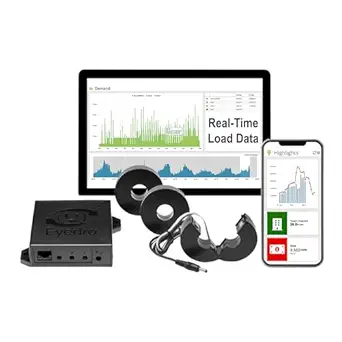 | Best for Non-Invasive, Detailed Power Data | Voltage options: 600V Delta, 480V/277V Wye, 208V/120V | Current range: 5A–6000A | Sensor type: Split-core current sensors | VIEW ON AMAZON | See Our Full Breakdown |
| Smart Home Energy Monitor with 16 50A Circuit Sensors, Real-Time Power & Cost Tracking, Compatible with Home Assistant |  | Best for Smart Home Integration and Privacy-Focused Monitoring | Sensors: 16 50A sensors | Supported voltages: Up to 240VAC single-phase, split-phase, three-phase | Connectivity: WiFi, MQTT, LAN | VIEW ON AMAZON | See Our Full Breakdown |
| Emporia Vue 3 Commercial 3-Phase Smart Energy Monitor |  | Best for Multi-Phase Systems & Renewable Energy Integration | Supported systems: Single phase, split phase, 3-wire, 3-phase | Sensor capacity: Supports systems less than 600A | Connectivity: WiFi | VIEW ON AMAZON | See Our Full Breakdown |
| Emporia Vue 3 Home Energy Monitor – Real-Time Electricity Usage and Solar Monitoring |  | Best Overall for Comprehensive Home Energy Monitoring | Certification: UL Listed | System Support: Single phase, 3-phase, Wye systems | Sensor Capacity: 16 branch sensors (50A each) | VIEW ON AMAZON | See Our Full Breakdown |
| Refoss Smart Home Energy Monitor with Open API, Home Assistant, No Cloud |  | Best for Local Control and Privacy-Conscious Users | Model: EM16P | Current Sensors: 2 main circuits (200A), 16 branch circuits (60A) | Connectivity: WiFi, Open API, MQTT | VIEW ON AMAZON | See Our Full Breakdown |
| WiFi Home Energy Monitor with 2 x 120A CTs and Power Tracking |  | Best for Precise Power Tracking and Solar System Management | Power Source: Battery Powered | Current Sensors: 2 main circuits (200A), 16 branch circuits (60A) | Connectivity: WiFi, Open API | VIEW ON AMAZON | See Our Full Breakdown |
| Smart WiFi Energy Monitor with 3 x 80A Clamp for Home Power Tracking |  | Best for Multi-Phase Power Monitoring and Remote Control | Clamp Sensors: 3 x 80A | Compatibility: Single-phase, split phase, 3-wire, 3-phase, 4-wire Wye | Connectivity: WiFi 2.4 GHz | VIEW ON AMAZON | See Our Full Breakdown |
| whole home energy monitor for electrical panel | Connectivity |
|---|---|
| Emporia Energy Monitor with 16 | — |
| Home Energy Monitor | WiFi, Ethernet |
| Meross Smart Home Energy Monit | WiFi, Open API |
| Home Energy Monitor for Home A | Wi-Fi, Ethernet |
| Eyedro Smart Home Energy Monit | — |
| Refoss Smart Home Energy Monit | Wi-Fi with external high-gain antenna |
| SIEMENS Inhab Smart Home Energ | — |
| Eyedro 3-Phase Energy Meter 20 | WiFi or Ethernet |
| Smart Home Energy Monitor with | WiFi, MQTT, LAN |
| Emporia Vue 3 Commercial 3-Pha | WiFi |
| Emporia Vue 3 Home Energy Moni | 2.4 GHz Wi-Fi |
| Refoss Smart Home Energy Monit | WiFi, Open API, MQTT |
| WiFi Home Energy Monitor with | WiFi, Open API |
| Smart WiFi Energy Monitor with | WiFi 2.4 GHz |
More Details on Our Top Picks
Emporia Energy Monitor with 16 Sensors and 4 Smart Plugs Bundle
This bundle stands out for its detailed monitoring capabilities, combining the Emporia Vue Energy Monitor with 16 sensors—more than many competitors like the Meross model—and four smart plugs for versatile device control. The system’s extensive sensor setup allows for granular data, making it ideal for users who want a full picture of their energy use across multiple circuits, including solar net metering. However, this complexity can be daunting for those unfamiliar with smart home integration, and setup may take some technical know-how. Compared to simpler monitors like the Eyedro WiFi/Ethernet, it offers richer insights but at the cost of increased configuration. This choice makes the most sense for homeowners seeking detailed, scalable monitoring with automation features, willing to invest time in setup.
Pros:- Provides highly detailed energy data for the entire home
- Includes smart plugs for remote control and automation
- Supports solar net metering for cost savings
- User-friendly app with automation features
Cons:- Requires significant initial setup and integration
- Potentially complex for users without smart home experience
Best for: Homeowners seeking a detailed, scalable energy monitoring system with automation capabilities and solar integration
Not ideal for: Users who prefer plug-and-play solutions without extensive setup or technical knowledge
- Sensors:16
- Smart Plugs:4
- Compatibility:iOS, Android, Alexa
- Features:Whole-home monitoring, real-time control, solar net metering
Our verdict“This system is ideal for tech-savvy homeowners who want deep insights and automation for their entire home energy use.”
Home Energy Monitor – Real Time Electricity Usage & AI-Powered Smart Home Energy Management
Compared with the Emporia bundle, this monitor emphasizes real-time data and detailed analysis through 10 circuit channels, making it well-suited for users who want to pinpoint specific energy hogs or optimize various home segments. Its compatibility with home automation systems like Home Assistant allows for extensive customization, but the installation can be complex, especially for those unfamiliar with electrical configurations. While it offers reliable data retention and safety certifications, the setup process may be intimidating for typical homeowners. This pick is best for those who desire granular, automated control over multiple circuits and are comfortable with technical installation.
Pros:- Supports real-time monitoring and detailed energy analysis
- Integrates seamlessly with home automation platforms like Home Assistant
- Supports multiple units for extensive coverage
- Reliable safety certifications ensure compliance
Cons:- Installation and configuration are complex
- Limited compatibility outside North America without adjustments
- No built-in display; relies on connected systems
Best for: Homeowners with technical skills who want detailed, automated control over multiple circuits
Not ideal for: Casual users or those seeking a simple, plug-and-play energy monitor
- Number of circuits:10
- Connectivity:WiFi, Ethernet
- Data retention:45 days for minute data, 36 months for summaries
- Supported systems:Single-phase, three-phase, North American split-phase
Our verdict“This monitor is perfect for tech-savvy homeowners aiming for detailed automation and circuit-specific insights.”
Meross Smart Home Energy Monitor
Compared to the more comprehensive Emporia system, the Meross monitor offers a straightforward approach with circuit-level monitoring and high accuracy, supporting up to 16 circuits and storing data locally for up to five years. Its compatibility with Home Assistant provides automation options similar to the Home Energy Monitor, but installation may require some electrical knowledge, and it is primarily designed for US systems. It’s an excellent choice for users who value privacy, local data storage, and precise energy insights without ongoing subscription costs. However, its setup can be challenging for non-technical users, and it lacks some of the automation flexibility of more integrated systems.
Pros:- Highly accurate real-time energy monitoring
- Supports circuit-level insights for detailed analysis
- Stores data locally without cloud subscriptions
- Integrates with Home Assistant for automation
Cons:- Installation can be technically demanding
- Limited to US electrical systems without modifications
- Customer reviews indicate some setup challenges
Best for: Homeowners who prioritize local data storage, high accuracy, and circuit-level insights
Not ideal for: Users seeking a simple plug-and-play monitor or those outside US electrical standards
- Max Main Circuits:200A
- Connectivity:WiFi, Open API
- Data Storage:Up to 5 years
- Supported Systems:Single-phase, split-phase, 3-phase
Our verdict“Ideal for users who want precise, local data and circuit-level insights with minimal ongoing costs.”
Home Energy Monitor for Home Assistant – Real-Time Electricity Usage and Power Monitoring
This monitor emphasizes seamless integration with Home Assistant, supporting up to 10 circuits per unit and scalability to 30 with multiple units—more than the Meross model’s capacity. Its support for solar, V2G, and BESS systems offers a comprehensive energy overview, ideal for users invested in advanced home energy systems. The lack of a built-in display shifts reliance to connected devices, which may be a drawback for those wanting quick, at-a-glance data. Compared with the Emporia system, it offers greater scalability and automation flexibility but requires a more technical setup process. This makes it suitable for energy enthusiasts with a home automation focus.
Pros:- Seamless integration with Home Assistant for real-time automation
- Supports solar, V2G, and BESS systems for comprehensive management
- Scalable to monitor up to 30 circuits with multiple units
- Ensures data privacy with local storage
Cons:- Requires technical setup and configuration
- No built-in display for quick data checks
- Limited to North American power systems without software adjustments
Best for: Tech-savvy homeowners with existing Home Assistant setups seeking scalable, integrated energy management
Not ideal for: Less technical users or those preferring standalone systems with minimal configuration
- Monitoring Circuits:Up to 10 per unit, scalable to 30
- Connectivity:Wi-Fi, Ethernet
- Supported Power Systems:Single-phase, three-phase
- Standards Compliance:FCC, CE, UL/IEC
Our verdict“Best suited for automation-focused homeowners who need scalable, integrated energy management within a smart home ecosystem.”
Eyedro Smart Home Energy Monitor 200A WiFi/Ethernet
Compared with the more feature-rich systems like Emporia or Meross, the Eyedro monitor offers a simple, straightforward approach that covers basic real-time energy insights for the whole home, including solar applications. Its compatibility with WiFi and Ethernet, along with included sensors, makes it flexible for various setups, but customer reviews suggest the experience can be mixed, with some users finding the setup less intuitive. It’s a good option for those who want basic monitoring without complex features, but it may require additional units for comprehensive net metering and can be less reliable in some environments. This pick is ideal for budget-conscious homeowners seeking essential energy data.
Pros:- Provides real-time energy insights via cloud
- Flexible setup with WiFi and Ethernet options
- Includes sensors for comprehensive monitoring
- Supports solar, grid, and net metering applications
Cons:- Customer ratings are mixed, indicating variable reliability
- Setup can be complex for some users
- Requires multiple units for detailed measurements like net metering
Best for: Homeowners seeking affordable, basic energy monitoring with solar compatibility
Not ideal for: Users wanting detailed circuit-level data or advanced automation
- Part Number:EYEDRO-HOME
- Item Weight:1.54 pounds
- Product Dimensions:8 x 8 x 3 inches
- Supports:Ethernet, solar, grid, net metering
Our verdict“Best suited for budget-minded homeowners who need basic, reliable energy monitoring, especially for solar applications.”
Refoss Smart Home Energy Monitor with 16 60A Circuit Sensors
The Refoss Smart Home Energy Monitor stands out for its ability to track energy across up to 18 circuits with high precision, making it ideal for detailed energy analysis. Compared to the Eyedro 3-Phase Energy Meter, it offers more circuits and supports multiple wiring configurations, which is perfect for complex systems. Its local control and data privacy are key advantages, especially for users wary of cloud dependence, though installation can be complex for those unfamiliar with electrical wiring. Its long-term data storage and open API make it flexible for integration and historical analysis. However, the absence of a built-in display means users must rely on the app, which could be inconvenient during troubleshooting or quick checks. This monitor makes the most sense for homeowners or small businesses wanting detailed, private, and flexible energy tracking with solar support.
Pros:- High-precision monitoring of up to 18 circuits
- Local control with no reliance on cloud data enhances privacy
- Supports solar energy optimization and smart automation
- Long-term data storage with export options
Cons:- Installation may require electrical wiring knowledge
- No built-in display; app is necessary for data viewing
- Requires Wi-Fi connection for operation
Best for: Homeowners with multiple circuits, solar setups, or those wanting detailed, private data access.
Not ideal for: Users seeking a plug-and-play solution with minimal wiring effort or no technical background.
- Number of circuits:18
- Sensor current:up to 60A (branch), up to 200A (main)
- System support:Single-phase, Split-phase, 3-phase 4-wire
- Data storage:5 years
- Warranty:2 years
- Connectivity:Wi-Fi with external high-gain antenna
Our verdict“This pick is best for homeowners or small businesses seeking detailed, flexible, and private whole-home energy monitoring with extensive circuit coverage.”
SIEMENS Inhab Smart Home Energy Monitor with Circuit Sensors
The SIEMENS Inhab Smart Home Energy Monitor is designed for users who want real-time energy data via a mobile app, making it ideal for quick insights and alerts. Unlike the Refoss Monitor, which offers extensive circuit coverage, the SIEMENS model supports 16-50A circuit sensors and is straightforward to install in existing electrical panels. Its emphasis on mobile notifications and personalized alerts makes it suitable for users who prefer monitoring on-the-go, though it is limited to the US and Canada, restricting international users. Professional installation may be necessary, especially for complex panels, which could be a hurdle for DIY enthusiasts. This device is perfect for homeowners who prioritize ease of use and instant alerts over detailed data logging or extensive circuit coverage.
Pros:- Real-time energy monitoring via mobile app
- Supports personalized alerts and abnormal activity notifications
- Easy to install in existing electrical panels
- Compatible with USA and Canada electrical standards
Cons:- Limited to North American electrical systems
- Installation may require professional help
- Less comprehensive circuit coverage compared to multi-sensor systems
Best for: Homeowners who want real-time energy updates and personalized alerts via their smartphone.
Not ideal for: International users outside North America or those seeking highly detailed long-term data storage.
- Circuit level sensors:16-50 Amp
- Main sensors:2-200 Amp
- Compatibility:USA and Canada
- Standards:CE marked, UL Listed
Our verdict“This monitor suits homeowners who want instant, mobile access to energy data and alerts without complex setup or extensive circuit coverage.”
Eyedro 3-Phase Energy Meter 200A/600V WiFi/Ethernet
The Eyedro 3-Phase Energy Meter offers detailed real-time data for systems supporting three-phase setups, making it ideal for small commercial or residential applications with complex power needs. Compared with the Refoss Monitor, it emphasizes non-invasive installation using split-core sensors, which is a significant advantage for those wary of shutting down power or doing extensive wiring. Its support for solar and net metering makes it suitable for renewable energy users, with the added benefit of no subscription fee for cloud reports. However, its setup process involves cloud account registration, which might be inconvenient for privacy-conscious users, and compatibility issues could arise with non-standard electrical systems. This device is best for users needing detailed, non-intrusive monitoring of three-phase systems with renewable energy integration.
Pros:- Supports real-time energy data with detailed graphs
- Non-invasive split-core sensors simplify installation
- Supports solar and net metering differentiation
- No subscription fee for cloud data and reports
Cons:- Requires cloud account setup, raising privacy concerns
- European adapters sold separately for international users
- Limited compatibility with older or non-standard electrical systems
Best for: Small businesses or homeowners with three-phase systems and solar panels who prefer non-invasive installation.
Not ideal for: Users seeking a simple, plug-and-play device or those without stable internet for cloud setup.
- Voltage options:600V Delta, 480V/277V Wye, 208V/120V
- Current range:5A–6000A
- Sensor type:Split-core current sensors
- Connectivity:WiFi or Ethernet
- Power adapter:6VAC North American
- Dimensions:10 x 7 x 3 inches
Our verdict“This monitor is ideal for users who need detailed, non-intrusive three-phase energy data with renewable energy features, accepting some setup complexity.”
Smart Home Energy Monitor with 16 50A Circuit Sensors, Real-Time Power & Cost Tracking, Compatible with Home Assistant
This Energy Monitor excels for users wanting local, private data access coupled with smart home compatibility. Its support for MQTT and LAN makes it highly customizable for tech-savvy homeowners or small commercial setups, especially those prioritizing privacy over cloud reliance. Compared with the Refoss Monitor, which offers broader circuit coverage, this device’s emphasis on local data and integration with Home Assistant makes it ideal for privacy-conscious users. Its limited measurement accuracy of 1% may be a concern for those needing highly precise data, but it is sufficient for general energy management. Its straightforward installation in most panels is a plus, though setup complexity might deter non-technical users. This pick is best for those who want detailed local control and smart home integration without sacrificing privacy.
Pros:- Supports multiple circuits with comprehensive monitoring
- Local data access via MQTT and LAN enhances privacy
- Compatible with Home Assistant and other smart home platforms
- Easy installation in most circuit panels
Cons:- Requires technical knowledge for MQTT and LAN setup
- Limited measurement accuracy (1%) compared to industrial-grade monitors
- No dedicated mobile app for quick view
Best for: Tech-savvy homeowners or small-scale commercial users who prioritize local data access and smart home integration.
Not ideal for: Users unfamiliar with MQTT or LAN setup or those requiring high measurement precision for billing purposes.
- Sensors:16 50A sensors
- Supported voltages:Up to 240VAC single-phase, split-phase, three-phase
- Connectivity:WiFi, MQTT, LAN
- Warranty:1 year
- Dimensions:3.1 x 1.2 x 4.18 inches
Our verdict“This monitor is perfect for privacy-minded, smart home-integrated users comfortable with technical setup and seeking local control.”
Emporia Vue 3 Commercial 3-Phase Smart Energy Monitor
The Emporia Vue 3 is designed for versatile energy management, supporting single-phase and three-phase systems up to 600A, making it suitable for both residential and small commercial needs. Compared with the Refoss Monitor, it offers greater flexibility in system types and the ability to add up to 8 sensors for detailed load analysis. Its real-time data and automation support via app make it a strong choice for users with complex electrical setups or those managing solar and net metering. The need for WiFi and additional sensors for larger systems could be a barrier for some, while its data retention limits might be a concern for long-term analysis. This device fits best for users with varied or three-phase systems requiring detailed, real-time monitoring and automation capabilities.
Pros:- Supports a wide range of electrical systems including 3-phase and split-phase
- Provides high-accuracy, real-time energy data
- Allows automation and detailed management via app
- Supports solar and net metering for renewable tracking
Cons:- Requires WiFi connection for real-time data access
- Additional sensors are sold separately, increasing overall cost
- Limited data retention without active app use
Best for: Small businesses or homeowners with multi-phase setups needing detailed, real-time energy data and renewable energy integration.
Not ideal for: Users who prefer simple, single-phase monitoring or do not want to invest in additional sensors or rely on WiFi for data.
- Supported systems:Single phase, split phase, 3-wire, 3-phase
- Sensor capacity:Supports systems less than 600A
- Connectivity:WiFi
- Sensor count:Includes 8, up to 8 additional
- Certifications:UL, CE
Our verdict“This monitor is well-suited for users with complex electrical systems seeking detailed, real-time data with renewable energy support and automation capabilities.”
Emporia Vue 3 Home Energy Monitor – Real-Time Electricity Usage and Solar Monitoring
The Emporia Vue 3 stands out for its broad support of various electrical systems and its certified safety, making it a versatile choice for most homes. Compared with the Refoss Smart Home Energy Monitor, it offers more detailed reporting and automation options, though it relies on 2.4 GHz Wi-Fi and some data features require the app to be open, which may limit continuous real-time monitoring. Its 16 branch sensors provide extensive circuit coverage, ideal for users wanting thorough insight into their entire home. The setup is straightforward for typical panel configurations, but advanced users should note that three-phase systems with earthed neutrals need additional sensors. This monitor suits homeowners seeking reliable, all-in-one energy management with solar support, willing to accept slightly higher complexity and cost.
Pros:- UL-certified for safety and reliability
- Supports solar and net metering monitoring
- Real-time data with automation options
- Easy installation in most panels
Cons:- Requires 2.4 GHz Wi-Fi for full features
- Some data features only active when app is open
- Additional sensors needed for certain three-phase systems
Best for: Homeowners who want a reliable, UL-certified system with broad system support and solar integration.
Not ideal for: Users with complex three-phase systems requiring neutral monitoring or those seeking continuous real-time data without app limitations.
- Certification:UL Listed
- System Support:Single phase, 3-phase, Wye systems
- Sensor Capacity:16 branch sensors (50A each)
- Connectivity:2.4 GHz Wi-Fi
- Data Retention:Minute data 7 days, hourly indefinite
- Warranty:1 year
Our verdict“This pick is ideal for homeowners seeking a comprehensive, certified energy monitor with solar tracking and automation capabilities.”
Refoss Smart Home Energy Monitor with Open API, Home Assistant, No Cloud
The Refoss EM16P offers a compelling solution for tech-savvy homeowners who prioritize data privacy and local automation, with no reliance on cloud services. Unlike the WiFi Home Energy Monitor, which provides straightforward app-based monitoring, the Refoss integrates seamlessly with Home Assistant and OpenClaw AI, enabling AI-driven automation and peak management. Its ±1% accuracy across multiple circuits makes it suitable for detailed energy optimization, especially in solar homes. Installation is simple with clamp-on sensors, but setup and integration may challenge less technical users, especially given some reports of initial configuration issues. This monitor appeals to those who want maximum control over their data and automation, with a focus on solar energy maximization.
Pros:- Supports local control with no cloud dependency
- Seamless integration with Home Assistant
- High accuracy ±1% across circuits
- Easy clamp-on installation
Cons:- Requires technical knowledge for setup
- Limited current range for very high power systems
- Some users report installation challenges
Best for: DIY enthusiasts and solar homeowners looking for a local, cloud-free energy monitoring and automation solution.
Not ideal for: Users without technical experience or those seeking plug-and-play setup without extensive configuration.
- Model:EM16P
- Current Sensors:2 main circuits (200A), 16 branch circuits (60A)
- Connectivity:WiFi, Open API, MQTT
- Accuracy:±1%” at specified ranges
- Data Storage:Up to 5 years
- Certifications:ETL, UL 61010
- Warranty:2 years
Our verdict“This monitor fits well for experienced users wanting privacy-focused, customizable energy management integrated with home automation systems.”
WiFi Home Energy Monitor with 2 x 120A CTs and Power Tracking
The WiFi Home Energy Monitor offers accurate, real-time tracking of energy flow, especially suitable for homes with solar panels, thanks to its bi-directional power measurement. Compared with the Smart WiFi Energy Monitor with clamp sensors, this model provides more detailed voltage and current data, making it ideal for users who want to monitor both consumption and generation precisely. Its plug-and-play setup with split-core CTs makes installation straightforward, but it relies heavily on WiFi and a smartphone app, which might limit continuous monitoring if connectivity issues arise. This monitor is best suited for energy-conscious homeowners who need detailed insights into their solar and grid interaction, but it may not be the best fit for those seeking a battery-powered, off-grid solution.
Pros:- Accurate energy measurement with configurable reports
- Supports bi-directional power flow for solar & grid
- Easy installation with split-core CTs
- Compatible with smart home automation
Cons:- Dependent on WiFi and smartphone app
- Limited info on warranty and support
- Requires connection to WiFi for full functionality
Best for: Homeowners with solar systems who want accurate, real-time power flow monitoring and power tracking.
Not ideal for: Users without stable WiFi or those preferring battery-powered, standalone monitors without app dependency.
- Power Source:Battery Powered
- Current Sensors:2 main circuits (200A), 16 branch circuits (60A)
- Connectivity:WiFi, Open API
- Accuracy:±1%” at specified current ranges
- Data Storage:Up to 5 years
- Certifications:ETL, UL 61010
- Warranty:2 years
Our verdict“This monitor excels for solar homeowners who need detailed, real-time power tracking integrated with smart home systems.”
Smart WiFi Energy Monitor with 3 x 80A Clamp for Home Power Tracking
The Smart WiFi Energy Monitor with three 80A clamps offers flexible, accurate monitoring across various wiring configurations, making it suitable for both single and multi-phase systems. Unlike the WiFi Home Energy Monitor or the Refoss EM16P, its three clamp sensors allow detailed circuit-level insights, particularly in multi-wire or three-phase setups. Its compatibility with the ‘SmartLife’ app makes remote monitoring and control straightforward, but installation should be performed by qualified personnel to ensure safety. Its ±2% accuracy is sufficient for most domestic uses, though it’s slightly less precise than higher-end models. This product is best suited for users needing multi-phase coverage and remote control, especially in more complex wiring environments.
Pros:- Provides real-time, multi-phase power monitoring
- Supports bidirectional measurement and remote control
- Easy to install with clamp sensors
- Compatible with popular smart home apps
Cons:- Installation should be performed by qualified personnel
- Requires 2.4 GHz WiFi network
- Safety precautions needed during setup
Best for: Homeowners with multi-wire or three-phase systems requiring detailed, remote power tracking and control.
Not ideal for: Users with simple single-phase homes or those who prefer plug-and-play solutions without professional installation.
- Clamp Sensors:3 x 80A
- Compatibility:Single-phase, split phase, 3-wire, 3-phase, 4-wire Wye
- Connectivity:WiFi 2.4 GHz
- Accuracy:±2%
- App:SmartLife
- Support:Remote monitoring and control
Our verdict“This monitor is ideal for users needing detailed multi-phase power tracking with remote access and control capabilities.”

How We Picked
Products were evaluated based on several critical criteria: measurement accuracy, ease of installation, sensor coverage, smart home integration, and build quality. We prioritized models that provide comprehensive data for entire electrical panels and balanced functionality with user-friendliness. Devices with flexible connectivity options such as WiFi, Ethernet, or open APIs scored higher, as they offer better integration potential. Cost was also considered, but a higher price was justified when it delivered more extensive sensor arrays or advanced features. The ranking reflects a combination of these factors, emphasizing value, reliability, and versatility for different user needs.Factors to Consider When Choosing Whole Home Energy Monitor For Electrical Panel
Choosing the right whole home energy monitor involves understanding several key factors beyond just the brand. It’s important to consider your home’s size, the complexity of your electrical system, and what you want to achieve—whether that’s basic monitoring or advanced energy management. This guide covers the main aspects to keep in mind to make an informed purchase that meets your specific needs.Sensor Coverage and Compatibility
Ensure the monitor supports enough sensors to cover your entire electrical panel. Larger homes or complex systems might require models with multiple sensors and circuit-specific monitoring. Compatibility with your panel type (single-phase or three-phase) is also critical; not all monitors support every configuration. Skipping this check can lead to incomplete data or installation issues, ultimately limiting the device’s usefulness.
Connectivity and Integration
Look for monitors that offer reliable connectivity options like WiFi or Ethernet, especially if you want real-time data accessible via smartphone or integration with smart home platforms. Devices with open APIs or compatibility with systems like Home Assistant provide more customization and automation options. Beware of models that rely solely on cloud services, which can introduce latency or privacy concerns.
Sensor Quantity and Placement
The number of sensors directly impacts how accurately you can monitor individual circuits and overall energy use. More sensors generally mean better coverage but can also increase complexity and cost. Proper placement of sensors is crucial for accurate readings; incorrect positioning can lead to misleading data and poor decision-making. Consider whether the device allows for easy sensor expansion or replacement.
Ease of Installation and Use
Installation complexity varies widely; some models are plug-and-play, while others require electrical expertise. Think about your comfort level with electrical work or whether professional installation is worth the investment. User interface and app usability also matter—intuitive dashboards and clear data presentation can make ongoing monitoring more effective and less frustrating.
Cost and Long-Term Value
While budget options are appealing, they may lack coverage or advanced features. Conversely, premium models with extensive sensors and automation capabilities tend to cost more upfront but can offer better long-term savings through detailed insights and optimization. Consider your budget, but also weigh the potential return on investment from improved energy efficiency and system management.
Frequently Asked Questions
Can I install a whole home energy monitor myself?
Many models are designed for DIY installation, especially those with plug-and-play sensors or simple clamp-on features. However, installing sensors on the main electrical panel may require electrical knowledge and adherence to safety standards. If you’re unsure about handling electrical wiring, hiring a licensed electrician can prevent errors and ensure compliance with local codes.
Will a whole home energy monitor work with my existing smart home system?
Compatibility varies among models; many monitors support popular platforms like Google Home, Alexa, or Apple HomeKit, but some may require additional hubs or integrations. Before purchasing, verify that the monitor’s app and API support your preferred ecosystem. Proper integration can enable automation and more detailed insights, making your system more effective.
How accurate are these energy monitors in real-world use?
Most quality monitors provide measurements within a few percentage points of actual energy use, but accuracy depends on sensor placement, calibration, and system complexity. Larger or more complex electrical setups might introduce variability, so it’s wise to choose a model known for reliability and to follow installation instructions carefully. Regular calibration or updates can further improve measurement accuracy.
Are there privacy concerns with WiFi or cloud-connected monitors?
Devices that rely on cloud services can raise privacy considerations, as they transmit your energy data over the internet. Look for models that offer local data storage or open API access if privacy is a priority. Reading the manufacturer’s privacy policy and understanding data sharing practices can help you make an informed choice about security and data control.
What features should I prioritize if I want to reduce energy costs?
Focus on monitors with real-time data, detailed circuit-level insights, and automation capabilities. Features like AI-powered suggestions, integration with smart thermostats, or solar monitoring can help identify energy hogs and optimize usage. Although more expensive, these advanced features can lead to significant savings over time by enabling proactive management of your energy consumption.
Conclusion
For general homeowners seeking reliable, easy-to-install monitoring, the Emporia Energy Monitor with 16 Sensors offers a balanced mix of coverage and usability. Budget-conscious buyers might prefer the Meross Smart Home Energy Monitor for basic needs, while tech enthusiasts or large property owners should consider models like the Emporia Vue 3 Commercial or Home Energy Monitor with AI features for advanced integration. Beginners will benefit from plug-and-play options, whereas those with complex systems or energy goals should look for monitors with extensive sensors and open APIs. Overall, matching your home’s size, system complexity, and energy goals will guide you to the best choice.