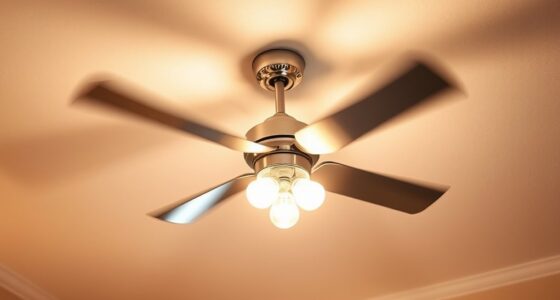
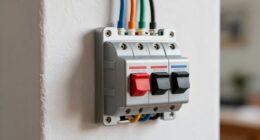
When installing a ceiling fan, turn off the power at the circuit breaker and double-check all wiring connections to prevent hazards like shorts or sparks. Secure the fan’s mounting bracket firmly to a ceiling joist or reinforced box, and always follow manufacturer instructions carefully. Use the right tools, and test the fan at different speeds to guarantee safe, proper operation. For more detailed safety tips, continue exploring to ensure your installation is secure and reliable.
Key Takeaways
- Turn off power at the circuit breaker before beginning installation to prevent electrical shock.
- Secure the mounting bracket to a sturdy ceiling joist or reinforced electrical box for stability.
- Double-check all wiring connections, ensuring they are tight, properly insulated, and correctly matched.
- Use the appropriate tools and follow manufacturer instructions to avoid improper installation or damage.
- Test the fan at different speeds after installation to ensure safe operation and identify any wobbling or noise.
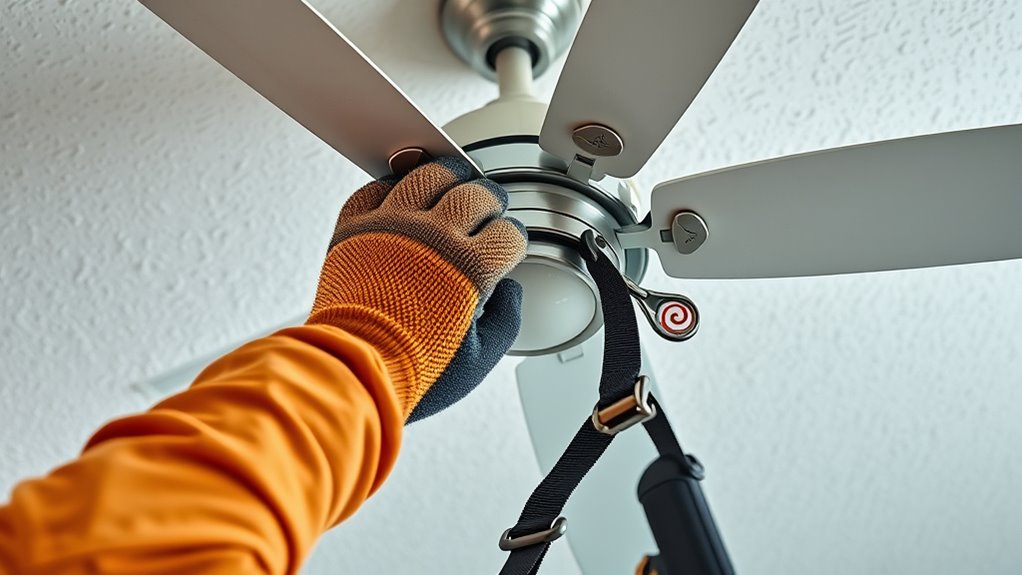
Installing a ceiling fan can be a great way to improve your home’s comfort and energy efficiency, but it’s essential to prioritize safety throughout the process. One of the most critical aspects is understanding the electrical wiring involved. Before you start, turn off the power at the circuit breaker to prevent any risk of electrical shock. Carefully examine the existing wiring in your ceiling box—look for any frayed wires or loose connections. If you’re unsure about the wiring setup, consult a professional to ensure everything is up to code. Proper electrical wiring is vital for safe operation and to avoid potential hazards like short circuits or electrical fires. Additionally, choosing a fan with a suitable energy-efficient design can help reduce your overall energy consumption and heating costs.
Always turn off power and check wiring carefully before installing a ceiling fan for safety.
Next, consider the different ceiling fan styles available. Whether you prefer traditional, modern, or rustic designs, choosing the right style guarantees your fan complements your home’s decor. Once you’ve selected your fan, check that the mounting hardware and electrical components are compatible with your ceiling structure. Many fans come with adaptable mounting options, but if your ceiling isn’t standard, you might need additional brackets or supports. Making sure your fan’s style matches your space doesn’t just enhance aesthetics—it also makes installation smoother and safer, as you won’t be forced to improvise with incompatible parts.
When it comes to installing the fan itself, pay close attention to the mounting bracket and the fan’s weight. Securely attaching the bracket to a sturdy ceiling joist or a reinforced electrical box is crucial to prevent wobbling or falling. Use the right tools and follow the manufacturer’s instructions precisely. During wiring connections, match the wires carefully: typically, black or red wires are hot, white wires are neutral, and green or copper wires are ground. Use wire nuts and electrical tape to secure connections, ensuring they’re tight and insulated. This reduces the risk of shorts or sparks once the fan is operational.
Finally, double-check all connections and mounting points before restoring power. Test the fan’s operation at different speeds to make sure it’s balanced and functioning correctly. If you notice any wobbling or unusual noises, turn off the power and re-inspect your wiring and mounting hardware. Remember, safety should always come first. If you’re uncomfortable with handling electrical wiring or unsure about any step, don’t hesitate to call in a licensed electrician. Proper installation not only keeps you safe but also guarantees your ceiling fan operates efficiently and lasts for years to come.
Frequently Asked Questions
Do I Need a Permit to Install a Ceiling Fan?
You might need a permit to install a ceiling fan, especially if you’re working with electrical wiring or changing the ceiling fan placement. Check your local building codes, as permits are often required for electrical work to make certain safety standards are met. If you’re unsure, contact your city’s building department. Getting the proper permits helps prevent future issues and ensures your installation complies with all safety regulations.
Can I Install a Ceiling Fan Myself Without Electrical Experience?
You can try installing a ceiling fan yourself, but without electrical experience, it’s risky. Imagine working with live wires, sparks flying, and a shaky ladder—dangerous scenarios that threaten your safety. Proper electrical safety and secure mounting techniques are essential. If you’re unsure about handling wiring or mounting, it’s best to call a professional. Your safety and the fan’s stability depend on correct installation, so don’t take unnecessary risks.
What Tools Are Essential for Safe Installation?
You’ll need essential tools like a drill, screwdriver, and a voltage tester to install your ceiling fan safely. Power tools make the job easier, but always use safety gear such as gloves and goggles to safeguard yourself. Make sure to turn off the power at the circuit breaker before starting. Having these tools and safety equipment on hand helps ensure a secure and safe installation process.
How High Should the Ceiling Fan Be Installed?
Imagine your ceiling fan as a gentle breeze dancing in the sky. To keep it safe and effective, install it at least 7 feet above the floor for standard ceilings or about 10-12 inches below the ceiling height for higher ones. Make certain proper fan clearance from walls and furniture, so the breeze flows freely without obstruction. Proper height not only enhances safety but also maximizes cooling efficiency.
What Safety Precautions Should I Take During Installation?
When installing a ceiling fan, prioritize electrical safety by turning off the power at the breaker and using insulated tools. Confirm ladder stability by placing it on a flat, secure surface and avoiding overreaching. Wear safety goggles and gloves to protect yourself from debris and electrical hazards. Double-check all connections before turning the power back on. These precautions help prevent accidents and ensure a safe, successful installation.
Conclusion
By following these safety tips, you’ll guarantee your ceiling fan installation is as smooth as a breeze on a summer day. Remember, a single mistake can turn your project into a towering challenge, but with caution and proper tools, you’ll avoid any mishaps. Prioritize safety, double-check your work, and don’t rush—your well-installed fan will keep you cool for years to come, proving that careful preparation is your best tool against disaster.