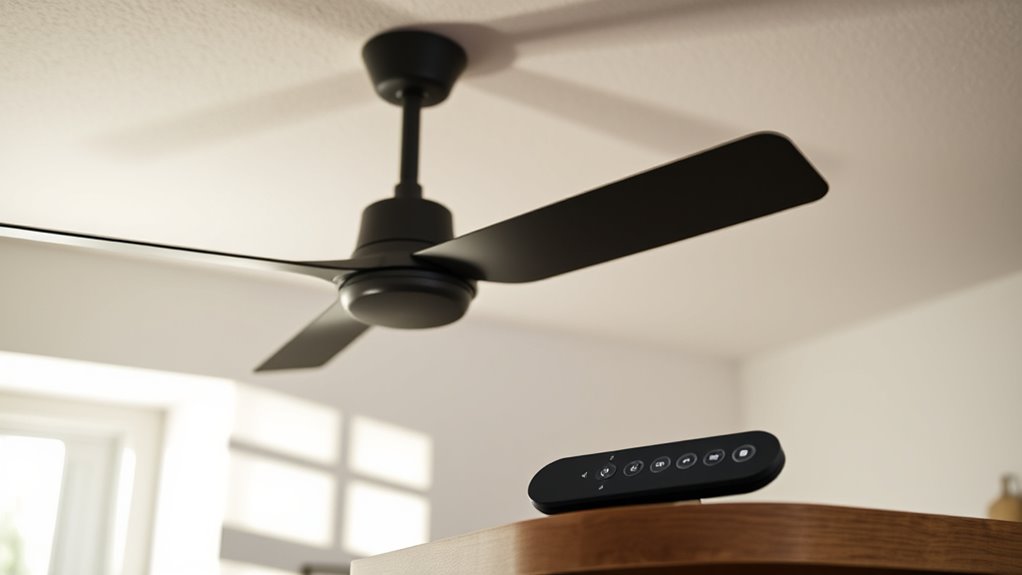

Choosing between remote and wall controls for your ceiling fan depends on your priorities. If you want convenience and the ability to operate from anywhere in the room or high, hard-to-reach places, a remote control is ideal. However, if energy efficiency and simple, instant access at the entrance matter most, a wall switch is better. To discover which option suits your space and needs best, keep exploring the details that follow.
Key Takeaways
- Wall switches provide immediate, physical control and complete power shutdown, enhancing energy efficiency.
- Remote controls offer convenience by allowing operation from anywhere in the room and easy speed adjustments.
- Wall switches are simple to install and require no batteries, while remotes may need periodic battery replacements.
- Remote controls are ideal for high or hard-to-reach fans and enable advanced features like timers.
- The choice depends on whether energy savings or remote convenience better suits your lifestyle and room setup.

When choosing how to control your ceiling fan, you often have two main options: remote controls or wall switches. Each offers distinct advantages that can influence your comfort and energy use. If you’re aiming for maximum energy efficiency, a wall switch can be a smart choice. Turning the fan off at the wall switch completely disconnects power, preventing unnecessary energy consumption. This is especially useful if your fan has a built-in light kit, as leaving the fan on but the light off can still draw power. Conversely, some modern remote-controlled fans include energy-saving features, like timers or smart settings, that help you manage energy use more precisely. So, if you prefer to *contemplate* your energy consumption, a remote with these capabilities can be beneficial.
User convenience plays a big role in your decision. Remote controls allow you to operate your fan from anywhere in the room, giving you easy access to speed adjustments, timers, or light controls without having to get up. This is especially handy if your ceiling fan is installed in a high or hard-to-reach place. You can turn the fan on or off, change speeds, and even control the light from your couch or bed. Wall switches, on the other hand, are straightforward and familiar; they provide instant control at the room entrance, which can be more intuitive for some users. However, if you prefer to change settings frequently or from different parts of the room, remote controls tend to be more convenient. Additionally, energy efficiency can be improved with remote controls that include timers or programmable settings, helping you reduce unnecessary power use.
Remote controls offer easy, room-wide operation, ideal for high or hard-to-reach ceiling fans.
Another aspect to consider is installation and compatibility. Wall switches are simple to install, often just replacing your existing switch, and don’t require batteries. They’re reliable and straightforward. Remote controls might need batteries replaced periodically, but they offer added flexibility, especially if you have multiple fans or want to control them from different locations. Some remote controls also come with wall-mounted holders, giving you a hybrid solution that combines convenience with a tidy appearance.
Ultimately, your choice depends on what’s more important to you—energy efficiency or user convenience. If you want to minimize power waste and prefer a simple setup, a wall switch might be the way to go. But if you prioritize easy, remote operation and the ability to control your fan from anywhere, then a remote control system will serve you better. Both options have their strengths, so think about your lifestyle and room layout to decide which suits you best.
Amazon Product B0B93SW5V9
As an affiliate, we earn on qualifying purchases.
Frequently Asked Questions
Can I Upgrade My Existing Ceiling Fan With a Remote or Wall Control?
Yes, you can upgrade your existing ceiling fan with a remote or wall control, provided it’s compatible. Check the remote compatibility with your fan model and verify proper wall control wiring is available. Installing a remote is usually straightforward if your fan has a receiver, but for wall controls, you might need to access wiring behind the switch. Always turn off power before starting, and consult installation instructions or a professional if needed.
Are Remote Controls Compatible With All Ceiling Fan Models?
Remote controls aren’t universally compatible with all fan models, so you need to check fan model compatibility first. Many remote controls offer universal compatibility, meaning they work with various brands and models, but some are designed for specific fans only. To guarantee proper function, verify your fan’s specifications and choose a remote control that matches those details. This way, you avoid compatibility issues and enjoy seamless operation.
Do Wall Controls Require Wiring or Professional Installation?
You might wonder if wall controls need wiring or professional installation. Generally, they do require wiring to connect to your fan’s wiring system, ensuring reliable wireless compatibility. While some models are designed for easy installation, most wall controls involve electrical work that’s best handled by a professional. This guarantees safety and proper functionality, especially if you’re not familiar with electrical wiring. Always check your fan’s specifications before starting installation.
Which Option Offers Better Energy Efficiency?
Remote controls generally offer better energy efficiency because they allow you to easily turn the fan off when not needed, reducing unnecessary energy consumption. With a remote, you can quickly adjust settings for ideal power savings, especially if you forget to turn off the fan manually. Wall controls also save energy but may lack the convenience to make quick adjustments, so the remote gives you more control over your power consumption.
How Do I Troubleshoot a Malfunctioning Remote or Wall Control?
If your remote or wall control malfunctions, start by checking for remote signal interference, like electronic devices or obstructions blocking the signal. Replace the batteries if the remote isn’t responding, as low power can cause issues. Confirm the wall control is properly connected and powered. Reset the system if needed, and consult the manufacturer’s instructions for specific troubleshooting steps to resolve common problems effectively.
Amazon Product B00HD0ELFK
As an affiliate, we earn on qualifying purchases.
Conclusion
As you weigh your options, imagine walking into a room where the ceiling fan responds effortlessly—either at your fingertips or with a simple switch on the wall. Will the convenience of remote control sway you, or does the classic feel of wall controls hold more appeal? The decision isn’t just about ease—it’s about how you want your space to feel. Whichever you choose, one thing’s certain: your perfect breeze is just a switch away.
Amazon Product B00A2JBMRE
As an affiliate, we earn on qualifying purchases.
Amazon Product B0865VQMH8
As an affiliate, we earn on qualifying purchases.