
Outdoor-rated fans are built with weatherproof materials, sealed motors, and sturdy mounting options, making them ideal for moisture, dust, and temperature swings. Indoor fans lack this durability and are designed for controlled environments, so they can fail quickly if exposed outside. Understanding these differences helps guarantee you pick the right fan for your space. Keep exploring to find out how ratings and specific features affect their performance and longevity.
Key Takeaways
- Outdoor-rated fans are made with corrosion-resistant materials and sealed motors for weather exposure, unlike indoor fans designed for controlled environments.
- They deliver higher airflow (CFM) to efficiently ventilate large outdoor spaces, whereas indoor fans have lower ratings suited for confined areas.
- Outdoor fans feature specialized mounting options and weatherproof wiring, while indoor fans have simpler installation for interior use.
- Designed to withstand humidity, rain, and temperature fluctuations, outdoor fans ensure durability in harsh conditions; indoor fans are not suited for such environments.
- Using the correct fan type ensures optimal performance and longevity, with outdoor fans rated for environmental stresses and indoor fans for climate-controlled spaces.
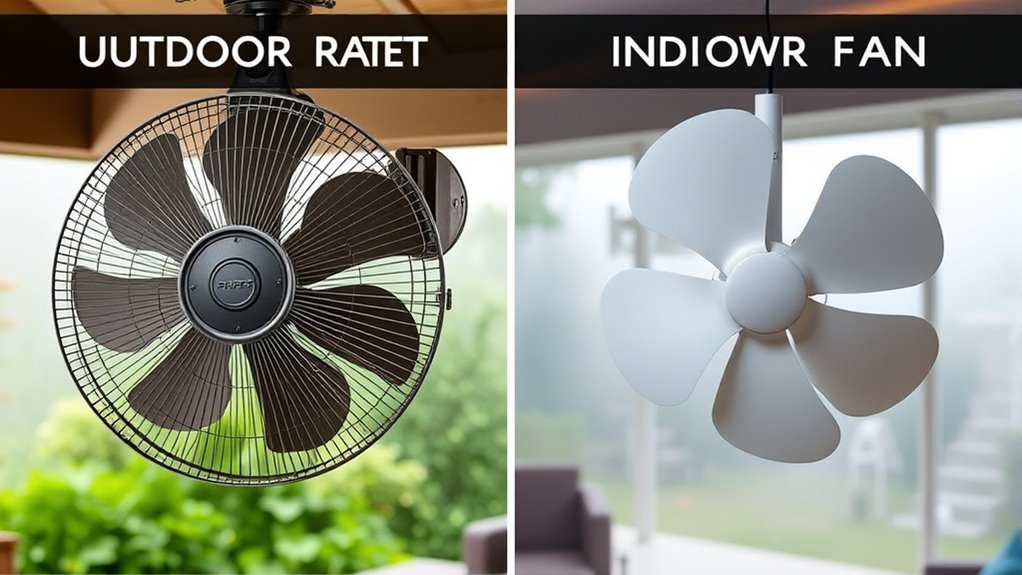
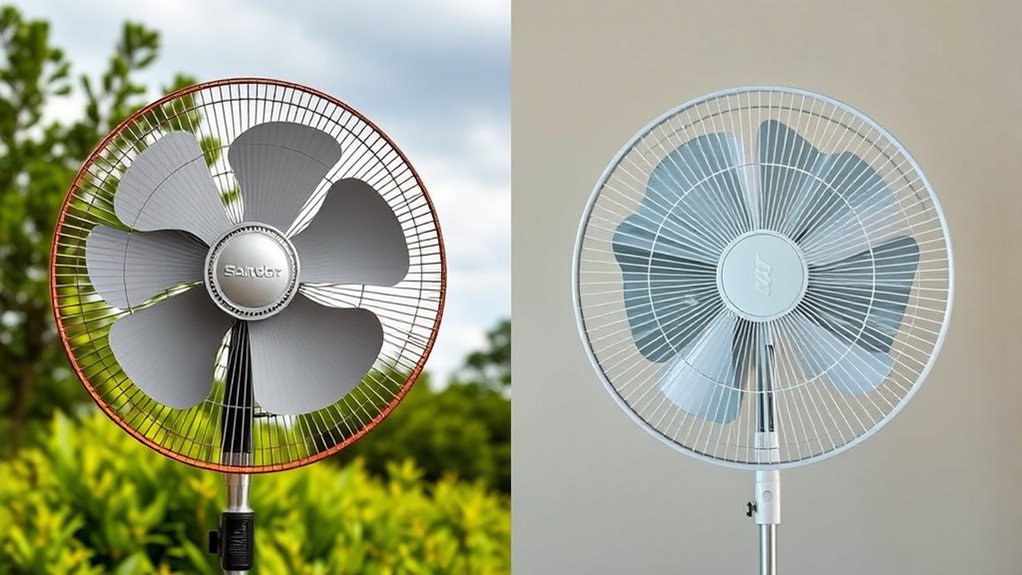
When choosing a fan for your space, understanding the differences between outdoor-rated fans and indoor fans is essential. The key factors to consider include ventilation efficiency, durability, and installation requirements. Outdoor-rated fans are specifically designed to handle the elements, meaning they often feature corrosion-resistant materials and sealed motors that prevent moisture and debris from damaging internal components. This durability ensures that your fan maintains ideal ventilation efficiency even when exposed to humidity, rain, or dust. In contrast, indoor fans are built for controlled environments, without the need for weatherproofing, making them less suitable for outdoor use. If you install an indoor fan outside, it might fail prematurely due to exposure to moisture or temperature fluctuations, which can compromise ventilation efficiency and lead to costly repairs. Proper understanding of city dynamics and environment considerations can help in selecting the appropriate fan for your needs. Ventilation efficiency is a major consideration, especially if you’re aiming to improve airflow in an outdoor space like a patio or pergola. Outdoor-rated fans are engineered with blades and motors optimized for larger, open areas, providing stronger airflow that effectively circulates air and reduces humidity. These fans often have higher airflow ratings, measured in cubic feet per minute (CFM), to cover wide spaces effectively. Indoor fans, while effective in confined or enclosed areas, usually have lower CFM ratings and are not designed to move large volumes of air outdoors. Using an indoor fan outdoors can result in subpar ventilation, leaving your space stuffy or humid. Installation requirements also differ markedly between the two types of fans. Outdoor-rated fans typically come with mounting options suited for exterior walls, ceilings, or posts, and their installation often involves additional considerations like weatherproof wiring and sealed electrical components. You might need to ensure proper grounding and use outdoor-rated electrical boxes to prevent corrosion or electrical hazards. Indoor fans generally have simpler installation processes, requiring fewer safety precautions related to exposure to the elements. If you try to retrofit an indoor fan outdoors, you risk electrical issues or early failure because it isn’t built to withstand environmental stresses. Ultimately, selecting the right fan depends on where you plan to install it and what you need it to accomplish. Outdoor-rated fans are built to handle the challenges of outdoor environments while delivering high ventilation efficiency. Indoor fans excel in enclosed, climate-controlled spaces but aren’t suitable for outdoor use. Paying attention to these differences, especially regarding ventilation efficiency and installation requirements, ensures you choose a fan that performs well and lasts longer in its intended setting.
Frequently Asked Questions
Can Outdoor Fans Be Used Indoors Safely?
Yes, outdoor fans can be used indoors, but you should be cautious. These fans are designed with weather resistance and corrosion resistance to withstand harsh outdoor conditions. Using them indoors is safe because they won’t pose electrical or safety risks if installed properly. However, keep in mind that outdoor fans may be noisier and less aesthetically suited for interior spaces. Verify they meet your indoor needs before installation.
What Maintenance Differences Exist Between Outdoor and Indoor Fans?
You need to maintain outdoor fans more carefully than indoor fans due to corrosion resistance and dust accumulation. Regularly clean outdoor fans to prevent dust buildup and check for rust or corrosion, especially on blades and motor components. Indoor fans require less frequent maintenance and are less exposed to elements. Proper upkeep guarantees both types run efficiently, but outdoor fans demand more attention to withstand weather conditions and sustain longevity.
Are Outdoor Fans Energy-Efficient Compared to Indoor Fans?
Outdoor fans are generally more energy-efficient than indoor fans because they often have higher efficiency ratings designed for harsher environments. Their robust motors and weatherproof components reduce energy consumption while maintaining strong airflow. You’ll notice that outdoor-rated fans use less power for the same level of airflow, making them a smart choice for energy savings. Just guarantee you choose models with high efficiency ratings to maximize energy efficiency.
How Long Do Outdoor-Rated Fans Typically Last?
Outdoor-rated fans typically last between 5 to 10 years, thanks to durability factors and weather resistance. Imagine a fan standing strong against rain, sun, and wind, maintaining its performance over time. Proper maintenance extends its life, but exposure to harsh elements can shorten it. You can expect a well-chosen outdoor fan to serve you reliably for several seasons, making it a smart investment for outdoor comfort.
Do Outdoor Fans Operate Quieter Than Indoor Fans?
Outdoor fans tend to operate louder than indoor fans because of their tougher build and larger fan blades, which can generate more noise. However, some outdoor fans feature advanced noise reduction technology and optimized blade designs to minimize sound levels. If quiet operation matters most, look for models with noise ratings and specific blade designs designed to reduce vibrations and noise, ensuring comfort whether you’re inside or outside.
Conclusion
Understanding the differences between outdoor-rated and indoor fans helps you choose the right one for your space. Did you know outdoor fans are typically designed to withstand humidity and weather, making them more durable? In fact, outdoor fans often last 2-3 times longer than indoor fans when exposed to the elements. By selecting the appropriate fan, you make certain of safety, efficiency, and longevity, keeping your space comfortable no matter the weather.