Integrating humidity sensors with fan systems allows you to automate airflow adjustments based on real-time data, maintaining ideal environmental conditions. Connect the sensors to your central control or smart system so fans can turn on or off automatically when humidity reaches certain levels. Proper placement and regular maintenance ensure accurate readings, while automation reduces manual effort. Keep exploring how you can fine-tune this integration to enhance your environmental control setup.

Get home appliances delivered free with Prime
- Fast, free delivery on millions of items
- Prime Video, Amazon Music and more included
- Member-only deals all year
Key Takeaways
- Connect humidity sensors to central control systems for real-time data monitoring and automated fan responses.
- Set threshold humidity levels to trigger fan activation or deactivation automatically.
- Calibrate sensors regularly to ensure accurate readings for reliable automation.
- Use data logging to analyze humidity trends and optimize fan system performance.
- Position sensors strategically for precise airflow measurement and effective environmental control.
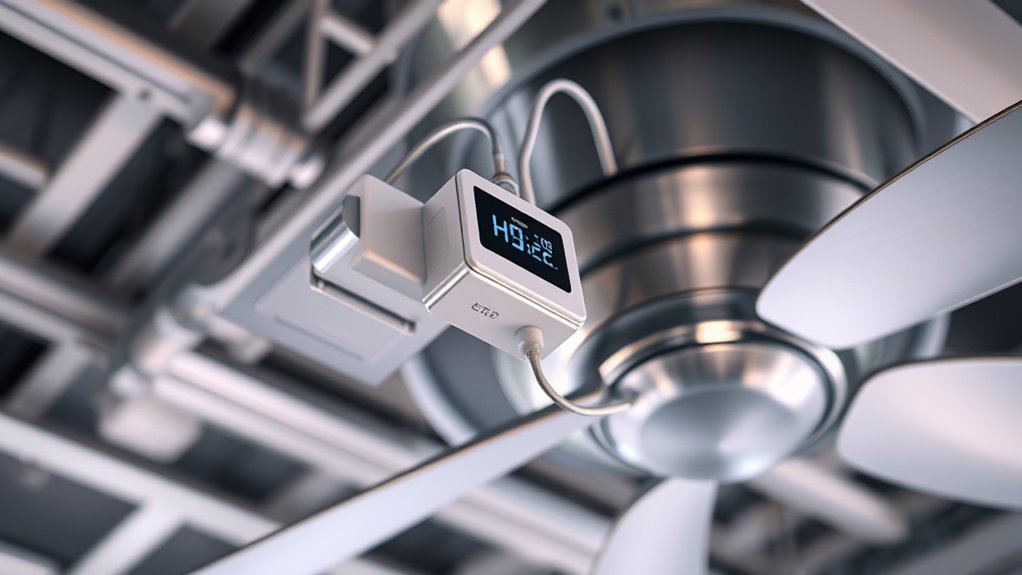
Integrating humidity sensors into your systems can substantially enhance environmental monitoring and control. When you add these sensors to your fan systems, you gain real-time insights into the ambient humidity levels, allowing you to make precise adjustments to maintain ideal conditions. But before deploying the sensors, it’s essential to focus on sensor calibration. Proper calibration ensures that the humidity readings are accurate and reliable, which is critical for effective control. You should regularly verify and adjust the sensors using calibration standards or reference hygrometers to prevent drift over time. Accurate calibration minimizes errors, ensuring your fan system responds appropriately to changing humidity levels.
Data logging plays a pivotal role in managing a humidity sensor integrated with your fan setup. By continuously recording humidity data, you can analyze patterns and identify trends over days, weeks, or months. This historical information helps you fine-tune your system, improve energy efficiency, and troubleshoot issues more effectively. When you set up data logging, make sure to choose a system that timestamps each entry and stores data securely. Automated logging also allows you to generate reports, providing valuable insights into environmental conditions and system performance.
Once your sensors are calibrated and data logging is in place, integrating the humidity sensors with your fan system becomes more straightforward. You can connect the sensors to a central control unit or smart home system that interprets the data and triggers fan adjustments automatically. For example, if the sensor detects humidity rising above a certain threshold, the system can activate fans to increase airflow and reduce moisture. Conversely, if humidity drops too low, the system can turn off fans or activate humidifiers, maintaining a balanced environment. This automation reduces the need for manual intervention, saving you time and ensuring consistent conditions.
Additionally, consider the placement of your humidity sensors. Position them in areas where accurate readings are critical and where airflow is representative of the overall environment. Proper placement ensures the data collected truly reflects the space’s conditions, leading to more effective control strategies. Regular maintenance, including cleaning sensors and checking connections, keeps your system running smoothly.
Furthermore, understanding the role of AI in healthcare and scientific discoveries highlights the potential for advanced systems to optimize environmental control, including humidity management. Incorporating AI-driven insights can help you predict environmental changes and adjust your systems proactively.
Incorporating humidity sensors with your fan systems, with a focus on sensor calibration and data logging, empowers you to create a more responsive and efficient environment. Accurate data and automation not only improve comfort but also extend the lifespan of equipment by preventing issues caused by improper humidity levels. With a thoughtful setup, your system can adapt seamlessly to changing conditions, delivering ideal performance at all times.
As an affiliate, we earn on qualifying purchases.
Frequently Asked Questions
How Do Humidity Sensors Impact Energy Efficiency?
Humidity sensors improve your energy efficiency by precisely controlling fan operation based on accurate readings. Proper humidity calibration guarantees sensors provide reliable data, preventing unnecessary fan use. Additionally, strategic sensor placement ensures accurate measurements, reducing energy waste. When you calibrate your sensors regularly and position them correctly, you optimize ventilation, minimize energy consumption, and maintain a comfortable environment without overworking your fan system.
What Maintenance Is Required for Humidity Sensors?
Did you know humidity sensors typically need calibration every 6 to 12 months? To keep them accurate, you should regularly check and perform sensor calibration. Replacement intervals vary but usually fall between 2 to 3 years, depending on usage and environment. Keep an eye out for drift in readings or slow responses, which indicate it’s time to replace the sensor for peak performance. Proper maintenance ensures efficiency and longevity.
Can Humidity Sensors Be Integrated With Smart Home Systems?
Yes, you can integrate humidity sensors with your smart home system. Make certain the sensor has wireless connectivity for seamless integration and supports your smart platform. Regular sensor calibration is essential for accurate readings, so check and calibrate your sensor periodically. Once connected, you can automate fan operation based on humidity levels, improving comfort and energy efficiency. This setup offers a smart, responsive environment tailored to your preferences.
What Are the Common Troubleshooting Steps for Sensor Errors?
When troubleshooting sensor errors, start by checking the wiring for loose connections or damage. Make certain the sensor is properly calibrated; incorrect calibration can cause inaccurate readings. Test the power supply to confirm it’s functioning correctly. If issues persist, reset the sensor and update its firmware if available. Regularly clean the sensor to prevent dust buildup, which can interfere with accurate humidity detection.
How Accurate Are Humidity Sensors in Different Environments?
Humidity sensors are generally accurate within ±2-5% RH, but their precision can vary depending on environmental factors. You should regularly calibrate your sensors to maintain accuracy, especially if conditions change. High temperatures, dust, and pollutants can affect readings, so ensure proper placement and maintenance. By calibrating periodically and considering environmental influences, you’ll get reliable humidity measurements, allowing your fan system to operate more efficiently.
As an affiliate, we earn on qualifying purchases.
Conclusion
Now, with your humidity sensors seamlessly integrated into your fan system, you’ll enjoy perfect air quality—until the sensors inevitably fail right when you need them most. Ironically, just when you think you’ve outsmarted humidity, the system might betray you, leaving your home damp and uncomfortable. But hey, at least you’ll have the sensors to remind you that even the smartest technology isn’t foolproof—making every dry day a small victory, or perhaps a lesson in humility.
digital hygrometer with data logging
As an affiliate, we earn on qualifying purchases.
As an affiliate, we earn on qualifying purchases.
smart humidity monitor with calibration
As an affiliate, we earn on qualifying purchases.
As an affiliate, we earn on qualifying purchases.
NFL season / tailgating Picks
team gear
As an affiliate, we earn on qualifying purchases.