To figure out if your comfort issue is airflow, humidity, or temperature, observe how your space feels. If it’s stuffy or drafty, airflow might be the problem. Feeling damp or sticky indicates high humidity, while dry skin or static electricity suggests low humidity. If the room is unevenly warm or cold, temperature could be at fault. Keep watching for signs and small changes; understanding these clues helps pinpoint the real cause of discomfort.
Key Takeaways
- Feel for drafts, stuffiness, or cold spots to identify airflow issues; adjusting vents can help.
- Check for dampness, mold, or static electricity to assess humidity levels.
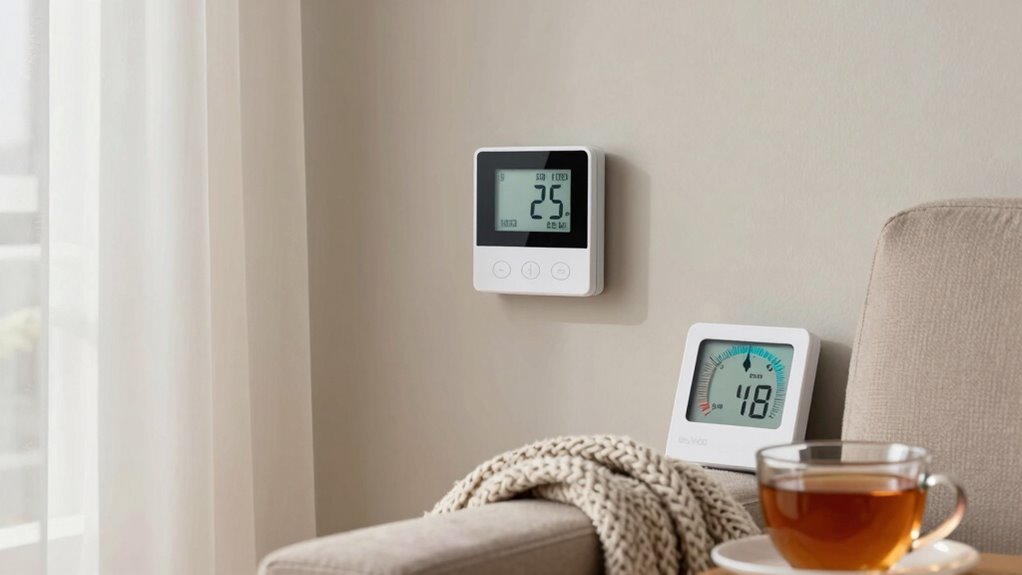
- Use a hygrometer and observe skin, throat, or nose for signs of high or low humidity.
- Monitor temperature consistency; uneven or excessive heat/cold suggests thermostat or airflow problems.
- Observe how temperature, humidity, and airflow interact to pinpoint the root cause of discomfort.
If you’re feeling uncomfortable at home or in your workspace, it can be challenging to identify whether the issue stems from airflow, humidity, or temperature. Often, these factors intertwine, making it hard to pinpoint what’s causing your discomfort. The key is to observe how air moves around you and how your environment reacts to different conditions. Start by paying attention to airflow patterns. Do you notice that certain areas feel stuffy or drafty? If air seems stagnant or you feel uneven air distribution, your space might not have proper airflow. Poor airflow can trap warm or cold air in specific zones, leading to hot spots or cold spots that make you uncomfortable. Conversely, if you experience drafts that cause sudden chills or gusts of cold air, it’s a sign that your airflow isn’t balanced, and adjusting vents or fans could help.
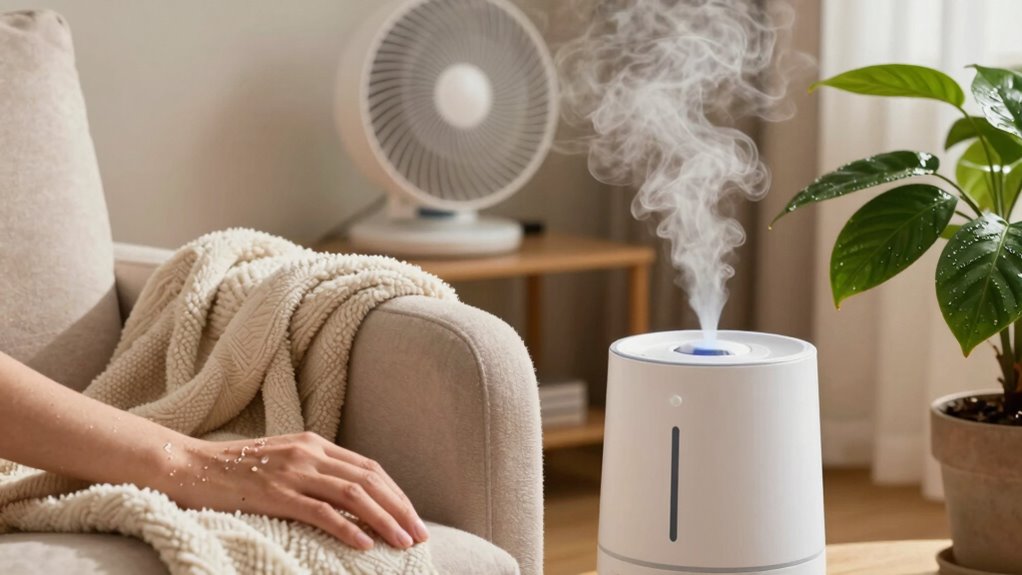
Next, consider humidity levels. High humidity makes the air feel heavy and damp, often causing you to sweat more and feel sticky or clammy. When humidity is too low, your skin may feel dry, and you might experience static electricity or respiratory irritation. You can gauge humidity by feeling the moisture in the air or using a hygrometer. If you notice condensation on windows or mold growth, humidity levels are likely too high. On the other hand, if your skin feels dry, your throat is scratchy, or your nose bleeds more often, the air might be too dry. Balancing humidity involves using dehumidifiers or humidifiers to create a comfortable environment. Additionally, understanding how air quality impacts your comfort can help you identify whether pollutants or inadequate ventilation are contributing to your discomfort. Recognizing the importance of proper ventilation can further enhance your ability to create a comfortable space. Moreover, poor ventilation can also contribute to airborne pollutants, which may affect your overall health and comfort. It’s essential to consider the interaction of these factors, as they often influence each other and collectively impact your comfort level.
Temperature is often the easiest factor to identify, but it’s not always the root cause. If the room feels uniformly hot or cold, adjusting the thermostat might resolve the issue. However, sometimes the temperature feels acceptable, yet you still feel uncomfortable, which indicates that other factors, like airflow or humidity, are influencing your comfort. For example, a room with good temperature control but poor airflow can cause you to feel stuffy, while imbalance in humidity can make a room feel colder or warmer than it actually is.
As an affiliate, we earn on qualifying purchases.
Frequently Asked Questions
Can Multiple Comfort Issues Occur Simultaneously?
Yes, multiple comfort issues can occur simultaneously. You might experience discomfort from airflow, humidity, and temperature interacting in your space. For example, poor airflow can make a room feel stuffy, while high humidity causes stickiness, and temperature fluctuations add to the discomfort. Recognizing these comfort interactions helps you identify and address multiple issues at once, improving overall comfort rather than just focusing on one problem.
How Often Should I Check My HVAC System?
You should check your HVAC system at least twice a year, ideally during spring and fall. Regular HVAC maintenance helps catch issues early and keeps your system running efficiently. During routine checks, troubleshoot common problems like airflow disruptions, strange noises, or inconsistent temperatures. Regular system troubleshooting ensures your HVAC operates effectively, improves comfort, and extends its lifespan. Don’t forget to schedule professional inspections to keep everything in top shape.
Do Window Treatments Affect Indoor Comfort Levels?
You might be surprised, but window treatments do affect indoor comfort levels. Window insulation and curtain materials can block drafts, reduce heat transfer, and even control sunlight, making your space more comfortable. Heavy fabrics or thick curtains insulate better than sheer ones, helping keep temperatures steady. By choosing the right window treatments, you can improve insulation and reduce energy costs, enhancing overall comfort in your home.
What Are Signs of HVAC System Inefficiency?
If you notice inconsistent temperatures, high energy bills, or strange noises, your HVAC system might be inefficient. Signs include airflow blockage, where vents blow weak air, and humidity imbalance, leading to damp or overly dry air. You could also experience uneven heating or cooling, frequent system cycling, or dust buildup. These issues suggest your system isn’t operating at its best, and addressing them can improve comfort and save you money.
How Does Outdoor Weather Influence Indoor Comfort?
Outdoor weather directly impacts your indoor comfort through outdoor climate changes and ventilation effects. When it’s hot or humid outside, your indoor temperature and humidity levels rise, making you feel uncomfortable. Cold weather can cause drafts or reduce heating efficiency. Poor ventilation can trap moisture or stale air, worsening comfort issues. Adjusting your HVAC system and improving ventilation help balance indoor conditions, regardless of outdoor climate fluctuations.
As an affiliate, we earn on qualifying purchases.
Conclusion
So, here’s the irony: after all this talk about airflow, humidity, and temperature, your perfect comfort actually depends on mastering the art of patience and a little trial and error. Turns out, the secret isn’t in the gadgets or settings but in your willingness to experiment. So go ahead—adjust, test, and enjoy the unpredictable thrill of finally feeling just right. Because sometimes, getting comfortable is just a matter of embracing the chaos.
As an affiliate, we earn on qualifying purchases.
humidifier and dehumidifier combo
As an affiliate, we earn on qualifying purchases.
As an affiliate, we earn on qualifying purchases.