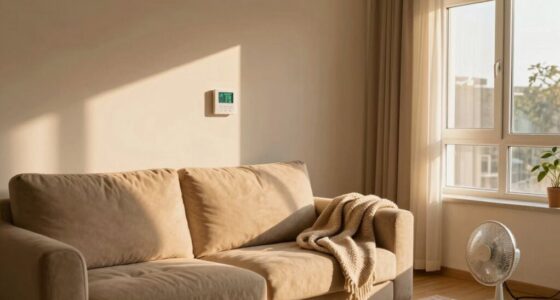
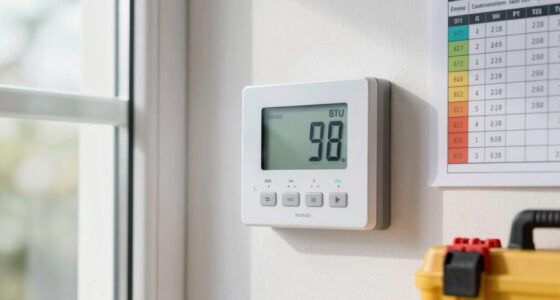
To maintain a healthy and comfortable home, you should focus on indoor air quality and humidity levels. Keep an eye on CO2 levels, airborne pollutants, and VOCs, as high levels can cause fatigue or breathing issues. Also, monitor humidity between 30-50% to prevent mold, dust mites, or dryness. Regular checks and proper ventilation help you stay ahead of potential problems. If you want to learn more about how to optimize your indoor environment, keep going.
Key Takeaways
- Monitor indoor CO2 levels to prevent drowsiness and maintain focus.
- Track humidity levels between 30% and 50% to prevent mold and dryness.
- Use air quality sensors to detect airborne pollutants and VOCs early.
- Regularly check and maintain ventilation systems for fresh, healthy air.
- Employ humidity control devices like humidifiers and dehumidifiers for optimal comfort.
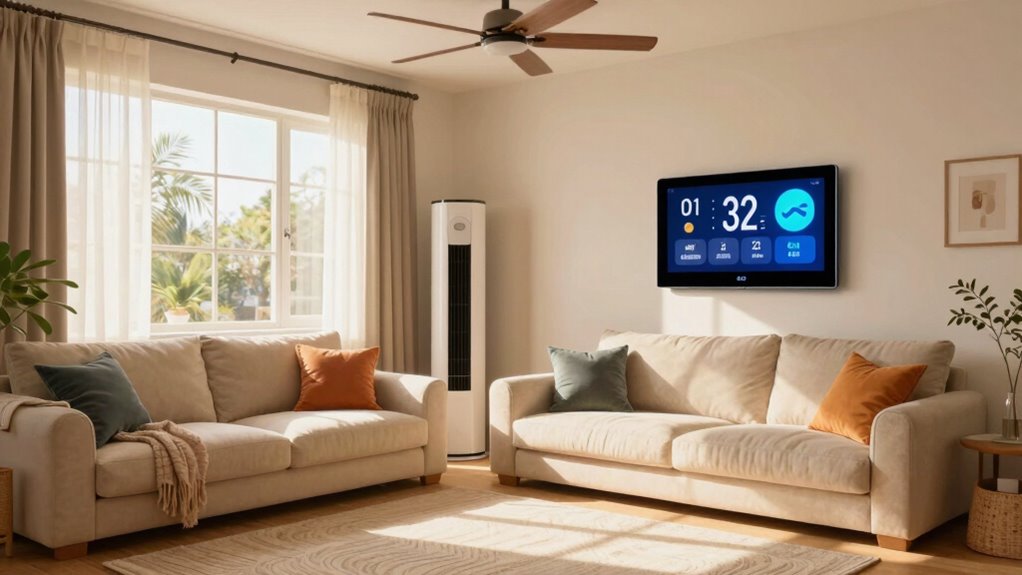
Indoor comfort metrics are essential tools for evaluating how well a space supports the well-being and productivity of its occupants. When you understand these metrics, you gain insights into how your home’s environment impacts your health and comfort. Two critical aspects to monitor are air quality and humidity control, which directly influence how livable and healthy your indoor space feels.
Air quality is a fundamental metric because it affects your respiratory health and overall comfort. Poor air quality can lead to allergies, asthma, fatigue, and other health issues. You should pay attention to indicators like levels of airborne pollutants, VOCs (volatile organic compounds), and CO2 concentration. High levels of CO2, for instance, can cause drowsiness and reduce your focus, making it harder to get work done or relax. Using air purifiers, ensuring proper ventilation systems, and regularly changing filters can help maintain ideal air quality. You might also consider investing in monitors that track indoor air pollution so you can take action when levels spike. Monitoring indoor air quality is crucial because it allows you to address problems before they impact your health significantly. Improving ventilation systems can also help maintain fresh air and reduce pollutant buildup. Additionally, understanding indoor air pollution sources can guide you in selecting the most effective solutions for your space.
Monitoring airborne pollutants, VOCs, and CO2 is essential for maintaining healthy indoor air quality and overall comfort.
Humidity control is another crucial aspect of indoor comfort that often gets overlooked. Maintaining the right humidity levels—generally between 30% and 50%—keeps your home comfortable and prevents issues like mold growth, dust mites, and static electricity. When humidity dips too low, your skin and respiratory passages can become dry, leading to irritation and discomfort. Conversely, excessive humidity fosters mold and mildew, which pose health risks and can damage your home. To stay on top of humidity levels, you can use humidifiers or dehumidifiers, depending on your environment. A simple hygrometer allows you to monitor and adjust these levels in real-time, ensuring your home remains within the ideal range. Proper humidity management is essential for supporting overall indoor health. Regularly maintaining your HVAC system can also improve the effectiveness of humidity control and air quality. Additionally, understanding the indoor environment and how it interacts with your home’s features can help you make better decisions about air quality solutions.
By actively tracking these metrics, you empower yourself to create a healthier living space. Regularly checking air quality and humidity levels helps you identify problems early, so you can implement solutions before discomfort or health issues develop. For example, if you notice elevated CO2 levels, improving ventilation can make a significant difference. If humidity is too high, dehumidifiers can prevent mold growth and improve air quality. Conversely, if it’s too low, humidifiers can add moisture, making the air more comfortable and reducing static electricity.
In the end, paying attention to these indoor comfort metrics isn’t just about feeling good; it’s about safeguarding your health and enhancing your quality of life. By monitoring air quality and humidity control consistently, you take proactive steps to ensure your home remains a safe, comfortable, and productive environment.

Amazon Smart Air Quality Monitor – Know your air, Works with Alexa
Know your air – Amazon Smart Air Quality Monitor makes it easy to understand what’s in your indoor…
As an affiliate, we earn on qualifying purchases.
As an affiliate, we earn on qualifying purchases.
Frequently Asked Questions
How Often Should Indoor Comfort Levels Be Monitored?
You should monitor indoor comfort levels regularly, ideally once a month, to ensure accurate readings. Keep sensors calibrated to maintain data accuracy, which is vital for reliable insights. Frequent checks help identify any issues early, like sensor drift or malfunctions. By staying on top of calibration and monitoring, you can optimize your home’s comfort and energy efficiency, making sure your indoor environment stays comfortable year-round.
What Factors Most Affect Indoor Comfort Metrics?
Did you know that humidity levels and air quality directly impact your indoor comfort? These factors are most influential because they affect how you perceive temperature and overall well-being. High humidity can make spaces feel warmer and promote mold, while poor air quality can cause allergies or respiratory issues. By monitoring these metrics, you can create a healthier, more comfortable environment, especially since they fluctuate with weather and ventilation habits.
Are There Affordable Devices to Measure Indoor Comfort?
Yes, there are affordable sensors available to measure indoor comfort. These devices, often called comfort indicators, track temperature, humidity, and air quality without breaking the bank. You can find compact, user-friendly options online or at home improvement stores. By using affordable sensors, you gain real-time insights into your indoor environment, helping you optimize comfort and maintain healthier air quality without costly equipment.
How Do Outdoor Weather Conditions Impact Indoor Comfort Metrics?
You might think outdoor weather doesn’t affect your home’s comfort, but it truly does. Outdoor temperature and humidity fluctuations directly influence indoor conditions. When it’s hot or humid outside, your AC struggles, making your indoor environment less comfortable. Sudden cold snaps or damp weather can also cause discomfort. Staying aware of these outdoor factors helps you adjust your indoor climate control, ensuring your home remains cozy regardless of the weather outside.
Can Indoor Comfort Metrics Improve Energy Efficiency?
Yes, indoor comfort metrics can improve your energy efficiency. By regularly calibrating your thermostat, you guarantee your heating and cooling systems operate at their best, preventing energy waste. Additionally, controlling humidity levels helps maintain comfort without overworking your HVAC system. Monitoring these metrics allows you to make informed adjustments, saving energy and reducing costs while keeping your home comfortable year-round.
humidity meter hygrometer
As an affiliate, we earn on qualifying purchases.
As an affiliate, we earn on qualifying purchases.
Conclusion
By paying attention to indoor comfort metrics, you can create a healthier, more enjoyable living space. Don’t you want your home to feel just right year-round? Monitoring factors like temperature, humidity, and air quality helps you pinpoint issues before they become problems. Imagine walking into a perfectly balanced home after a long day—doesn’t that sound like the ultimate comfort? Keep these metrics in mind, and turn your house into the sanctuary you deserve.
air purifier for VOCs
As an affiliate, we earn on qualifying purchases.
As an affiliate, we earn on qualifying purchases.

Dehumidifier, 95OZ Dehumidifier for Home 1000 Sq.Ft – Quiet with Auto Shut Off & Relaxing 7 Color Ambient Light,Ideal for Livingroom, Bedroom, Basement(Black)
Semiconductor dehumidifiers use thermoelectric cooling to remove moisture from the air. They create a drier, more comfortable environment…
As an affiliate, we earn on qualifying purchases.
As an affiliate, we earn on qualifying purchases.