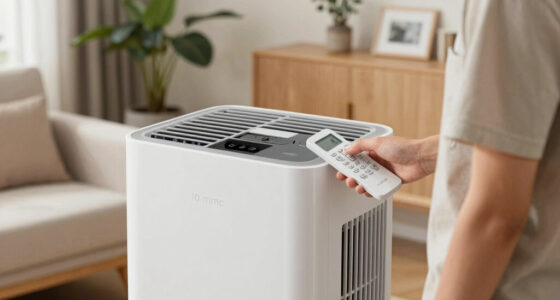
To create a quiet cooling environment in bedrooms, nurseries, and offices, choose appliances with noise-reduction features like quiet motors and adjustable speeds. Opt for portable or window air conditioners and energy-efficient fans with silent operation modes. Incorporate ventilation solutions to maintain airflow without noise buildup. Using ceiling fans with quiet motors and combining multiple solutions guarantees comfort and tranquility. Want more tips on achieving the quietest setup? Keep exploring to discover additional strategies.
Key Takeaways
- Choose cooling devices with quiet operation modes and noise-reduction technology for minimal disturbance.
- Opt for adjustable fan speeds and silent motors to customize noise levels based on needs.
- Incorporate proper ventilation to maintain airflow while reducing noise from excessive cooling.
- Prioritize energy-efficient appliances designed for quiet performance in bedrooms, nurseries, and offices.
- Combine multiple solutions like fans and coolers to optimize comfort while keeping noise levels low.
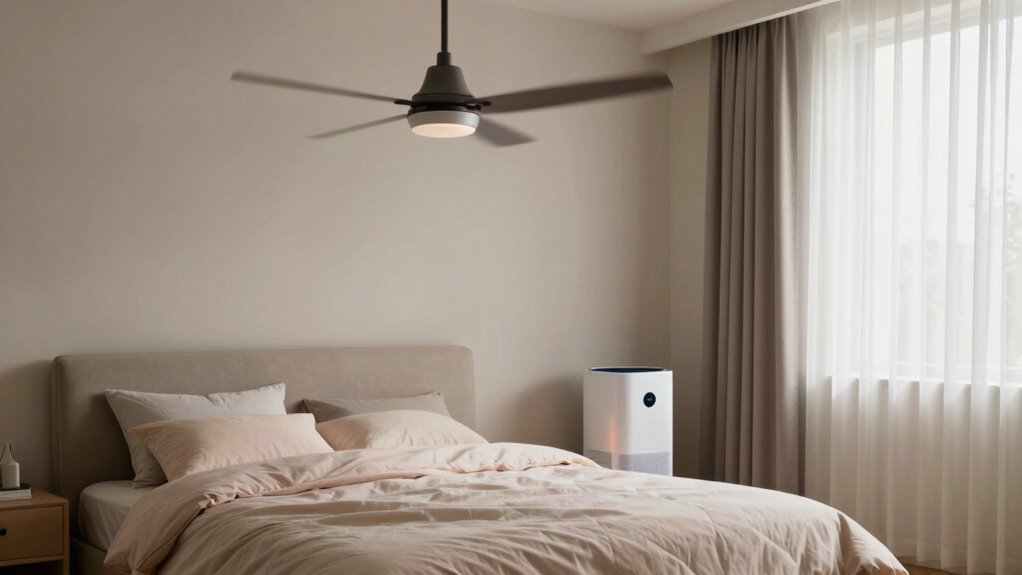
When choosing a cooling device, evaluate the type that best suits your space. For bedrooms and nurseries, a portable or window air conditioner with quiet operation modes can do the trick. These units often feature adjustable fan speeds, allowing you to set the lowest, quietest setting during sleep hours. For offices, consider energy-efficient fans or evaporative coolers that produce minimal noise while providing sufficient cooling. If using a ceiling fan, select one with a quiet motor and adjustable speeds, so you can find the perfect balance between airflow and silence. Additionally, selecting modern, noise-reducing appliances can further enhance the quiet environment you desire. Incorporating ventilation solutions like controlled airflow can also help maintain a comfortable and quiet indoor climate. Opting for home theater projectors with silent cooling systems can also contribute to a peaceful environment, especially if your space doubles as a media room.
quiet portable air conditioner with sleep mode
As an affiliate, we earn on qualifying purchases.
As an affiliate, we earn on qualifying purchases.
Frequently Asked Questions
How Energy-Efficient Are Quiet Cooling Options Compared to Traditional Units?
Quiet cooling options are generally more energy-efficient than traditional units, leading to significant energy savings. They often use advanced technology, such as inverter compressors or improved insulation, which reduces electricity consumption. By choosing these quieter options, you also lessen environmental impact through lower greenhouse gas emissions. Overall, investing in quiet cooling devices helps you save money on energy bills while contributing to a healthier environment.
Can Quiet Cooling Systems Effectively Cool Large or Open-Plan Spaces?
Yes, quiet cooling systems can effectively cool large or open-plan spaces when you incorporate sound insulation and acoustic barriers. These features help contain noise and improve efficiency, allowing the system to work better without disturbing the environment. By choosing units designed for larger areas and adding soundproofing measures, you guarantee a comfortable, cool space that remains peaceful and quiet, even in expansive or open layouts.
Are There Specific Noise Levels I Should Look for in a Cooling Device?
You want a cooling device that keeps noise levels low enough to avoid losing sleep or focus. Look for models with sound insulation and noise reduction features, ideally producing sounds below 50 decibels—quieter than a whisper. Keep in mind, the quieter the unit, the more peaceful your space stays. Don’t settle for loud units; they can turn a cool room into a noisy nuisance.
How Often Should Quiet Cooling Units Be Maintained or Serviced?
You should schedule maintenance for your quiet cooling unit at least once a year to keep it running smoothly. Regular service helps prevent issues and guarantees quiet operation. Keep in mind that maintenance schedules may vary based on usage and model, so check your manufacturer’s recommendations. Service costs can differ, but routine upkeep often costs less than major repairs, saving you money and maintaining a peaceful environment.
Do Quiet Cooling Solutions Require Professional Installation or Setup?
You can often handle DIY installation for quiet cooling units, especially if you enjoy hands-on projects, but it’s essential to take aesthetic considerations into account to ensure the unit blends seamlessly with your space. While many models come with clear instructions, professional setup can guarantee ideal performance and safety. If you’re unsure about your skills or the complexity of the installation, consulting a professional helps avoid potential issues and keeps your space looking sleek.
energy-efficient silent ceiling fan
As an affiliate, we earn on qualifying purchases.
As an affiliate, we earn on qualifying purchases.
Conclusion
By following this quiet cooling checklist, you’ll turn your bedroom, nursery, or office into a peaceful oasis where comfort and tranquility reign. Think of it as crafting a sanctuary where the gentle hum of a well-tuned space whispers serenity, not disturbance. With these simple steps, you’ll keep your environment cool and calm, making every moment spent there as soothing as a lullaby or a calming breeze—your perfect retreat from the chaos outside.
noise reduction window air conditioner
As an affiliate, we earn on qualifying purchases.
As an affiliate, we earn on qualifying purchases.
low noise oscillating fan for bedroom
As an affiliate, we earn on qualifying purchases.
As an affiliate, we earn on qualifying purchases.