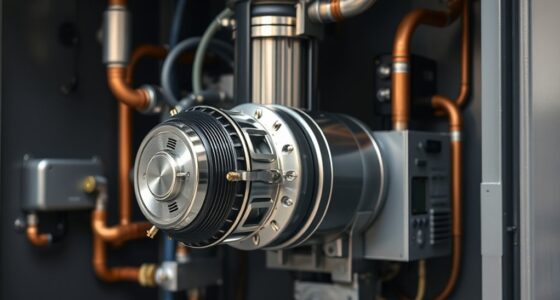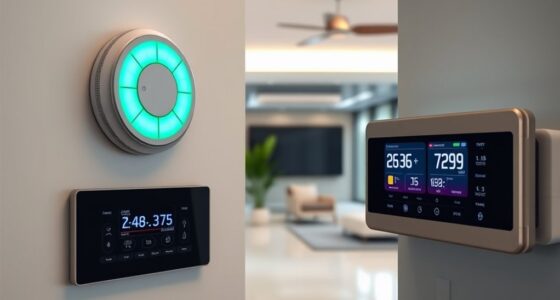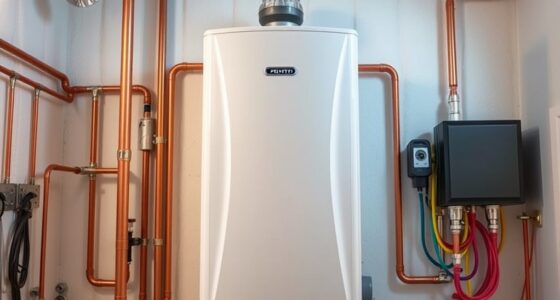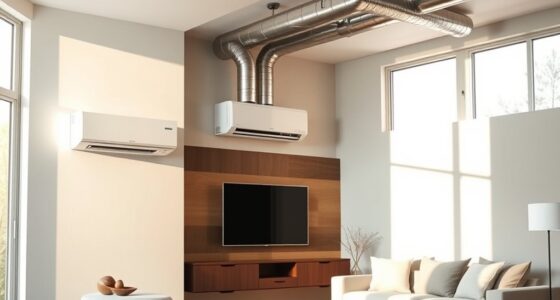
Using both air conditioners and dehumidifiers together helps you create a more comfortable and energy-efficient indoor space. The dehumidifier reduces excess moisture, making the air feel cooler and more pleasant, while the AC handles temperature. This combo lowers your energy bills and extends the life of your appliances. By managing humidity and heat effectively, you’ll enjoy a healthier environment. Keep exploring to discover how this smart partnership can transform your comfort and savings.

Get home appliances delivered free — and shop member deals
- Fast, free delivery on millions of items
- Access to Prime Big Deal Days deals on October 6–7
- Prime Video, Amazon Music and more included
Key Takeaways
- Combining air conditioners and dehumidifiers enhances indoor comfort by effectively controlling temperature and humidity levels.
- Using both devices reduces energy consumption by lowering the workload on the air conditioner.
- Dehumidifiers improve air quality, preventing mold, odors, and dust mites, complementing the cooling process.
- Proper humidity management extends the lifespan of both appliances and protects furniture and belongings.
- Integrated use offers cost savings and a healthier, more comfortable indoor environment during humid months.
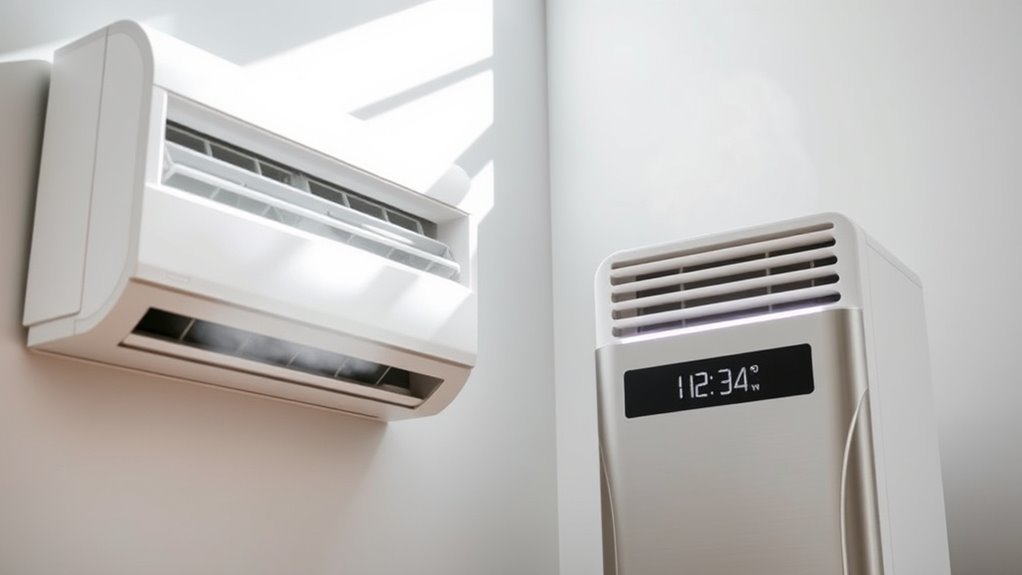
When the weather heats up or humidity levels rise, air conditioners and dehumidifiers become essential for maintaining a comfortable indoor environment. Both devices are designed to improve your indoor air quality, but they do so in different ways. Air conditioners cool the air, reducing the temperature, while dehumidifiers focus on humidity control by removing excess moisture from the air. Using them together can create an ideal balance, especially during humid summer months when high temperatures and humidity go hand in hand. This combination helps you feel cooler and more comfortable without over-reliance on air conditioning alone, which can lead to higher energy bills.
Using both air conditioners and dehumidifiers creates a comfortable, energy-efficient indoor climate during humid summer months.
Energy efficiency is a key benefit when you combine these appliances. Instead of cranking up the air conditioner to combat humidity, running a dehumidifier first can lower moisture levels, making the space feel cooler at a higher temperature setting. This reduces the workload on your AC, leading to lower energy consumption and cost savings. Additionally, controlling humidity prevents the formation of mold, musty odors, and dust mites, which thrive in damp environments. By maintaining appropriate moisture levels—ideally between 30% and 50% humidity—you create a healthier indoor atmosphere and preserve the integrity of your furniture and belongings.
Using both devices also enhances comfort. High humidity makes the air feel warmer and stickier, even if the temperature isn’t technically hot. An air conditioner alone might struggle to keep the environment comfortable if the humidity remains high. By adding a dehumidifier, you remove excess moisture, allowing your AC to operate more efficiently and maintain a consistent, pleasant temperature. This synergy not only improves comfort but also prolongs the lifespan of both appliances, as they don’t have to work as hard to do their jobs.
In practical terms, integrating these systems means you can set your thermostat higher without sacrificing comfort. You’ll experience less sweating and clamminess, which are common in overly humid conditions. Plus, you won’t need to constantly adjust your settings, since the dehumidifier handles the moisture and the AC manages the temperature. This partnership results in a more energy-efficient approach to climate control, saving you money and reducing your carbon footprint. Additionally, understanding how contrast ratio affects your device’s performance can help you choose the most efficient units for your needs.
air conditioner and dehumidifier combo
As an affiliate, we earn on qualifying purchases.
As an affiliate, we earn on qualifying purchases.
Frequently Asked Questions
Can a Dehumidifier Replace an Air Conditioner Entirely?
A dehumidifier can’t replace an air conditioner entirely because it mainly controls humidity, not temperature. If you’re looking for temperature regulation, an air conditioner is essential. While a dehumidifier improves comfort by reducing excess moisture, it doesn’t cool the air. For ideal comfort, you might consider using both together, but a dehumidifier alone won’t meet your needs for cooling and humidity control simultaneously.
How Do I Choose the Right Size for Both Devices?
When choosing the right size for your devices, start with a size calculation based on your space’s square footage. For capacity matching, verify the air conditioner cools effectively without excess, and the dehumidifier handles your humidity levels comfortably. You should select a unit with appropriate BTU ratings for the room size, avoiding oversized or undersized models that can waste energy or underperform. Proper sizing maximizes comfort and efficiency.
Are There Energy-Saving Benefits to Using Both Together?
Imagine revealing hidden savings—using both devices can boost energy efficiency and cut costs. When you run an air conditioner and dehumidifier together, they work synergistically, reducing strain on each other and your energy bills. This combo not only enhances comfort but also conserves power, leading to significant cost savings over time. So, yes, pairing them smartly maximizes efficiency and helps your wallet stay healthier.
What Maintenance Is Required for Combined Use?
When using both an air conditioner and dehumidifier, you’ll need to perform regular maintenance. You should check the humidifier calibration to verify it’s working accurately and replace filters in both units as recommended by the manufacturer. This keeps the systems running efficiently, prevents mold buildup, and maintains air quality. Scheduling routine inspections and cleanings helps you avoid costly repairs and ensures ideal performance for your comfort.
Can Using Both Devices Improve Indoor Air Quality?
Did you know that improper humidity control can reduce indoor air quality by fostering mold and dust mites? Using both devices can markedly improve this, as they work together to reduce excess moisture and enhance air purification. This combination helps maintain ideal humidity levels, preventing allergens and pollutants from lingering. By managing humidity and filtering the air, you’ll create a healthier, more comfortable indoor environment for everyone.
energy-efficient dehumidifier for home
As an affiliate, we earn on qualifying purchases.
As an affiliate, we earn on qualifying purchases.
Conclusion
So, pairing an air conditioner with a dehumidifier is like having a perfect team working together. They tackle humidity and temperature, making your home feel just right. By combining both, you’ll enjoy cooler, drier air and improved comfort all year round. Don’t wait to optimize your space—think of this duo as your secret weapon against indoor stuffiness, turning your home into a invigorating oasis that’s as inviting as a cool breeze on a hot day.
portable air conditioner with humidity control
As an affiliate, we earn on qualifying purchases.
As an affiliate, we earn on qualifying purchases.
best dehumidifier for mold prevention
As an affiliate, we earn on qualifying purchases.
As an affiliate, we earn on qualifying purchases.
NFL season / tailgating Picks
team gear
As an affiliate, we earn on qualifying purchases.