
Choosing the right amperage for your home EV charger directly impacts how quickly your vehicle charges. Higher amperage allows more current to flow, reducing charging time—just make certain your electrical system can handle it. Upgrading to a higher amperage increases speed but requires assessment of your home’s wiring and safety measures. If you want a faster, safer charge, understanding your system’s limits is key. Keep exploring to discover how to optimize your home charging setup effectively.
Key Takeaways
- Higher amperage allows more current flow, reducing charging times when the vehicle can handle increased power.
- Compatibility between your EV’s onboard charger and the higher amperage ensures safe, optimal charging speeds.
- Upgrading your home’s electrical system may be necessary to support higher amperage chargers safely.
- Proper installation by a licensed electrician prevents overloads, electrical hazards, and maximizes charging efficiency.
- Assessing your vehicle’s charging capacity and household electrical limits guides the best amperage choice for faster charging.
How Does Amperage Affect Your EV Charging Speed?
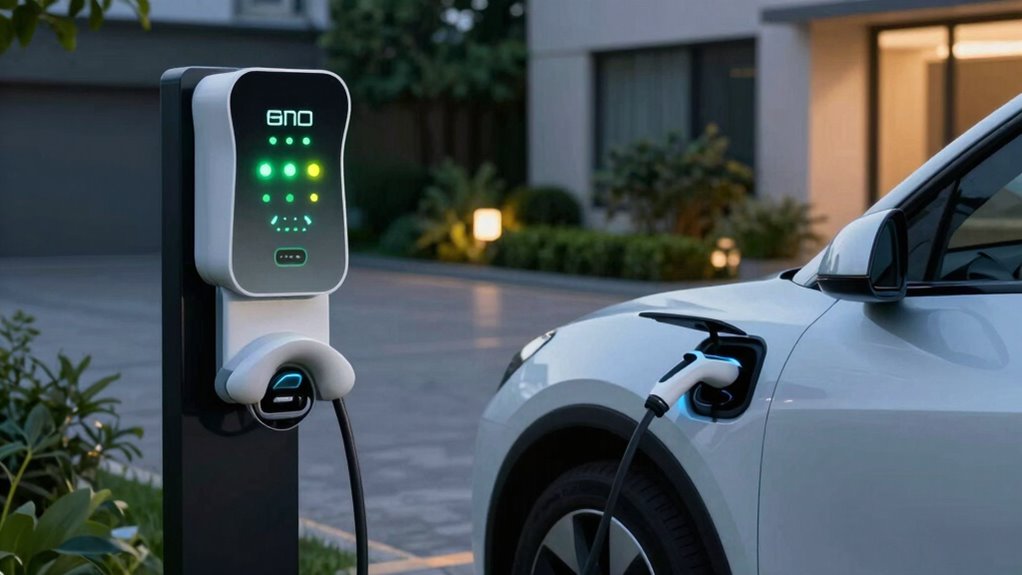
Amperage directly impacts how quickly your electric vehicle charges at home. Higher amperage allows more current to flow, reducing charging time and making your EV ready sooner. When considering charging station placement, confirm your home’s electrical system can support the desired amperage without risking overloads, which can affect energy efficiency. A well-placed charger near your driveway or garage minimizes cable length, reducing energy loss. Increasing amperage doesn’t just speed up charging; it also enhances energy efficiency by decreasing the duration your vehicle spends plugged in, saving electricity and lowering costs. Proper home electrical planning is essential to ensure safety and optimal performance. Additionally, understanding extension cord standards can help prevent potential hazards when setting up your charger. Ensuring your home’s electrical system can handle the desired amperage is crucial for safe and efficient EV charging, especially when considering future upgrades. To maximize charging speed, it’s important to match your electrical system capacity with your vehicle’s charging requirements, enabling faster and more reliable charging sessions. Moreover, selecting the correct charger capacity based on your electrical system can significantly influence the overall efficiency of your home charging setup. Keep in mind, the right amperage setup depends on your home’s electrical capacity and your daily driving needs, ensuring you get fast, efficient charging without compromising safety.
What Can Your Home Electrical System Handle?
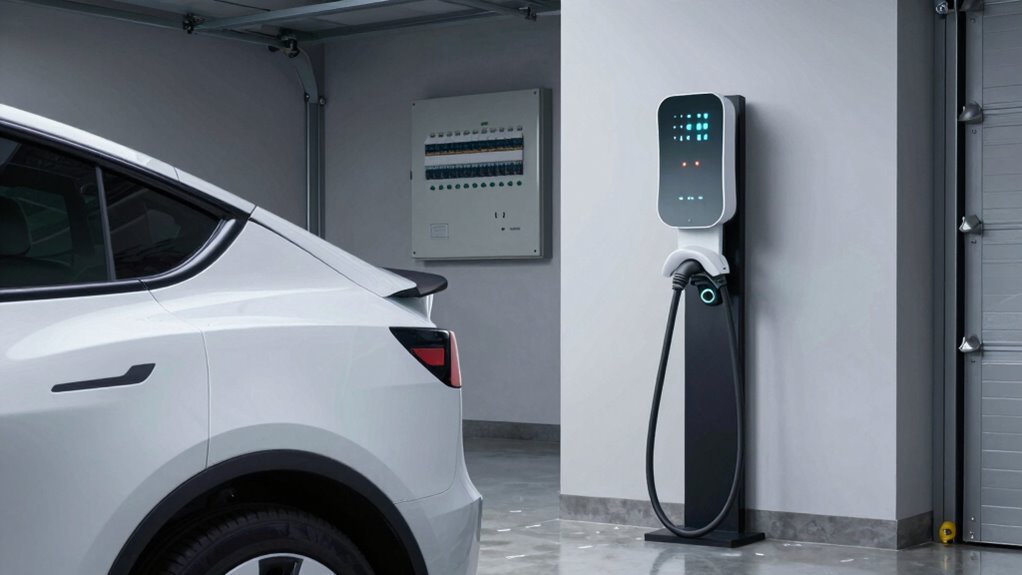
Have you ever wondered what your home’s electrical system can actually accommodate when it comes to EV charging? Your system’s capacity depends on several factors, including your main service panel and overall grid capacity. If you have solar panels, they can supplement your power needs, reducing strain on the grid and allowing for higher charging rates. Additionally, integrating AI-based energy management systems can optimize your home’s power usage and improve charging efficiency. Using electrical load calculations can help you accurately assess your capacity and avoid potential issues. Conducting a home electrical assessment can provide a comprehensive understanding of your system’s capabilities and limitations. Moreover, understanding electrical load distribution is crucial for safe and effective EV charging. To avoid overloading circuits, oversizing your charger without checking your electrical system could trip breakers or cause damage. To determine what your home can handle, consider your existing electrical load, the capacity of your main panel, and whether your solar setup supports additional power draw. Consulting an electrician can help you understand your limits and ensure safe, efficient charging without risking your home’s electrical stability.
How Increasing Amperage Speeds Up Charging Times
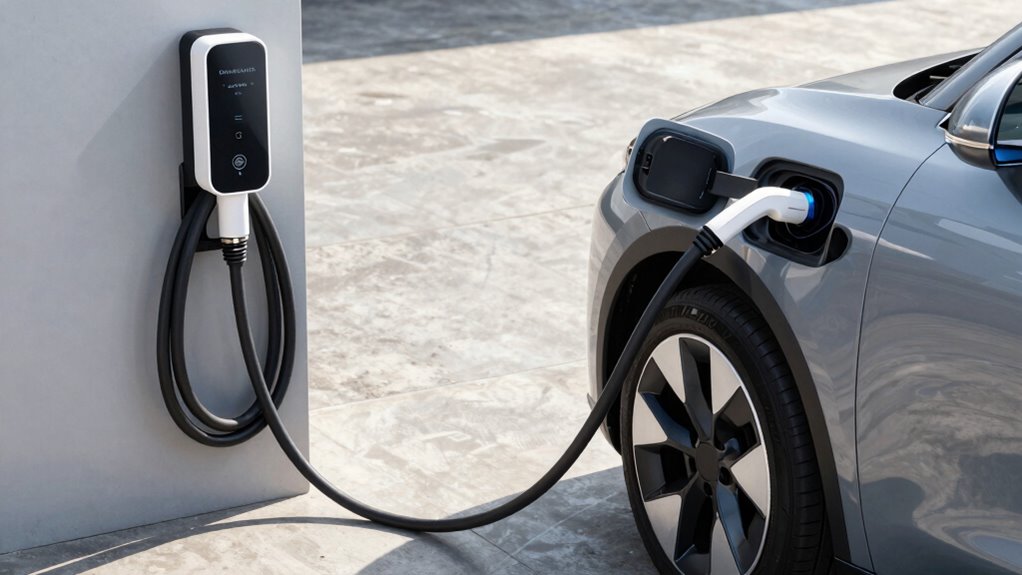
Increasing the amperage of your home charger can markedly reduce your EV’s charging time. However, the speed depends on your power supply limits and whether your vehicle can handle higher currents. Understanding these factors helps you choose the right setup for faster, safer charging. Additionally, selecting a charger with a higher charge rate can optimize your charging efficiency while ensuring compatibility with your vehicle’s capabilities. Incorporating the latest wall art trends into your charging station can also create a more inviting and personalized space. Being aware of your electrical system capacity ensures you avoid overloads and maintain safety during rapid charging sessions, especially when utilizing technological integration tools that enhance overall efficiency. Knowing your home’s electrical panel capabilities allows you to plan for high-amperage chargers without risking system overloads.
Higher Amperage Means Faster Charging
When you boost the amperage of your home EV charger, you can substantially reduce your charging times. A higher amperage allows more current to flow into your vehicle’s battery, which speeds up the charging process. The size of your battery capacity also plays a role; larger batteries benefit more from increased amperage, as they take longer to charge at lower levels. Choosing a charging station with higher amperage ensures your vehicle charges faster, especially during quick top-ups. Keep in mind that your vehicle’s onboard charger must support the higher amperage to realize these benefits. Selecting the appropriate home soundproofing measures can also help create a quieter environment while your vehicle charges. Ensuring proper electrical safety measures are in place is essential when upgrading to higher amperage chargers to prevent potential hazards. Additionally, understanding your battery capacity can help you select the optimal charging setup for your needs. Proper charger compatibility is crucial to maximize the benefits of increased amperage without risking damage to your vehicle or electrical system. Being aware of electrical load management can help prevent overloads and ensure safe operation. By choosing a charger with the right amperage, you optimize charging speed, saving you time and making electric driving more convenient.
Power Supply Limits Speed
Boosting amperage can considerably speed up your EV charging, but your home’s electrical system sets practical limits on how much current can flow. Your power supply must support the increased load, which depends on your existing electrical wiring and circuit capacity. Advances in battery technology allow faster charging, but the charging infrastructure in your home needs to handle higher current levels safely. If your electrical system isn’t designed for high amperage, upgrading it becomes necessary to avoid tripping breakers or causing damage. Understanding these limits helps you optimize charging speed without risking safety or costly repairs. Additionally, product roundups can help you select the right equipment to safely increase your charging capacity. Ensuring your electrical system is properly evaluated can prevent unforeseen issues and ensure safe operation. Evaluating your circuit capacity and consulting with a professional can help you determine the best way to increase your charging speed while maintaining safety. Ultimately, the capacity of your power supply directly influences how quickly you can take advantage of higher amperage to reduce charging times efficiently.
Vehicle Compatibility Matters
Even if your home’s electrical system can deliver higher amperage, your vehicle must also be compatible to take advantage of faster charging speeds. Not all EVs support high amperage charging, so check your car’s specifications before upgrading your station. A compatible vehicle allows you to maximize the benefits of a higher amperage setup, reducing charging time considerably. When selecting a charging station, consider its aesthetics; a sleek, unobtrusive design can blend seamlessly into your garage. Also, be mindful of EV charging etiquette—avoid blocking access or leaving cables scattered. Proper compatibility and thoughtful station placement ensure you get the fastest charging experience while maintaining a tidy, respectful charging environment. This way, you optimize your setup without sacrificing convenience or style.
How to Choose the Best Amperage for Your Home and Vehicle
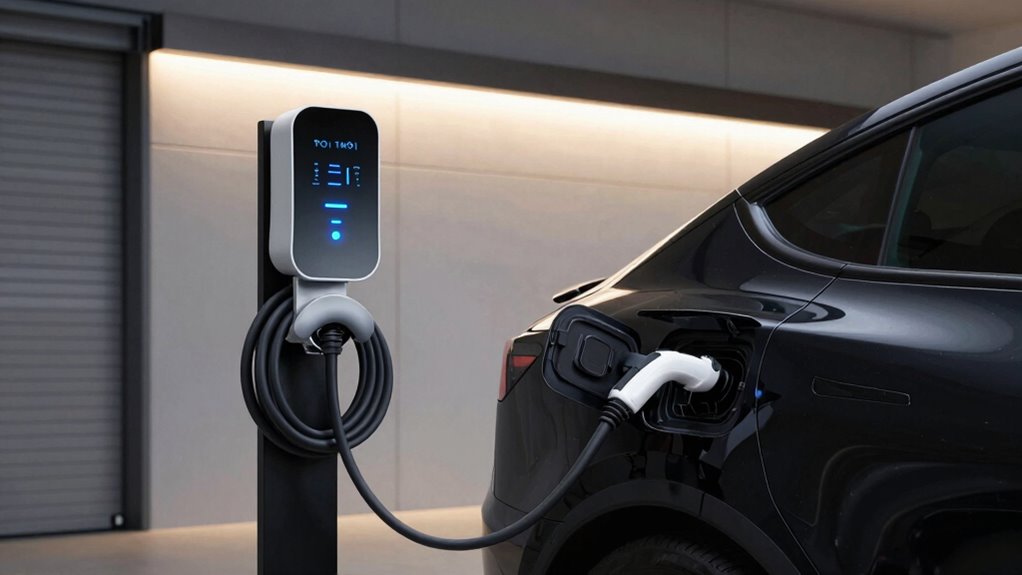
To choose the right amperage, start by evaluating your vehicle’s charging needs and how quickly you want it to charge. Next, check your home’s electrical capacity to guarantee it can handle the chosen setup without overload. Finally, find a balance between charging speed and safety to select the best amperage for your situation.
Assess Your Vehicle’s Needs
Before choosing the right amperage for your home charger, it’s essential to understand your vehicle’s charging capabilities and your daily driving habits. Check your EV’s battery capacity to determine how much energy it can hold and how quickly it can charge at different amperages. Some vehicles can handle higher charging speeds at fast-charging stations, but may be limited at home. Consider how often you need to charge—if you mostly top off overnight, a lower amperage might suffice. If you want faster charging to reduce downtime, higher amperage options could be better. Knowing your vehicle’s charging limits and typical usage helps you select an appropriate amperage, ensuring your home charger meets your needs without over- or under-investing in capacity.
Determine Household Power Limits
Understanding your vehicle’s charging needs is just one part of selecting the right home charger. You also need to evaluate your household’s power limits, including the available grid capacity. Check your main electrical panel to see how much current is already in use and what’s left for EV charging. If your home uses renewable energy sources like solar, consider how much extra load they can support without affecting other appliances. Overshooting your grid capacity can cause circuit overloads or trips, risking safety and reliability. To avoid this, consult an electrician to appraise your home’s electrical system. Choosing the right amperage ensures you maximize charging speed without compromising safety or your renewable energy setup. This careful assessment helps you find a charger suited to your household’s power limits.
Balance Speed and Safety
Choosing the right amperage for your home charger involves balancing charging speed with safety. Higher amperage chargers can speed up your charging time, but they must be compatible with your vehicle’s charger compatibility and your home’s electrical system. Going too high can risk overloads or safety hazards, while too low may result in slow charging. Consider your vehicle’s maximum charging capacity and your household energy efficiency goals. An appropriate amperage ensures you get a faster charge without compromising safety. It’s essential to select a charger that matches your vehicle’s needs and your home’s electrical limits. This balance helps maximize energy efficiency and safe operation, giving you faster, reliable charging while minimizing risk.
Safety Tips for Upgrading Your EV Charger’s Amperage
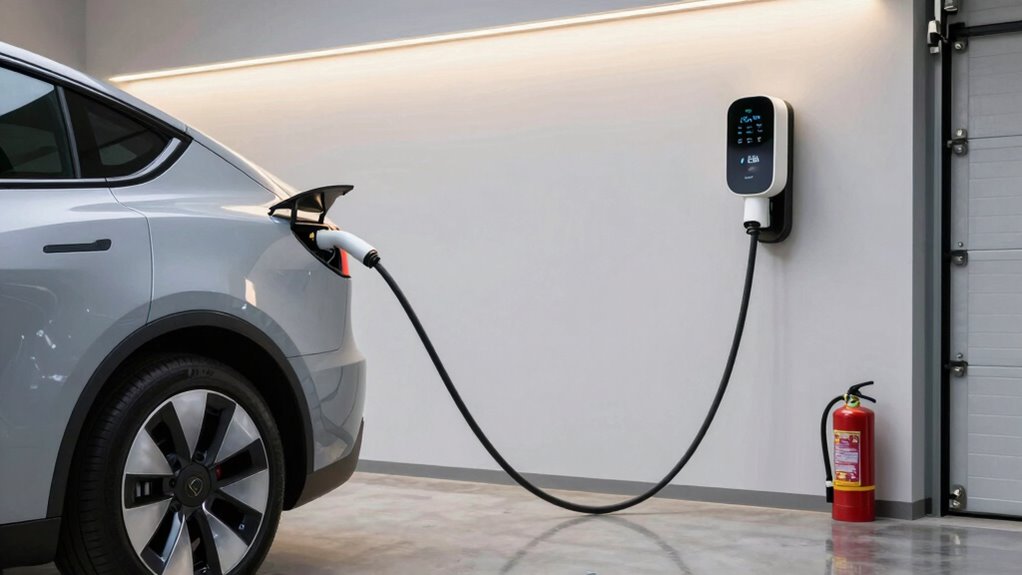
Upgrading your EV charger’s amperage can improve charging speed, but it also comes with safety considerations that shouldn’t be overlooked. First, guarantee grounding safety. Proper grounding prevents electrical shocks and protects your home’s wiring system. Before increasing amperage, have a professional inspect your current wiring setup and perform any necessary wiring upgrades. Using the right gauge wire is essential to handle higher currents safely. Avoid shortcuts that compromise safety standards, as inadequate wiring or grounding can cause serious hazards. Always turn to licensed electricians for upgrades. They’ll ensure your system complies with electrical codes and that grounding safety is intact. Remember, a safe upgrade not only speeds up charging but also keeps your home protected from potential electrical risks.
Practical Steps to Install or Upgrade Your Home EV Charger
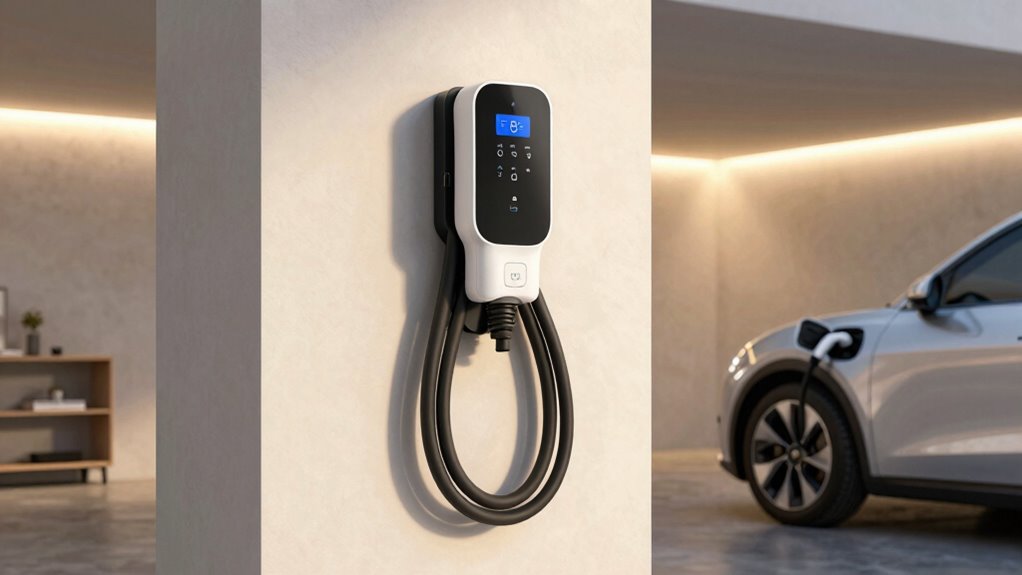
Installing or upgrading your home EV charger involves a clear, step-by-step process to guarantee safety and efficiency. First, assess your existing charging infrastructure and consider how battery technology advancements impact your needs. Next, select a charger compatible with your vehicle and your home’s electrical system. You may need to upgrade your circuit breaker or wiring for higher amperage. Then, hire a licensed electrician to handle installation, ensuring compliance with safety codes. Regularly check your setup to prevent issues and optimize charging speeds. Here’s a quick overview:
| Step | Action | Key Consideration |
|---|---|---|
| Assess infrastructure | Evaluate existing electrical system | Compatibility with battery tech |
| Choose charger | Pick the right charger for your needs | Amperage and charging speed |
| Upgrade electrical system | Hire electrician for upgrades | Ensuring safe, reliable setup |
| Final inspection | Confirm all safety standards met | Long-term charging efficiency |
How to Determine the Right Amperage for Your Charging Needs
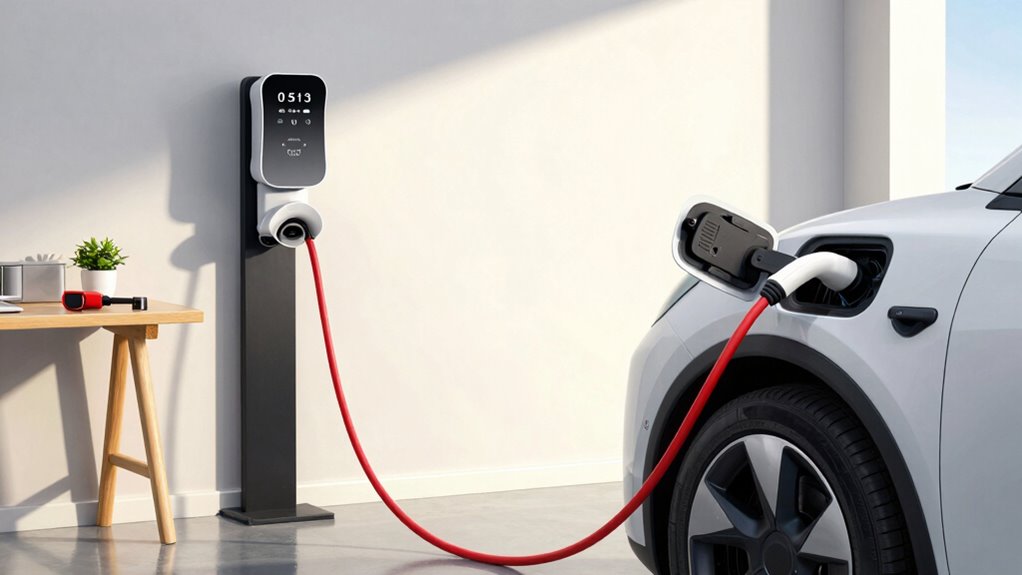
Determining the right amperage for your home EV charger is vital to make certain safe and efficient charging. Start by considering your vehicle’s battery capacity and how quickly you want to charge. A larger battery capacity usually requires a higher amperage to reduce charging time, but your charging station’s maximum capacity also matters. Check your vehicle’s specifications for recommended charging rates. If you have a basic charging station, it might limit you to lower amperages, while a more advanced station can support higher currents. Evaluate your daily driving needs and whether you prefer overnight charging or faster top-ups. Matching your charger’s amperage with your vehicle’s capabilities and your household’s electrical capacity ensures safe, optimal charging without overloading your system.
Frequently Asked Questions
Can Higher Amperage Increase Your Home’s Overall Electrical Load?
Yes, choosing higher amperage for your home EV charger can increase your electrical capacity, affecting your overall power distribution. When you install a higher amperage circuit, it draws more electrical current, which can put additional strain on your home’s electrical system. Make sure your electrical panel can accommodate this increased load to prevent overloads or potential hazards. Consulting an electrician ensures your home’s electrical capacity supports your EV charging needs safely.
What Are the Long-Term Cost Implications of Upgrading Amperage?
Upgrading your amperage can seem intimidating, but the long-term benefits outweigh the costs. While installation costs may be higher initially, you’ll enjoy energy savings as faster charging reduces your overall electricity use. Think of it as planting a seed for future savings—your investment grows over time. This upgrade not only boosts convenience but also helps you save money in the long run, making every dollar worth it.
Are There Any EV Models That Require Specific Amperage Levels?
Some EV models do require specific amperage levels for ideal compatibility and charging speed. You should check your EV model’s compatibility to make sure it matches your charging station’s amperage. Using the right amperage helps maximize charging speed and prevents potential damage. Always review your vehicle’s specifications to select the appropriate amperage level, ensuring efficient charging and avoiding issues related to incompatible or underpowered outlets.
How Does Amperage Affect Charging Station Compatibility?
Amperage affects charging station compatibility because higher amperage levels often require stations that meet specific amperage standards. When you choose a charging station, verify it supports your vehicle’s maximum amperage to avoid compatibility issues. Standard amperage levels help you find stations that work efficiently with your EV, preventing slow charging or connection problems. Always check your car’s recommended amperage and match it with stations that adhere to compatible amperage standards for safe, fast charging.
What Incentives or Rebates Are Available for Upgrading Home Chargers?
You can take advantage of various incentives and rebates when upgrading your home charger. Tax credits often cover a portion of the installation costs, making the upgrade more affordable. Rebate programs from local utilities or government agencies can provide direct discounts or cash back. Check your state’s energy department or utility website to find specific programs available in your area, helping you save money while enjoying faster, more efficient EV charging.
Conclusion
Choosing the right amperage for your home EV charger can substantially speed up your charging times without risking safety. While some believe higher amperage always equals faster charging, your home’s electrical capacity and your vehicle’s limits matter most. By understanding these factors and following proper safety guidelines, you can optimize your setup. Ultimately, investing in the right amperage isn’t just about speed—it’s about safe, reliable charging tailored to your needs.