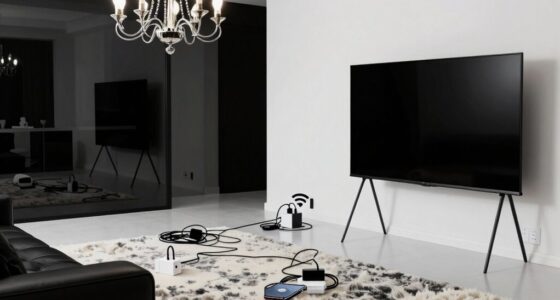
To think about whole-home power protection, focus on creating a layered system that includes surge protectors at the main panel, backup power sources, and backup batteries like UPS units. This setup helps shield your devices from voltage spikes, outages, and fluctuations, ensuring everything stays safe and operational. Regular maintenance and professional guidance are key to staying prepared for evolving risks. Keep exploring to learn how to tailor this system effectively for your home needs.
Key Takeaways
- Adopt a layered approach combining surge protectors, backup power sources, and UPS for comprehensive coverage.
- Assess your home’s specific electrical needs and vulnerabilities to tailor protection solutions effectively.
- Regularly maintain and upgrade components to ensure optimal performance and adapt to evolving risks.
- Install surge protection at key points like the main panel to safeguard the entire electrical system.
- Collaborate with professional electricians for system design, installation, and ongoing safety assessments.
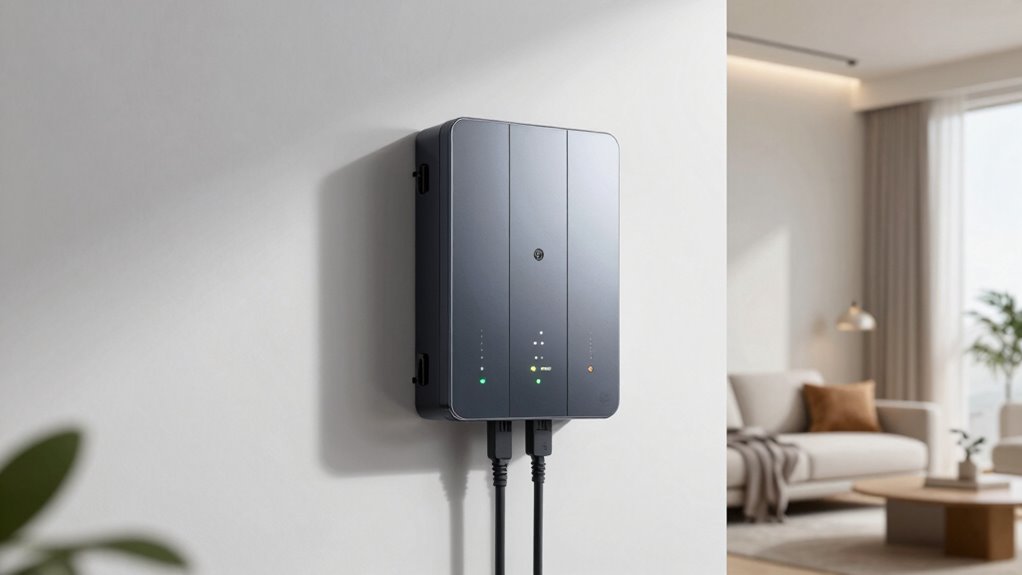
Power protection might not be something you think about daily, but it’s crucial to keep your devices safe and running smoothly. When considering a whole-home system, you’re taking a proactive step to shield everything—from your computers and TVs to your refrigerators and HVAC systems. One of the key aspects of this defense is surge management, which helps prevent sudden voltage spikes from damaging your appliances. Lightning strikes, power outages, and grid fluctuations can all cause these surges, risking expensive repairs or replacements. By installing an all-encompassing surge protector as part of your home’s power system, you create a barrier that absorbs or redirects excess voltage, safeguarding your entire electrical setup.
Effective surge management protects your home’s devices from voltage spikes caused by storms and power fluctuations.
Backup solutions are equally indispensable in a whole-home power protection plan. During outages, whether caused by storms, grid failures, or maintenance, backup power sources ensure that your critical systems stay operational. You might consider whole-home generators or battery storage systems that kick in automatically when a power interruption occurs. This not only keeps your lights on but also preserves the security systems, medical devices, and data servers you depend on daily. Backup solutions give you peace of mind, knowing that your home remains functional and secure, even when the grid fails.
Thinking about power protection as a whole-home system means understanding that it’s more than just plugging in a surge protector or a generator. It involves designing a layered approach where surge management and backup solutions work together seamlessly. For example, installing whole-house surge protectors at your main electrical panel helps prevent damaging voltage spikes before they reach your appliances. Combining this with an uninterruptible power supply (UPS) or generator provides continuous power during outages. This integrated system reduces the risk of damage and downtime, making your home more resilient. Additionally, understanding the importance of power protection and how it fits into your overall home safety strategy can help you make more informed decisions about your electrical systems. Incorporating power management solutions can further optimize your system’s efficiency and longevity.
You should also consider the importance of regular maintenance and inspections. Over time, surge protectors can wear out, and backup batteries can lose their capacity. Staying on top of these aspects ensures your whole-home power protection remains effective. Moreover, consulting with professionals who understand electrical safety best practices can help you identify vulnerabilities and upgrade your system proactively. Regular assessments allow you to implement system upgrades that address evolving risks and technology advancements. Incorporating comprehensive planning into your approach ensures your electrical infrastructure is prepared for future challenges. Additionally, working with a professional electrician to tailor the system to your specific needs guarantees maximum safety and performance. As you plan your home’s power protection, think beyond individual devices—look at the entire infrastructure, integrating surge management and backup solutions to build a sturdy, reliable system that keeps your home safe and powered no matter what.
As an affiliate, we earn on qualifying purchases.
Frequently Asked Questions
What Is the Cost Range for Whole-Home Power Protection Systems?
The cost for whole-home power protection systems typically ranges from $1,500 to $4,000, depending on the system’s complexity and features. Cost considerations include installation expenses and the level of protection you need. While some systems might be pricey, investing in a reliable, affordable system is essential for safeguarding your appliances and electronics. System affordability varies, so it’s wise to compare options and choose one that offers the best protection within your budget.
How Often Should Power Protection Systems Be Maintained or Inspected?
You should inspect your power protection system at least once a year. For example, a homeowner who performed annual inspections caught a failing surge protector before it caused damage, saving thousands. Maintenance frequency involves checking for signs of wear, corrosion, or loose connections. Use inspection tips like testing system responses and examining connections regularly to guarantee maximum protection. Consistent maintenance keeps your system reliable and extends its lifespan.
Can Existing Home Wiring Affect Power Protection System Effectiveness?
Yes, existing home wiring can impact your power protection system’s effectiveness. Faulty or outdated wiring may cause electrical interference, reducing the system’s ability to shield your devices from surges or outages. Properly inspecting and upgrading your home wiring guarantees your power protection system functions efficiently. By addressing wiring issues, you minimize interference and enhance overall protection, keeping your appliances safe and your system reliable.
Are There Specific Brands or Models Recommended for Residential Use?
You’ll find that brands like Siemens, Eaton, and Square D are top choices for residential power protection. When comparing models, look for features like surge suppression, automatic shutoff, and easy installation. Coincidentally, these brands often have reliable customer reviews and proven track records. Do some model comparisons to match your home’s needs, focusing on capacity and compatibility, so you’re protected without overspending.
How Does Power Protection Impact Energy Efficiency and Savings?
Power protection helps improve energy efficiency and savings by shielding your home from electrical surges that can damage appliances and cause energy waste. When your system blocks surges, your appliances run smoothly, reducing unnecessary energy consumption. This promotes better energy conservation overall. By investing in a whole-home power protection system, you can lower your electricity bills, extend the lifespan of your devices, and contribute to a more sustainable, efficient energy use environment.
As an affiliate, we earn on qualifying purchases.
Conclusion
Thinking about your home’s power protection as a whole system might seem overwhelming, but it’s really about safeguarding what matters most. By understanding the key components and how they work together, you can guarantee your home stays safe and functional. Isn’t it worth taking that extra step to protect your family and your belongings? Remember, a well-designed power protection plan isn’t just an expense—it’s peace of mind, now and in the future.
uninterruptible power supply UPS
As an affiliate, we earn on qualifying purchases.
As an affiliate, we earn on qualifying purchases.
home electrical system surge protection
As an affiliate, we earn on qualifying purchases.
As an affiliate, we earn on qualifying purchases.