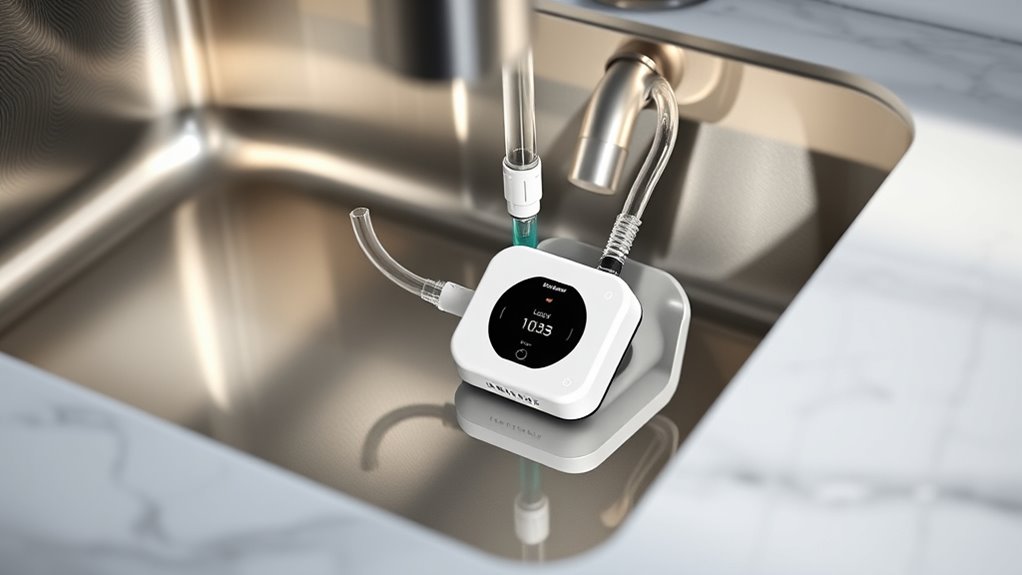

Smart water leak detection systems can help prevent costly damage by sensing leaks early with strategically placed sensors near joints, vulnerable spots, and hard-to-reach areas. Automated alerts notify you immediately of potential problems, allowing for quick action. Using moisture, flow, and temperature sensors, these systems monitor your pipes proactively. Proper installation maximizes protection, especially with different pipe materials and high-risk zones. Keep exploring to learn how to optimize your setup for maximum leak prevention.

Get home appliances delivered free with Prime
- Fast, free delivery on millions of items
- Prime Video, Amazon Music and more included
- Member-only deals all year
Key Takeaways
- Proper sensor placement near vulnerable areas like joints, bends, and appliances ensures early leak detection.
- Combining moisture, flow rate, and temperature sensors enhances system accuracy and early warning capabilities.
- Automated alerts enable real-time notifications, minimizing water damage and structural harm.
- Using durable, leak-resistant pipe materials reduces the likelihood of leaks and extends system effectiveness.
- Strategic sensor installation in high-pressure zones or hidden locations ensures comprehensive monitoring and damage prevention.
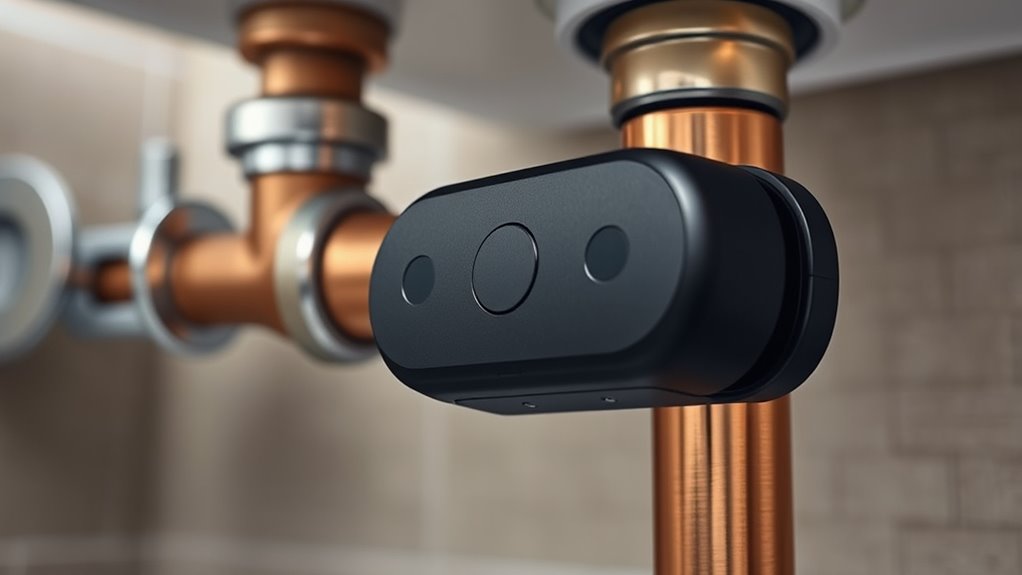
Have you ever worried about hidden water leaks causing costly damage? It’s a common concern, especially since leaks often develop behind walls or under floors, making them hard to detect until significant harm has already occurred. That’s where smart water leak detection systems come into play, offering proactive solutions to identify leaks early and prevent extensive damage. One of the key factors in the effectiveness of these systems is understanding how pipe materials and sensor placement influence their performance.
Different pipe materials, such as copper, PVC, or PEX, react differently when exposed to leaks. Some materials are more prone to cracking or corrosion, which can increase the likelihood of leaks forming unexpectedly. When selecting pipes, opting for durable, leak-resistant materials can reduce the risk altogether. However, even with high-quality pipes, leaks can still happen due to age, pressure fluctuations, or external damage. That’s why sensor placement is critical to ensure early leak detection. Sensors should be strategically positioned near joints, bends, or areas with a history of issues. Placing them along vulnerable sections of piping maximizes the chance of catching leaks at their inception.
Choosing durable pipes and strategic sensor placement helps detect leaks early and prevent costly damage.
Smart leak detection systems often include sensors that monitor moisture, temperature, or flow rates. Proper sensor placement means installing these devices in spots where leaks are most likely to occur or where water damage would be most costly. For example, placing sensors under sinks, behind appliances, or along basement walls helps catch leaks before they cause structural damage or mold growth. Additionally, some systems use advanced moisture sensors that can be easily installed in hard-to-reach places, giving you peace of mind without extensive remodeling. Understanding the role of automation in such systems can further enhance early detection capabilities.
The choice of pipe materials influences how you should approach sensor placement. For instance, older copper pipes may be more susceptible to corrosion, so placing sensors nearby can help detect leaks early. Conversely, PEX pipes are flexible and resistant to many common issues, but they still benefit from sensors at connections and high-pressure zones. The goal is to create a network where sensors act as an early warning system, alerting you to small leaks before they escalate into major problems.
smart water leak detection system
As an affiliate, we earn on qualifying purchases.
As an affiliate, we earn on qualifying purchases.
Frequently Asked Questions
How Do Leak Detection Systems Integrate With Smart Home Devices?
You can easily integrate leak detection systems with your smart home devices through smart home platforms like Alexa, Google Home, or Apple HomeKit. These systems are designed for device compatibility, allowing you to set up alerts, automate shut-offs, or even trigger other devices when a leak is detected. By linking everything seamlessly, you gain real-time control and peace of mind, preventing water damage efficiently.
What Is the Typical Lifespan of a Water Leak Detection Sensor?
The typical lifespan of a water leak detection sensor is about 3 to 5 years. To guarantee it stays effective, you should regularly perform sensor maintenance and calibration. This helps prevent false alarms and maintains sensitivity. Keep an eye on the manufacturer’s recommendations for calibration intervals, and replace sensors when they show signs of wear or reduced accuracy, ensuring your system continues protecting your home effectively.
Can Leak Detection Systems Differentiate Between Minor and Major Leaks?
Yes, leak detection systems can differentiate between minor and major leaks by analyzing leak severity. They use sensor calibration to assess the flow rate and leak size, allowing you to prioritize responses. When sensors are properly calibrated, they can alert you to small drips before they escalate into major problems. This feature helps you manage leaks proactively, saving water and preventing costly damage.
Are There Energy Consumption Concerns With Continuous Leak Monitoring?
You might think continuous leak monitoring consumes a lot of energy, but modern systems are designed for power efficiency. Investigations show that these devices use minimal energy due to low-power sensors and smart algorithms. While there is some energy use involved, it’s generally negligible compared to potential water damage costs. Overall, you can enjoy reliable leak detection without significant concerns about energy consumption, making these systems both effective and eco-friendly.
How Effective Are Leak Detection Systems in Outdoor or Underground Pipes?
Leak detection systems are quite effective for outdoor pipe durability and underground pipe monitoring. They quickly identify leaks in outdoor pipes, reducing damage risks and maintenance costs. For underground pipes, these systems excel at early leak detection, preventing extensive damage and water loss. You benefit from real-time alerts that help you respond promptly, ensuring the longevity of your infrastructure and minimizing costly repairs.
As an affiliate, we earn on qualifying purchases.
Conclusion
By installing smart water leak detection systems, you safeguard your home from costly damage and water waste. Think of them as vigilant guardians, silently watching over your space like an unblinking eye. Don’t wait for a flood to realize the importance of prevention—act now and embrace the peace of mind that comes with proactive protection. After all, isn’t it better to catch a leak early than to face the aftermath later?
moisture and flow sensors for pipes
As an affiliate, we earn on qualifying purchases.
As an affiliate, we earn on qualifying purchases.
automatic water leak alert system
As an affiliate, we earn on qualifying purchases.
As an affiliate, we earn on qualifying purchases.
Halloween Picks
halloween
As an affiliate, we earn on qualifying purchases.