
TL;DR
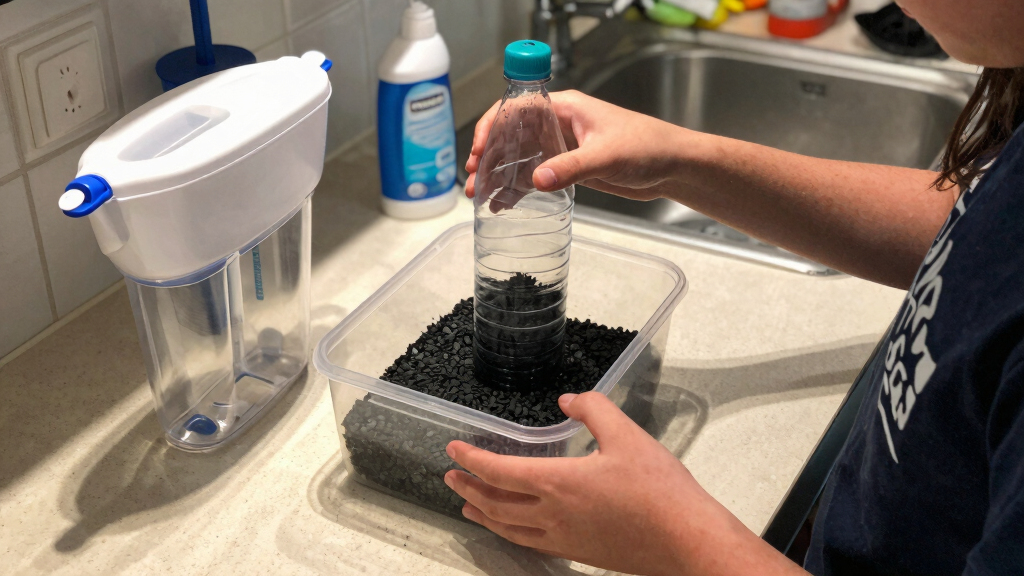
A junior high school student in Warrenton, Virginia, created a homemade water filter that successfully removes 95.5% of microplastics from drinking water. This development showcases youth engagement in environmental solutions and has potential implications for water safety.
A junior high school student from Warrenton, Virginia, has developed a water filter that removes 95.5% of microplastics from drinking water, according to her own testing results. This achievement highlights youth involvement in environmental innovation and could influence future water safety measures.

Get home appliances delivered free with Prime
- Fast, free delivery on millions of items
- Prime Video, Amazon Music and more included
- Member-only deals all year
The student, whose name has not been publicly disclosed, built the water filter in her garage as part of a science project. She tested its effectiveness by analyzing water samples before and after filtration, finding that it eliminated 95.5% of microplastics present. The project was guided by her interest in environmental issues and sustainable solutions.
Her testing involved collecting water samples contaminated with microplastics, then passing them through the homemade filter. The filtration process used a combination of activated charcoal, fine mesh, and other household materials, similar to gravity water filters for camping. The results were verified through microscopy analysis, confirming the high removal rate.
Why It Matters
This development is significant because it demonstrates the potential for accessible, low-cost solutions to microplastic contamination in drinking water. It also highlights the role of young innovators in addressing environmental challenges, potentially inspiring further research and community-based efforts.
Products Worth Considering

Levoit Eleva 300X Air Purifier with Fully Sealed HEPA Filtration and Smart Control

Levoit Vital 100S-P Air Purifier with Washable Pre-Filter

Bose Portable Smart Speaker with Alexa and Google Assistant, Black
As an affiliate, we earn on qualifying purchases.
Background
Microplastic pollution in water sources has become a growing concern worldwide, with studies indicating widespread contamination in tap and bottled water. While large-scale filtration systems exist, accessible solutions for individual households remain limited. This project aligns with ongoing efforts to find practical, affordable methods to reduce microplastic ingestion.
“I wanted to see if I could make a filter that could really make a difference in cleaning microplastics from water.”
— the student
“Her results are impressive for a middle school project and show real potential for further development.”
— her science teacher
What Remains Unclear
It is not yet confirmed whether the filter can be scaled for household use or if it maintains long-term effectiveness. Further testing and validation are needed before broader adoption or commercial development can be considered.
What’s Next
The student plans to refine her design and conduct additional testing to improve efficiency and durability. Researchers and environmental groups may explore her approach for potential adaptation into larger-scale or consumer-grade filters. Further validation by scientific institutions is expected.
Key Questions
How effective is the water filter in removing microplastics?
According to her testing, the filter removes approximately 95.5% of microplastics from contaminated water samples.
Can this filter be used at home?
It is currently a prototype built by a student; further testing is needed to determine if it is suitable for household use or large-scale application.
What materials are used in the filter?
The filter utilizes household materials such as activated charcoal and fine mesh, combined in a layered design.
Will this project lead to commercial products?
There are no immediate plans for commercialization; however, further research and validation could lead to broader development.
Why is removing microplastics from water important?
Microplastics pose health risks when ingested, and their widespread presence in water sources is a growing environmental concern.
Source: reddit