TL;DR

Get home appliances delivered free with Prime
- Fast, free delivery on millions of items
- Prime Video, Amazon Music and more included
- Member-only deals all year
A Veranda report identifies six bathroom design directions that designers expect to gain traction in 2027: custom storage, expressive hardware, layered lighting, patterned tile floors, more residential-looking finishes and smart technology. These are designers’ forecasts, not measured industry data or guarantees of what homeowners will adopt.
Designers interviewed by Veranda predict that bathrooms in 2027 will combine more personalized storage and smart features with decorative choices such as distinctive hardware, layered lighting and patterned tile floors. The report describes emerging client requests and professional observations, rather than a verified industry-wide shift or a guarantee that these designs will become widespread.
The six directions identified in the report are custom cabinetry and storage, standout hardware, multiple lighting sources, patterned tile floors, a move away from purely utilitarian design, and smart technology. Together, they suggest a design approach that treats the bathroom as both a functional space and part of the home’s broader style.
Rachel Cannon, founder and principal designer of Rachel Cannon Limited, says clients are showing greater interest in fully customized bathroom cabinetry that supports the way they organize and use the room. Gina Elkins, founder and principal of Studio Casa Vita, points to features such as docking drawers with outlets, dedicated places for hair tools, and storage for towels and makeup. Those examples are designers’ descriptions of client needs, not evidence of how common the features are across the housing market.
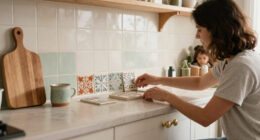
On finishes, Cannon reports more willingness to use distinctive cabinet hardware, including knobs paired with backplates and designs in varied shapes or materials. She also describes renewed interest in tile laid in patterns such as herringbone or offset brick, as well as floors with colored geometric details. Elkins says clients are asking for multiple kinds of light—from task lighting at mirrors to softer nighttime options—and for warmer materials and finishes that help bathrooms feel connected to the rest of a home.
Bathrooms Gain a Residential Feel
The forecast matters to homeowners planning a renovation because it shifts the design question beyond choosing a vanity or tile color. The designers’ examples emphasize how storage, lighting and layout can affect daily routines, while material and decorative choices can make a bathroom feel more consistent with the rest of a house.
Some of the recommendations also involve practical trade-offs. Built-in outlets, custom cabinetry and automated fixtures may require more planning than a cosmetic refresh, while patterned flooring and mixed hardware can make a stronger visual statement. The report does not provide cost estimates, installation requirements or evidence that these choices increase resale value. It presents them as design options and client requests, not universal prescriptions.
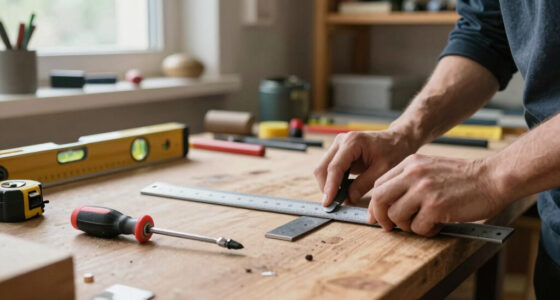
custom bathroom cabinetry with outlets
As an affiliate, we earn on qualifying purchases.
As an affiliate, we earn on qualifying purchases.
From Utility Room to Designed Space
Veranda frames the trends as part of a wider interest in carrying current decorating choices into rooms that are often renovated less frequently than kitchens or living rooms. The article says designers are watching changes in materials, storage and function, but it does not cite market research, sales figures or a survey measuring adoption.
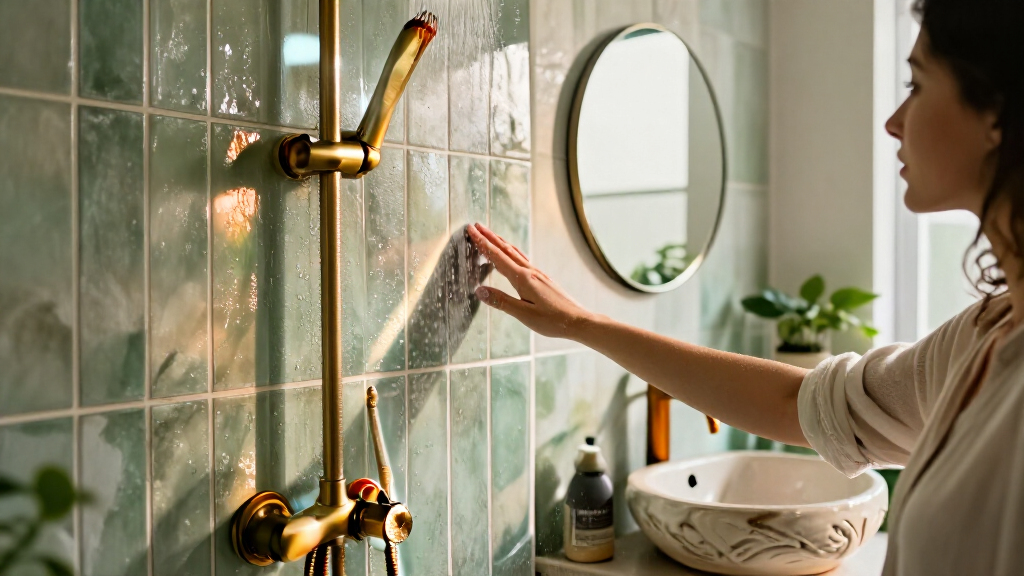
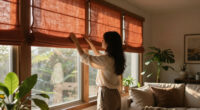
Elkins describes clients moving away from bathrooms designed as purely practical spaces. Her examples include separating a vanity from wet areas with cased openings or trim, using wood flooring in the vanity zone and stone in wet areas, and bringing warmer paint, stained wood and ceiling details into the room. The report also notes interest in automated shower controls, smart toilet functions, touch-free faucets and motorized window coverings.
“By incorporating customized organizational systems, we can maximize every inch and make the bathroom feel more intuitive, efficient, and personal.”
— Rachel Cannon, founder and principal designer of Rachel Cannon Limited
As an affiliate, we earn on qualifying purchases.
How Broad Is the Shift?
The report does not establish how many homeowners are adopting these features or whether the forecasts will hold across different budgets, regions and types of homes. Its evidence consists of comments from designers about their own clients and projects, not a representative survey or industry data. It also gives no comparative figures for renovation costs, product demand or resale outcomes.
It remains unclear which ideas will gain the most traction in 2027, and whether they will be adopted broadly or mainly in custom and higher-budget renovations. Smart features and bespoke storage may also depend on a homeowner’s layout, budget and maintenance preferences; the article does not assess those factors.
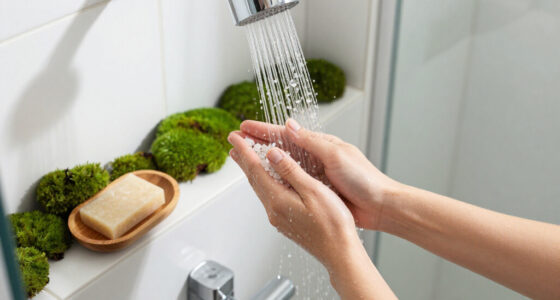
layered lighting fixtures for bathroom
As an affiliate, we earn on qualifying purchases.
As an affiliate, we earn on qualifying purchases.
Watch Renovation Choices in 2027
The predictions can be tested against renovation projects and client choices as 2027 approaches and unfolds. More concrete evidence would include adoption data from designers, builders or product suppliers, alongside cost and installation information that the report does not provide.
For now, the article offers a snapshot of what two designers say they are seeing or expecting. Homeowners considering a project can use the ideas as prompts for planning, while weighing the specific needs and constraints of their own bathrooms rather than assuming every forecast will become a standard design choice.
As an affiliate, we earn on qualifying purchases.
Key Questions
What six bathroom trends does the report predict for 2027?
The report names custom storage, distinctive hardware, layered lighting, patterned tile floors, a more residential design approach and smart bathroom technology.
Are these trends confirmed to be widespread?
No. They are designers’ forecasts and observations based on their clients and projects. The report does not include market-wide adoption data.
What kinds of smart bathroom features are mentioned?
Elkins cites automated shower controls, smart toilet functions, touch-free faucets and motorized shades or drapery.
What does layered bathroom lighting mean in the report?
It means using different sources for different purposes, such as mirror task lighting, softer nighttime lighting and decorative fixtures. Elkins also gives toe-kick and baseboard lighting as examples.
Source: rss
Cold & flu season Picks
humidifiers
As an affiliate, we earn on qualifying purchases.