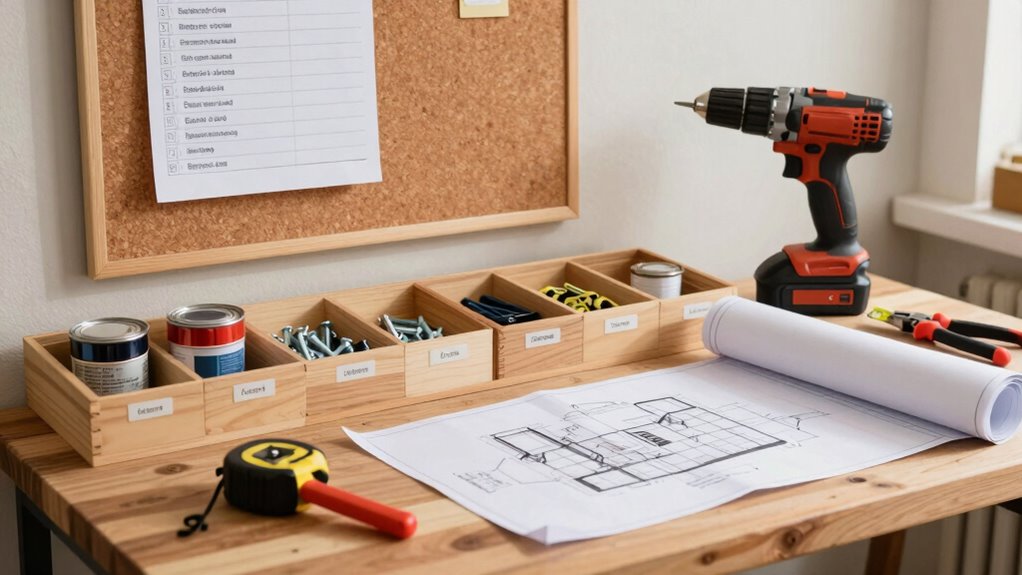

To prevent weekend project chaos, start by organizing your tools with labeled bins, pegboards, or drawer inserts for quick access. Keep your workspace tidy to stay focused and avoid interruptions. Use a reliable power setup like inverter generators for consistent power. Incorporate technology like CAD and 3D printing for precise results. Following these steps sets the stage for a smooth, enjoyable project—stay tuned to learn more about creating an efficient DIY upgrade plan.
Open a free Amazon Business account
Business pricing, bulk buying and tax-exempt orders.
As an affiliate, we earn on qualifying purchases.
Key Takeaways
- Organize tools with labeled storage solutions to ensure quick access and reduce project delays.
- Maintain a clutter-free workspace to enhance efficiency and prevent interruptions.
- Use reliable power sources like inverter generators for consistent tool operation.
- Incorporate CAD and 3D printing for precise design and customization, minimizing errors.
- Prioritize safety standards to create a secure environment and avoid accidents during the project.
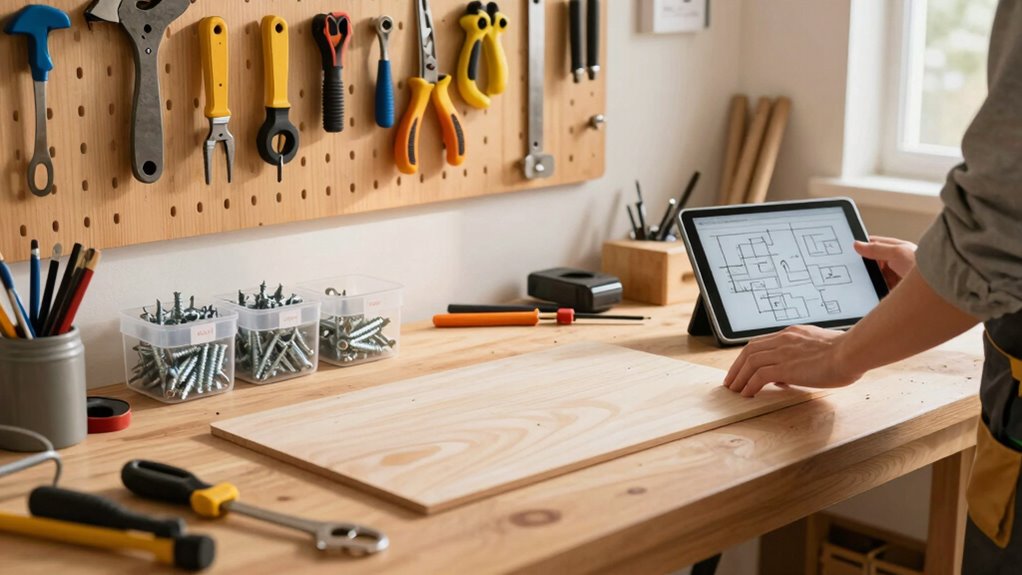
Are you ready to take your projects to the next level without breaking the bank? The key to a smooth, enjoyable weekend project lies in a solid DIY upgrade strategy. It all starts with proper tool organization. When you keep your tools neatly arranged and easily accessible, you save time searching and prevent frustration. Invest in storage solutions like labeled bins, pegboards, or drawer inserts that keep everything in its place. Not only does this streamline your workflow, but it also helps you identify missing tools quickly, avoiding unnecessary trips to the hardware store. Remember, a clutter-free workspace boosts efficiency and keeps your project moving forward without interruption. Additionally, maintaining organized tools ensures you won’t waste time hunting for the right one mid-project. Incorporating efficient power sources, like portable inverter generators, can also keep your tools powered reliably, especially when working off-grid or during power outages. Ensuring your workspace is safe and compliant with safety standards can prevent accidents and ensure a smooth project process. Proper workspace safety practices are essential for a successful and stress-free project experience.
A well-planned setup that integrates CAD and 3D printing can further enhance precision and customization in your projects, saving you time and effort in the long run.
As an affiliate, we earn on qualifying purchases.
Frequently Asked Questions
How Do I Choose the Right Tools for My Project?
To choose the right tools for your project, start with a skill assessment to understand your abilities. Then, focus on tool selection by identifying essential tools that match your project’s needs. Opt for quality tools that fit your skill level and budget. Avoid overbuying by researching specific tools for your task, and consider multi-purpose options to save space and money. This approach guarantees efficiency and reduces frustration.
What Safety Precautions Should I Take During Upgrades?
You should prioritize tool safety by always inspecting your tools before use and following manufacturer instructions. Wear protective gear like gloves, goggles, and masks to shield yourself from debris, sparks, and fumes. Keep your workspace well-ventilated and clear of clutter to prevent accidents. Never bypass safety features on power tools, and stay focused on your task. Taking these precautions minimizes risks, ensuring your upgrade project stays safe and successful.
How Can I Estimate Project Costs Accurately?
Think of estimating project costs like mapping a treasure hunt—you need a clear plan. Start with budget planning by listing all materials and tools, then research prices through material sourcing. Add a contingency for unexpected expenses. Break down the project into phases and assign costs to each. This detailed approach helps you stay on track financially, avoiding surprises and ensuring your DIY upgrade stays within your budget.
What Are Common Mistakes to Avoid in DIY Upgrades?
To avoid DIY pitfalls and upgrade missteps, always plan thoroughly before starting. Don’t rush the prep work or underestimate the tools and skills needed. Avoid skipping safety precautions, which can lead to accidents. Keep realistic expectations about your abilities and timeline. Failing to research materials or follow instructions can cause costly mistakes. Ultimately, don’t ignore permits or codes—these oversights can delay or invalidate your project.
How Do I Prioritize Tasks for Multiple Upgrades?
To prioritize tasks for multiple upgrades, start with a clear planning timeline, listing each project’s steps and deadlines. Allocate your resources wisely, considering tools, materials, and time needed for each task. Focus on the most critical upgrades first, then schedule smaller or simpler projects around them. Regularly review your progress, adjust your plan as needed, and keep a flexible mindset to prevent chaos and stay on track.
portable inverter generator for tools
As an affiliate, we earn on qualifying purchases.
As an affiliate, we earn on qualifying purchases.
Conclusion
By following this DIY upgrade strategy, you’ll transform your weekend projects from chaos into smooth sailing—like turning a wild hurricane into a gentle breeze. No more sleepless nights or frantic messes; instead, you’ll experience pure joy and pride in every successful upgrade. Stick to the plan, stay organized, and watch as your home becomes a masterpiece of calm and control. Get ready to conquer your DIY dreams with confidence—your weekend victory is just one smart step away!
As an affiliate, we earn on qualifying purchases.
As an affiliate, we earn on qualifying purchases.
NFL season / tailgating Picks
team gear
As an affiliate, we earn on qualifying purchases.