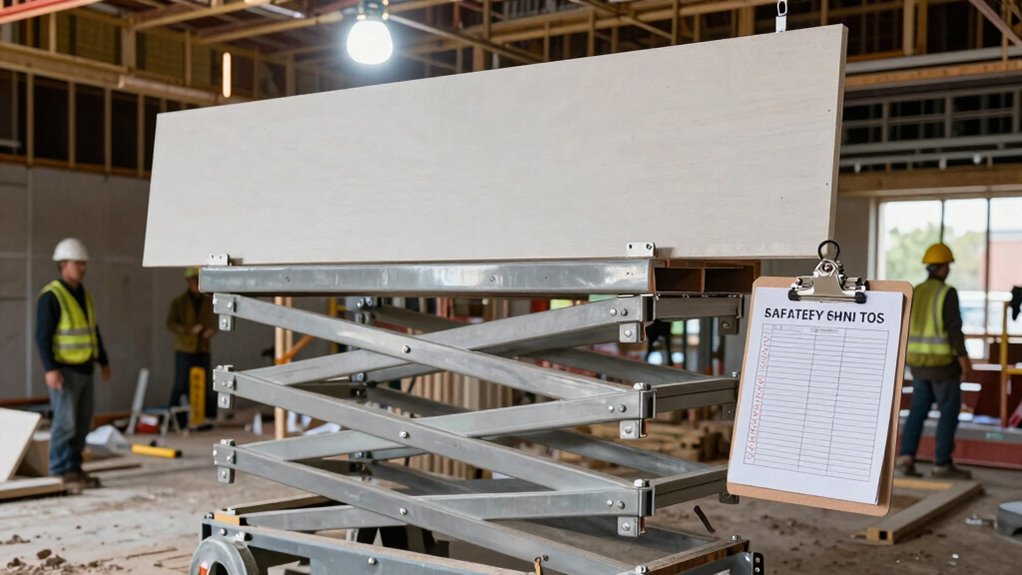

Before lifting drywall with a drywall lift, you should inspect all components for damage, verify safety features like locks and brakes work, and confirm the lift’s certifications. Assess your work area for hazards and space needs, clear it of obstructions, and affirm the surface is stable. Wear proper PPE, follow safe handling techniques, and perform final safety checks. Staying thorough reduces risks; keep going to learn how to do each step safely and confidently.
Key Takeaways
- Inspect and maintain all equipment components, including cables, hydraulics, and safety locks, before use.
- Verify the drywall lift meets safety certifications and all safety features are operational.
- Assess the work area for hazards, ensuring sufficient space and a stable surface for safe operation.
- Wear appropriate PPE and follow proper handling techniques for lifting and positioning drywall sheets.
- Conduct a final safety check to confirm all components are secure, the area is clear, and the lift is ready for operation.
Why Safety Comes First When Using a Drywall Lift
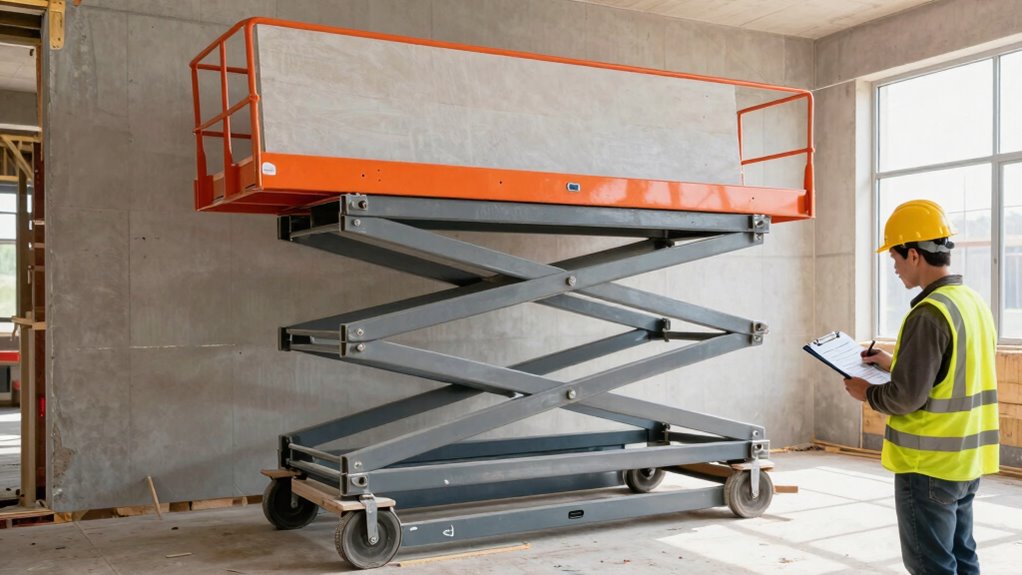
Because drywall lifts are heavy and require careful handling, safety should always be your top priority. Ensuring drywall safety begins with a thorough equipment inspection before each use. Check for any signs of damage, loose bolts, or worn parts that could compromise stability. A well-maintained lift reduces the risk of accidents, injuries, or drywall damage during installation. Never skip inspecting the equipment, even if it looks fine. Properly functioning safety features and secure parts are essential for safe operation. Remember, rushing through equipment inspection can lead to overlooked hazards. Prioritizing safety not only protects you but also guarantees a smoother, more efficient drywall installation process. Taking these precautions shows your commitment to a safe work environment. Regular maintenance and understanding drywall lift safety guidelines further enhance overall safety. Additionally, understanding the importance of projector contrast ratio and its impact on image quality can be crucial for home theater setups, ensuring a better viewing experience. Being aware of personal protective equipment requirements can further minimize the risk of injury during handling and installation. Incorporating safety awareness into your routine helps prevent potential accidents before they happen. Paying attention to equipment maintenance schedules also plays a vital role in maintaining safe operation standards.
How to Check Your Drywall Lift’s Safety Features and Certifications
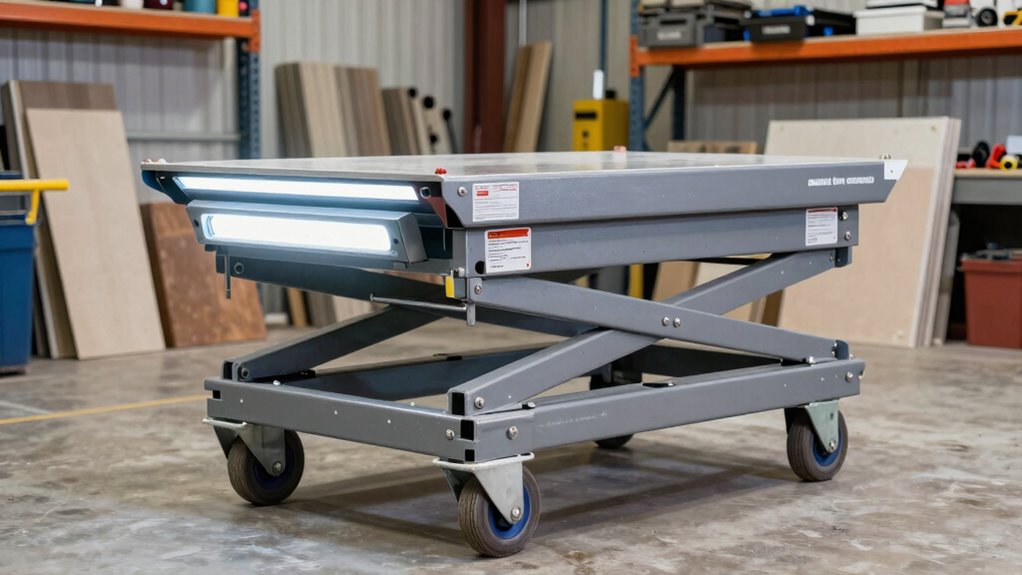
Start by checking that your drywall lift has the proper safety certifications from recognized authorities to guarantee it meets safety standards. Next, inspect all safety features, like locking mechanisms and stabilizers, to confirm they’re functioning correctly. Doing these quick checks helps you work safely and avoid potential hazards. Additionally, verifying the safety certifications can provide extra assurance that the equipment complies with industry standards. Ensuring the correct installation of safety components is essential for maintaining a secure working environment. Regularly reviewing the manufacturer’s guidelines can help identify any maintenance needs or updates to safety features. Incorporating electric power generation safety tips can also be beneficial when using powered tools or equipment in your workspace. Being aware of quality assurance principles can further help in maintaining safety and performance standards.
Verify Safety Certifications
Before using a drywall lift, verifying that it meets all safety certifications and standards is vital. Check for certifications from recognized organizations like OSHA or ANSI, which verify the lift’s safety features and construction quality. Confirm that the lift complies with electrical hazard regulations to prevent shocks or short circuits, especially if it has electrical components. Additionally, consider environmental factors; verify the lift is rated for indoor or outdoor use and that it can handle weight and weather conditions safely. Proper certifications indicate the lift has undergone testing for stability, durability, and safety. Don’t overlook these details, as using uncertified equipment can lead to accidents or compromise safety during operation. Always verify certifications before every use to keep your workspace safe. Safety standards are essential to ensure the drywall lift performs reliably under various conditions. Ensuring the lift has a valid inspection record can further confirm that it has been regularly checked for ongoing safety compliance.
Inspect Safety Features
Once you’ve confirmed that your drywall lift has the proper safety certifications, it’s important to thoroughly inspect its safety features before each use. Check that all safety locks and latches are functioning correctly and securely engaged. Inspect the lift’s cables, pulleys, and hydraulic systems for signs of wear, fraying, or leaks. Ensure that safety guards are in place and undamaged. Proper equipment maintenance is essential to prevent malfunctions. Additionally, verify that operators have received adequate training on safety procedures and the lift’s features. Regular inspections help identify potential issues early, reducing risk during operation. Also, safety standards can guide your inspection process and ensure compliance with regulations. Familiarity with standard safety protocols can further enhance your inspection routine and promote safe operation. Performing routine safety checks consistently can significantly improve overall safety and longevity of the equipment. Conducting pre-operational safety assessments can help detect issues before use, further minimizing hazards. Never overlook this step, as it guarantees the lift operates safely and efficiently, protecting both workers and the project’s progress.
How to Evaluate Your Work Area for Hazards and Space Needs
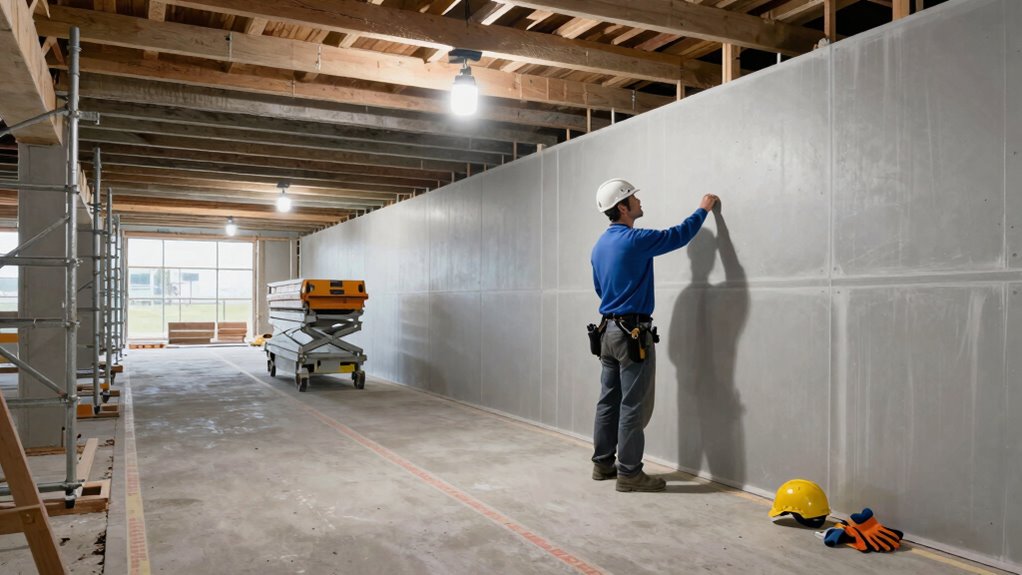
Evaluating your work area thoroughly is essential to guarantee safety and efficiency when using a drywall lift. Begin with a work area assessment to ensure enough space for maneuvering and positioning the lift safely. Check for any obstacles like furniture, tools, or electrical cords that could impede movement. Hazard identification is critical; look for uneven surfaces, overhead obstructions, or unstable flooring that could cause accidents. Confirm that the ceiling height and room dimensions accommodate the drywall sheets and the lift’s reach. Clear the area of debris and secure any loose items. Properly assessing these factors minimizes risks, prevents accidents, and ensures smooth operation. Recognizing building safety protocols and adhering to them further enhances overall safety. Additionally, understanding cybersecurity best practices can help protect project data and digital tools used during construction. Conducting a comprehensive safety inspection before starting work can reveal potential issues that might otherwise go unnoticed. Taking the time for a thorough work area evaluation makes your drywall project safer and more efficient, especially when considering equipment safety guidelines to prevent mishandling or damage during operation. Incorporating a hazard mitigation plan can further reduce the risk of unexpected incidents during your project.
What PPE Do You Need for Safe Drywall Lift Operation?
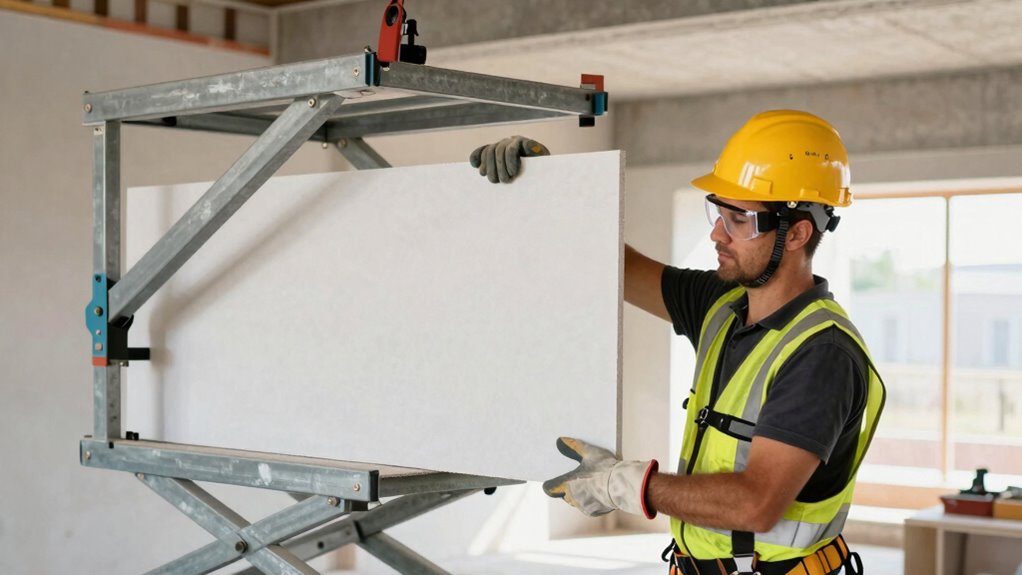
To guarantee your safety while operating a drywall lift, wearing the appropriate personal protective equipment (PPE) is essential. PPE helps prevent injuries and enhances hazard prevention during setup and operation. Make sure you have:
- Safety goggles or glasses to protect your eyes from dust and debris.
- A hard hat to shield your head from falling objects.
- Heavy-duty gloves to improve grip and prevent hand injuries.
- Steel-toed boots to protect your feet from heavy materials and accidental drops.
Additionally, being aware of commercial kitchen equipment can provide insight into proper handling and safety measures for heavy-duty tools and gear.
Using the right PPE minimizes risks and ensures safe handling of drywall sheets. Always inspect your PPE before use to confirm it’s in good condition. Proper hazard prevention depends on your commitment to wearing the necessary safety gear at all times during operation.
Step-by-Step: Setting Up Your Drywall Lift Safely
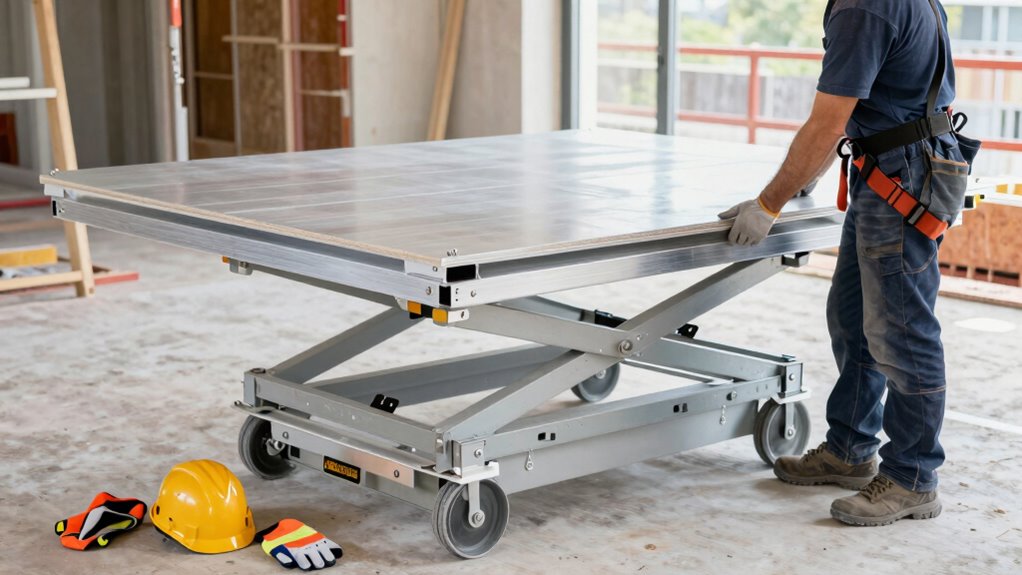
Before setting up your drywall lift, you need to inspect the equipment thoroughly to make certain all parts are in good condition. Next, position the lift correctly to maintain stability and safety during operation. Finally, securely fasten the drywall to prevent slips or falls once it’s lifted into place.
Inspect Equipment Thoroughly
Ensuring your drywall lift is in top condition is essential for safe operation. Proper equipment maintenance prevents accidents and prolongs the lift’s lifespan. Before use, thoroughly inspect the lift for any signs of damage or wear. Consider these key steps:
- Check all moving parts, including pulleys and joints, for smooth operation.
- Examine hydraulic systems for leaks or loss of pressure.
- Inspect bolts, nuts, and welds to ensure they’re secure and free of corrosion.
- Confirm that storage safety procedures were followed, and no debris or obstructions are present.
Taking these precautions guarantees the lift functions correctly and safely. Regular inspections promote equipment maintenance and reduce the risk of mishaps, making your drywall installation safer and more efficient.
Position Lift Correctly
Properly positioning your drywall lift is essential for a safe and efficient installation. Start by adjusting the lift’s arms and supports to match the drywall sheet’s size, ensuring proper lift positioning. Make sure the lift is on a flat, stable surface before raising the arm. Align the lift’s handles and controls to your ergonomic alignment, reducing strain and improving control during lifting. Keep your body centered and avoid awkward postures to prevent injuries. Double-check that all locking mechanisms are secure before raising the drywall. Position the lift so that the sheet will be level and aligned with your marking. Taking these steps ensures stability and reduces the risk of slips or falls during the installation process. Proper lift positioning is key to a safe, effective drywall setup.
Secure Drywall Properly
To secure drywall properly with your lift, start by positioning the sheet against the wall or ceiling surface and adjusting the lift’s supports to hold it firmly in place. This guarantees proper drywall placement and precise sheet alignment. Next, follow these steps:
- Confirm the sheet is level and aligned with adjacent panels before tightening supports.
- Gradually lower the lift, ensuring even weight distribution to prevent shifting.
- Secure the drywall with screws or nails once it’s in the correct position.
- Double-check that the sheet remains aligned and secure before removing the lift or proceeding with installation.
How to Handle Large Drywall Sheets Safely and Without Risks
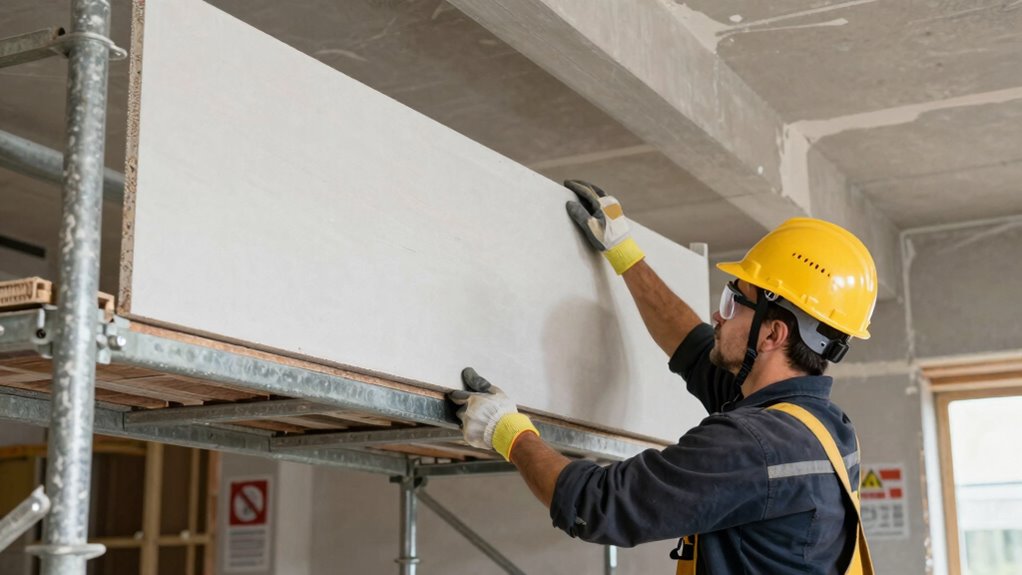
Handling large drywall sheets can be risky if you don’t take proper precautions. To guarantee safety, focus on drywall handling with correct lifting techniques. Always bend your knees and keep your back straight to avoid strain. Grip the drywall firmly but avoid overexerting your muscles. If possible, work with a partner to distribute the weight evenly, reducing the risk of dropping the sheet. Use your legs to lift, not your back, and keep the drywall close to your body to maintain control. Move slowly and deliberately to prevent slips or missteps. Never attempt to handle oversized sheets alone if they’re too heavy or unwieldy. Proper lifting techniques reduce injury risk and make drywall handling safer and more efficient.
How to Secure Drywall Properly During Lifting
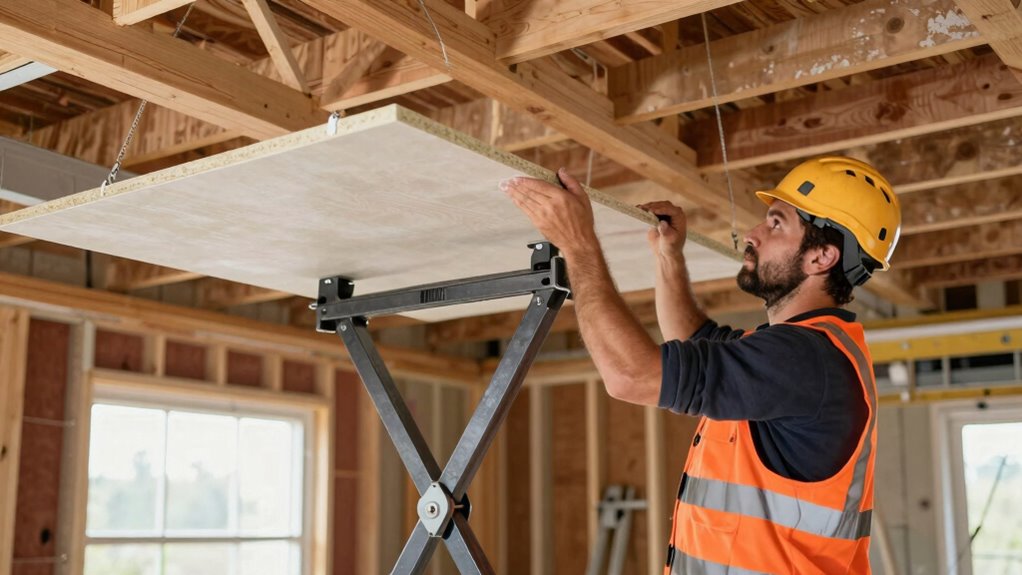
To secure drywall properly during lifting, you need to focus on your grip techniques, ensuring they’re firm but not damaging. Using support tools like lifts or braces can help stabilize the sheet and reduce strain. Additionally, maintaining the correct lifting posture will keep you safe and make the process more efficient.
Proper Grip Techniques
When lifting drywall, maintaining a proper grip is crucial to prevent accidents and guarantee safety. To do this effectively, focus on these key techniques:
- Make certain your grip strength is firm but not excessive to avoid fatigue or slips.
- Position your hands so that your thumbs are on top, with fingers wrapped securely around the edges.
- Keep your hands close to your body to improve control and reduce strain.
- Distribute weight evenly across both hands, adjusting hand positioning as needed to maintain balance.
Use of Support Tools
Using support tools is crucial to secure drywall properly during lifting and prevent accidents. Support tools like drywall lifts, clamps, and braces help hold the sheet steady, reducing strain and the risk of slips. Always use appropriate safety equipment, such as gloves and safety glasses, to protect yourself while handling these tools. Secure the drywall with support tools before lifting to ensure it doesn’t shift or fall unexpectedly. Properly positioning the drywall on support stands or using a drywall lift can make the process safer and more efficient. Never bypass safety equipment or skip support tools, as they are indispensable in maintaining stability during the lift. Taking the time to use these tools correctly helps prevent injuries and ensures your project stays on track.
Correct Lifting Posture
Maintaining the correct lifting posture is essential to prevent injuries and guarantee the drywall stays secure during the lift. Proper lifting ergonomics ensure you use your muscles efficiently and reduce strain. To achieve this, focus on:
- Keeping your back straight and core engaged to support your spine.
- Bending at your hips and knees, not your waist, for ideal muscle engagement.
- Holding the drywall close to your body to minimize strain on your arms and back.
- Distributing your weight evenly across both legs to maintain balance and control.
Common Mistakes to Avoid When Operating a Drywall Lift

One common mistake to avoid when operating a drywall lift is failing to secure the drywall properly before raising it. Poor drywall material handling can lead to slips or falls, risking injury or damage. Make sure you use the correct lifting techniques, such as balancing the sheet evenly and holding it close to your body. Don’t rush the process; rushing can cause instability. Always double-check that the drywall is securely clamped or supported before lifting. Neglecting this step can result in the sheet falling unexpectedly, causing injury or drywall damage. Proper lifting techniques and careful handling ensure safety and efficiency. Taking your time and maintaining control will help prevent accidents and make the entire drywall installation smoother.
Training Tips to Build Confidence and Safe Operation Skills
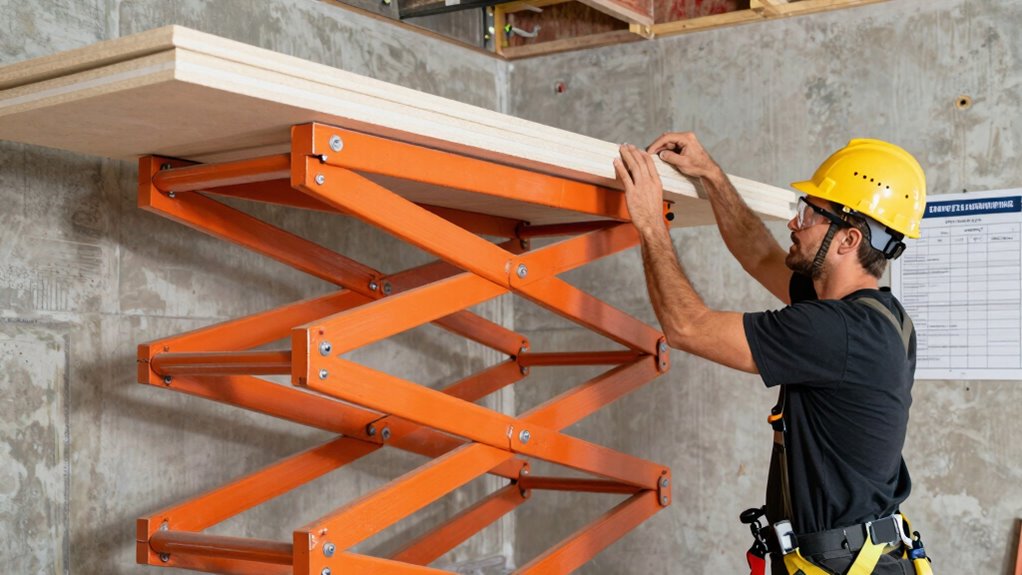
To build confidence and guarantee safe operation of a drywall lift, hands-on training is essential. This approach helps you master key skills and reduces risks. Start by understanding proper drywall lift maintenance to ensure reliable performance. Next, practice drywall lift troubleshooting to quickly identify and fix issues. Here are four training tips to enhance your skills:
- Familiarize yourself with the lift’s controls and safety features.
- Practice lifting and positioning drywall on a variety of ceiling and wall configurations.
- Conduct routine drywall lift maintenance checks to prevent malfunctions.
- Simulate troubleshooting scenarios to develop confidence in resolving common problems.
Final Safety Checks Before Lifting Your First Drywall Sheet

Before you lift your first drywall sheet, it’s important to perform final safety checks to make certain everything is in proper working order. Begin by inspecting the drywall lift for any signs of wear or damage, paying close attention to the hydraulic system, cables, and wheels. Check that the lift’s maintenance is up to date and that all moving parts are properly lubricated. Confirm that safety locks and brakes are functioning correctly. If you notice any issues, perform drywall lift troubleshooting before proceeding. Ensure the lift is stable on a flat surface and that the area around it is clear of obstructions. Taking these steps helps prevent accidents and ensures smooth operation during your drywall installation.
Frequently Asked Questions
How Often Should I Inspect My Drywall Lift for Maintenance Issues?
You should inspect your drywall lift before each use and perform a thorough maintenance checklist monthly. Regular inspections help catch potential issues early, ensuring safety and efficiency. Pay special attention to cables, hydraulic systems, and safety locks. If you notice any wear or damage, address it immediately. Adopting a consistent inspection schedule keeps your equipment in top condition and prevents accidents, giving you peace of mind on every job.
Can Drywall Lifts Be Used on Uneven or Sloped Surfaces?
Imagine you’re installing drywall on a sloped attic ceiling. Drywall lifts can adapt to uneven surfaces, but you must prioritize sloped surface safety. Use adjustable legs and secure the lift firmly to prevent slipping. While some lifts are designed for uneven surfaces, always double-check stability and weight capacity. Properly securing the lift guarantees safety and precision, making your installation smoother and safer on challenging slopes.
What Are the Recommended Storage Practices for Drywall Lifts?
You should store drywall lifts in a dry, covered area to guarantee storage safety and prevent rust. Always clean the lift after use, removing debris and lubricating moving parts to maintain equipment durability. Store it upright or on a stable surface, avoiding stacking heavy objects on top. Regular inspections for damage or wear will help prolong its lifespan, keeping it ready for your next project.
Are There Weight Limits I Should Be Aware of for Different Drywall Lifts?
You should always check the lifting capacity and weight restrictions of your drywall lift before use. Most lifts have a maximum weight limit, typically ranging from 150 to 300 pounds, depending on the model. Exceeding these limits can compromise safety and damage the equipment. Always read the manufacturer’s guidelines and verify the lift is rated for the weight of your drywall sheets to prevent accidents.
How Do I Ensure Proper Communication With Team Members During Lifting?
To guarantee proper communication during lifting, you should establish clear signals and verbal cues with your team. Always use team communication to coordinate movements, making sure everyone understands the plan before lifting. Follow safety protocols by checking in regularly, confirming each member’s readiness, and calling out any issues. This approach minimizes accidents, keeps everyone informed, and maintains a safe lifting process from start to finish.
Conclusion
Before you lift that first drywall sheet, remember, safety isn’t just a checklist—it’s your lifeline, your shield against chaos! When you double-check every feature, assess every hazard, and wear your PPE like armor, you turn what could be a disaster into a smooth, unstoppable victory. So take these steps seriously, stay alert, and treat your drywall lift like a trusted partner—because one wrong move could turn your project into a wild rollercoaster you never signed up for!