During storms, your sump pump can fail, risking costly water damage to your home. To prevent this, installing reliable backup systems like battery backups or water-powered pumps is vital. These backup options detect rising water levels and activate automatically during power outages or pump malfunctions. Regular maintenance and timely upgrades ensure your system responds when it matters most. Keep familiar with these solutions—if you want to protect your home effectively, uncover more essential tips ahead.
Key Takeaways
- Regularly test and maintain backup systems to ensure functionality during storm-night power outages.
- Choose appropriate backup options like battery or water-powered pumps based on home needs.
- Install backup systems properly in accessible locations, free of debris, and verify secure wiring.
- Monitor battery health and replace batteries every 3–5 years to prevent failure during storms.
- Recognize signs of backup system failure and upgrade components promptly to prevent flooding during heavy storms.
Understanding the Risks of Sump Pump Failures and How Backups Protect Your Home

Sump pump failures can lead to severe flooding and water damage if not properly protected. During storms, your home faces increased risk, and a malfunctioning sump pump can’t keep up with heavy rainfall or rising groundwater. This emphasizes the importance of storm preparedness; without a backup system, your home is vulnerable to costly water damage. When the sump pump fails, water can quickly flood basements and lower levels, damaging belongings and compromising structural integrity. Protecting your home means understanding these risks and investing in reliable backup solutions. Ensuring your sump pump has a backup system minimizes the chances of water damage during storms, giving you peace of mind and keeping your property safe from unexpected flooding. Additionally, staying informed about local building codes and safety regulations can help ensure your backup system meets all necessary standards. Proper maintenance of your sump pump components also plays a crucial role in preventing failures and ensuring optimal operation during critical times.
How Do Sump Pump Backup Systems Work? An Easy Explanation

When your primary sump pump fails during a storm, a backup system kicks in to keep water out of your basement. These systems work by detecting rising water levels and activating automatically. Here’s how they operate:
- Water Pressure Detection: Sensors monitor water levels and trigger the backup when pressure rises too high.
- Power Source Activation: Backup systems switch to their power source—battery or external power—once the primary fails.
- Pump Operation: The backup pump moves water away from your foundation, preventing flooding.
- Battery Lifespan Management: Regular maintenance guarantees the battery remains charged and functional during emergencies.
- Enhanced Recovery and HRV: Incorporating proper foam rolling techniques can promote overall wellness and support your body’s ability to recover after stressful events like storms. Understanding the importance of backup system reliability ensures your sump pump functions effectively when needed most. Additionally, choosing a system with high contrast ratio features can improve visibility of indicator lights and controls, facilitating easier monitoring during critical moments. Conducting regular system testing can further ensure your backup functions correctly when it’s needed most. Being aware of power outage preparedness can help you plan better for extreme weather situations. This seamless process helps protect your home, even if the primary pump stops working unexpectedly.
What Are the Best Types of Sump Pump Backup Systems for Homeowners?

Choosing the right backup system is essential to guarantee your basement stays dry during power outages or pump failures. Battery backups are a popular choice because they automatically activate when the power goes out, providing reliable protection. They’re easy to install and maintain, ensuring your sump pump keeps running in emergencies. Water-powered systems are another effective option; they use city water pressure to operate the sump pump, requiring no batteries or electricity. These systems are dependable during electrical outages but depend on a steady municipal water supply. Both types offer peace of mind, but your choice depends on your home’s needs and local water availability. Water pressure can be a critical factor when considering water-powered backup systems, especially if your municipal supply fluctuates. Flywheel and engine upgrades can enhance the overall performance and durability of your sump pump system, ensuring it operates efficiently when needed most. Investing in one of these backup systems helps prevent flooding and costly damage during stormy nights, and understanding backup system reliability can help you make an informed decision to protect your home effectively. Additionally, considering system maintenance ensures your backup remains ready when disaster strikes.
How to Choose the Right Sump Pump Backup System for Your Home

To choose the right sump pump backup system, start by evaluating your home’s specific needs and how much backup power or capacity you’ll require. Next, compare the available options to find one that fits your budget while offering reliable performance. Considering these factors helps you make an informed decision that keeps your home protected during heavy rains. Additionally, understanding system efficiency tips can help you select a backup that operates effectively over time. Being aware of system reliability factors can further ensure that your chosen solution performs consistently when needed most. Incorporating insights from molecular-scale circuit design can even inspire innovative features in backup systems, enhancing their durability and functionality. Evaluating power management strategies can also optimize the backup system’s performance during extended outages. Exploring advanced monitoring techniques can provide early alerts and help maintain system integrity for peace of mind.
Assess Your Home’s Needs
Before selecting a sump pump backup system, you need to evaluate your home’s specific needs and vulnerabilities. Start by considering your flood zone, as areas prone to heavy rain require more robust backup solutions. Next, assess your property’s size, which influences the volume of water that could accumulate. Additionally, look at your current sump pump’s capacity to handle typical water flow. Finally, identify any past flooding issues or vulnerabilities in your basement. This assessment helps you determine whether you need a backup system with higher power, longer run times, or additional features. By understanding these factors, you can choose a backup system tailored to protect your home effectively during storms and power outages.
Compare Backup Options
After evaluating your home’s specific needs, the next step is to compare the available backup options to find the best fit. Battery options vary, from simple deep-cycle batteries to advanced solar-powered systems, offering different levels of independence and maintenance. Consider how long each battery type can run during a power outage and how easy it is to replace or recharge. For example, some systems incorporate wearable tech to monitor battery health and performance remotely. Installing proper ventilation can also extend battery life and ensure safety during operation. Additionally, selecting batteries with eco-friendly materials can contribute to a more sustainable backup system. Regular maintenance and understanding system capacity are essential for reliable performance. Generator comparisons are also essential; portable generators provide flexibility but require fuel and noise considerations, while standby generators connect directly to your home’s electrical system for automatic operation. Think about your typical storm duration, available space, and convenience. Additionally, understanding growth mindset principles can help you stay proactive in maintaining your backup systems and adapting to changing needs. By weighing these options, you can select a backup system that guarantees your sump pump keeps running when it matters most.
Consider Budget and Reliability
Choosing the right sump pump backup system requires balancing your budget with the need for reliable protection. Consider these factors:
- Initial costs versus long-term savings—cheaper units may require more frequent pump maintenance.
- Reliability during storms—invest in systems that handle water pressure fluctuations effectively.
- Power source options—battery backups are dependable but may need replacement; water-powered systems require less maintenance.
- Compatibility with your existing sump pump—ensure the backup system can handle your home’s water pressure load without failure.
Additionally, selecting a system with astrological compatibility can help ensure your backup functions smoothly when you need it most. Proper planning and understanding of home design principles can extend the lifespan and effectiveness of your backup system, providing peace of mind during severe weather events.
Installing Your Sump Pump Backup System : Step-by-Step Guide

Before you start installing your backup system, make sure the installation area is clear and accessible. Next, gather all necessary tools and components to guarantee a smooth setup. Finally, carefully connect the backup components, following the manufacturer’s instructions for safety and proper function.
Preparing Installation Area
To guarantee a smooth installation, you need to prepare the area where you’ll install your sump pump backup system thoroughly. First, choose an appropriate installation site that’s accessible and close to power sources. Second, clear the foundation clearance around the sump pit to ensure there’s enough space for tools and maintenance. Third, remove debris, rocks, or any obstructions that could interfere with the pump’s operation. Fourth, check the floor’s level to prevent the sump pump from tilting or shifting over time. Properly preparing the area minimizes installation issues and ensures your backup system functions reliably during storms. Taking these steps guarantees a secure setup and reduces future maintenance needs.
Connecting Backup Components
Once you’ve prepared the installation area, it’s time to connect the backup components to guarantee your sump pump system works seamlessly during power outages or pump failures. Start by attaching your chosen battery option—whether a deep-cycle or marine battery—to the backup pump or switch. Confirm your alarm systems are wired correctly to alert you of failures or low battery levels. Use the following table for clarity:
| Component | Connection Details |
|---|---|
| Battery options | Connect to backup pump terminals or dedicated switch |
| Alarm systems | Wire to sump pump and battery system for alerts |
| Backup pump activation | Link to primary pump or float switch |
Verify all connections are secure and test the system to confirm proper operation. Proper setup ensures reliable backup performance when needed most.
Maintaining and Troubleshooting Your Backup System for Long-Term Reliability
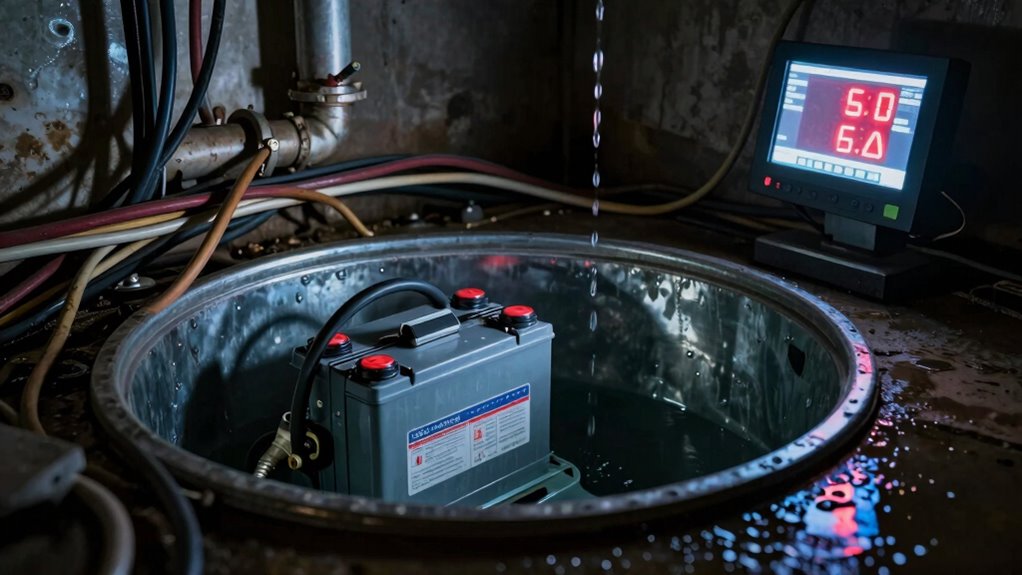
Regular maintenance and prompt troubleshooting are essential to guarantee your sump pump backup system remains reliable during emergencies. To keep it in top shape, focus on these key steps:
- Battery maintenance: Check your backup’s battery regularly, ensuring it’s fully charged and clean of corrosion. Replace it every 3-5 years or as needed.
- System testing: Periodically run manual tests to confirm the backup activates correctly when power fails.
- Inspect wiring and connections: Look for loose or damaged wires, fixing or replacing them promptly.
- Clean the sump pit: Remove debris and sediment that could hinder pump operation or cause false alarms. Staying proactive ensures your system performs when you need it most.
Signs You Need to Upgrade or Replace Your Sump Pump Backup

Your sump pump backup system may be signaling that it’s time for an upgrade or replacement if it shows signs of frequent failures or doesn’t activate during power outages. If your backup consistently struggles to start or runs poorly, it’s a clear indicator that your pump capacity is insufficient. Regular battery maintenance is vital; if the battery no longer holds a charge or shows age-related signs, replace it promptly. Additionally, listen for unusual noises or slow responses, which suggest wear or motor issues. Consider upgrading if your system can’t handle heavy rain or if your existing backup is over a few years old. Here’s a quick guide:
| Warning Signs | Action Needed |
|---|---|
| Frequent failures | Replace backup system |
| Won’t activate during outages | Check battery maintenance, upgrade capacity |
| Slow pump response | Upgrade pump capacity |
| Battery won’t hold charge | Replace battery |
| Age over 5 years | Consider system replacement |
Avoid Common Mistakes to Keep Your Backup System Working When It Matters Most
To guarantee your backup sump pump works reliably when you need it most, avoiding common mistakes is essential. First, neglecting regular sump pump maintenance can lead to unexpected failures, so schedule routine checks. Second, ignore signs of wear or outdated components, which could compromise your backup system upgrades. Third, failing to test your backup system periodically may leave you unprepared during a storm. Fourth, using incompatible or low-quality parts can cause malfunctions. To prevent these issues, stay proactive with maintenance, upgrade outdated components, perform regular system tests, and choose quality parts for replacements. These steps ensure your backup system remains operational, providing peace of mind during heavy rains. Proper care saves you from costly water damage and system failures when it matters most.
Frequently Asked Questions
How Often Should I Test My Sump Pump Backup System?
You should test your sump pump backup system at least once a month to guarantee it’s ready for emergencies. Incorporate this into your maintenance schedule so you’re always prepared when heavy rains hit. Regular testing helps identify issues early, giving you peace of mind and improving your emergency preparedness. Don’t forget to check the backup’s battery life and connections during each test to keep everything functioning smoothly.
Can I Install a Backup System Myself or Need Professional Help?
You can attempt a DIY installation of your sump pump backup system if you have basic plumbing and electrical skills. However, for a safe and proper setup, it’s best to seek professional assistance. Professionals ensure the system is correctly installed, tested, and functioning efficiently, reducing the risk of failure during a storm. If you’re unsure about any steps, don’t hesitate to hire an expert to prevent costly mistakes.
What Is the Typical Lifespan of Sump Pump Backup Systems?
A stitch in time saves nine, so knowing your backup system’s lifespan is key. Typically, sump pump backup systems last 3 to 5 years, but this depends on the type—battery backups need regular battery maintenance, while water-powered backups often last longer. Keep an eye on your system’s performance and replace components as needed to make certain it’s ready when stormy nights hit.
Are Backup Systems Effective During Power Outages?
Backup systems can be effective during power outages if you choose the right type, like battery-powered backups. You should consider battery longevity, ensuring your system has enough charge to last through storms. Proper installation safety is vital; follow manufacturer guidelines to prevent malfunctions. Regularly test your backup system, especially before storm season, to make sure it works when you need it most. This way, your home stays protected even when the power’s out.
How Much Does a Sump Pump Backup System Usually Cost?
A sump pump backup system typically costs between $150 and $500, depending on the type and features. When considering a battery backup, you’ll want to include ongoing maintenance, so create a maintenance checklist to guarantee reliability. Regularly test the system, check the battery’s charge, and replace it when necessary. Investing in a backup system provides peace of mind during storms, safeguarding your home from flooding.
Conclusion
A surprising 98% of basement flooding cases happen during heavy storms when your sump pump fails. By choosing the right backup system and maintaining it properly, you can prevent devastating water damage. Regular checks and timely upgrades guarantee your system works when it matters most. Don’t wait for a storm to find out your backup isn’t reliable—stay proactive and protect your home from costly surprises. Your peace of mind is worth the effort.