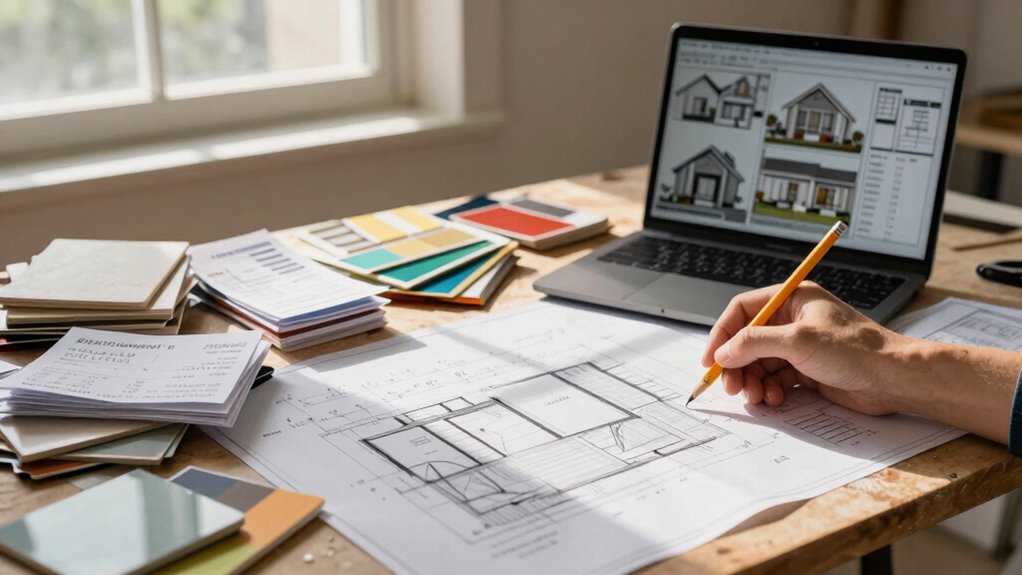

Your home project can go over budget even before starting due to unforeseen material shortages, which often result from supply chain disruptions and increased demand. Design changes happen frequently as new ideas or issues with layouts emerge, adding costs and delays. External factors like economic conditions also cause material prices to fluctuate unexpectedly. To avoid surprises, it’s essential to understand these common issues—continue exploring to discover strategies that can help you manage these risks effectively.

Get home appliances delivered free with Prime
- Fast, free delivery on millions of items
- Prime Video, Amazon Music and more included
- Member-only deals all year
Key Takeaways
- Material shortages due to supply chain disruptions force costly alternative choices and delays before construction begins.
- Design changes prompted by new ideas or compatibility issues increase costs and require permits, affecting budgets early on.
- External factors like global economic conditions cause fluctuations in material prices and availability, impacting initial estimates.
- Unanticipated costs from modifications and supply issues often lead to underestimated budgets at project start.
- Lack of contingency planning and insufficient risk management result in budget overruns before construction even starts.

Have you ever wondered why your home renovation often costs more than you planned? One major reason is the unexpected material shortages that can throw off your budget even before construction begins. When you’re ready to start, suppliers might not have the materials you ordered or may face delays in restocking. These shortages mean you could have to settle for more expensive alternatives or wait longer, which adds to your overall costs. Sometimes, certain materials become scarce due to supply chain disruptions or increased demand, forcing you to choose more costly options or delay your project until supplies are available. These unforeseen material issues disrupt your initial estimates and make sticking to your budget tricky. Additionally, unpredictable global events can further exacerbate these shortages, making it even more challenging to plan accurately.
Another factor that contributes to going over budget early on is design changes. As you sketch out your dream home or renovation plans, you often get new ideas or realize certain features don’t fit as well as you thought. Maybe you decide to upgrade a countertop, change the layout, or add extra details to the design. These adjustments might seem minor at first but can quickly escalate your project’s expenses. Every change often requires new permits, additional labor, and different materials, all of which increase costs. Plus, design changes tend to cascade, meaning that one alteration can lead to multiple adjustments across your plans, further inflating the budget. It’s common to underestimate how much these modifications will cost at the start, especially if you’re enthusiastic to perfect every detail before construction begins.
Design changes during renovation can quickly escalate costs through permits, labor, and cascading adjustments.
Both material shortages and design changes create a ripple effect that impacts your project’s finances well before the first nail is hammered. They force you to reconsider your choices, scramble to find alternatives, and often pay premium prices for materials or services on short notice. These issues also lead to delays, which can cause your project timeline to extend and your costs to accumulate even more. Recognizing how supply chain disruptions and their impact can help you develop more resilient planning strategies. Being aware of these external factors enables you to better anticipate potential setbacks and incorporate buffers into your budget. Moreover, understanding the global economic conditions that influence material availability can help you prepare more effectively for potential fluctuations in costs and supplies.
Ultimately, understanding that material shortages and design changes are common pitfalls helps you set more realistic expectations. You can work with your contractor to build contingencies into your budget or plan for potential delays. Recognizing these issues early on allows you to make informed decisions, minimizing the financial surprises that can turn a straightforward home project into a costly endeavor before construction even starts.
home renovation material shortage solutions
As an affiliate, we earn on qualifying purchases.
As an affiliate, we earn on qualifying purchases.
Frequently Asked Questions
How Can I Better Estimate My Project Costs Beforehand?
To better estimate your project costs beforehand, start with detailed cost estimation by listing all materials, labor, and permits. Use budgeting strategies like adding a contingency fund for unforeseen expenses. Research current prices and get multiple quotes to guarantee accuracy. Regularly track your spending against your estimates, and adjust your plan as needed. This proactive approach helps you stay within budget and avoid surprises during construction.
What Are Common Hidden Expenses in Home Renovations?
Did you know that unexpected costs and hidden fees account for nearly 30% of home renovation budgets? These common hidden expenses often include permit fees, unforeseen structural issues, and additional labor costs. You might also encounter surprise charges for materials or changes in project scope. To avoid blowouts, always set aside a contingency fund and thoroughly research potential hidden fees before starting your home renovation.
How Do Contractor Negotiations Impact the Budget?
Contractor negotiations greatly impact your budget by influencing costs and transparency. When you use effective negotiation strategies, you can secure better rates, clarify project scope, and reduce unexpected expenses. Contractor transparency ensures you understand all costs upfront, preventing surprises. By actively engaging in negotiations and demanding openness, you control expenses, avoid hidden fees, and keep your project within budget from the start.
Are There Specific Permits That Often Cause Delays?
Permit delays and regulatory hurdles often cause project delays before construction begins. You might find that obtaining building permits, zoning approvals, or environmental clearances takes longer than expected due to local regulations or backlog. These delays can push back your start date and increase costs, especially if you’re not prepared for potential bureaucratic hurdles. Planning ahead for permits and understanding local requirements can help minimize these issues and keep your project on track.
How Can I Prevent Scope Creep During Planning?
Think of your project as a carefully crafted blueprint—stay true to your initial vision to prevent scope creep. To do this, lock in design adjustments early and avoid frequent changes. Be decisive with material choices and finalize them before construction begins. Regularly review your plan and communicate clearly with your contractor. This way, you keep your project on track, within budget, and avoid surprises that can derail your vision.
construction project contingency planning kit
As an affiliate, we earn on qualifying purchases.
As an affiliate, we earn on qualifying purchases.
Conclusion
Understanding why home projects often go over budget before construction begins can save you from surprises down the line. Did you know that 30% of homeowners report exceeding their initial budget? Being proactive with detailed planning, realistic estimates, and contingency funds can keep your project on track. Don’t let unforeseen costs derail your dream home—prepare thoroughly and stay vigilant. Your careful planning now can make all the difference in bringing your vision to life within budget.
As an affiliate, we earn on qualifying purchases.
cost-effective building materials
As an affiliate, we earn on qualifying purchases.
As an affiliate, we earn on qualifying purchases.
Halloween Picks
halloween
As an affiliate, we earn on qualifying purchases.