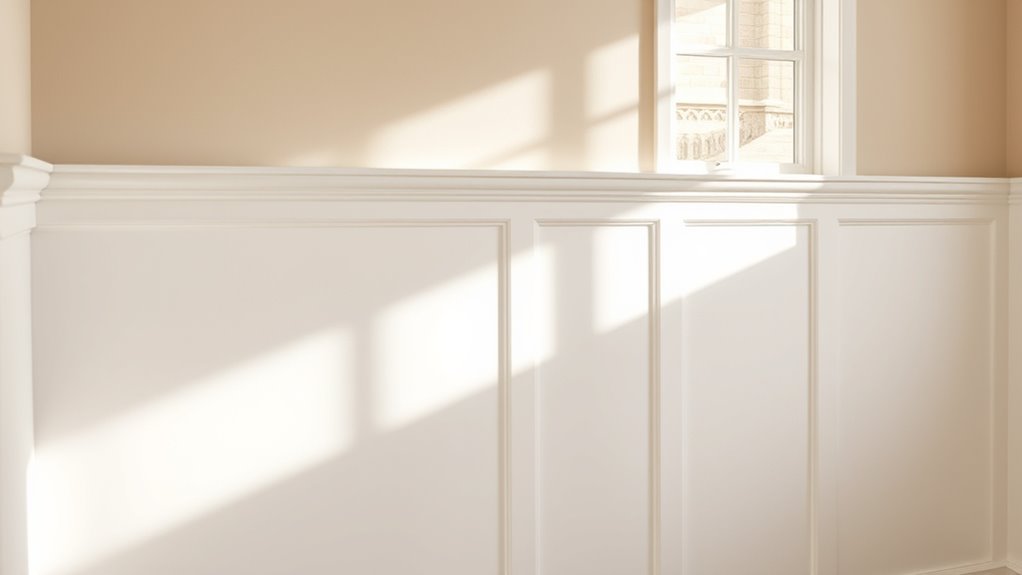

DIY wainscoting is a budget-friendly way to add style and elegance to your walls without hiring professionals. You can choose from materials like MDF, plywood, or even vinyl panels, which are affordable and easy to work with. Using simple tools and techniques, you can create flat panels, board and batten, or shiplap styles. With careful planning and finishing, your walls will look custom and refined—if you want to master the details, keep going to learn more.
Key Takeaways
- Choose affordable materials like MDF or plywood for cost-effective wainscoting that looks stylish.
- Opt for simple styles such as flat panels or shiplap to save time and money.
- Measure accurately and plan your layout to minimize waste and ensure a professional appearance.
- Use basic tools like a saw, drill, and hammer to DIY installation, reducing labor costs.
- Finish with paint or stain to enhance elegance and hide imperfections, creating a polished look on a budget.

Considering a home upgrade that adds elegance without breaking the bank? Wainscoting is a fantastic way to elevate your space without the hefty price tag. You can achieve a refined look that transforms your walls into stylish focal points, and the best part is, you don’t have to hire professionals to do it. With some basic tools and a little patience, you can install beautiful wainscoting yourself, saving a significant amount of money in the process.
Material costs vary depending on the type you choose. For a budget-friendly option, MDF or plywood panels are ideal, costing between $6 and $12 per square foot. They’re affordable, easy to work with, and perfect for DIY projects. Vinyl and PVC panels are also economical, ranging from $5 to $10 per square foot, and they’re moisture-resistant, making them suitable for bathrooms or kitchens. If you prefer natural wood, cedar or oak can give a rich, classic look, but they come at a higher price—anywhere from $8 to $22 per square foot. For covering 50 square feet, expect to spend roughly $350 to $700 on MDF or plywood, while solid hardwoods could set you back $450 to $900.
One of the key advantages of a DIY approach is cost savings. Installing wainscoting yourself can cut costs by up to half compared to professional installation fees. Basic tools like a saw, drill, and hammer are all you need, and the process is straightforward, especially with simple styles like flat panels or shiplap. More intricate patterns, such as raised panels or board and batten, may require more skill and time, but they’re still manageable for a dedicated DIYer. The time commitment depends on the size of your project and the complexity of your chosen design, but with patience, you’ll find it’s well worth the effort. Additionally, choosing pre-primed or ready-to-paint panels can further streamline the process and reduce prep work. Your choice of style impacts both appearance and cost. Flat panels are affordable and easy to install, costing between $7 and $15 per square foot, while board and batten can range from $10 to $23. Beadboard and shiplap also offer versatile options at varying prices. Don’t forget, trim and molding can add a polished look but increase expenses, costing about $1 to $5 per foot. Painting your wainscoting can further customize the style and help hide imperfections, making it look even more professional. To ensure your project lasts, consider the drivetrain components, like proper cutting, sealing, and finishing techniques, which can greatly extend the lifespan of your work.
Proper planning is essential. Measure your wall space accurately, gather all necessary tools and materials, and prepare your walls to ensure a smooth installation. Protect your floors and furniture during the process, and take your time to achieve clean, crisp lines. With a little effort, you can create stunning wainscoting that adds sophistication to your home—all while staying within your budget.
Frequently Asked Questions
What Tools Are Essential for DIY Wainscoting Installation?
You need a few essential tools to install wainscoting yourself. Start with a tape measure for accurate measurements, a level to ensure straight lines, and a pencil for marking cuts and positions. Use a stud finder to locate studs, a saw for cutting panels and moldings, and a nail gun or hammer for securing pieces. Don’t forget caulk and a brush for finishing touches, creating a polished, professional look.
How Do I Choose the Right Style for My Home?
Did you know that choosing the right wall treatment can increase your home’s value by up to 10%? When selecting a style, consider your room’s function and architecture. For example, use beadboard in cozy spaces or flat panels for a modern look. Think about your budget, skill level, and whether you want a dramatic or subtle effect. Pick a style that complements your home’s character and your personal taste.
Can Wainscoting Be Added to Uneven Walls?
Yes, you can add wainscoting to uneven walls, but you’ll need to prepare first. Assess the wall’s unevenness and use tools like shims, battens, or drywall mud to create a flat surface. Installing horizontal battens or plywood overlays helps level the wall. Use a string line for alignment, and finish with molding and paint. Proper preparation guarantees your wainscoting looks elegant and professional, even on challenging surfaces.
How Long Does It Typically Take to Complete?
Think of your project as planting a tree; patience and planning determine its growth. Usually, you’ll spend a weekend or two, depending on your space and skill. Smaller rooms with straightforward designs take less time, while larger, intricate layouts need more. With proper tools and preparation, you can speed things up, but don’t rush—quality takes time. Your effort will transform your walls into an elegant, timeless feature.
What Are Common Mistakes to Avoid During Installation?
During installation, you should avoid mistakes like mismeasuring, which can cause uneven panels or gaps. Be sure to remove existing baseboards and outlets before starting, and secure panels properly into wall studs to prevent future detachment. Don’t rush the process—take your time to align panels correctly and cut holes accurately. Also, check that the finish is smooth and consistent, and add moisture protection if needed.
Conclusion
Now that you’ve learned how to install DIY wainscoting, you can transform your space without breaking the bank. With a little effort and creativity, those elegant walls are within your reach. Why settle for bland walls when you can add character and charm yourself? Isn’t it rewarding to see your vision come to life with your own hands? Embrace the process—you’ll enjoy the beauty and pride that come with your handcrafted upgrade.