
Switching to smart switches lets you control lights remotely, set schedules, and automate routines, making your home more convenient and energy-efficient. They often integrate seamlessly with voice assistants and other smart devices, enhancing automation capabilities. Installation is typically straightforward, but check if you need specific wiring like a C-wire. While they cost a bit more upfront, you’ll save on energy bills and enjoy modern features. Keep exploring to discover detailed tips for a smooth upgrade.
Key Takeaways
- Ensure compatibility with your existing wiring, possibly requiring a C-wire for proper installation.
- Choose a smart switch that integrates with your preferred voice assistants and automation systems.
- Consider the cost-benefit balance, as smart switches are more expensive but offer energy savings and convenience.
- Install the switch like a traditional one, but be aware of potential setup steps via smartphone app or voice control.
- Update firmware regularly to maintain security, enhance features, and ensure seamless integration with your smart home.
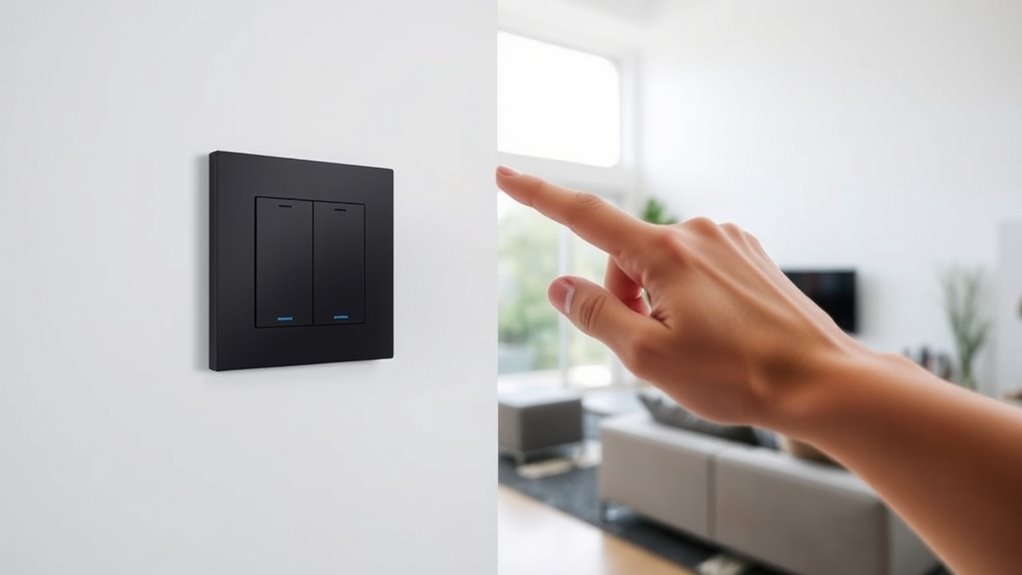
Switching to smart switches can greatly improve your home’s convenience and energy efficiency. These devices let you control your lights and appliances remotely, whether you’re at home or away. They connect to your Wi-Fi or other communication protocols, making it simple to turn devices on or off through your smartphone or voice commands. This flexibility allows you to schedule lighting or appliance use, helping you save energy and reduce utility bills. Plus, smart switches integrate seamlessly with other smart home devices, such as motion sensors and smart plugs, creating a cohesive automation system that enhances everyday living. Their modern, sleek designs blend well with contemporary decor, adding an elegant touch to your home.
Switching to smart switches enhances convenience, energy efficiency, and seamless integration with your smart home system.
Compared to traditional switches, smart switches offer a lot more automation options. With a regular switch, you’re limited to manual control, but a smart switch allows you to set timers, create routines, and automate lighting based on your habits or preferences. This means your lights can turn on automatically when you enter a room or turn off at predetermined times, saving you effort and reducing energy waste. Connectivity is another key difference; smart switches can be controlled remotely via smartphone apps or voice commands through devices like Alexa or Google Home. This makes managing your home’s lighting more convenient, especially when you’re away or unable to reach the switch. Additionally, the integration of automation technology often involves AI in Education systems, which can optimize energy use based on learned patterns.
Installing a smart switch is straightforward and similar to replacing a traditional switch. You’ll typically install it in your wall junction box, but some models may require specific wiring, such as a C-wire, to ensure proper power. Once installed, you can control the switch through an app, voice commands, or programmed schedules. Compatibility with other smart devices and home systems is usually seamless, allowing for integrated automation and energy monitoring. While smart switches tend to be more expensive than regular switches, their added features and energy savings often justify the cost over time. Smart switches also tend to have firmware updates that improve functionality and security over their lifespan, which is not possible with traditional switches.
Smart switches primarily control power and switch operations, unlike smart lights, which focus on brightness and color adjustments. They are suitable for controlling standard lights, fans, or appliances, providing a cost-effective way to automate various devices without needing special bulbs. Overall, switching to smart switches offers a significant upgrade to home control, making your environment smarter, more efficient, and easier to manage. They work well within broader home automation systems, often compatible with voice assistants, and support scheduling and energy monitoring. Embracing smart switches means enjoying greater convenience and energy savings, helping you create a more modern, automated home environment.
smart light switch with app control
As an affiliate, we earn on qualifying purchases.
As an affiliate, we earn on qualifying purchases.
Frequently Asked Questions
Are Smart Switches Compatible With All Types of Wiring?
Smart switches aren’t compatible with all wiring types. If your home has neutral wires, most smart switches will work fine. Without neutrals, you’ll need models like Lutron Caseta that operate without them. Check your wiring first, especially for older homes, and choose switches designed for your setup. Following manufacturer instructions guarantees safe installation, and testing helps confirm proper operation. Compatibility depends heavily on your existing wiring configuration.
How Secure Are Smart Switches From Hacking?
Imagine a smart switch as a digital lock on your home’s front door. While it offers convenience, it’s not invincible. You could be vulnerable if it’s outdated, poorly secured, or connected to an insecure network. Hackers can exploit weaknesses like default passwords or unpatched firmware. To stay safe, regularly update your device, change default settings, and monitor activity—think of it as adding extra locks and alarms to protect your home.
Can I Install Smart Switches Myself or Need a Professional?
You can install smart switches yourself if you’re comfortable with basic wiring and safety precautions. You’ll need tools like a screwdriver and wire strippers, and you should turn off power before starting. Follow the installation instructions carefully, making sure of correct wiring connections, especially with neutral and ground wires. If your wiring setup is complex or you’re unsure, it’s best to hire a professional to avoid safety risks and ensure proper installation.
What Is the Average Cost of Upgrading to Smart Switches?
Think of upgrading your home like assembling a Lego set—you can do it yourself or seek expert help. The average cost for smart switch upgrades ranges from $107 to $227 per switch, including labor and materials. If you’re handy, DIY options might save you money, but professional installation guarantees flawless setup. Budget accordingly, and remember that choosing the right switches can be a wise investment for future convenience.
Do Smart Switches Consume More Energy Than Traditional Switches?
Smart switches do consume more energy than traditional switches because they need power to operate, even when idle, typically between 0.5 to 1.5 watts per hour. However, their energy-saving features, like scheduling and remote control, help reduce overall consumption. If you choose high-quality models and optimize their use, you can minimize the extra energy use, making smart switches an efficient option despite their standby power.
Wi-Fi smart switch compatible with Alexa
As an affiliate, we earn on qualifying purchases.
As an affiliate, we earn on qualifying purchases.
Conclusion
Switching to smart switches is like giving your home a brain upgrade—making it smarter, more responsive, and easier to control. Once you’ve set them up, you’ll feel like you’ve released a new level of convenience, turning your space into a symphony of seamless automation. Embrace the change, and watch your home transform into a well-orchestrated masterpiece where every switch plays its part effortlessly. Your smarter home journey begins now—welcome to the future!
smart switch with C-wire support
As an affiliate, we earn on qualifying purchases.
As an affiliate, we earn on qualifying purchases.
voice-controlled smart light switch
As an affiliate, we earn on qualifying purchases.
As an affiliate, we earn on qualifying purchases.