
If your laundry feels slow to dry, the likely issue is poor airflow caused by cluttered spaces, improper clothes handling, or overloading your dryer or rack. Piles of clothes or scattered supplies block airflow, trapping moisture and increasing drying time. Overstuffing also prevents hot air from circulating properly. To improve, organize your laundry area, handle clothes correctly, and avoid overloading. Keep exploring to discover more tips for faster, more efficient drying.
Key Takeaways
- Cluttered laundry areas block airflow, delaying drying times.
- Improperly folded clothes trap moisture, reducing drying efficiency.
- Overloading dryers or racks restricts hot air circulation, prolonging drying.
- Poor ventilation and obstructed vents slow moisture evaporation.
- Piling or stacking damp clothes impedes airflow, extending drying duration.
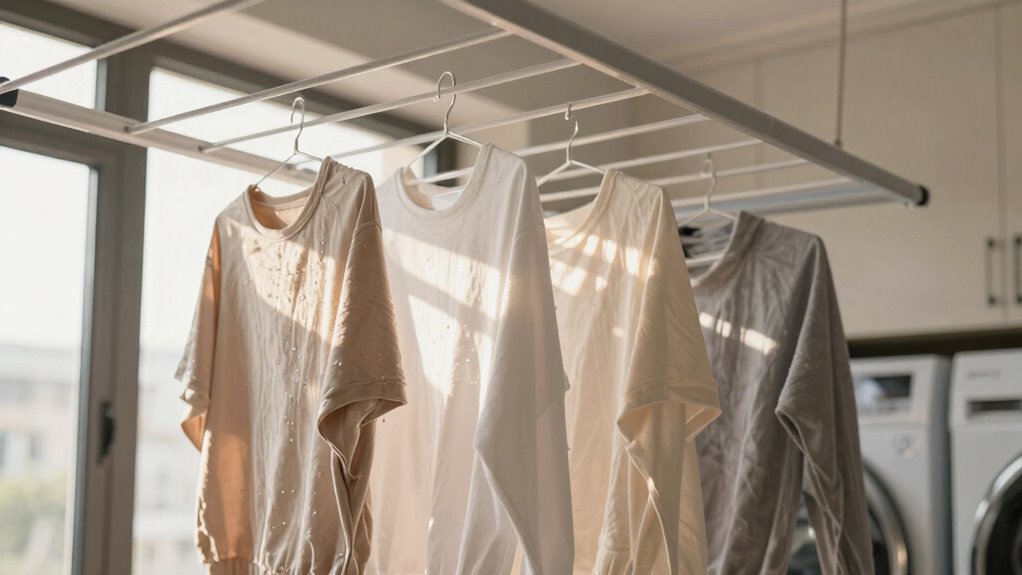
Ever wondered why your laundry sometimes takes longer to dry or ends up feeling damp even after hours? The answer often lies in how your laundry room is arranged and how efficiently you handle your clothes folding. When your laundry space is cluttered or disorganized, it can cause delays in the drying process and make your entire routine feel sluggish. If clothes aren’t folded properly, they tend to stay damp longer because the excess moisture isn’t evenly distributed or released. Proper clothes folding not only keeps your laundry neat but also guarantees better airflow around each piece, speeding up the drying time.
A messy laundry room can obstruct airflow and make your drying process less efficient. Piles of clothes, laundry baskets, and scattered supplies block vents or airflow paths that are vital for drying clothes quickly. When your laundry room isn’t well-organized, you might find yourself searching for items or rearranging everything just to get a clear space for drying. This unnecessary movement can also cause wrinkles or uneven drying, which prolongs the entire process. Investing a little time into laundry room organization helps create a dedicated, clutter-free space where clothes can dry properly and efficiently. Additionally, understanding how airflow and ventilation impact drying times can help you optimize your laundry setup even further. Proper airflow is essential for removing moisture efficiently from your clothes, making ventilation a key factor in drying performance. A well-ventilated space encourages faster moisture evaporation and reduces the chances of mold or mildew buildup.
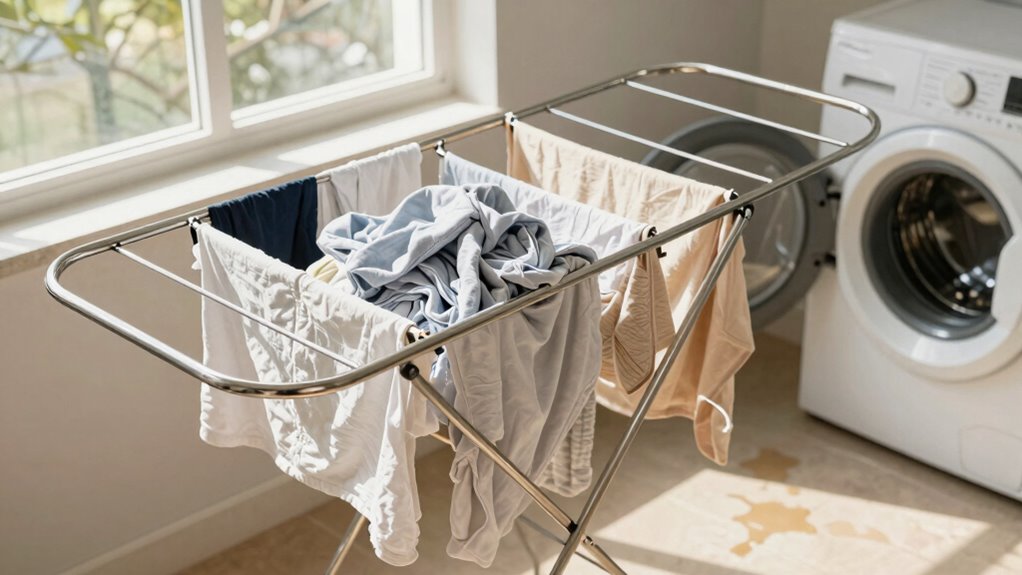
Another common issue is how you load your dryer or drying rack. Overloading prevents hot air from circulating freely around your clothes, leading to longer drying times and damp patches. Conversely, underloading wastes energy and can make the process seem slower because you’re not taking full advantage of your appliance’s capacity. Making sure your clothes are loaded in an even layer, with enough space for air to circulate, helps your dryer operate more efficiently. Also, consider the placement of your clothes after washing—if you’re piling damp clothes haphazardly or stacking them poorly, you hinder the drying process. Proper clothes folding after washing promotes better airflow and reduces dampness, especially if you’re air-drying on a rack. Remember, clothes folding techniques can significantly influence how quickly your laundry dries, so practicing the right methods can save you time.
dryer vent cleaning kit
As an affiliate, we earn on qualifying purchases.
As an affiliate, we earn on qualifying purchases.
Frequently Asked Questions
Can Ambient Temperature Affect Drying Time?
Yes, ambient temperature affects drying time because warmer indoor air helps moisture evaporate faster. When your indoor air is warm, your laundry dries more quickly, but cooler temperatures slow down the process. Proper temperature control can optimize drying efficiency by maintaining a consistent, warmer indoor environment. Keep your space well-heated or ventilated to speed up drying and prevent dampness, making your laundry routine more efficient.
Do Different Fabric Types Dry Faster or Slower?
Different fabric types dry at different rates; for example, lightweight cotton dries faster than thick towels or denim. Softer fabrics often dry quicker because they typically hold less water, while darker or brightly colored fabrics are more prone to color fading if dried too slowly. You can speed up drying by choosing fabrics with lower moisture retention and being mindful of fabric softness, which directly impacts drying efficiency.
How Does Humidity Impact Laundry Drying Efficiency?
Humidity acts like an invisible shroud around your laundry, suffocating its drying efficiency. When humidity levels rise, moisture in the air hinders evaporation, making it feel like your clothes are battling an unseen resistance. High humidity effects slow down the drying process, leaving your laundry damp and sluggish. To boost drying efficiency, you need a drier climate or better ventilation, so moisture can escape and your clothes can breathe freely.
Can Laundry Load Size Influence Drying Speed?
Yes, your laundry load size influences drying speed. If you overload the dryer, load distribution becomes uneven, causing longer drying times. Similarly, fabric weight matters—heavier fabrics like towels take longer to dry than lighter ones like t-shirts. To optimize drying, make sure proper load distribution, avoid overloading, and mix different fabric weights thoughtfully. This way, your laundry dries more efficiently, saving you time and energy.
Are There Specific Detergents That Affect Drying Times?
Yes, some detergents leave behind residue that traps moisture, turning your laundry into soggy socks instead of quick-drying marvels. Fragrance effects can also linger, creating a perfume cloud that clings stubbornly, extending drying times. Opt for detergents labeled “quick-dry” or “low-residue” to dodge this slow dance. Avoid those heavily scented options unless you fancy waiting longer for your laundry to finally dry—because no one wants damp, fragrant socks.
clothes drying rack with cover
As an affiliate, we earn on qualifying purchases.
As an affiliate, we earn on qualifying purchases.
Conclusion
Imagine your laundry as a garden, each piece a delicate bloom needing the right sun and rain to flourish. When drying stalls, it’s like the clouds refuse to part, leaving your blooms in shadow. But with patience and the right tools, sunlight breaks through, and your clothes bloom anew—fresh, vibrant, and ready to wear. Don’t let slow drying be a storm; instead, see it as a promise of brighter, more efficient days ahead.
dryer vent airflow booster
As an affiliate, we earn on qualifying purchases.
As an affiliate, we earn on qualifying purchases.
laundry room organization storage
As an affiliate, we earn on qualifying purchases.
As an affiliate, we earn on qualifying purchases.