Poor airflow in your laundry room can cause mold growth, lingering odors, and health issues from airborne spores. Without proper ventilation, moisture from damp clothes and appliances gets trapped, raising indoor humidity and creating a damp environment that encourages mold. Upgrading vents, sealing gaps, and using dehumidifiers can make a big difference. You’ll stay healthier and your space stays cleaner — if you stay tuned, you’ll discover how to improve your laundry room’s airflow effectively.

Get home appliances delivered free with Prime
- Fast, free delivery on millions of items
- Prime Video, Amazon Music and more included
- Member-only deals all year
Key Takeaways
- Proper airflow prevents mold growth on walls, ceilings, and behind appliances.
- Improved ventilation reduces musty odors and maintains a fresh laundry environment.
- Adequate airflow minimizes indoor humidity, preventing dampness and potential damage.
- Good ventilation protects health by reducing airborne mold spores and contaminants.
- Enhanced airflow ensures moisture from dryers and wet clothes doesn’t accumulate, preserving appliance longevity.
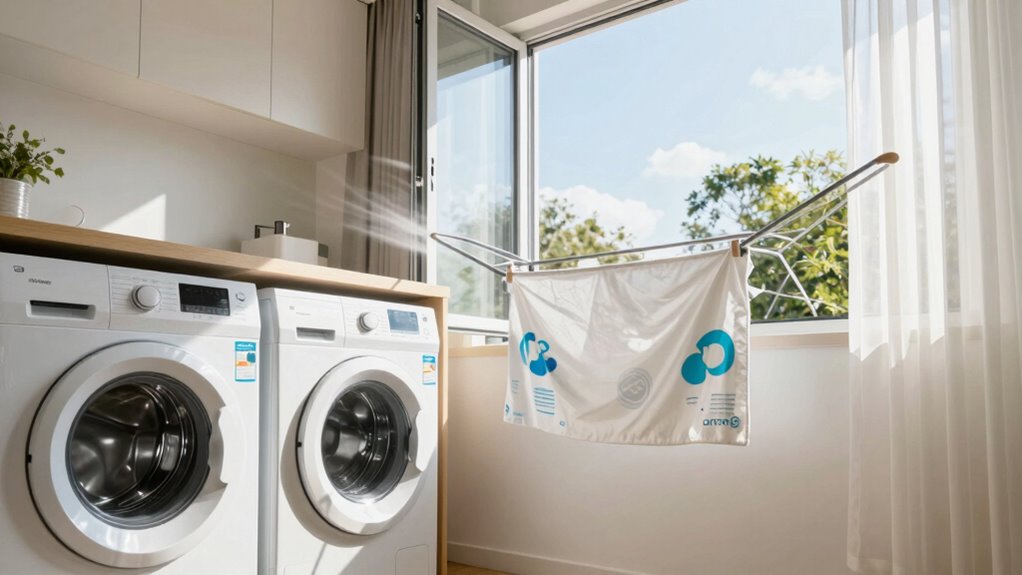
A laundry room with poor airflow can quickly become a breeding ground for mold, unpleasant odors, and even health issues. When air doesn’t circulate properly, moisture from washing machines, dryers, and damp clothes gets trapped, creating the perfect environment for mold spores to thrive. It’s easy to overlook how essential good ventilation is, but without it, the space can become unhealthy and uncomfortable. Upgrading your ventilation system isn’t just about reducing odors—it’s about safeguarding your health and maintaining a clean, safe environment. Ventilation upgrades can considerably improve airflow, helping moisture escape and preventing it from settling on walls, ceilings, or behind appliances.
Moisture control is essential in a laundry room, and proper ventilation is its strongest ally. If you notice persistent dampness or a musty smell, it’s a clear sign that your current airflow isn’t enough. Increasing ventilation allows moist air to exit and dry, fresh air to enter, reducing humidity levels and discouraging mold growth. Installing an exhaust fan or upgrading an existing one can make a big difference. These fans work actively to pull out humid air, especially during and after laundry loads, keeping the room drier and healthier. When combined with moisture control strategies—like sealing leaks, insulating pipes, and using dehumidifiers—you create a balanced environment that prevents excess moisture buildup. Ensuring proper ventilation is a key part of moisture management in this space.
Beyond just adding or improving exhaust fans, you should consider the overall design of your laundry space. Proper placement of vents and ensuring unobstructed airflow paths can maximize the effectiveness of your ventilation upgrades. For example, sealing gaps around windows or doors prevents outside humid air from entering and disrupting moisture control efforts. Additionally, choosing appliances with venting options that direct air outdoors helps maintain continuous airflow and reduces indoor humidity. You might also think about installing a vented dryer, which expels hot, moist air outside instead of into the room, further improving air quality. Ensuring adequate airflow is crucial for preventing moisture accumulation and maintaining a healthy environment. Proper airflow management helps sustain optimal humidity levels and enhances overall indoor air quality. Incorporating ventilation design principles into your laundry room can ensure long-term effectiveness and comfort.
Products Worth Considering

LEVOIT Vital 200S-P Smart Air Purifier for Large Rooms up to 1875 ft², Quiet 27 dB Operation, AHAM VERIFIDE Certified, Air Quality Monitor,

Blueair Blue Pure 211i Max Air Purifier for Large Rooms

Blueair Blue Pure 511i Max Smart Air Purifier
As an affiliate, we earn on qualifying purchases.
Frequently Asked Questions
Can Poor Airflow Affect My Laundry Appliances’ Lifespan?
Poor airflow can definitely shorten your laundry appliances’ lifespan. When ventilation maintenance is neglected, excess heat and humidity build up, causing your washer and dryer to work harder and wear out faster. Improved airflow boosts appliance efficiency by reducing overheating and moisture buildup. So, if you want your appliances to last longer, prioritize proper ventilation and guarantee continuous airflow, which helps prevent costly repairs and extends their longevity.
How Often Should I Inspect My Laundry Room Ventilation System?
You should inspect your laundry room ventilation system at least once a year. Regular ventilation maintenance guarantees ideal airflow, preventing lint buildup and moisture issues. During these inspections, perform airflow diagnostics to identify any blockages or inefficiencies. Staying proactive helps your appliances last longer and keeps your laundry space safe. Don’t forget, timely checks help you catch problems early, saving you money and avoiding costly repairs down the line.
Does Humidity in the Laundry Room Impact Indoor Air Quality?
Yes, humidity in your laundry room impacts indoor air quality. Poor ventilation design can trap excess moisture, leading to mold, mildew, and musty odors. Effective humidity control helps prevent these issues, improving air quality and protecting your health. You should guarantee your ventilation system is working properly, with good airflow, to maintain a balanced environment. Proper humidity management keeps your laundry space safe, fresh, and healthier for everyone.
Are There Specific Materials That Improve Laundry Room Airflow?
Yes, certain materials can improve your laundry room airflow. Installing ventilation fans helps actively move moist air out, while airflow vents increase passive airflow, reducing humidity. Use vented doors or wall vents made of metal or plastic to enhance air circulation. These materials work together to prevent mustiness and mold, creating a healthier space. Regularly maintaining your ventilation fans and airflow vents guarantees continuous, effective airflow.
Can Airflow Improvements Reduce Energy Costs in My Laundry Room?
Yes, improving airflow can lower your energy costs. Installing a ventilation fan helps remove excess humidity and heat, reducing your AC and dryer energy use. Duct insulation guarantees efficient airflow, preventing heat loss or gain along ducts. Together, these upgrades make your laundry room more energy-efficient by maintaining proper airflow, reducing strain on appliances, and lowering utility bills. Better airflow keeps your laundry space comfortable and cost-effective.
Conclusion
Think of your laundry room as a tiny jungle—lush, busy, and full of life. Without proper airflow, it’s like choking that jungle, trapping heat, moisture, and musty odors. By improving ventilation, you’re giving your space the breath it needs to thrive, keeping it fresh and healthy. So, don’t let your laundry room become a stagnant swamp. Clear the air, and watch your laundry landscape flourish. Your clothes—and your peace of mind—will thank you.