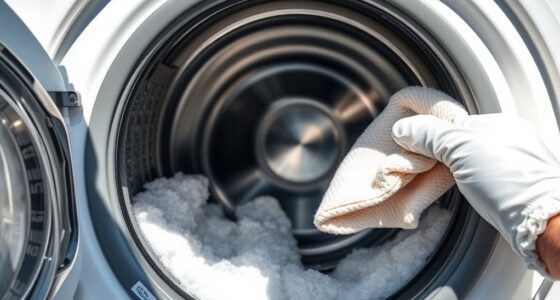
High-efficiency laundry detergents use advanced enzymes and surfactants to clean effectively with less water and energy. Enzymes break down stains like protein, starches, and oils at lower temperatures, while surfactants lift dirt and grease from fabrics. Together, they optimize cleaning efficiency, reduce residue, and protect delicate clothes. This smart chemistry allows you to wash thoroughly while saving resources. Keep exploring to discover how these innovations make your laundry more eco-friendly and effective.
Key Takeaways
- HE detergents utilize enzymes to target specific stains, enabling effective cleaning at lower temperatures.
- Surfactants in HE formulas reduce surface tension, lifting dirt and oils more efficiently in minimal water.
- Enzymes and surfactants work synergistically to improve stain removal while conserving water and energy.
- Optimized chemistry minimizes residue and detergent build-up, protecting fabrics and enhancing fabric longevity.
- Advances in enzyme and surfactant technology promote sustainable laundry practices with reduced environmental impact.
Laundry detergents are essential products that help keep your clothes clean and fresh by removing dirt, stains, and odors. To achieve this, modern high-efficiency (HE) detergents rely on sophisticated science, particularly in enzyme activity and surfactant chemistry. These components work together to deliver powerful cleaning performance while using less water and energy.
Enzymes are biological molecules that speed up chemical reactions, and in laundry detergents, they target specific types of stains. For example, proteases break down protein-based stains like blood and sweat, while amylases tackle carbohydrate-based stains such as pasta sauce. You might not see these enzymes, but they actively work during the wash cycle to digest stubborn stains into smaller, more washable particles. This enzymatic activity allows HE detergents to effectively remove stains at lower temperatures, reducing energy consumption and protecting delicate fabrics.
Enzymes in detergents break down stains, enabling effective cleaning at lower temperatures.
Surfactant chemistry is the backbone of most laundry detergents. Surfactants are compounds that lower the surface tension between water and dirt, allowing grime to be lifted away from your clothes. In high-efficiency detergents, surfactants are carefully formulated to produce a lot of suds with minimal water. They form micelles—tiny clusters that encapsulate dirt and oils, making it easier for them to be rinsed away. These surfactants are designed to be highly effective in cold or lukewarm water, which is common in HE washing machines. By optimizing surfactant chemistry, manufacturers ensure that your laundry gets thoroughly cleaned without requiring hot water, saving you energy and prolonging the lifespan of your clothing.
The interaction between enzymes and surfactants in HE detergents exemplifies science at its best. Surfactants loosen and lift dirt, while enzymes chemically break down specific stains, working in tandem to deliver superior cleaning power. This synergy allows you to wash effectively with less detergent and water, making your laundry routine more sustainable. Additionally, the formulation minimizes residue and build-up, which can occur with traditional detergents, ensuring your clothes feel fresh and look vibrant after every wash.
Understanding the science behind high-efficiency laundry detergents reveals how enzyme activity and surfactant chemistry are essential for optimized performance. They allow you to clean more effectively at lower temperatures, reduce water and energy use, and maintain the quality of your garments. Advances in detergent science continue to enhance these technologies, making laundry more eco-friendly and efficient. With these scientific advancements, your laundry routine becomes not just easier but also more eco-friendly and efficient.
Frequently Asked Questions
How Do Enzyme-Based Detergents Work at the Molecular Level?
Enzyme-based detergents work by harnessing enzyme activity to break down stains at the molecular level. When you wash, enzymes target specific substrates, like protein, starch, or fat molecules, and catalyze their breakdown into smaller, easier-to-remove pieces. This process speeds up stain removal, making your laundry cleaner. You benefit from the enzymes’ ability to attack stubborn stains effectively, even at lower temperatures, ensuring your clothes come out fresh and spotless.
Are High-Efficiency Detergents Safe for Septic Systems?
Septic systems typically tolerate high-efficiency detergents, but you should be cautious. These detergents usually have fewer harsh chemicals, promoting septic compatibility. However, excessive use can leave detergent residues that clog or compromise your system. To keep your septic system healthy, opt for low-sudsing, biodegradable options, and use detergents sparingly. This way, you protect your septic system while still enjoying clean clothes effortlessly.
What Environmental Impacts Do These Detergents Have?
You should know that high-efficiency laundry detergents can have environmental impacts, especially related to biodegradability concerns and aquatic toxicity. These detergents often contain surfactants and chemicals that may not break down easily in the environment, potentially harming aquatic life. To minimize these impacts, choose eco-friendly options with biodegradable ingredients and avoid overuse, helping protect waterways and ecosystems from harmful chemical build-up.
How Do Different Water Temperatures Affect Detergent Performance?
You’ll find that water temperature considerably impacts detergent effectiveness. Hot water helps break down oils and proteins, making detergents more effective at removing stains. Warm water offers a balance, working well for most loads. Cold water, however, may reduce detergent performance, especially with greasy or oily stains. Adjusting water temperature based on your laundry needs can optimize cleaning results and ensure your detergent works efficiently.
Can High-Efficiency Detergents Cause Skin Sensitivities?
Yes, high-efficiency detergents can cause skin sensitivities. You might experience skin irritation or allergy concerns if you have sensitive skin or allergies to certain chemicals in the detergent. To diminish risks, you should choose hypoallergenic options, use less detergent, and make sure clothes are thoroughly rinsed. Always check labels for potential irritants, and consider wearing gloves or applying moisturizers if you notice skin reactions after laundry.
Conclusion
Now that you understand how high-efficiency laundry detergents work, you’ll see they’re quite the marvel of modern chemistry, much like alchemy of old. By choosing the right formula, you save water, energy, and extend your wardrobe’s life—all while keeping your clothes pristine. So, next time you toss in a load, remember, you’re part of a scientific revolution that’s as essential today as the discovery of the wheel. Clean clothes, smart choices, and a nod to progress—what’s not to love?