If you want outdoor furniture that stands up to sun and rain, consider materials like synthetic wicker, resin, and plastic, which resist fading, cracking, and warping. Durable woods such as teak, cedar, and ipe naturally resist moisture and insects with minimal maintenance. Metals like aluminum and galvanized steel resist rust when coated properly. Wrought iron needs extra care, but with the right treatment, it’s also a good option. Keep exploring to discover the best choices for your outdoor space.
Key Takeaways
- Synthetic fibers like resin wicker and high-quality plastics resist UV rays, moisture, and fading for long-lasting outdoor use.
- Weather-resistant woods such as teak, cedar, and ipe naturally withstand rain, rot, and insects with minimal maintenance.
- Aluminum and galvanized steel metals are highly resistant to rust and corrosion, ideal for exposure to sun and rain.
- Resin and plastic furniture are durable against temperature changes, cracking, and fading, suitable for all-season outdoor conditions.
- Proper maintenance, protective coatings, and covers extend the lifespan of outdoor furniture materials exposed to sun and rain.
Which Outdoor Furniture Materials Resist Sun and Rain Best?

When choosing outdoor furniture that can withstand sun and rain, it’s essential to contemplate materials specifically designed for durability. Synthetic fibers, like resin wicker or high-quality plastic, resist moisture and UV rays, making them ideal for outdoor use. These fibers won’t crack or fade easily, ensuring your furniture stays vibrant over time. Additionally, outdoor cushions made with weather-resistant fabrics, such as polyester or acrylic, are crucial. Look for cushions with UV protection and quick-drying foam to prevent mold and mildew. Combining durable synthetic fibers with specially designed outdoor cushions creates furniture that not only survives the elements but also remains comfortable and attractive. This pairing offers longevity and ease of maintenance, perfect for outdoor spaces exposed to sun and rain. Weather-resistant materials are specifically engineered to maintain their appearance and integrity despite prolonged exposure to the elements. Using UV protection in fabrics further enhances their resilience against sun damage. To maximize durability, selecting corrosion-resistant hardware and framing can also significantly prolong the lifespan of outdoor furniture. Incorporating proper maintenance routines can help preserve these materials and extend their useful life even further. Additionally, selecting high-quality finishes can further protect furniture surfaces from the damaging effects of weather.
How Do Sun and Rain Accelerate Wear on Outdoor Furniture?

Sun and rain can substantially speed up the deterioration of outdoor furniture by breaking down materials and weakening structural integrity. UV degradation from prolonged sun exposure causes fabrics, plastics, and coatings to fade, crack, or become brittle over time. Rain accelerates wear through moisture infiltration, which can lead to rust formation on metal parts, especially if protective coatings are compromised. Continuous exposure to moisture also promotes wood rot and mold growth on porous surfaces. Additionally, microplastics in dust can settle on furniture surfaces, contributing to environmental pollution and potential health concerns. This environmental exposure can also lead to material fatigue, reducing the overall lifespan of outdoor furniture. Moreover, weather-resistant coatings can help mitigate some of these effects, prolonging the furniture’s durability. Properly maintaining furniture with protective treatments can further extend its lifespan against harsh weather conditions. Together, sun and rain weaken the durability of outdoor furniture, making it more susceptible to cracks, warping, and corrosion. Understanding these effects helps you choose materials better suited for harsh weather, ensuring your furniture lasts longer and retains its appearance despite constant sun and rain exposure.
The Most Weather-Resistant Woods for Outdoor Use

When choosing outdoor furniture, you want wood that can withstand harsh weather conditions and last for years. Natural resistance qualities like oil content and density help certain woods resist rot and pests, reducing maintenance needs. Considering durability against the elements and how long the wood can stay beautiful will help you pick the best option for your outdoor space. Incorporating proper surface finishes can further enhance the weather resistance of your furniture. Additionally, selecting woods with inherent weather-resistant properties ensures better longevity and appearance over time. Understanding the environmental factors that affect outdoor wood can also guide you toward selecting the most suitable material for your specific climate. Recognizing how engineered wood products can offer enhanced stability and resistance may also be beneficial when choosing durable outdoor furniture. Being aware of moisture exposure and how it impacts different materials can help maintain furniture integrity over the years.
Durability Against Elements
If you want outdoor furniture that can withstand harsh weather conditions, choosing the right wood is essential. Teak is a top choice because its natural oils repel water and resist decay, making it highly durable against rain and sun. Teak maintenance is straightforward—regular cleaning keeps it looking its best, and sealing helps preserve its appearance over time. Its dense grain makes it less prone to warping or cracking. When it comes to fabric cleaning, opt for weather-resistant cushions that can endure exposure without deteriorating. For woods like cedar or ipe, proper sealing and periodic maintenance are key to prolonging their lifespan outdoors. Additionally, understanding Floating on Water principles can inspire you to incorporate natural materials and vibrant accents that complement outdoor furniture, creating a harmonious environment. Incorporating weather-resistant finishes can further enhance the longevity of your outdoor pieces.
Natural Resistance Qualities
Certain woods naturally resist the elements, making them ideal choices for outdoor furniture. These woods, such as teak, cedar, and redwood, possess inherent resistance to moisture, rot, and insect damage. Their natural oils and dense grain help them withstand sun and rain, maintaining their strength and appearance over time. When considering furniture placement, these woods enhance your garden aesthetics by aging gracefully and developing a charming patina. Their resilience allows you to enjoy outdoor setups without frequent maintenance or worry about weather damage. Choosing weather-resistant woods aligns with creating a durable, attractive outdoor space that remains inviting year-round. Moreover, natural resistance qualities are a key factor in determining the longevity of outdoor furniture, reducing the need for costly repairs or replacements. Their natural qualities make them a smart investment, ensuring your furniture stays beautiful and functional through all seasons. Additionally, selecting weather-resistant woods can reduce the need for chemical treatments or sealants that may harm the environment. These woods often require less chemical treatment, which benefits both your outdoor environment and the longevity of the furniture. Incorporating sustainable materials can further enhance the eco-friendliness of your outdoor setup. Using woods with natural durability can also contribute to more sustainable and eco-friendly outdoor furniture options.
Maintenance and Longevity
Choosing the right weather-resistant wood can substantially extend the lifespan of your outdoor furniture. Regular maintenance, like cleaning and sealing, keeps the wood durable and looking its best, ensuring you enjoy indoor comfort outdoors for years. These woods, such as teak, cedar, and redwood, naturally resist decay and insects, reducing the need for frequent repairs. Proper upkeep preserves their aesthetic appeal, maintaining their rich color and texture. Applying protective oils or sealants annually can prevent weather-related damage, especially in harsh climates. By investing in quality, weather-resistant wood and staying consistent with maintenance, you enhance longevity and keep your furniture looking beautiful. This approach saves you money and effort while maximizing the outdoor comfort and visual charm of your space.
Metal Outdoor Furniture That Stands Up to Elements

Metal outdoor furniture is a durable choice that can withstand various weather conditions when properly selected and maintained. Its weather resistance makes it ideal for outdoor use, even in harsh climates. Look for options like galvanized steel, aluminum, or powder-coated metal, which resist rust and corrosion. Galvanized steel, with its protective coating, handles rain and humidity well, while aluminum is naturally resistant to rust and lightweight. Powder coating adds an extra layer of protection against the elements, preventing chipping and fading. Regular cleaning and occasional touch-ups extend the lifespan of your metal furniture, ensuring it stays sturdy and attractive. When you choose quality metal outdoor furniture, you get a long-lasting, weather-resistant piece that stands up to the sun, rain, and everything in between.
Resin and Plastic: Durable Outdoor Furniture Options

Resin and plastic outdoor furniture are popular choices because they’re built to withstand the elements without requiring much maintenance. Their resin durability makes them resistant to sun, rain, and temperature changes, so they won’t warp or crack easily. Plastic furniture, in particular, is lightweight and easy to move, making it convenient for rearranging or storage. You won’t need to worry about frequent upkeep; a simple wash with soap and water keeps them looking fresh. While some plastics may fade over time, high-quality resin options resist discoloration better. These materials are also resistant to rust and corrosion, making them ideal for outdoor use. Overall, resin and plastic furniture offer long-lasting, low-maintenance outdoor solutions that handle sun and rain with ease.
Wicker and Rattan: Which Types Survive Sun and Rain Best?
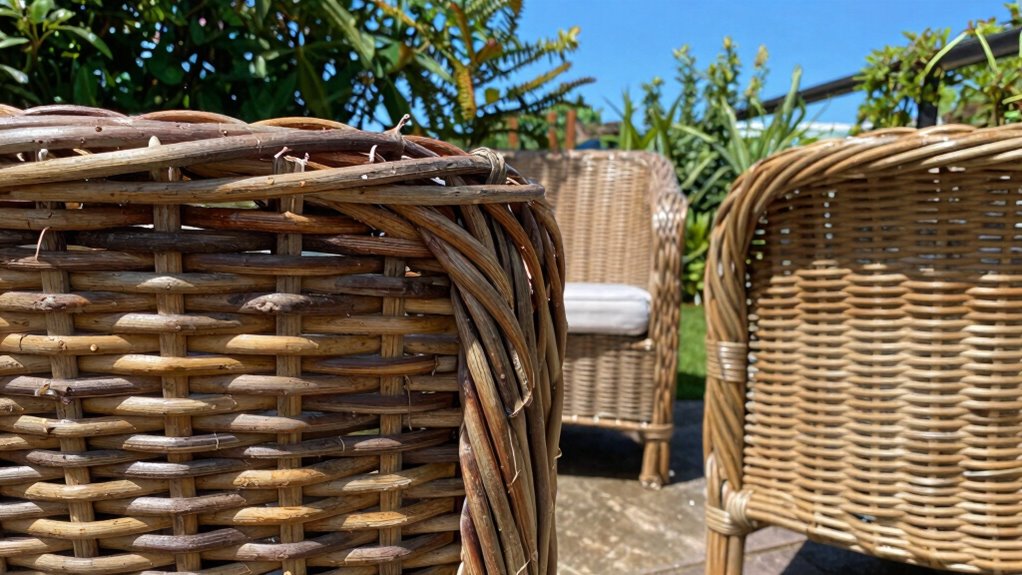
Ever wonder which wicker and rattan types hold up best against sun and rain? Synthetic fibers are your best bet for durability, especially when used in outdoor furniture. They resist fading, cracking, and warping caused by sun exposure and moisture. Traditional rattan, made from natural materials, tends to deteriorate quickly without proper treatment, so it’s less ideal for harsh weather. Wicker crafted from synthetic fibers offers a long-lasting alternative that withstands the elements. When it comes to outdoor cushions, look for those with weather-resistant covers that resist mold and mildew. These cushions, paired with weatherproof wicker or rattan, ensure your outdoor furniture stays attractive and functional season after season. Choosing the right materials keeps your outdoor space inviting and low-maintenance.
Tips to Maintain Outdoor Furniture and Extend Its Life

To keep your outdoor furniture looking its best and lasting longer, regular maintenance is essential. Clean your furniture regularly with gentle soap and water to remove dirt and prevent stains. Protect it with appropriate sealants or covers, especially during harsh weather. Incorporate garden lighting to highlight your outdoor decor trends, making your space inviting while also protecting your furniture from sun damage. Check for loose screws or joints and repair promptly to prevent further damage. Consider seasonal storage or covers during winter to extend its lifespan. Staying on top of these tips helps maintain your furniture’s appearance and durability. Remember, well-maintained pieces not only last longer but also enhance the overall aesthetic of your outdoor space.
Compare Cost, Style, and Durability of Top Outdoor Materials

When choosing outdoor furniture, you need to weigh cost, style, and durability to find the best fit. A cost-effectiveness analysis helps you balance budget with quality, while style options let you match your outdoor space’s look. Consider how well each material withstands the elements to make certain your furniture lasts over time.
Cost Effectiveness Analysis
Evaluating the cost-effectiveness of outdoor furniture materials involves weighing their price, appearance, and longevity. You’ll want to contemplate how different materials fit within your budget and align with sustainable practices. Here are key points to guide your decision:
- Pricing strategies: Materials like aluminum and resin offer low upfront costs, while teak and wrought iron tend to be pricier but last longer.
- Material sustainability: Eco-friendly options like recycled plastics or sustainably sourced wood may cost more initially but support environmental goals.
- Durability vs. cost: Investing in durable materials can reduce replacement expenses over time, offering better long-term value.
Style Versatility Options
Choosing the right outdoor furniture material involves balancing style options with cost and durability. Pattern versatility is a key factor, as some materials, like wicker or metal, offer a wide range of designs, from modern to rustic. Color options also vary, with materials like resin or fabric available in numerous shades, allowing you to match or contrast with your outdoor decor. While some materials excel in pattern versatility and vibrant color choices, they might come at a higher cost or require more maintenance. Others, like concrete or treated wood, offer more subdued tones but fewer pattern options. By considering your style preferences and budget, you can select a material that enhances your outdoor space without sacrificing visual appeal.
Durability Against Elements
Outdoor furniture must stand up to the elements, making durability a key factor alongside style and cost. When comparing materials, consider climate-specific durability and how seasonal furniture care impacts longevity. For example:
- Teak offers excellent resistance to sun and rain, thriving with minimal seasonal furniture care.
- Aluminum is lightweight, rust-resistant, and handles climate changes well, making it a cost-effective option.
- Synthetic wicker mimics natural rattan, providing durability in various weather conditions but may require occasional cleaning to maintain appearance.
Choosing the right material depends on your climate and willingness to perform seasonal furniture care. Some materials excel in specific environments, ensuring your outdoor setup stays durable and attractive over time. Balancing cost, style, and climate-specific durability helps you select the best outdoor furniture for your needs.
Choosing the Right Outdoor Furniture Material for Your Climate

When selecting the best outdoor furniture material for your climate, understanding how weather conditions can impact different options is essential. For hot, sunny areas, materials like teak or aluminum resist fading and warping. In wetter climates, synthetic resin or treated wood prevent rot and mold. Think about your garden accessories and outdoor lighting setup, as they must complement your furniture’s durability. Here’s a quick guide:
| Climate Type | Recommended Material |
|---|---|
| Hot & Sunny | Teak, aluminum, synthetic resin |
| Humid & Rainy | Treated wood, resin wicker |
| Cold & Snowy | Metal, synthetic fibers, durable plastics |
Choosing the right material guarantees your outdoor space stays beautiful and functional year-round.
Frequently Asked Questions
Which Outdoor Furniture Materials Are Most Eco-Friendly and Sustainable?
You should choose outdoor furniture made from eco-friendly, sustainable materials like recycled plastics and reclaimed wood, as they reduce waste and conserve resources. Look for pieces crafted from renewable resources such as bamboo or cork, which grow quickly and have minimal environmental impact. These options not only support sustainability but also offer durability, ensuring your furniture lasts through sun and rain while helping protect the planet.
How Do Different Finishes Affect Outdoor Furniture’s Weather Resistance?
Different finishes substantially impact your outdoor furniture’s weather resistance. Protective coatings, like sealants or varnishes, create a barrier against moisture and UV rays, enhancing finish durability. Opt for finishes designed for outdoor use, such as powder coating or marine-grade paint, to make certain of long-lasting protection. Regular maintenance and reapplication of protective coatings can also extend your furniture’s lifespan, keeping it resilient against sun, rain, and other harsh elements.
Are There Specific Treatments That Can Enhance Outdoor Furniture Durability?
Yes, you can enhance your outdoor furniture’s durability with protective coatings and weatherproof treatments. Applying a high-quality sealant or waterproof finish creates a barrier against sun damage and rain, extending its lifespan. Regularly reapplying these treatments guarantees your furniture remains resistant to the elements. Choose products specifically designed for outdoor use, and follow manufacturer instructions for best results, keeping your furniture looking great year after year.
What Outdoor Furniture Materials Are Best for Coastal, Humid, or Snowy Climates?
Think of coastal, humid, or snowy climates as tough as a battleship’s armor. For such conditions, choose marine grade metals that resist corrosion and salt-resistant woods like teak or cedar, which withstand moisture and snow. These materials are built to last, just like a sailor’s ship, ensuring your outdoor furniture stays beautiful and durable no matter the weather. Their resilience makes them perfect for challenging environments.
How Does UV Exposure Impact the Longevity of Various Outdoor Furniture Materials?
UV exposure can greatly impact the longevity of your outdoor furniture by causing material degradation over time. You should look for furniture with built-in UV protection, as it helps prevent fading, cracking, and weakening caused by sun rays. Without proper UV protection, materials like wood and fabric may deteriorate faster, reducing their lifespan. Choosing UV-resistant materials ensures your furniture stays beautiful and durable, even after long periods of sun exposure.
Conclusion
Choosing the right outdoor furniture means selecting materials that gracefully weather the seasons, much like a seasoned traveler adapting to changing landscapes. With a little care, your furniture can stand as a steadfast companion, enduring sun and rain like a gentle breeze or a soft rain shower. By understanding each material’s strengths, you’ll craft a welcoming outdoor space that remains vibrant and inviting, inviting you to relax and enjoy countless sunny days and gentle rains alike.