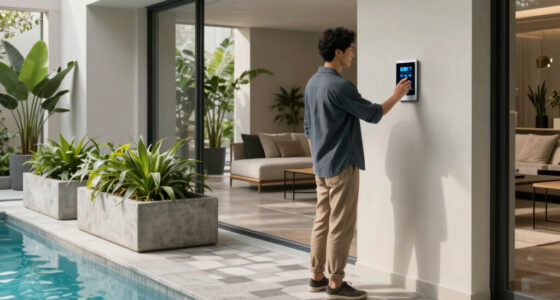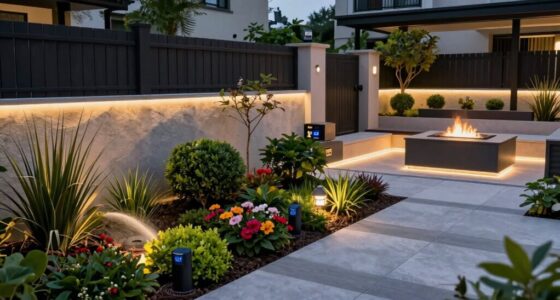
To build a better patio heat and shade plan, position solar panels on the sunniest sides to provide natural shade and harness energy. Incorporate shaded zones with pergolas, umbrellas, or natural landscape features like trees and shrubs. Use adjustable outdoor lighting to enhance comfort and ambiance in shaded areas. Select materials that help regulate temperature, and combine natural and man-made shading for maximum efficiency. Keep exploring to discover more tips for creating a cozy, energy-efficient outdoor space.

Get home appliances delivered free with Prime
- Fast, free delivery on millions of items
- Prime Video, Amazon Music and more included
- Member-only deals all year
Key Takeaways
- Strategically position solar panels to maximize sunlight capture while providing natural shade for cooling.
- Incorporate adjustable lighting and shade structures like pergolas or umbrellas to extend patio usability.
- Use natural landscape features such as trees and shrubs for seasonal and organic shading.
- Select materials with thermal properties that help regulate temperature and reduce heat gain.
- Combine man-made and natural shading methods for a layered, comfortable, and aesthetically pleasing outdoor space.
Creating a comfortable patio space requires more than just furniture and decor; it’s about thoughtfully managing heat and shade. One of the most effective ways to do this is by carefully considering solar panel placement and outdoor lighting design. Solar panels aren’t just for energy efficiency—they can also influence how much sunlight hits your patio throughout the day. By positioning solar panels strategically, you can reduce excess glare and heat, making your outdoor space more pleasant during peak sun hours. For example, installing solar panels on the side of your house that receives the most direct sunlight can create a natural barrier, casting subtle shade over your patio area. This not only harnesses energy but also helps control the amount of direct sunlight reaching your space, keeping it cooler and more inviting.
Strategic solar panel placement creates natural shade, reducing heat and enhancing outdoor comfort.
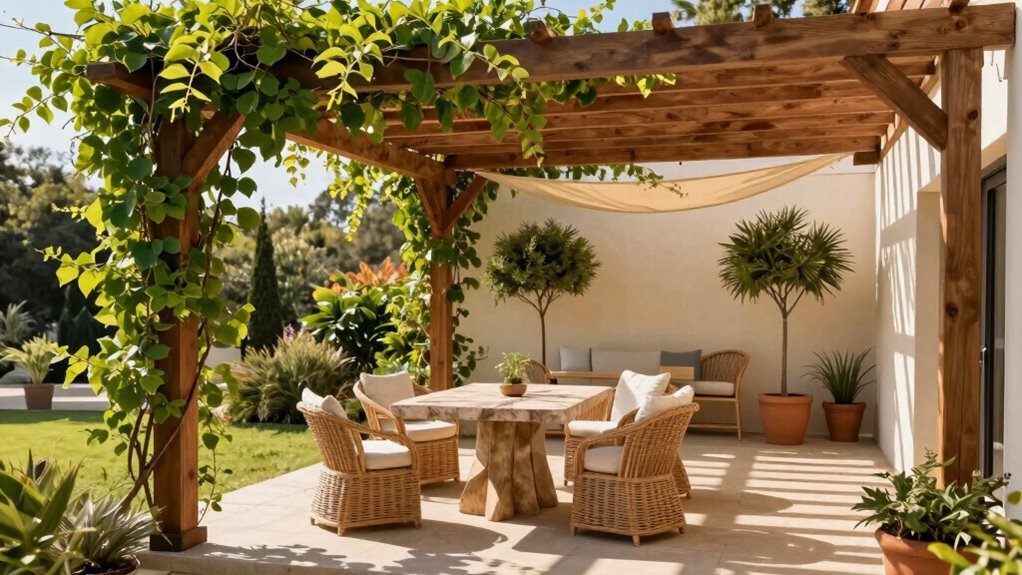
When it comes to outdoor lighting design, your goal should be to create a balance between illumination and shade. Thoughtfully placed lighting fixtures can extend the usability of your patio into the evening while also providing relief from harsh sunlight during the day. Consider installing wall-mounted lights or string lights that can be adjusted or dimmed, so you’re not overwhelmed by brightness or heat. Incorporating shaded areas with pergolas, umbrellas, or retractable awnings is equally important. These structures can be complemented with integrated lighting to offer both sun protection and ambiance. A well-designed lighting plan can help you avoid the temptation of sitting directly in the sun when it’s hottest, encouraging you to enjoy shaded, cooler zones instead. Additionally, understanding solar heat gain can help you make more informed decisions about shading and material choices for your patio.
Furthermore, selecting materials with appropriate thermal properties can significantly influence how well your patio maintains a comfortable temperature throughout the year. To optimize both shade and heat management, think about the natural landscape and how it interacts with your patio. Trees, shrubs, and tall plants can provide organic shade that changes with the seasons, cooling your space naturally. Positioning outdoor lighting and solar panels in relation to these natural features enhances their effectiveness, creating a layered approach to heat control. For instance, placing solar panels to the north or in shaded areas reduces their impact on sunlight while still capturing energy. Meanwhile, strategically placed lighting can highlight the contours of your shaded areas, making the space feel cozy without adding heat.
In addition, selecting shade structures that complement your landscape and design aesthetic can further enhance the comfort and style of your patio. Knowing how natural shading works and how to integrate it with man-made solutions can make a significant difference in your overall heat and shade strategy. Ultimately, building a better patio heat and shade plan involves an integrated approach. By carefully considering solar panel placement and outdoor lighting design, you can craft an outdoor environment that’s comfortable, energy-efficient, and inviting—regardless of the time of day or year.
adjustable outdoor patio umbrella
As an affiliate, we earn on qualifying purchases.
As an affiliate, we earn on qualifying purchases.
Frequently Asked Questions
What Materials Are Best for Outdoor Shading Structures?
You should choose durable materials like pergola frames made from treated wood, aluminum, or steel for longevity. For shading, solar fabrics are an excellent choice because they block UV rays while allowing airflow and natural light. These fabrics, combined with sturdy pergola materials, create an effective outdoor shade structure that withstands weather, offers comfort, and enhances your patio’s aesthetic.
How Do I Choose the Right Location for Shade?
You should choose a location for shade that complements your outdoor furniture setup and maximizes comfort. Consider areas where natural light is harsh or where the sun hits during peak hours, providing relief. Think about integrating lighting solutions nearby for evening use, and guarantee the spot allows easy access and a good view. Proper placement enhances your outdoor experience, making your patio inviting and functional year-round.
What Are Cost-Effective Heating Options for Patios?
For cost-effective heating, consider cozying up to a fire pit or outdoor heater. Fire pits provide warmth and ambiance at a minimal cost, perfect for casual gatherings. Outdoor heaters, especially electric or propane models, deliver direct heat efficiently and economically. By choosing versatile, value-packed options like these, you can extend your patio’s usability without breaking the bank, creating a warm welcome for every weather.
How Can I Maintain and Clean Outdoor Heating and Shading?
You can maintain and clean your outdoor heating and shading by regularly inspecting fire pits and electric heaters for debris or buildup. For fire pits, remove ashes and clean grates with a brush, ensuring proper ventilation. For electric heaters, wipe down surfaces with a damp cloth and check cords for damage. Keep shading clean by washing fabrics with mild soap and water, and store removable covers during harsh weather for longevity.
Are There Eco-Friendly Options for Patio Heating and Shading?
Yes, you can choose eco-friendly patio heating and shading options like solar-powered heaters and solar shades, which harness renewable energy and reduce your carbon footprint. Look for products with wind resistance features to guarantee durability against weather. These options are not only sustainable but also cost-effective in the long run, helping you create a comfortable outdoor space while minimizing environmental impact.
solar powered outdoor string lights
As an affiliate, we earn on qualifying purchases.
As an affiliate, we earn on qualifying purchases.
Conclusion
By thoughtfully combining heat sources and shade options, you create a cozy outdoor retreat that feels like a sanctuary in your own backyard. Remember, a balanced plan is like a well-choreographed dance—each element working in harmony to keep you comfortable and protected from the sun’s glare. With a little planning and creativity, your patio will become a delightful haven where every moment feels just right, no matter the weather.
As an affiliate, we earn on qualifying purchases.
thermal patio furniture materials
As an affiliate, we earn on qualifying purchases.
As an affiliate, we earn on qualifying purchases.
Halloween Picks
halloween
As an affiliate, we earn on qualifying purchases.