To fix wild temperature swings on your pellet grill, focus on adjusting the PID setting, which controls how the grill maintains steady heat. Access the PID menu through your control panel, enable it if needed, and fine-tune the parameters for better stability. Proper calibration and regular maintenance help reduce fluctuations and improve cooking consistency. Want to master your grill’s temperature control? Keep exploring to learn more about optimizing your settings for perfect results.
Key Takeaways
- Properly tuning the PID (Proportional-Integral-Derivative) setting stabilizes grill temperature and prevents wild swings.
- Access and enable the PID control via the grill’s advanced menu to gain precise temperature management.
- Fine-tune PID parameters based on sensor feedback to minimize fluctuations and achieve consistent heat.
- Regularly calibrate sensors and update firmware to ensure accurate readings and stable temperature control.
- Maintain the grill by cleaning sensors and avoiding excessive lid openings, supporting overall temperature stability.
As an affiliate, we earn on qualifying purchases.
What Is the PID Setting and Why Does It Matter?

Have you ever wondered how pellet grills maintain a consistent temperature? That’s where the PID setting comes in. PID stands for Proportional-Integral-Derivative, and it’s a control algorithm that helps manage grill stability. By adjusting how the grill responds to temperature fluctuations, the PID setting keeps your heat steady, preventing wild swings. Without it, your grill might overcorrect, causing inconsistent temperatures and unpredictable cooking results. When properly calibrated, the PID system fine-tunes pellet feed and fan speed, ensuring your grill stays at your target temperature. This precise control minimizes temperature fluctuations, making your grilling experience smoother and more reliable. AI-powered control systems analyze sensor data to optimize grill performance in real-time. Understanding the PID control setting empowers you to achieve even, consistent results every time you cook, especially when you learn to calibrate the PID for your specific grill model. Additionally, a well-adjusted PID system can extend your grill’s lifespan by reducing unnecessary strain on its components.
As an affiliate, we earn on qualifying purchases.
How Wild Temperature Swings Impact Your Grilling Results
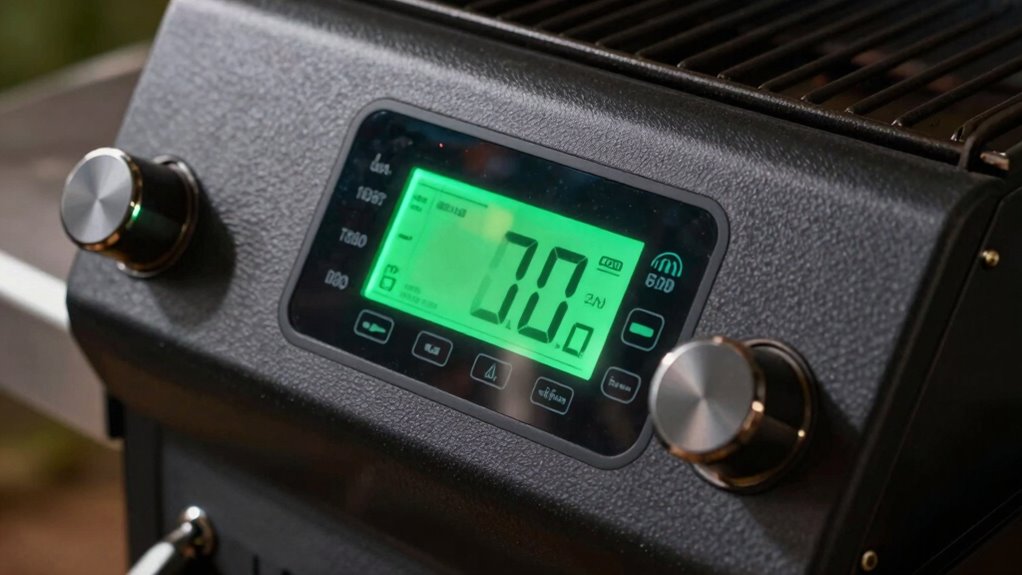
When your pellet grill experiences wild temperature swings, it can seriously undermine your cooking. Fluctuating temperatures lead to uneven cooking, making it difficult to achieve consistent results. These swings often cause your grill to consume more fuel, reducing efficiency and increasing costs. Additionally, inconsistent heat levels can disrupt smoke production, which is crucial for flavor. Too much fluctuation might result in excessive smoke or inadequate smoke, both of which compromise taste. Conversely, frequent temperature changes can cause you to open the lid more often, further wasting fuel and disrupting the cooking process. Proper temperature control can help prevent these issues and improve your overall grilling experience, especially by addressing sensor calibration to ensure accurate readings. Ensuring that your grill’s power settings are correctly adjusted is also vital for maintaining stable temperatures and reliable performance. Regular maintenance and routine calibration can further enhance temperature stability, leading to better cooking results.
As an affiliate, we earn on qualifying purchases.
How to Enable and Access the PID Setting on Your Pellet Grill

To fine-tune your pellet grill’s temperature, you need to access the PID menu first. Once you’ve found it, you can adjust the temperature settings to match your cooking needs. I’ll show you how to do both steps quickly and easily. Understanding Free Floating technology can help you better grasp how PID controls stabilize your grill’s temperature for consistent results, especially when managing smart protocol settings for optimal performance. Additionally, being familiar with contrast ratio can help you understand how precise control over temperature fluctuations improves overall cooking quality. Recognizing the importance of ergonomics in your setup can also make the adjustment process more comfortable and intuitive. Knowing how PID tuning works allows you to customize your grill’s response to temperature changes, resulting in more reliable cooking outcomes.
Accessing the PID Menu
Wondering how to access the PID menu on your pellet grill? First, power on your grill and locate the control panel. Many models require you to press and hold specific buttons—like the settings or menu button—for a few seconds to enter advanced options. Once inside, look for the PID or calibration menu. Here, you can perform digital calibration to fine-tune temperature accuracy. Sensor calibration may also be available, ensuring your grill’s temperature readings are precise. Enabling the PID setting often involves toggling a switch or selecting an option from the menu. Refer to your grill’s user manual for specific instructions, as steps vary by model. Accessing this menu is essential for adjusting the digital calibration, which helps stabilize temperature fluctuations. Understanding industry trends can also help you better optimize your grill’s performance.
Adjusting Temperature Settings
Enabling and accessing the PID setting on your pellet grill is a straightforward process that substantially improves temperature control. Once you’ve entered the PID menu, you’ll find options to fine-tune your grill’s temperature, reducing fluctuations and ensuring consistent heat. Adjusting these settings allows you to maintain precise temperatures, which enhances flavor development by providing stable cooking conditions. Properly setting the PID also simplifies grill maintenance, reducing wear on components caused by temperature swings. To modify the settings, follow your grill’s manual instructions, typically involving a combination of button presses. Remember, small adjustments can make a big difference, giving you more control over your cook and resulting in better-tasting food with less effort. Proper temperature management ultimately leads to more flavorful and perfectly cooked meals. Additionally, understanding battery care and proper charging can help keep your pellet grill’s electronic components functioning optimally over time. Maintaining consistent temperatures is essential for achieving ideal results, especially when aiming for specific textures and flavors, and utilizing proper calibration can further optimize your grill’s performance.
Pellet grill temperature stabilization
As an affiliate, we earn on qualifying purchases.
As an affiliate, we earn on qualifying purchases.
Step-by-Step Guide to Adjusting Your PID for Stable Temperatures
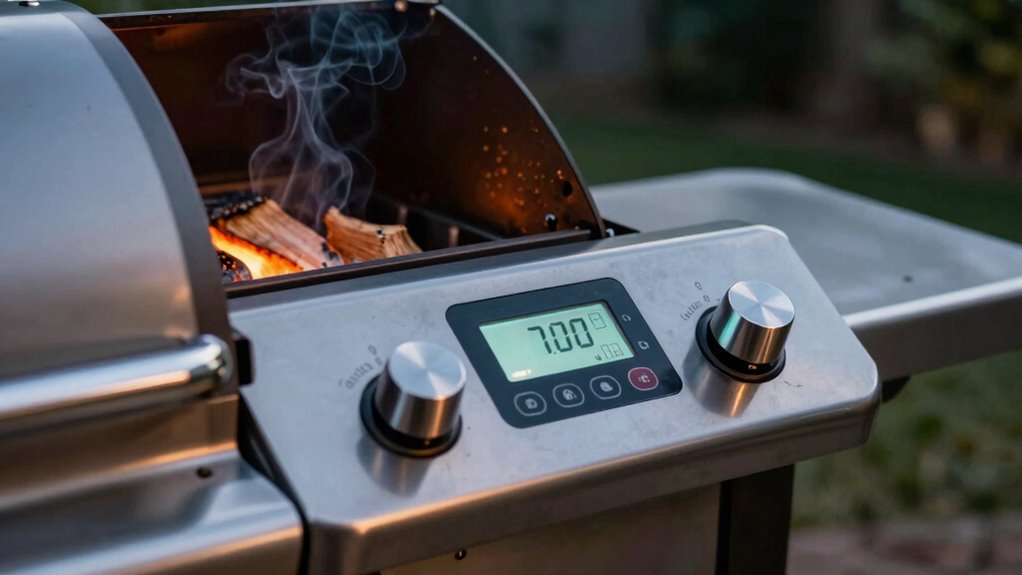
To keep your pellet grill at a steady temperature, you need to understand how the PID works. Once you’re familiar with the basics, you can adjust its settings to improve performance. Let’s walk through the steps to fine-tune your PID for consistent results.
Understanding PID Basics
Understanding PID basics is essential for maintaining stable temperatures on your pellet grill. PID, or Proportional-Integral-Derivative, controls how your grill adjusts heat to keep the set temperature steady. It works by constantly monitoring temperature fluctuations and making rapid adjustments. Proper PID tuning guarantees consistent smoke flavor and reduces the need for frequent grill maintenance. Here’s a quick look at key PID components:
| PID Component | Function |
|---|---|
| Proportional | Corrects current temperature deviations |
| Integral | Adjusts for accumulated errors |
| Derivative | Predicts future temperature trends |
Mastering these basics helps you fine-tune your grill, preventing wild swings and delivering perfect, consistent results every time. Understanding sensor calibration ensures your PID system receives accurate data for optimal performance.
Adjusting Your Settings
Adjusting your PID settings is crucial for maintaining consistent temperatures on your pellet grill. Proper adjustments help counteract fluctuations caused by varied fuel quality and the need for efficient grill maintenance. Start by locating your PID controller’s settings, usually found in the menu or via an app. Adjust the parameters gradually, focusing on temperature stability rather than rapid changes. Low-quality fuel can cause uneven burns, so fine-tune the PID to compensate for inconsistent fuel quality. Keep in mind, regular grill maintenance—cleaning burn pots, sensors, and fans—also improves temperature control. Understanding PID theory can help you make more precise adjustments, leading to better temperature stability. Testing your adjustments by running the grill at a set temperature for about 30 minutes, then monitoring the fluctuations. Regularly monitoring system performance is essential for optimal control. Fine-tuning your PID ensures a steadier temperature, making your cooking more predictable and flavorful.
Common PID Problems and How to Troubleshoot Them

When your pellet grill’s PID controller isn’t functioning properly, it can lead to unstable temperatures and uneven cooking. Common issues include sensor calibration errors or outdated firmware causing poor responsiveness. To troubleshoot, first check if your sensor needs recalibration—incorrect readings can throw off PID control. Also, ensure your firmware is up to date; manufacturers often release updates that fix bugs and improve stability. If temperature swings persist, verify the wiring connections and clean the sensor for accurate readings. Proper sensor maintenance can also help prevent issues before they start. Additionally, understanding PID tuning procedures can help you optimize your grill’s performance. Regular temperature monitoring can help identify problems early. Here’s a quick overview:
| Issue | Solution |
|---|---|
| Sensor calibration error | Recalibrate the temperature sensor |
| Firmware outdated | Update to the latest firmware |
| Loose wiring | Secure all connections |
| Dirty sensor | Clean with a soft cloth |
Addressing these common problems will improve your grill’s temperature stability.
Tips for Maintaining Consistent Temp Beyond Just PID Settings

Maintaining a consistent temperature on your pellet grill involves more than just fine-tuning the PID settings; it requires careful attention to several practical strategies. Regular grill maintenance ensures components like the fan and auger function smoothly, reducing temperature fluctuations. Also, prioritize fuel quality; using fresh, high-quality pellets prevents inconsistent burning and maintains steady heat. Keep your grill clean by removing ash and grease build-up, which can interfere with airflow and temperature regulation. Additionally, avoid opening the lid frequently, as this causes heat loss and temperature swings. Consistent grill maintenance and good fuel choices help stabilize the environment inside your grill, making your temperature control more reliable without solely relying on PID adjustments.
Should You Use the PID? Pros and Cons of Default vs. Custom Settings
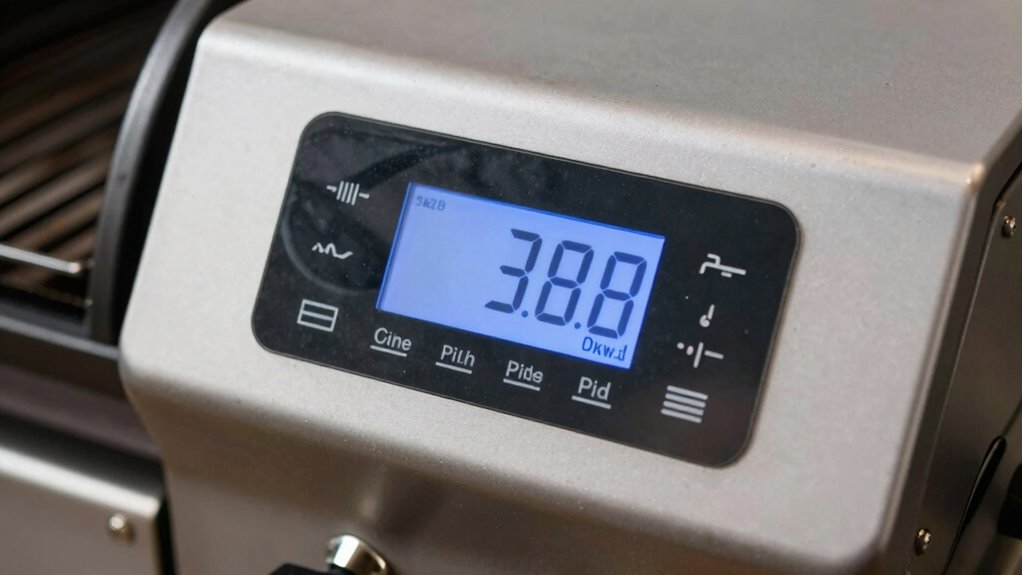
Using the PID (Proportional-Integral-Derivative) controller can substantially influence your grill’s temperature stability. Default PID settings are designed for general use, offering decent grill consistency out of the box. However, customizing these settings can better address your specific pellet grill and cooking style, reducing temperature fluctuations.
Optimizing your pellet grill with custom PID settings enhances temperature stability and cooking precision.
- Save time by avoiding constant adjustments
- Achieve more precise temperature control
- Minimize wild swings during critical cooks
- Tailor performance to your pellet type
- Risk of over-complicating simple setups
Choosing between default and custom PID settings depends on your experience and desired grill performance. Default settings work well for most, but if you’re aiming for flawless grill consistency, tweaking the PID may be worth it—just be aware of potential complexity and the learning curve involved.
Frequently Asked Questions
Can PID Settings Be Customized for Different Types of Food?
Yes, you can customize PID settings for different types of food. By adjusting your grill’s custom PID, you optimize temperature control for specific foods like brisket or ribs. This guarantees even cooking and better results. Experimenting with food-specific settings helps you maintain steady temperatures tailored to each dish’s needs. With some practice, you’ll master these customized PID adjustments for perfect, consistent results every time you cook.
How Often Should I Recalibrate My PID for Optimal Performance?
Think of your PID as the heartbeat of your grill. You should recalibrate every 15-20 cooks or when you notice temperature fluctuations. This keeps your performance consistent, like a steady drumbeat. Regular calibration ensures the system adapts to changes, maintaining ideal control. Neglecting it can cause wild swings, making your smoking unpredictable. Keep your grill tuned, and you’ll enjoy perfect results every time.
Are There Specific Brands of Pellet Grills With Better PID Controls?
You’ll find that brands like Traeger, Rec Tec, and Memphis offer pellet grills with better PID controls, ensuring more consistent temperatures. These brands are known for their reliability and high PID accuracy, which helps minimize temperature swings. When choosing, prioritize models praised for their precise temperature regulation, and consider user reviews to confirm their PID performance. This way, you’ll enjoy steady grilling without much fuss.
Does Ambient Temperature Affect the Effectiveness of PID Adjustments?
Don’t let the grass grow under your feet—ambient influence can substantially impact your pellet grill’s ability to maintain steady temps. While PID adjustments are designed to handle temperature variability, extreme changes in ambient temperature can challenge even the best controls. To keep things on an even keel, monitor outdoor conditions and make small tweaks to your settings when needed. This way, you’ll enjoy consistent results regardless of the weather.
Can I Use a Third-Party Device to Enhance PID Temperature Stability?
Yes, you can use third-party controllers to improve PID temperature stability on your pellet grill. These devices often offer advanced features and custom PID tuning options, helping you fine-tune the temperature control for more consistent results. Just guarantee compatibility with your grill model, and follow the manufacturer’s instructions for ideal PID tuning. This way, you’ll minimize wild temperature swings and enjoy more precise cooking.
Conclusion
Mastering your pellet grill’s PID is like tuning a finely crafted instrument—you’ll release smooth, steady temperatures that sing with perfect flavor. When you tame those wild swings, grilling becomes a dance, not a rollercoaster ride. With a little patience and dial adjustments, you’ll turn chaos into harmony, transforming every cookout into a symphony of smoky perfection. So, take control, and let your grill’s steady heartbeat elevate your grilling game.