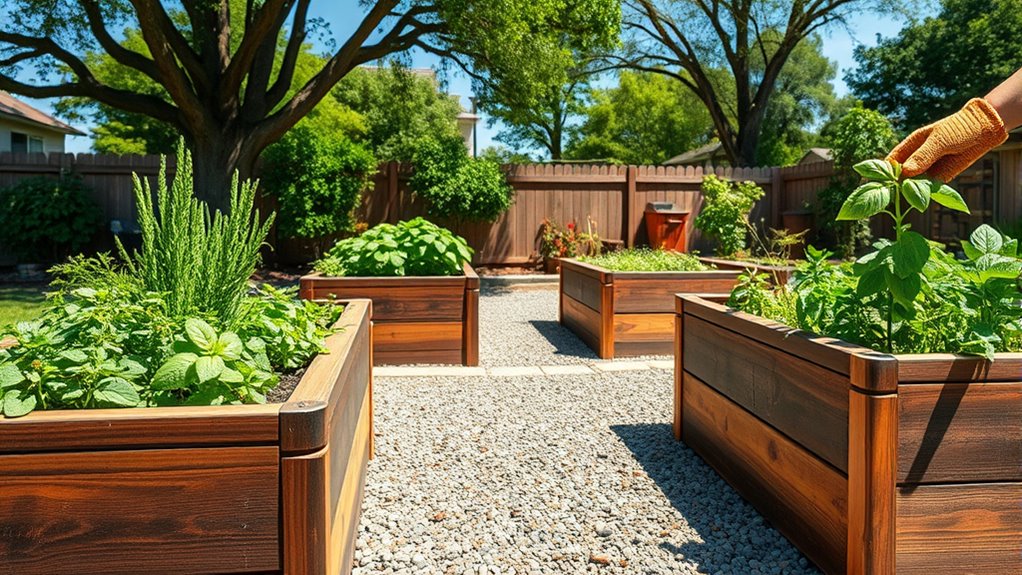

To build raised garden beds for vegetables and herbs, start by planning the layout, considering sunlight, wind, and accessibility. Choose durable, weather-resistant materials like wood or recycled options to guarantee longevity. Assemble the beds at comfortable heights for easy planting and harvesting, and fill them with quality soil and compost for nutrient-rich planting conditions. Proper construction and maintenance set your garden up for success; if you keep exploring, you’ll learn more about optimizing your garden space.
Key Takeaways
- Plan bed layout considering sunlight, accessibility, and wind exposure for optimal vegetable and herb growth.
- Choose durable, weather-resistant materials like wood or stone that align with your aesthetic and budget.
- Construct raised beds at a comfortable height to facilitate easy planting, maintenance, and harvesting.
- Fill beds with quality soil mixed with compost to ensure nutrient-rich conditions for vegetables and herbs.
- Incorporate pest barriers and companion planting strategies to protect crops and promote healthy growth.
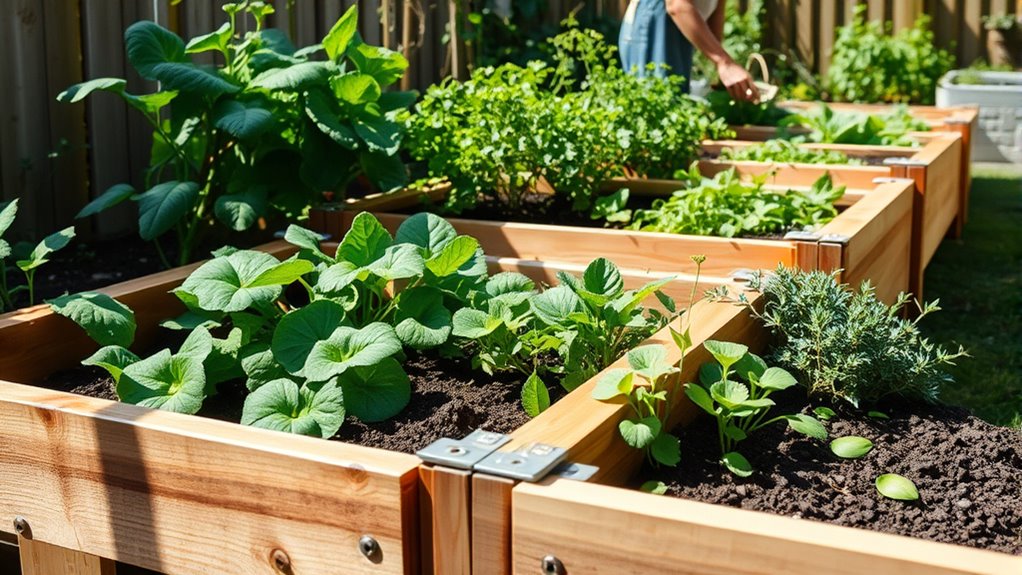
Ever wondered how to create a productive and easy-to-maintain garden space? Building raised garden beds is one of the best ways to achieve that. They offer excellent drainage, easy access for planting and harvesting, and help you control soil quality. Before you start, it’s important to plan the layout, considering sunlight, wind, and accessibility. Once you’ve mapped out your space, gather materials like wood, stone, or recycled materials, depending on your aesthetic and budget. Building raised beds also allows you to customize soil conditions, which is vital for healthy vegetables and herbs.
Build raised garden beds for better drainage, easy access, and customizable soil for thriving vegetables and herbs.
To get the most out of your garden, mastering composting techniques is essential. By composting kitchen scraps, yard waste, and other organic materials, you create nutrient-rich soil that boosts plant growth. Fill your raised beds with a mix of compost, garden soil, and other organic matter to guarantee your plants get the nutrients they need. Composting not only improves soil fertility but also reduces waste, making your garden more sustainable. Regularly aerate your compost piles and keep them moist to speed up decomposition. This way, you’ll have a continuous supply of healthy compost to nourish your vegetables and herbs.
Another key aspect of maintaining a thriving garden is pest management strategies. Raised beds naturally help reduce some pests by elevating plants above ground level, but they’re not pest-proof. Use physical barriers like row covers or mesh screens to prevent insects from reaching your crops. Companion planting is also effective; for example, planting marigolds nearby can deter nematodes and aphids. Keep your garden clean by removing dead or diseased foliage promptly, which helps prevent pest infestations. Regularly inspecting your plants allows you to catch problems early before they become severe. Introducing beneficial insects, such as ladybugs or predatory beetles, can naturally control pest populations, reducing the need for chemical treatments.
Creating a successful raised garden bed isn’t just about construction; it’s about ongoing care. Incorporate pest management strategies into your routine and keep your soil healthy with composting techniques. Water consistently, avoid over-fertilizing, and rotate your crops annually to prevent soil depletion and disease buildup. Additionally, choosing appropriate soil mixtures can significantly improve plant health and yield. With a little effort and planning, your raised beds will become a bountiful source of fresh vegetables and herbs, making gardening both rewarding and manageable. Remember, the more you learn about soil health and pest control, the easier it will be to keep your garden productive year after year.
Frequently Asked Questions
What Are the Best Materials for Raised Bed Construction?
You should choose sustainable materials like cedar, redwood, or composite lumber for your DIY construction of raised beds. These options are durable, eco-friendly, and naturally resistant to rot, making them ideal for vegetable and herb gardens. Avoid treated wood with chemicals, and consider recycled or locally sourced materials to further enhance sustainability. Using these materials guarantees your raised beds will last and support healthy, thriving plants.
How Deep Should My Raised Garden Beds Be?
You should make your raised garden beds at least 12-18 inches deep to guarantee proper soil drainage and accommodate plant depth. This depth helps prevent waterlogging and provides enough space for roots to grow strong. For larger vegetables like tomatoes or carrots, go even deeper. A deeper bed promotes healthy plant growth, better root development, and efficient water management, making your garden more productive and easier to maintain.
Can I Build Raised Beds on Uneven or Sloped Ground?
Did you know 33% of gardeners face drainage issues on uneven ground? You can build raised beds on sloped or uneven ground, but proper soil preparation is crucial. Use levelers or steps to create a stable base, and incorporate erosion control measures like barriers or retaining walls. This ensures your garden stays productive and prevents soil from washing away, giving you a lush, thriving vegetable and herb garden.
What Are Common Pests to Watch for in Raised Beds?
You should watch for pests like aphids, beetles, slugs, and snails in your raised beds. To identify pests early, practice pest identification regularly. When necessary, use organic pest control methods such as neem oil, insecticidal soap, or introducing beneficial insects like ladybugs. Keep your garden healthy by removing debris and weeds, which also helps prevent pest infestations. Staying vigilant guarantees your vegetables and herbs stay healthy and pest-free.
How Often Should I Water My Raised Garden Beds?
Water your raised garden beds like you’re giving a thirsty plant a cool drink—gently, but thoroughly. Typically, you should water about 2-3 times a week, depending on weather and soil moisture. Check your soil moisture regularly; it should feel damp but not soggy. During hot or windy days, you might need to water more often, ensuring your vegetables and herbs stay healthy and happy.
Conclusion
Now that you’ve built your raised garden beds, you’ve set the foundation for a thriving oasis, much like a gardener tending to their own Eden. With each seed planted and every weed removed, you’re nurturing a miniature paradise, echoing the timeless dance of nature’s cycles. Just as the sun rises and sets in harmony, your patience and care will yield bountiful harvests, turning your garden into a haven of growth, life, and endless possibilities.