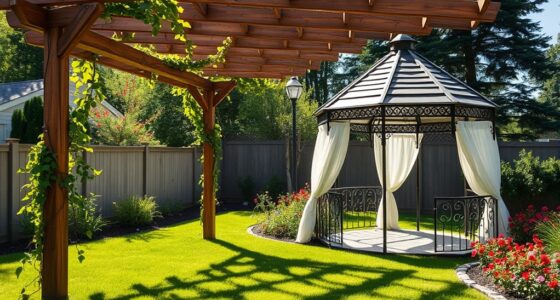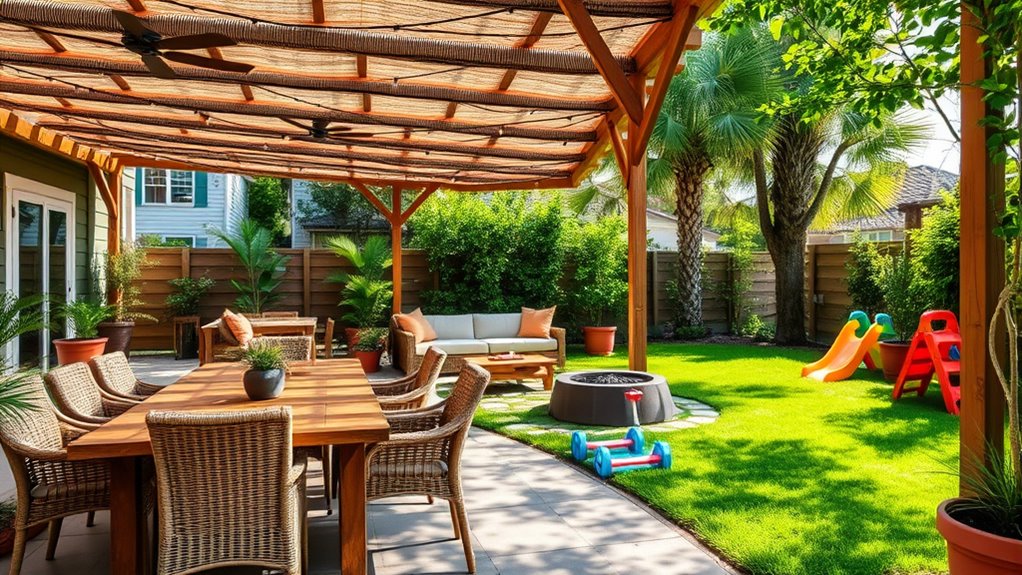

To create a multi-use outdoor space, carefully plan your layout by placing dining, lounging, and play areas for easy access and flow. Use landscape lighting to enhance ambiance and safety after dark, while weatherproof storage keeps everything tidy. Incorporate versatile furniture that adapts to different activities and add decorative touches for warmth. With thoughtful design, your yard becomes an inviting, functional haven—continue to explore how all these elements come together to maximize your outdoor enjoyment.
Key Takeaways
- Plan distinct zones for dining, lounging, and play, ensuring smooth flow and appropriate proximity to the house.
- Incorporate landscape lighting to define areas, enhance ambiance, and improve safety during evening use.
- Use versatile furniture and decor that can serve multiple functions and adapt to different activities.
- Include outdoor storage solutions to keep spaces organized and clutter-free for easy access and maintenance.
- Design with flexibility in mind, allowing seamless transitions between activities and maximizing outdoor space usability.

Transforming your outdoor area into a versatile space can considerably enhance your home’s functionality and enjoyment. When planning a multi-use outdoor space, you want it to serve your needs for dining, lounging, and play without feeling cluttered or disconnected. One of the first steps is to think about how to define different zones within the area. Using landscape lighting can do wonders for creating ambiance and increasing safety after sunset. Well-placed lights along pathways, around dining areas, and near lounging spots make the space inviting and functional, extending your outdoor use into the evening hours. Plus, good lighting can highlight features like a fire pit or water element, adding visual interest.
Create distinct outdoor zones with landscape lighting to boost ambiance and safety.
Next, consider your outdoor storage solutions. It’s essential to keep the area tidy and organized, especially if you plan to entertain often or have kids who love to play outside. Investing in weatherproof storage options, such as benches with hidden compartments or sturdy outdoor cabinets, allows you to stow away cushions, toys, grilling tools, and gardening supplies. This prevents clutter from taking over your space and makes it easier to switch from one activity to another. When you have designated storage, you’re more likely to keep the area neat, making it more inviting and functional.
Designing your outdoor space to accommodate dining, lounging, and play involves thoughtful layout planning. Place the dining area in a spot that’s close enough to the kitchen or house for easy access but still feels separate enough to create a cozy atmosphere. Use outdoor rugs and furniture arrangements to define the lounging zone, encouraging relaxation and conversation. For play, allocate a safe, open area—perhaps a grassy patch or a paved section—where kids can run around or where you can set up games and sports equipment. Make sure each zone flows smoothly into the next to foster a seamless outdoor experience.
Finally, incorporate versatile furniture pieces that can serve multiple purposes. For example, a large dining table can double as a work surface or craft station when not hosting meals. Stackable chairs or modular seating can be rearranged to suit your needs. Additionally, rustic decor such as wooden accents and vintage accessories can enhance the overall aesthetic and warmth of your outdoor area. By thoughtfully integrating landscape lighting, efficient outdoor storage, and flexible furniture, you create an outdoor space that adapts to your lifestyle. This not only maximizes your yard’s potential but also ensures you get the most enjoyment out of every sunny afternoon and warm evening.
Frequently Asked Questions
How Can I Ensure Privacy in a Multi-Use Outdoor Area?
To guarantee privacy in your outdoor area, you should start with a sturdy fence privacy that blocks views from neighbors. Add planting screens like tall shrubs, bamboo, or trellises with climbing plants to create natural barriers. Arrange furniture thoughtfully to maximize seclusion, and consider outdoor curtains or screens for flexible privacy options. These strategies will help you enjoy your space comfortably and privately.
What Are Eco-Friendly Materials Suitable for Outdoor Furniture?
You can choose eco-friendly materials like sustainable wood, which is responsibly harvested and durable for outdoor furniture. Recycled plastics are also great—they’re weather-resistant and reduce waste. Opt for furniture made from these materials to create an environmentally conscious outdoor space. These choices help you enjoy your dining, lounging, and play areas while minimizing your ecological footprint and supporting sustainability efforts.
How Do I Maintain Different Zones During Seasonal Changes?
You should regularly adjust your outdoor zones by protecting your weather-resistant furniture with covers during harsh seasons. Incorporate seasonal plantings to add color and vigor, changing them as the weather shifts. Keep lounge and dining areas clear of debris, and consider portable heaters or fans to regulate temperature. By staying proactive, you’ll preserve your space’s functionality and beauty year-round, ensuring each zone remains inviting regardless of seasonal changes.
What Lighting Options Are Best for Multifunctional Outdoor Spaces?
You should consider a mix of solar lighting and string lights to illuminate your outdoor space effectively. Solar lights are eco-friendly and easy to install, perfect for general lighting. String lights add a cozy, decorative touch, ideal for dining and lounging areas. Combining these options guarantees your space remains functional and inviting during evening hours, regardless of the activity. Switch them on as needed to create the perfect ambiance for each zone.
How Can I Incorporate Storage Without Cluttering the Space?
You can incorporate hidden storage by choosing multifunctional furniture like benches with built-in compartments or ottomans that double as storage. Use vertical space with wall-mounted shelves or storage cabinets to keep clutter off the ground. Opt for furniture with hidden compartments to seamlessly blend storage into your outdoor design. This approach keeps your space organized and functional without sacrificing style or openness.
Conclusion
Think of your outdoor space as a vibrant garden, where each corner blooms with purpose—dining tables like fragrant roses, lounging areas as shady trees, and play zones like colorful wildflowers. When you blend these elements, your yard becomes a harmonious landscape, inviting everyone to explore and enjoy. With a little planning, you turn your outdoor area into a lively, versatile oasis—your personal paradise where every activity blossoms naturally.