When choosing patio materials, consider your style, budget, and maintenance needs. Concrete offers versatility and affordability but can crack over time, while pavers provide durability and easy repairs with their interlocking stones. Tile creates an elegant look but requires careful maintenance to prevent damage. Each material has unique benefits for your outdoor space. To make the best decision, explore how these options can match your lifestyle—more tips await you.
Key Takeaways
- Understand the durability, aesthetics, and maintenance needs of concrete, pavers, and tile to match your outdoor style and budget.
- Concrete offers versatility and affordability but may crack over time; sealing and repairs extend its lifespan.
- Pavers provide a textured, elegant look with easy repair options, ideal for long-term durability and customization.
- Tile creates a sophisticated appearance but requires weather-resistant, outdoor-rated options and regular upkeep.
- Proper planning and maintenance enhance the longevity of your patio, regardless of material choice.
Creating a functional and attractive outdoor space starts with choosing the right patio materials. The material you select will influence your landscaping ideas, how you maintain your patio, and the overall vibe of your backyard. Whether you’re aiming for a sleek modern look or a rustic charm, your choice should align with your lifestyle, budget, and aesthetic preferences.
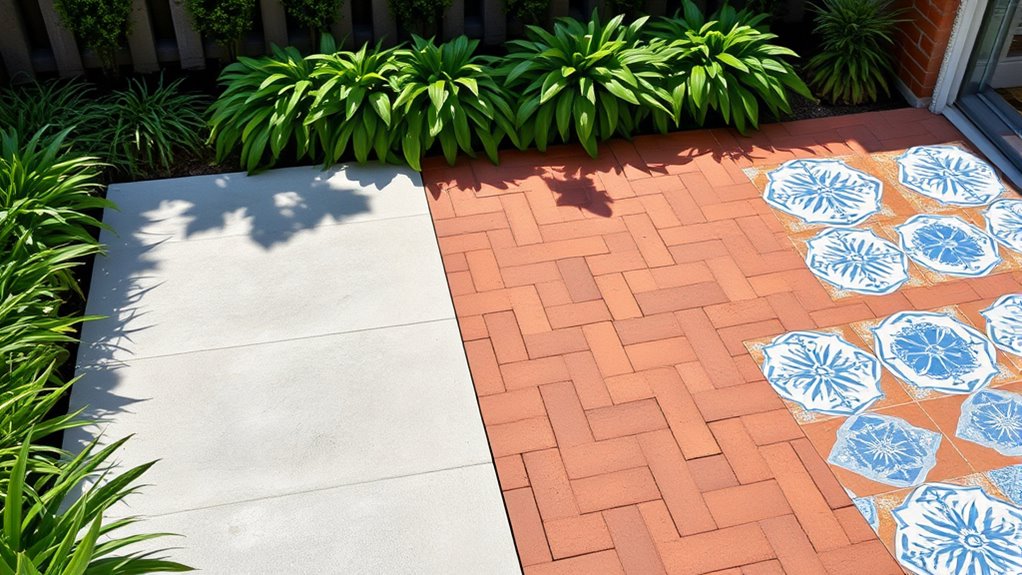
Concrete is a popular choice because it’s versatile, durable, and budget-friendly. If you’re considering concrete, you’ll find it easy to customize with colors, stains, and textures that match your landscaping ideas. It’s low-maintenance compared to other materials—just occasional sealing and cleaning keep it looking fresh. However, concrete can crack over time, especially if your area experiences freeze-thaw cycles, so regular inspection and timely repairs are essential parts of patio maintenance. An added benefit is that concrete can be shaped into various patterns and sizes, giving you flexible design options for your outdoor space.
Pavers offer a more textured, elegant appearance and are renowned for their durability. These interlocking stones are excellent if you want a patio that can withstand heavy furniture, foot traffic, or even outdoor appliances. When you opt for pavers, you’ll appreciate their ease of repair—if a section gets damaged, you simply replace the affected pavers instead of the entire surface. This makes pavers a practical choice for long-term patio maintenance. They also lend themselves well to creative landscaping ideas, as you can mix different colors, shapes, and patterns to create unique designs. The installation process might take a little longer than pouring concrete, but the result is a sturdy, visually appealing surface that can last for decades with proper care.
Tile patios tend to evoke a sophisticated, refined look. They’re perfect if your landscaping ideas lean toward an elegant or Mediterranean vibe. Tile offers a wide range of colors, patterns, and textures, but keep in mind that not all tiles are suitable for outdoor use. You’ll want to choose outdoor-rated tiles that can withstand weather changes and resist slipping. Tile requires more attentive patio maintenance—regular sealing, cleaning, and checking for cracks are necessary to keep it looking pristine. It’s also more delicate than concrete or pavers, so heavy furniture or sharp objects can cause damage. But if you’re willing to put in the effort, tile can create a stunning outdoor area that feels almost like an extension of your indoor living space. Additionally, understanding different materials used in patio construction can help you select the most appropriate option for your needs.
Ultimately, your choice of patio materials should reflect your aesthetic preferences, how much time you want to spend on maintenance, and your landscaping ideas. Each material has its strengths and considerations, but with proper care and planning, your patio can become a beautiful, functional outdoor retreat for years to come.
Frequently Asked Questions
How Do I Choose the Best Patio Material for My Climate?
To choose the best patio material for your climate, consider climate considerations and material durability. If you face freezing temperatures, opt for concrete or pavers that resist cracking. In hot, sunny areas, choose tiles with good heat resistance. For humid climates, select materials that resist mold and moisture. You’ll want a durable option that withstands weather changes, ensuring your patio stays beautiful and functional year-round.
What Maintenance Is Required for Different Patio Materials?
You’ll need to stay on top of maintenance for your patio materials. For concrete, sealing is essential to prevent stains and cracks, and you should regularly remove stains as soon as they appear. Pavers require minimal sealing, but you should check for shifting and clean debris often. Tile patios may need sealing too, depending on the type, and you should promptly remove stains to keep them looking their best.
Are There Eco-Friendly Options for Patio Materials?
Yes, you can choose sustainable options and eco-friendly materials for your patio. Look for recycled concrete, permeable pavers, or reclaimed wood tiles, which reduce environmental impact. These materials help manage stormwater, lower carbon footprints, and use fewer natural resources. By selecting eco-friendly options, you’ll create a beautiful, functional outdoor space that’s kind to the planet and aligns with sustainable living principles.
How Long Does Each Patio Material Typically Last?
Concrete typically lasts 25-30 years, offering solid durability for your patio. Pavers are highly durable, with a material longevity of 30-50 years, and they’re easier to repair if damaged. Tile may last 10-20 years, but its durability varies based on quality and installation. For the best longevity, consider pavers, which provide a superior durability comparison, ensuring your outdoor space remains attractive and functional for years to come.
What Are the Cost Differences Between Concrete, Pavers, and Tile?
When comparing costs, concrete is usually the most affordable, with material pricing often below $10 per square foot. Pavers tend to be more expensive, averaging $10 to $20 per square foot, but offer durability and aesthetic options. Tile can vary widely in price, from budget-friendly options around $5 to high-end designer tiles costing over $30 per square foot. Your choice depends on your budget and desired look.
Conclusion
Choosing the right patio material shapes your outdoor space’s look and durability. Think of concrete, pavers, and tile as different tools in your toolbox—each with its strengths. Concrete offers strength, pavers bring charm, and tile adds elegance. By visualizing their qualities, you can see how your choice creates a cozy, durable retreat. Trust your vision, weigh your needs, and select the perfect material to turn your backyard into a beautiful, functional haven.