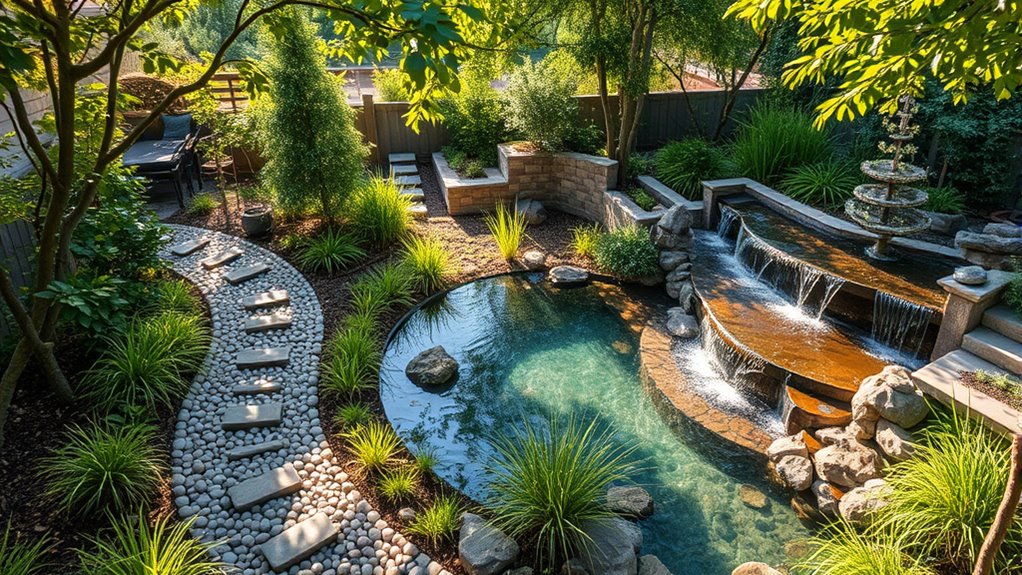

To create eco-friendly water features that reuse rainwater, start by installing collection systems on your rooftops or surfaces to gather rainwater efficiently. Use storage tanks, filters, and screens to keep the water clean, and incorporate natural filtration methods like gravel and aquatic plants. Add small pumps to circulate the water and prevent stagnation. Implementing these ideas not only conserves water but also promotes healthy, sustainable landscapes. Keep exploring to discover more ways to make your water feature truly eco-friendly.
Key Takeaways
- Incorporate rain harvesting systems with collection barrels or tanks for water reuse in features.
- Use natural filtration methods like gravel beds and aquatic plants to maintain water quality.
- Design features with overflow outlets to manage heavy rain and prevent flooding.
- Integrate native plants and eco-friendly materials to enhance biodiversity and sustainability.
- Install small pumps and leak-proof plumbing for efficient water circulation and minimal evaporation.
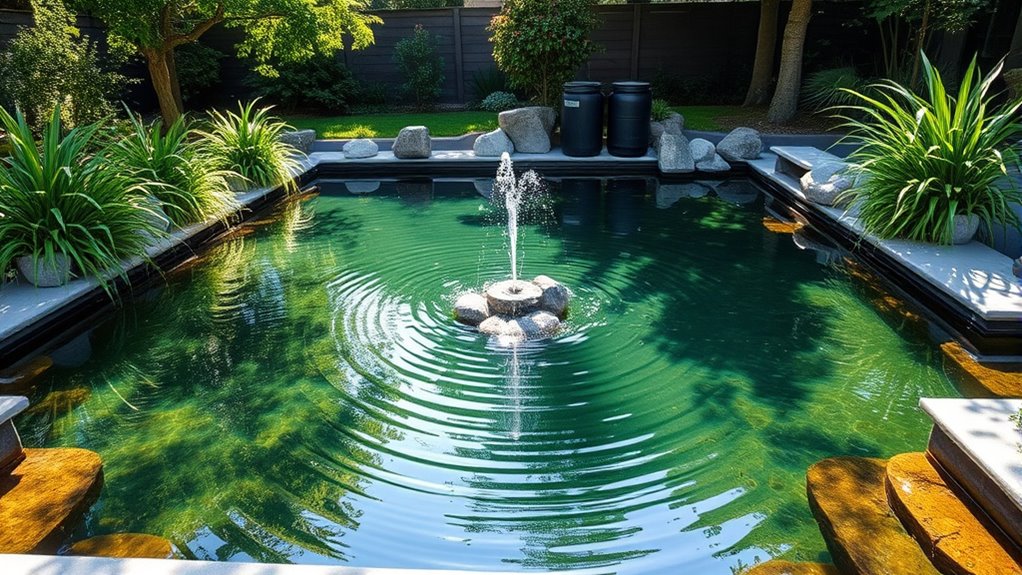
Many water features now incorporate rainwater reuse to promote sustainability and reduce water bills. By integrating rainwater harvesting systems into your landscape, you can effectively collect and reutilize rainwater for your water features, making your outdoor space more eco-friendly. This approach not only conserves potable water but also supports sustainable landscaping practices that benefit the environment. When designing a water feature that reuses rainwater, you should consider installing a rain barrel or a more advanced collection system at strategic points around your property. These systems capture runoff from rooftops, driveways, and other surfaces, funneling it into storage tanks. From there, the stored rainwater can be filtered and directed to fountains, ponds, or waterfalls, creating a self-sustaining cycle that minimizes reliance on municipal water supplies.
Using rainwater harvesting for your water features aligns perfectly with sustainable landscaping goals. It reduces the demand for treated water, decreases stormwater runoff, and helps prevent localized flooding. You can also enhance your landscape’s eco-friendliness by choosing native plants that thrive on rainwater and require less supplemental irrigation. This combination of rainwater harvesting and sustainable landscaping creates a harmonious environment that supports local ecosystems and promotes biodiversity.
Rainwater harvesting reduces water demand, prevents flooding, and promotes ecological harmony through native plants.
Incorporating this method into your design is straightforward. Start by evaluating your catchment areas and determining how much rainwater you can collect. Next, select appropriate storage containers that fit your space and aesthetic preferences. Installing leaf screens and filters is essential to keep debris out of your system, ensuring the water remains clean for your water feature. When connecting your harvesting system to the water feature, make sure the plumbing is leak-proof and that you include a overflow outlet to handle heavy rain events. This prevents flooding and protects your landscape. Additionally, incorporating water feature design tips can help optimize the aesthetic and functionality of your setup.
You can also consider adding a small pump to circulate the rainwater, maintaining movement in ponds or fountains and preventing stagnation. Using natural filtration methods, like gravel and aquatic plants, can further improve water quality and support the health of aquatic life if you incorporate fish or plants. By designing with rainwater harvesting in mind, you not only create beautiful, functional water features but also contribute to a more sustainable environment. It’s a simple yet impactful way to reduce water waste, lower your utility bills, and showcase your commitment to eco-conscious living. Overall, integrating rainwater reuse into your water features allows you to enjoy a stunning landscape that’s both beautiful and environmentally responsible.
Frequently Asked Questions
What Are the Costs Involved in Installing Rainwater Reuse Water Features?
The cost estimation for installing rainwater reuse water features varies based on size, complexity, and materials. You should consider investment considerations like initial setup, filtration systems, and plumbing, which can range from a few hundred to several thousand dollars. While upfront costs might seem high, long-term savings on water bills and environmental benefits make it a worthwhile investment. Plan your budget carefully to make sure you get the best eco-friendly water feature for your space.
How Often Should Rainwater Collection Systems Be Maintained?
You should perform a maintenance schedule at least once every three to six months to guarantee your rainwater collection system runs smoothly. Regular system inspection helps identify clogged filters, leaks, or debris buildup that could affect water quality and efficiency. After heavy storms or seasonal changes, do a more thorough check. Consistent maintenance keeps your eco-friendly water feature functioning properly and prolongs its lifespan, saving you time and money in the long run.
Are There Specific Plants That Thrive Near Rainwater-Based Water Features?
Think of your rainwater feature as a welcoming garden party for native plants and drought-tolerant species. These hardy plants thrive in such environments, soaking up the moisture like sponges and adding vibrant life. Native plants flourish naturally, needing less water and care. Drought-tolerant species, resilient and tough, thrive on the consistent moisture provided by your rainwater system, creating a lush, sustainable oasis that dances with color and energy.
Can Rainwater-Reusing Features Be Integrated Into Small Urban Gardens?
Yes, you can integrate rainwater-reusing features into small urban gardens. Given urban space limitations, opt for compact, container garden integration with miniature water features that collect and reuse rainwater. You can install small rain barrels or hidden underground tanks, making efficient use of limited space. These eco-friendly water features add aesthetic appeal while conserving water, perfect for maximizing your urban garden’s potential without cluttering the area.
What Safety Precautions Are Necessary for Rainwater Harvesting Systems?
You should always cover your rainwater harvesting system to prevent debris and pests from contaminating your water. Regularly check for leaks and verify proper stormwater management. Test water quality periodically to detect any bacteria or pollutants, keeping your system safe. Use first flush diverters to minimize contaminants, and install filters to maintain clean, reusable rainwater, protecting both your garden and your health.
Conclusion
By choosing water features that reuse rainwater, you’re not just saving resources—you’re creating a sustainable oasis. Imagine transforming your garden into a thriving haven, much like turning a small rain shower into a nourishing stream that sustains everything around it. With each drop recycled, you become part of a larger cycle of conservation. It’s a simple change that flows into a bigger impact, making your outdoor space both beautiful and eco-friendly.