Using recycled and repurposed materials for your garden helps reduce waste, protect the environment, and create a unique, sustainable outdoor space. You can transform old containers like buckets, teapots, or wooden crates into charming planters, or use broken pottery as decorative mulch. Think creatively—upcycling pallets for raised beds or using discarded wood for edging. Keep exploring ideas to maximize your garden’s charm while supporting eco-friendly practices. If you continue exploring, you’ll discover more inspiring tips to enhance your garden creatively.
Key Takeaways
- Transform old containers like buckets, teapots, and wooden crates into unique planters to add charm and reduce waste.
- Use recycled materials such as broken pottery or discarded wood for decorative mulch and garden edging.
- Build raised beds with repurposed pallets or reclaimed wood to create sustainable garden structures.
- Line containers with gravel or pottery shards for proper drainage and plant healthy, eco-friendly gardens.
- Decorate and personalize recycled garden elements to enhance aesthetics while promoting environmental responsibility.
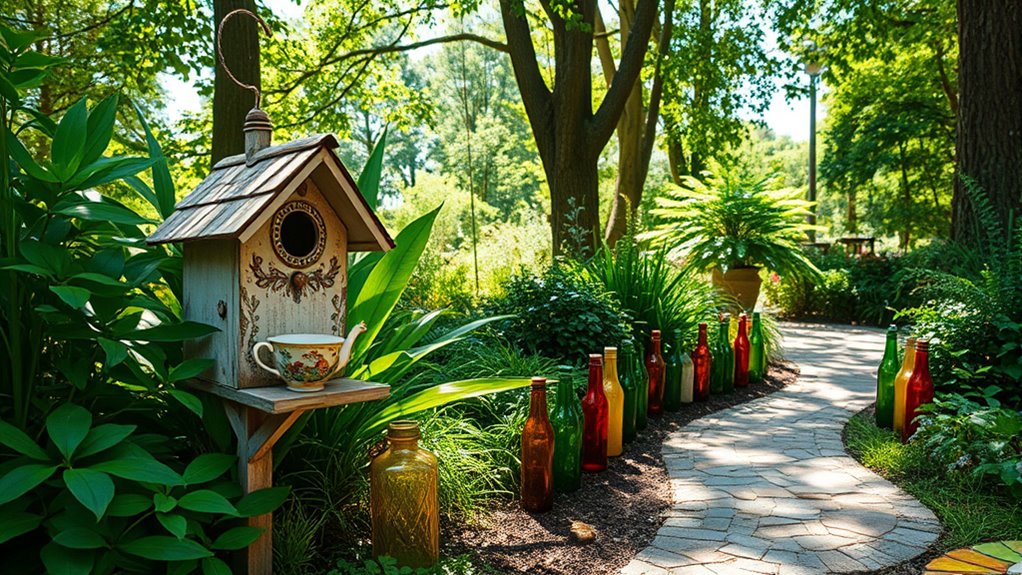
Gardens thrive when you use recycled materials, not only reducing waste but also creating a more sustainable outdoor space. One effective way to do this is by upcycling garden containers. Instead of tossing old buckets, teapots, or even broken ceramics, you can transform them into charming planters that add character to your garden. Upcycling garden containers offers a creative outlet and helps prevent clutter, giving new life to items that might otherwise end up in the trash. These repurposed containers can hold flowers, herbs, or small vegetables, making your garden both functional and visually appealing.
Using recycled containers transforms clutter into charming, sustainable garden planters that add character and function.
Creating DIY recycled planters is simple and cost-effective. Start by selecting containers that are waterproof and have drainage holes. If your chosen item lacks holes, you can drill them yourself. Think outside the box—old boots, tin cans, or wooden crates can all become unique planters with a little effort. Painting or decorating them adds a personal touch, turning everyday objects into conversation pieces. Plus, using recycled materials in this way encourages you to think creatively about what can be reused, reducing your environmental footprint while enhancing your garden’s aesthetic.
When planning your upcycled garden containers, consider the size and type of plants you want to grow. Larger containers are perfect for vegetables like tomatoes or peppers, while smaller ones suit herbs or succulents. Make sure to line the containers with a layer of gravel or broken pottery at the bottom for drainage. Fill them with high-quality soil, and you’re ready to plant. Not only does this approach save money, but it also promotes sustainability by repurposing materials that might otherwise be wasted.
Using recycled materials isn’t limited to containers. You can incorporate old pallets for raised beds, repurpose broken pottery as decorative mulch, or use discarded wood for garden edging. The key is to think creatively and intentionally about how each item can serve a new purpose in your garden. This approach not only reduces waste but also fosters a sense of accomplishment and connection to your outdoor space. Every recycled piece adds character, making your garden uniquely yours — eco-friendly, stylish, and sustainable.
Ultimately, integrating recycled and repurposed materials into your garden projects is an easy, rewarding way to promote environmental responsibility. Whether you’re upcycling garden containers or crafting DIY recycled planters, each project contributes to a greener planet and a more personalized outdoor retreat. Incorporating the right materials can improve the durability and aesthetic appeal of your garden elements, ensuring longevity and visual harmony. With a little imagination, you can transform everyday items into beautiful, functional elements that enhance your garden’s charm and sustainability.
Frequently Asked Questions
How Do I Ensure Recycled Materials Are Safe for Edible Gardens?
To guarantee recycled materials are safe for your edible garden, you should prioritize chemical safety by choosing items free from harmful substances. Conduct material testing or research the history of the materials to confirm they haven’t been exposed to chemicals or contaminants. Avoid using painted or treated wood, plastics, or metals with unknown coatings. This way, you protect your plants and yourself from potential health risks.
What Are the Best Recycled Containers for Small Plants?
You should choose upcycling plant containers like old teacups, wooden crates, or tin cans, which are perfect for small plants. These options are sustainable gardening solutions that add charm and personality to your garden. Make certain to drill drainage holes to prevent waterlogging. Upcycling plant containers not only reduces waste but also gives your garden a unique, eco-friendly vibe. Always clean them thoroughly before planting to ensure safety.
How Can I Prevent Pests When Using Repurposed Wood?
Think of your repurposed wood as a fortress, standing strong against pests. Apply pest-resistant coatings like mineral oil or natural sealants to create an unwelcoming barrier. Plant pest deterrent plants such as marigolds or basil nearby to act as natural guards. Regularly inspect your wood for signs of pests, and keep the area tidy. This combo keeps unwanted invaders at bay, letting your garden flourish happily and healthy.
Are There Eco-Friendly Sealants for Recycled Garden Materials?
Yes, you can find eco-friendly coatings and natural sealants for your recycled garden materials. Look for plant-based oils like linseed or tung oil, which naturally seal wood without harmful chemicals. These natural sealants penetrate deeply and provide a protective barrier against moisture and pests. Always choose products labeled as eco-friendly or non-toxic, ensuring your garden remains safe for plants, wildlife, and the environment.
How Do I Clean and Prepare Recycled Items for Gardening Use?
Cleaning recycled items is easier than you think! Start with simple cleaning methods like scrubbing with soap and water, then rinse thoroughly. Inspect the material carefully for any damage, rust, or residues that might harm your garden. Use a brush or sponge for stubborn dirt, and consider disinfecting with a natural solution like vinegar if needed. Proper cleaning guarantees your recycled items are safe, durable, and ready to thrive in your garden.
Conclusion
By choosing recycled and repurposed materials, you turn your garden into a vibrant tapestry woven from stories of sustainability. Every old tire or broken pot becomes a brushstroke in your masterpiece, painting a picture of eco-conscious beauty. As you nurture these treasures, your garden flourishes like a wildflower meadow, bursting with life and purpose. In this way, your mindful choices don’t just grow plants—they cultivate hope and a greener future.