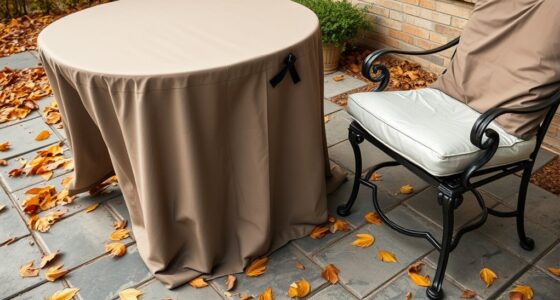
When choosing sustainable outdoor furniture and decor, look for options made from recycled plastics like high-density polyethylene (HDPE), which resist weather and last long. Bamboo is another eco-friendly choice, known for its rapid renewal and natural beauty. Reclaimed wood and recycled metals also help reduce environmental impact. Crafting with these materials minimizes waste and promotes durability. To discover more eco-smart options and how to incorporate them into your outdoor space, keep exploring sustainable design ideas.
Key Takeaways
- Recycled plastics like high-density polyethylene (HDPE) are durable, weather-resistant options for eco-friendly outdoor furniture.
- Bamboo is a fast-growing, renewable material ideal for outdoor pieces, offering natural beauty and sustainability.
- Reclaimed wood and recycled metal (aluminum or steel) reduce demand for new materials and promote waste reduction.
- Choosing products with eco-friendly, durable designs minimizes the need for frequent replacements.
- Incorporating recyclable and sustainably sourced materials supports environmental conservation and responsible outdoor decor choices.

As outdoor spaces become more popular, choosing sustainable materials for furniture and decor is essential for reducing environmental impact. You want your outdoor area to be beautiful and functional, but also eco-friendly. One excellent option is using recycled plastics, which divert waste from landfills and transform it into durable furniture pieces. Recycled plastics, such as high-density polyethylene (HDPE), are resistant to weather, insects, and UV rays, making them perfect for outdoor use. They can be molded into a variety of designs, from sleek modern tables to classic benches, all while helping to reduce plastic pollution. By selecting furniture made from recycled plastics, you’re making a conscious choice that supports waste reduction without sacrificing style or longevity.
Recycled plastics create durable, eco-friendly outdoor furniture that reduces waste and adds modern style.
Another compelling sustainable material is bamboo, which is celebrated for its rapid growth and renewability. Bamboo craftsmanship allows artisans to create stunning outdoor furniture with minimal environmental impact. Unlike hardwoods that take decades to mature, bamboo can be harvested every three to five years, making it a highly sustainable resource. When you opt for bamboo furniture, you’re choosing a product that not only looks natural and warm but also contributes to the preservation of forests. Bamboo’s strength and flexibility make it suitable for various outdoor pieces, from loungers to dining sets. Plus, the craftsmanship involved in shaping bamboo ensures that each piece is unique, showcasing the beauty of natural materials.
In addition to recycled plastics and bamboo, there are other sustainable options like reclaimed wood, which involves repurposing old timber into new furniture, and metal made from recycled aluminum or steel. These choices help reduce the demand for virgin materials and minimize environmental harm. When you prioritize sustainability, it’s important to contemplate the entire lifecycle of your outdoor decor. Look for products that are not only made from eco-friendly materials but are also designed to last, reducing the need for frequent replacements.
Furthermore, understanding the importance of recyclable materials and their role in reducing waste can guide consumers toward more environmentally responsible choices. Ultimately, incorporating recycled plastics and bamboo craftsmanship into your outdoor space allows you to enjoy stylish, durable furniture while supporting sustainable practices. It’s about making smarter choices that benefit the planet and create a welcoming environment for years to come. By selecting eco-conscious materials, you’re contributing to a greener future and setting a positive example for others to follow. So, when you plan your outdoor decor, remember that sustainability isn’t just a trend; it’s a vital part of responsible living.
Amazon Product B0DHZKB6ZR
As an affiliate, we earn on qualifying purchases.
Frequently Asked Questions
How Do Sustainable Materials Compare in Durability to Traditional Options?
Sustainable materials often have comparable durability and material resilience to traditional options. While some may question their comparative longevity, many eco-friendly choices, like recycled teak or bamboo, withstand outdoor elements well and last years with proper care. You’ll find that these sustainable options can be just as resilient, offering long-lasting performance. With the right maintenance, you won’t sacrifice durability for eco-friendliness, making them a smart, resilient choice for outdoor furniture and decor.
What Are the Cost Differences Between Sustainable and Conventional Outdoor Materials?
You’ll likely find that sustainable outdoor materials cost more upfront, mainly due to eco label certifications and sourcing transparency. These certifications guarantee eco-friendly practices, often increasing production costs. While initial expenses are higher, you save in the long run through durability and reduced environmental impact. Comparing options, you’ll notice that investing in certified sustainable materials supports responsible sourcing and offers better peace of mind about your outdoor space’s sustainability.
Are Sustainable Outdoor Furniture Materials Resistant to Weather and Pests?
Think of sustainable outdoor furniture as a resilient ship sailing through stormy weather. Yes, they’re resistant to the elements, thanks to eco-friendly finishes that shield against moisture and UV rays. Pest-resistant treatments further protect your pieces from unwanted critters, ensuring durability. While no material is completely invincible, these treatments markedly enhance weather and pest resistance, making your furniture a sturdy, eco-friendly companion that withstands outdoor challenges with confidence.
How Can I Identify Genuinely Eco-Friendly Outdoor Decor Products?
To identify genuinely eco-friendly outdoor decor, look for products with clear recycling certifications and verified eco labels. These indicate the item meets strict environmental standards and uses sustainable materials. Always check for transparency from manufacturers about their sourcing and production practices. Also, research the eco label verification process to guarantee the certification is legitimate. By doing so, you can confidently choose decor that’s both stylish and eco-conscious.
What Maintenance Is Required for Sustainable Outdoor Furniture Materials?
You should regularly clean your outdoor furniture with eco friendly cleaning products to avoid damage, and avoid harsh chemicals. For recyclable finishes, check manufacturer instructions for specific care, but generally, wipe surfaces with a damp cloth and avoid abrasive materials. Protect furniture from extreme weather, and reapply sealants when needed to maintain durability. Proper maintenance extends your furniture’s lifespan and preserves its eco-friendly qualities.
Amazon Product B09XHGBVZK
As an affiliate, we earn on qualifying purchases.
Conclusion
Choosing sustainable materials for your outdoor furniture and decor not only benefits the environment but also enhances your space’s longevity. Did you know that using eco-friendly woods can reduce deforestation by up to 50%? By making mindful choices, you help conserve resources and create a beautiful, durable outdoor area. So, next time you shop, pick sustainable options — your planet and your outdoor space will thank you!
Amazon Product B0GSQX6TLN
As an affiliate, we earn on qualifying purchases.
Amazon Product B0GSJT5Y52
As an affiliate, we earn on qualifying purchases.