
Induction cooking heats your pots and pans through rapidly changing magnetic fields that produce heat directly inside the cookware. Unlike gas or electric stoves, induction transfers energy efficiently by inducing electric currents within ferromagnetic cookware, leading to faster heating and better control. This process heats only the cookware, keeping the surface cooler and saving energy. Curious? Explore further to understand the science behind this quick and efficient way to cook.

Get home appliances delivered free with Prime
- Fast, free delivery on millions of items
- Prime Video, Amazon Music and more included
- Member-only deals all year
Key Takeaways
- Induction cooking heats cookware directly through electromagnetic fields, enabling rapid heat transfer compared to traditional methods.
- The magnetic fields induce eddy currents in ferromagnetic pots and pans, generating heat inside the cookware instantly.
- Because only cookware heats up, the cooktop remains cool, allowing for quick temperature adjustments and safety.
- Electromagnetic induction is highly efficient, reducing energy loss and speeding up cooking times significantly.
- The process is scientific and precise, not magic—fast heating results from electromagnetic principles, not supernatural forces.
As an affiliate, we earn on qualifying purchases.
How Does Induction Cooking Work?
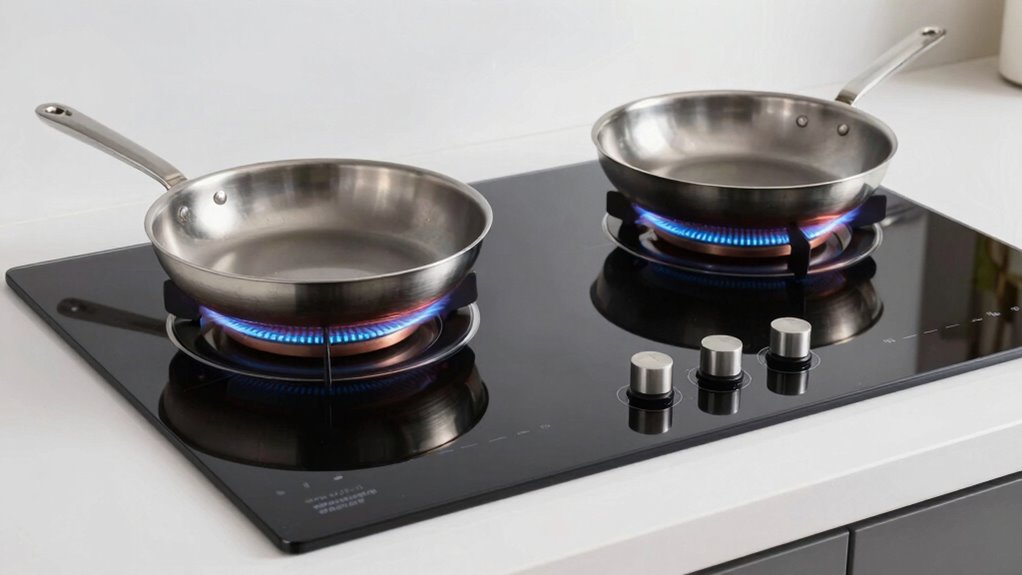
Have you ever wondered how induction cooking heats your pots and pans so quickly? It all comes down to the way induction cooktops use magnetic fields. When you place your pot cookware on the surface, an electric current runs through a coil beneath the glass. This creates a magnetic field that directly induces electric currents in the ferromagnetic material of your cookware. These currents generate heat inside the pot itself, not on the cooktop surface. This process means your pots and pans heat up almost instantly, giving you precise control over cooking temperatures. Because only the cookware heats, the cooktop remains relatively cool, enhancing safety and energy efficiency. Additionally, magnetic field induction is a key principle that enables this rapid heating process. The design and material of the cookware also play a significant role in how efficiently heat is transferred. For optimal performance, using cookware made of ferromagnetic metals ensures maximum heat transfer efficiency. Understanding induction heating mechanisms can help you maximize your cooking efficiency and safety.
As an affiliate, we earn on qualifying purchases.
Why Is Induction Cooking Faster Than Gas or Electric?
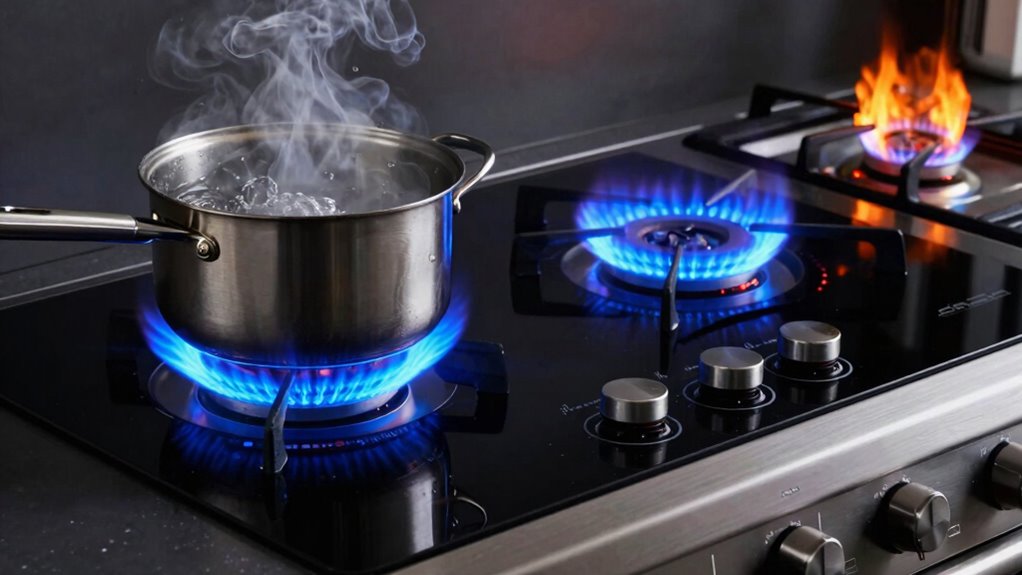
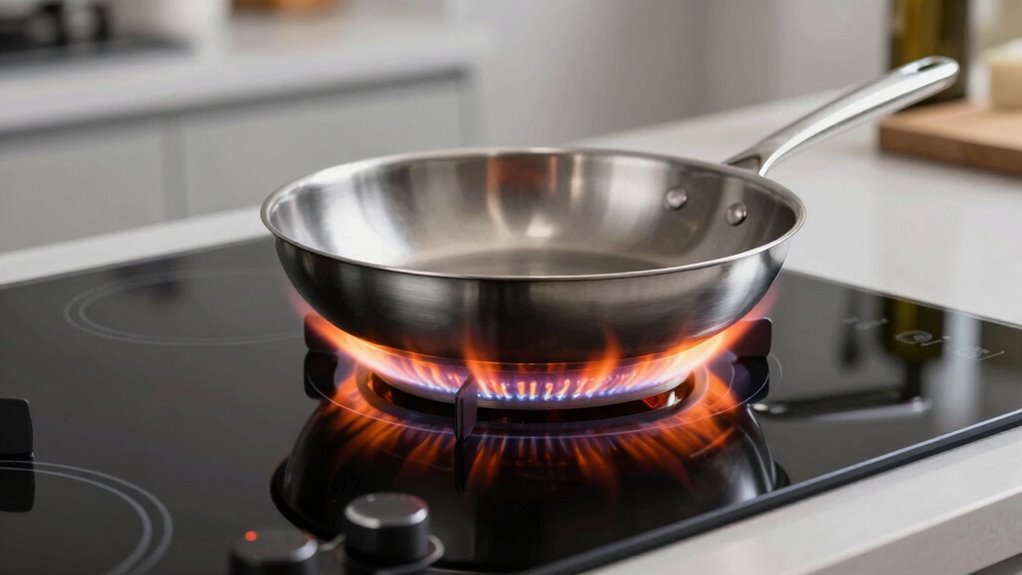
Induction cooking heats cookware directly through magnetic induction, which is considerably more efficient than gas or electric methods. This increased cooking efficiency means that heat transfer occurs almost instantaneously, minimizing wasted energy. This direct transfer of energy results in faster cooking times compared to traditional methods. Unlike gas, where heat is transferred from a flame to the cookware, or electric coils that warm gradually, induction generates heat directly within the pan. Because the energy is focused right where you need it, you experience faster heating times and more precise temperature control. The rapid transfer of heat reduces cooking time markedly, making your kitchen more efficient. This energy efficiency not only saves energy but also helps maintain consistent temperatures, so you can cook more quickly and with greater accuracy. Additionally, magnetic induction enables the cookware itself to become the heat source, further enhancing efficiency and safety during cooking.
induction cooktop with temperature control
As an affiliate, we earn on qualifying purchases.
As an affiliate, we earn on qualifying purchases.
What Factors Help Induction Heat Up Quickly?

What makes induction cooktops heat up so quickly? The key factors are energy efficiency and cookware compatibility. Induction technology directly transfers energy to compatible cookware through electromagnetic fields, which means less heat loss and faster heating times. Because the heat is generated within the pan itself, you don’t squander time waiting for a burner to warm up. Additionally, induction cooktops detect whether your cookware is compatible—if it’s magnetic, the heat transfers efficiently; if not, the cooktop won’t activate. This selective heating reduces energy waste and ensures rapid response to temperature adjustments. Proper safety gear is also essential when using induction cooktops, as the surface can become very hot during operation. The electromagnetic field generated by induction cooktops is precisely controlled, enabling quick adjustments to cooking temperatures. Overall, these factors combine to make induction cooking faster, more precise, and more energy-efficient than traditional methods.
As an affiliate, we earn on qualifying purchases.
The Science of Electromagnetic Heat Transfer in Induction
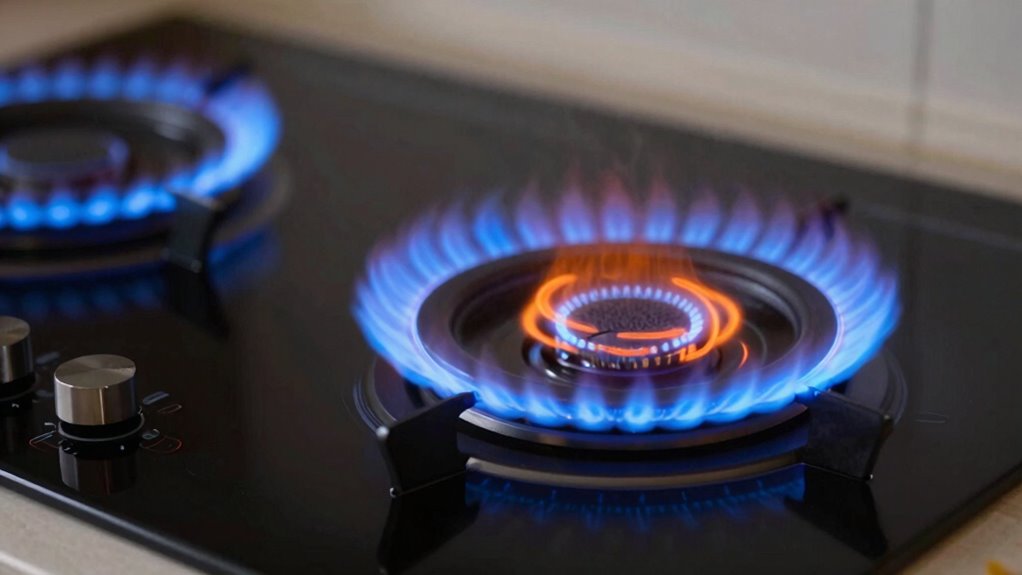
Electromagnetic fields are at the core of how induction cooktops generate heat, operating through a process rooted in physics. When you turn on an induction stove, an electric current flows through coils beneath the cooktop surface, creating strong magnetic fields. These magnetic fields interact with the ferromagnetic cookware placed on the surface, inducing electric currents called eddy currents within the metal. This process enables direct heat transfer from the cookware to your food, rather than heating the cooktop itself. The efficiency of this heat transfer relies on the magnetic properties of the cookware and the strength of the magnetic fields. Because the heat is generated directly in the cookware through electromagnetic induction, it heats up rapidly, making induction cooking remarkably fast.
Is Induction Cooking Safe? Common Myths Debunked
Many people worry that induction cooking might pose health risks due to electromagnetic fields, but extensive research shows these concerns are largely unfounded. Understanding induction safety involves debunking common electromagnetic myths. Here are three key points:
- Modern induction cooktops emit low-level electromagnetic fields that are safe for everyday use, aligning with safety standards.
- Electromagnetic myths often exaggerate risks, but studies show no evidence of adverse health effects from typical induction cooking exposure.
- The cookware itself only heats when compatible ferromagnetic material is present, reducing unnecessary electromagnetic exposure.
Frequently Asked Questions
Can Induction Cooktops Be Used With All Types of Cookware?
You can’t use all types of cookware with induction cooktops because of cookware compatibility and magnetic properties. Only pots and pans made of ferrous metals, like cast iron or some stainless steel, work well. Non-magnetic materials like aluminum or glass won’t heat up because they lack the necessary magnetic properties. To verify compatibility, check if your cookware is magnetic—if it sticks to a magnet, it’ll likely work on an induction cooktop.
How Energy-Efficient Is Induction Cooking Compared to Other Methods?
You’ll find induction cooking highly energy-efficient, saving you money on energy bills through faster heating and minimal heat loss. This method reduces energy consumption, leading to significant energy savings compared to gas or electric stoves. Additionally, its precise temperature control lowers environmental impact by decreasing unnecessary energy use. Overall, induction cooking helps you cook efficiently while supporting eco-friendly choices, making it a smart option for both your wallet and the planet.
Are There Any Health Risks Associated With Electromagnetic Fields?
Like a cautious hero wary of shadows, you wonder if electromagnetic exposure poses health concerns. The truth is, current research shows induction cooktops emit low-level electromagnetic fields that are generally considered safe for most people. While some worry about long-term effects, scientific evidence hasn’t confirmed significant health risks from typical use. Still, if you’re sensitive or concerned, you can take simple precautions like using cookware with proper grounding and maintaining a safe distance.
How Do Temperature Controls on Induction Cooktops Compare to Traditional Stoves?
You’ll find that induction cooktops offer superior temperature precision compared to traditional stoves, allowing you to set exact heat levels easily through a user interface. This precise control helps prevent overheating and allows for more consistent cooking results. Unlike traditional stoves, which rely on heat transfer from burners, induction cooktops respond quickly to adjustments, giving you better control and efficiency during your cooking process.
What Maintenance Is Required to Keep Induction Cooktops Functioning Properly?
To keep your induction cooktop functioning properly, follow regular cleaning routines by wiping down the surface after each use with a damp cloth to prevent buildup. Check ventilation requirements to guarantee proper airflow and prevent overheating. Avoid using abrasive cleaners or metal scrubbers, and keep the area around the cooktop clear of clutter. Proper maintenance ensures efficient heating, prolongs its lifespan, and keeps your cooking experience smooth and safe.
Conclusion
Remember, good things come to those who wait, but with induction cooking, you don’t have to wait long. Its rapid heating isn’t magic—it’s science working efficiently. By understanding how electromagnetic energy heats your cookware so quickly, you can cook smarter and safer. So, next time you see your food sizzling in no time, you’ll know it’s not luck, but technology at work—proving that speed often comes from smart solutions, not shortcuts.
Halloween Picks
halloween
As an affiliate, we earn on qualifying purchases.