

If your KitchenAid Artisan Series 5 Quart Tilt Head Stand Mixer is making a grinding noise, it could indicate a mechanical issue that needs attention. Addressing the problem promptly can prevent further damage and restore your mixer’s smooth operation.
In this guide, we’ll walk through common causes of grinding sounds and provide clear, safe steps to troubleshoot and fix the issue effectively.
Key Takeaways
| Identify the noise source | Grinding sounds often originate from the gear or attachment area. |
| Check for debris or obstructions | Foreign objects or hardened ingredients can cause grinding. |
| Inspect the gears and attachments | Worn or damaged gears can produce grinding noises. |
| Ensure proper assembly and lubrication | Incorrect setup or lack of lubrication may lead to noise. |
| Regular maintenance prevents issues | Cleaning and inspecting your mixer can extend its lifespan. |
Amazon Product B0769ZQWH7
As an affiliate, we earn on qualifying purchases.
Step 1: Unplug and Prepare
- Ensure the mixer is unplugged before starting any inspection or repair.
- Remove any attachments, like the flat beater or dough hook, to access the internal parts.
Amazon Product B07GK7XKJK
As an affiliate, we earn on qualifying purchases.
Step 2: Check for Obstructions and Debris
- Inspect the attachment hub and gear area for foreign objects or hardened ingredients.
- Clean any visible debris carefully with a soft brush or cloth.
Step 3: Inspect the Gears and Internal Components
- Remove the mixer cover following the manufacturer’s instructions for your model.
- Look for worn, chipped, or damaged gears inside the gear housing.
- Replace any damaged gears or components if necessary.
Step 4: Lubricate Moving Parts
If applicable, apply a small amount of food-grade lubricant to the gear mechanisms, following the manufacturer’s guidelines. Avoid over-lubricating, as excess lubricant can attract dirt or debris.
Step 5: Reassemble and Test
- Reassemble the cover and attachments securely.
- Plug in the mixer and run it at a low speed to check if the grinding noise persists.
The Products in This Guide
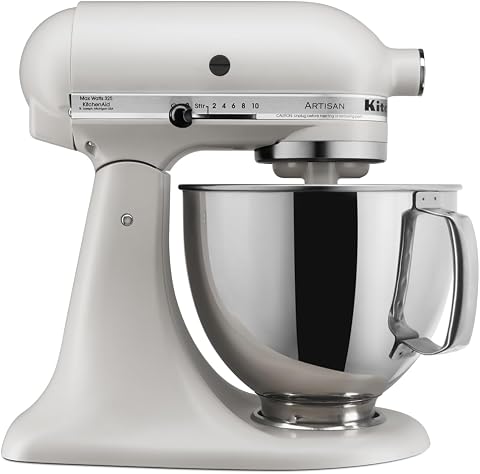
KitchenAid Artisan Series 5 Quart Tilt Head Stand Mixer
- ✔ Model: KSM150PS
- ✔ Attachment compatibility: Yes
- ✔ Weight: 26 lbs

KitchenAid Stand Mixer Attachment
- ✔ Model: KSMMGA
- ✔ Attachment type: Food grinder
- ✔ Weight: 3.2 lbs
KitchenAid Artisan Series 5 Quart Tilt Head Stand Mixer
The KitchenAid Artisan Series 5 Quart Tilt Head Stand Mixer is built for durability, but grinding noises can occur due to gear or attachment issues. Regular maintenance and careful inspection can keep it running smoothly.
Pros:
- Durable metal construction
- Multiple speed options
- Large 5-quart bowl
- Tilt-head design for easy access
Cons:
- Potential gear wear over time
- Noise issues may require disassembly
- Attachment compatibility varies
Best for: Home bakers and cooking enthusiasts needing a reliable, high-capacity mixer.
Not ideal for: People uncomfortable with DIY repairs or internal inspections.
Bottom line: With proper maintenance, your KitchenAid mixer can operate smoothly for years.
KitchenAid Stand Mixer Attachment
The KitchenAid Metal Food Grinder attachment connects seamlessly to your mixer’s power hub, making it easy to grind fresh ingredients and avoid issues like grinding noise caused by debris or jammed attachments.
Pros:
- Multiple grinding plates included
- Large food tray
- Easy to clean
- Sturdy metal construction
Cons:
- Additional cost
- Requires space for storage
- Attachment sold separately
Best for: Freshly grinding meats, vegetables, and making sausages.
Not ideal for: Users who don’t want additional attachments or complex setups.
Bottom line: Adding a food grinder can reduce internal debris and improve mixer performance.
Frequently Asked Questions
Why is my KitchenAid mixer making a grinding noise?
Grinding noises typically indicate worn gears, debris inside the gear housing, or attachment issues. Regular inspection and cleaning can resolve these problems.
Can I fix the grinding noise myself?
Yes, many fixes involve cleaning, inspecting, and lubricating internal components, which you can do safely with proper care and following the manufacturer’s instructions.
When should I replace internal gears?
If you notice chipped, worn, or damaged gears during inspection, replacing them is necessary to restore smooth operation and prevent further damage.
How often should I clean or inspect my mixer?
Perform a basic inspection and cleaning every few months, especially if you notice unusual noises or reduced performance.
Keep Your KitchenAid Running Smoothly
By following these steps, you can diagnose and fix common grinding noise issues in your KitchenAid Artisan stand mixer. Regular maintenance not only extends the lifespan of your appliance but also ensures consistent performance for all your baking and cooking needs.
Affiliate disclosure: As an Amazon Associate we earn from qualifying purchases. Prices and availability are accurate as of the time of publishing.