
Precision temperature control matters more than you might think because even small deviations can ruin product quality, safety, and industry compliance. You rely on accurate sensors to prevent costly mistakes, especially in sensitive fields like pharmaceuticals or food processing. Over time, sensors drift or fail without proper calibration, risking process disruptions. Keeping your control systems precise protects your operations and reputation. If you want to understand how vital these factors really are, there’s plenty more to uncover.
Key Takeaways
- Accurate temperature control ensures product quality and safety in sensitive industries like pharmaceuticals and food processing.
- Precise sensors prevent costly process deviations and reduce waste by maintaining optimal conditions.
- Regular calibration and monitoring detect sensor drift and failures early, preventing potential safety hazards.
- In regulated industries, strict temperature accuracy is essential for compliance and avoiding legal penalties.
- Reliable temperature management enhances overall operational efficiency and boosts stakeholder confidence.
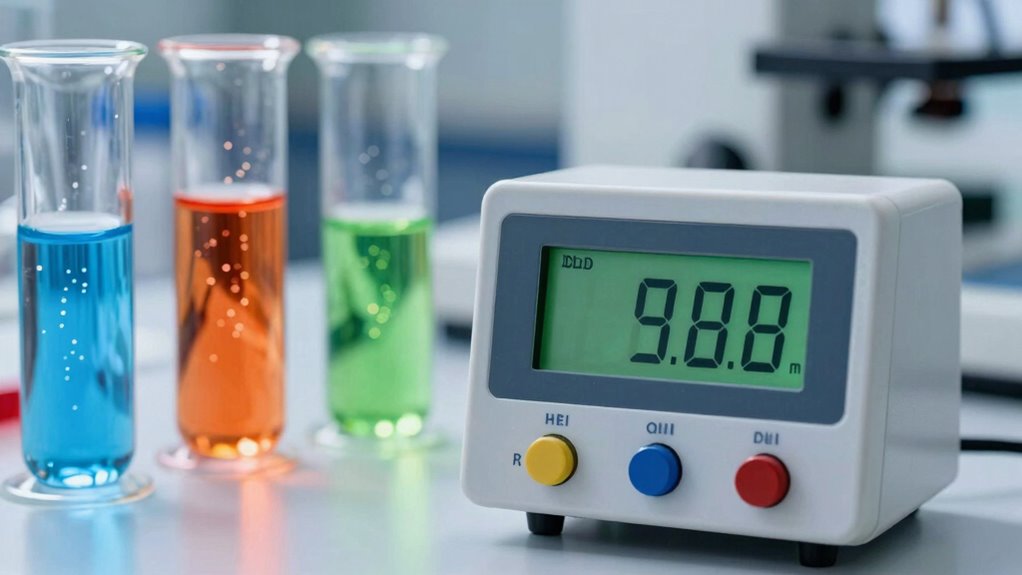
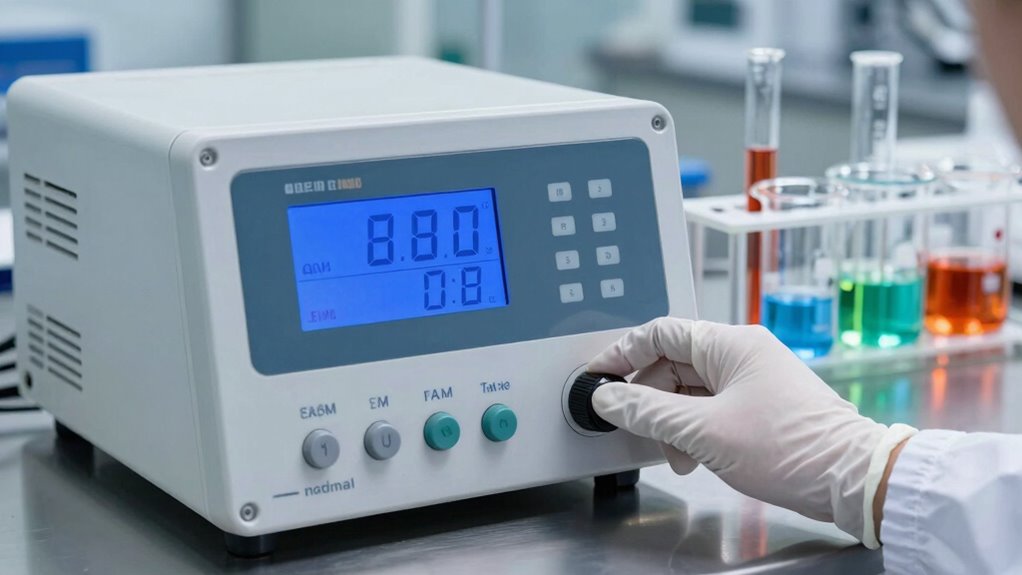
When it comes to processes that require exact conditions, precision temperature control is more critical than most people realize. Whether you’re working in manufacturing, pharmaceuticals, or food processing, maintaining a stable and accurate temperature can mean the difference between success and failure. At the heart of this control are temperature sensors, which constantly monitor ambient or product-specific temperatures. These sensors serve as the eyes and ears of your system, providing real-time data that guides adjustments. Without reliable sensors, your entire process risks deviation, leading to inconsistent quality or even dangerous outcomes. That’s why selecting high-quality temperature sensors and ensuring their proper calibration is essential. reliable sensors are fundamental to achieving consistent results, especially in high-stakes environments.
Calibration techniques play a pivotal role in maintaining the accuracy of these sensors. Over time, temperature sensors can drift, leading to measurement errors that compromise your process. Regular calibration involves comparing sensor readings against a known standard and making adjustments to align the sensor’s output with accurate measurements. This process can be manual or automated, but the goal remains the same: to guarantee that your temperature readings are trustworthy. Proper calibration techniques help you identify sensor inaccuracies early, preventing costly mistakes and ensuring product consistency. It’s a proactive step that saves time and money in the long run, especially when precise temperature control directly impacts product quality or safety. Calibration standards are essential to ensure consistency across different measurement setups. Additionally, understanding sensor drift helps in developing effective calibration schedules that maintain accuracy over time. Establishing a routine calibration process is especially important when sensors operate in harsh environments, where external factors can accelerate measurement inaccuracies. Implementing detection methods for sensor failure can also prevent unexpected process disruptions and maintain continuous control.
Regular calibration ensures trustworthy temperature readings, preventing costly errors and maintaining product quality and safety.
In practical terms, the importance of calibration extends beyond initial setup. You need a routine schedule to check and recalibrate your sensors, particularly if they operate in harsh environments or high-stakes industries. Implementing a calibration protocol also involves selecting the right standards—such as ice baths, dry blocks, or calibration baths—depending on your sensor type. Having a strict calibration routine isn’t just good practice; it’s often a regulatory requirement, especially in fields like pharmaceuticals or food safety. When your temperature sensors are properly calibrated, you gain confidence that your control systems are functioning accurately, reducing the risk of off-spec products or process failures.
Ultimately, understanding the significance of calibration techniques and the role of precise temperature sensors underscores why temperature control isn’t just a minor detail—it’s a fundamental component of quality assurance. By prioritizing accurate sensor readings and consistent calibration, you ensure your processes remain reliable, safe, and efficient. Precision temperature control isn’t an optional luxury; it’s a necessity that can elevate your operation’s standards and deliver consistent, high-quality results every time.
precision temperature sensors for industrial use
As an affiliate, we earn on qualifying purchases.
As an affiliate, we earn on qualifying purchases.
Frequently Asked Questions
How Does Temperature Precision Impact Energy Efficiency?
Temperature precision directly impacts your energy efficiency by ensuring thermal stability, so you don’t waste energy overcompensating for fluctuations. When you maintain accurate control, your systems run most effectively, reducing unnecessary power consumption. Although investing in precision control might have initial cost implications, it pays off in the long run with lower energy bills and enhanced system longevity. Ultimately, precise temperature management helps you save money while promoting energy-efficient operations.
What Industries Benefit Most From Precise Temperature Control?
Ever wonder who can’t afford to mess up temperature? Industries like pharmaceuticals, food processing, and semiconductor manufacturing rely on temperature stability to avoid costly errors. You need precise calibration techniques to keep everything just right. Without this control, products could spoil or malfunction, causing chaos. These industries understand that small fluctuations can lead to big disasters—so they invest heavily in temperature control to keep things smooth and safe.
Are There Affordable Solutions for High-Precision Temperature Control?
Yes, there are cost-effective solutions and budget-friendly options for high-precision temperature control. You can find affordable digital controllers, thermoelectric coolers, and PID systems that offer reliable accuracy without breaking the bank. By exploring these options, you guarantee your process stays within tight temperature tolerances while keeping costs manageable. With some research, you’ll discover solutions tailored to your needs that deliver precise control without overspending.
How Do Sensors Ensure Accuracy in Temperature Regulation?
Like a trusty compass, sensors guide precise temperature regulation by ensuring accuracy. You calibrate sensors regularly, much like tuning a musical instrument, to maintain their accuracy. This calibration helps achieve temperature stability, preventing fluctuations that could ruin your process. Sensors constantly monitor conditions, sending real-time data that your control system uses to adjust heating or cooling. This ongoing feedback loop keeps temperatures steady, ensuring your environment remains perfectly controlled and reliable.
What Are the Risks of Imprecise Temperature Control?
Imprecise temperature control risks compromising temperature stability, which can lead to faulty products, safety hazards, or process inefficiencies. Without proper calibration methods, your systems might drift from desired settings, causing inconsistencies. You might face costly downtime, product rejection, or safety issues. Ensuring accurate sensors and regular calibration methods help maintain temperature stability, reducing these risks and ensuring your processes run smoothly and safely.
calibration tools for temperature sensors
As an affiliate, we earn on qualifying purchases.
As an affiliate, we earn on qualifying purchases.
Conclusion
So, next time you think about temperature control, ask yourself: could your project or process really afford to be off by just a few degrees? Precision matters more than you might realize, impacting everything from quality to safety. When you prioritize accurate temperature control, you’re not just ticking a box—you’re ensuring the best possible outcome. Isn’t it worth the extra effort to get it right the first time? After all, small improvements can make a big difference.
As an affiliate, we earn on qualifying purchases.
high-accuracy temperature measurement devices
As an affiliate, we earn on qualifying purchases.
As an affiliate, we earn on qualifying purchases.