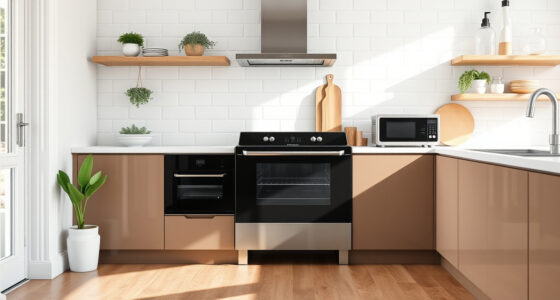
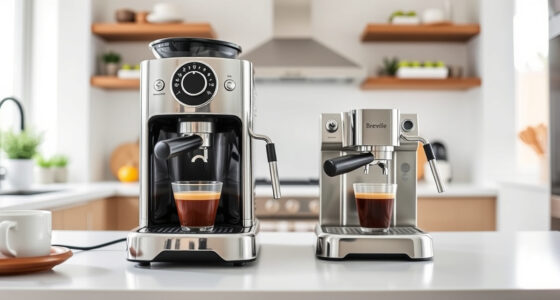
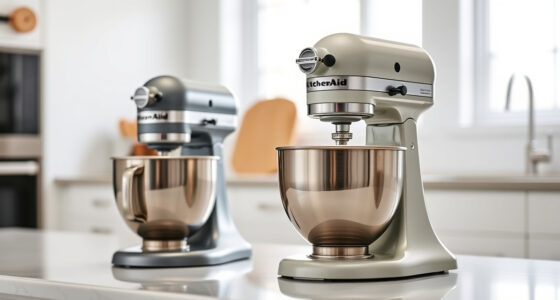
A great meal-prep setup for serious home cooks keeps your workspace organized, clutter-free, and efficient. You should create dedicated zones for chopping, prepping, and assembling, with most-used tools and ingredients within easy reach. Use clear containers, label everything, and maximize space with wall racks or stackable bins. Regularly reassessing your layout helps maintain flow and comfort. Keep things tidy and ergonomic, and you’ll find cooking becomes faster and more enjoyable—you’ll discover how to perfect your setup as you go.

Get home appliances delivered free — and shop member deals
- Fast, free delivery on millions of items
- Access to Prime Big Deal Days deals on October 6–7
- Prime Video, Amazon Music and more included
Key Takeaways
- Dedicated, clutter-free work zones streamline meal prep and reduce stress during busy cooking sessions.
- Clear, labeled containers and standardized sizes ensure quick access and efficient storage of ingredients.
- Task-specific zones for chopping, assembling, and cleaning improve workflow and minimize cross-contamination.
- Space-saving solutions like wall racks and stackable bins maximize storage and accessibility.
- Ergonomic tools and adjustable setups enhance comfort, making meal prep quicker and more enjoyable.
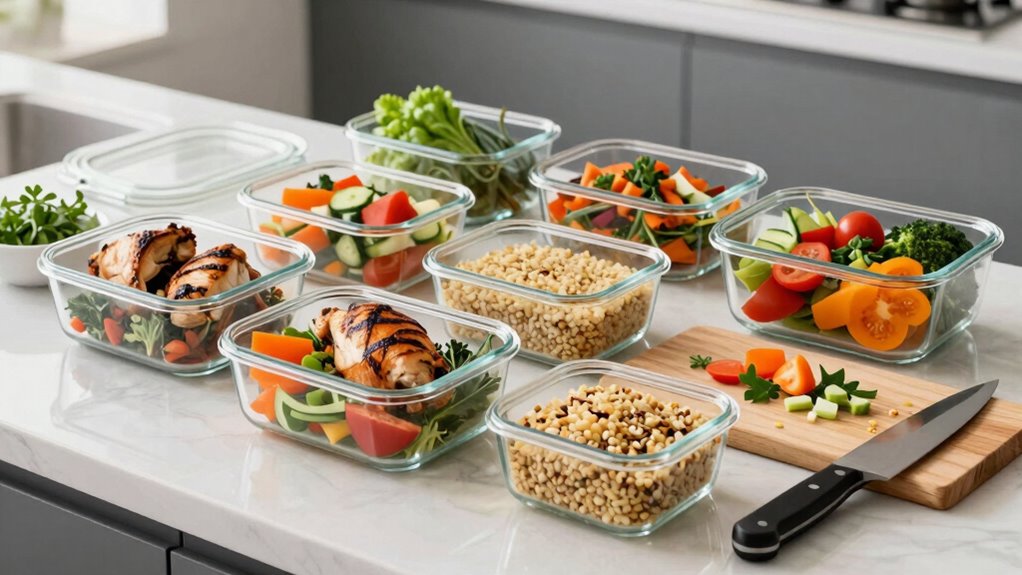
Preparing meals in advance can save you time and reduce daily stress, but setting up an effective meal-prep station is key to success. When you focus on kitchen organization, you create a space that’s both functional and efficient. The way you arrange your tools, containers, and ingredients makes all the difference in how smoothly your meal prep goes. Start by clearing a dedicated area where you can work comfortably without clutter. This space should be close to your fridge and pantry, so you don’t waste time moving around. Keep your most-used utensils and prep tools within easy reach to streamline your process.
Storage solutions are vital to a well-organized meal-prep setup. Invest in clear, stackable containers that are microwave and dishwasher safe—these make it simple to store, see, and access your prepped meals. Use uniform sizes for containers so they stack neatly, saving space in your fridge and freezer. Label each container with the contents and date, which helps you track freshness and prevents food waste. Consider using dividers within containers if you prepare multiple ingredients or dishes to keep everything separated and organized. Incorporating proper storage solutions** can also help maximize space and keep everything orderly. Additionally, choosing adjustable storage options** can help you adapt your setup as your meal prep needs evolve over time.
Good kitchen organization also means having designated zones for different tasks. Set up a specific spot for chopping and prepping ingredients, with cutting boards and knives easily accessible. Have a separate area for assembling meals, where containers and toppings are ready to go. This compartmentalization reduces the chance of cross-contamination and keeps your workflow smooth. Don’t forget to keep cleaning supplies nearby, so you can wipe down surfaces quickly and maintain a tidy station throughout your prep session. Incorporating efficient labeling techniques can further enhance your organization and reduce prep time. Including adjustable storage options can help accommodate varying quantities of ingredients as your meal prep needs evolve. Additionally, considering ergonomic tools can make repetitive tasks more comfortable and efficient, especially during longer prep sessions.
Regarding storage solutions, think vertically as well as horizontally. Use wall-mounted racks or magnetic strips for knives and utensils, freeing up counter space. Shelving units or stackable bins can hold dry goods or bulk ingredients, making it easier to find what you need without digging through clutter. Incorporate drawer organizers for smaller items like spice jars, measuring spoons, and lids. The goal is to have everything you need for meal prep visible and accessible, so you’re not wasting time searching for tools or ingredients. Proper organization also involves regularly decluttering and reassessing your storage solutions, ensuring they continue to serve your evolving needs.
In the end, a well-thought-out meal-prep setup with smart kitchen organization and effective storage solutions will make your cooking routine more enjoyable and less stressful. When your space is optimized for efficiency, prepping meals becomes quicker, more organized, and even a little fun. You’ll look forward to your weekly sessions, knowing that everything is in its place and ready to use. This kind of setup helps you stay consistent, eat healthier, and save time during busy weekdays.
As an affiliate, we earn on qualifying purchases.
Frequently Asked Questions
What Are the Best Containers for Meal Prep?
You should choose containers made from reusable materials like glass or BPA-free plastic, as they’re durable and eco-friendly. Opt for various container sizes—small for snacks, medium for lunches, and large for bulk prep—to suit your needs. These options keep your meals fresh and organized, making your meal prep efficient. Reusable containers are a smart investment that simplifies your routine and reduces waste, keeping you on track with your healthy eating goals.
How Long Can Prepped Meals Stay Fresh?
Prepped meals typically stay fresh for 3 to 4 days, like a well-tuned engine running smoothly. To guarantee meal storage safety, always refrigerate promptly and use airtight containers to lock in ingredient freshness. After this window, ingredients may spoil or lose flavor, risking health. For longer storage, consider freezing, but remember, the quality of ingredients might decline over time. Keep an eye on smell and appearance to stay safe.
What Tools Are Essential for Efficient Meal Prep?
You need essential tools like sharp knives, cutting boards, and containers for efficient meal prep. A good set of measuring cups and spoons helps with accurate ingredient sourcing, ensuring your meals turn out great. Invest in a quality food processor or blender for quick prep. To streamline meal planning, use recipe apps or planners. These tools help you stay organized, save time, and make ingredient sourcing smoother, making your meal prep more enjoyable.
How Do I Prevent Food Boredom With Meal Prep?
Did you know that 70% of meal preppers lose interest within two weeks? To prevent food boredom, focus on flavor variety by experimenting with different herbs, spices, and sauces. Rotate ingredients regularly to keep meals exciting and fresh. This approach not only keeps your taste buds engaged but also guarantees you’re getting a diverse range of nutrients, making meal prep enjoyable and sustainable long-term.
Tips for Cleaning and Maintaining Meal Prep Containers?
To keep your meal prep containers clean and well-maintained, regularly wash them with warm, eco-friendly soap and avoid harsh abrasives. Consider container customization with labels to prevent mix-ups. Choose eco-friendly materials like BPA-free plastics or glass that are dishwasher safe for easy cleaning. Always dry containers thoroughly before stacking to prevent mold. Proper care extends their lifespan, making your meal prep both sustainable and hassle-free.
As an affiliate, we earn on qualifying purchases.
Conclusion
With this meal-prep setup, you’ll become a culinary superhero, conquering weeknight dinners with ease. Your kitchen will transform into a well-oiled machine, making cooking faster, simpler, and more enjoyable. Say goodbye to last-minute stress and hello to delicious, wholesome meals that keep you coming back for more—seriously, you might just become the legend of your own kitchen. Once you get this setup down, cooking will feel like second nature, and you’ll wonder how you ever lived without it.
adjustable kitchen organization racks
As an affiliate, we earn on qualifying purchases.
As an affiliate, we earn on qualifying purchases.
As an affiliate, we earn on qualifying purchases.
Fall Picks
fall essentials
As an affiliate, we earn on qualifying purchases.