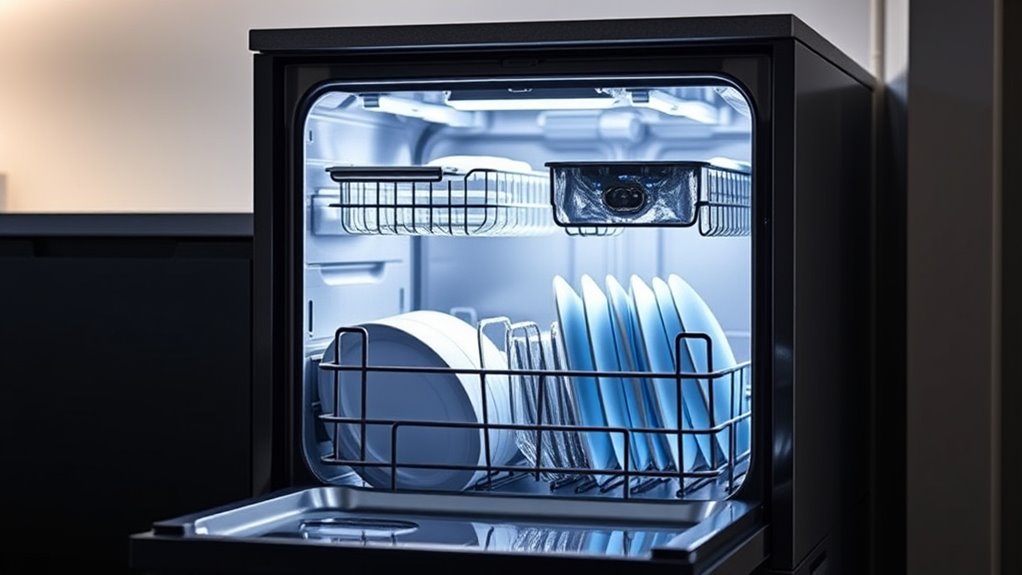

Smart dishwashers use sensor cycles to automatically detect soil levels, load size, and water temperature. They adjust water and energy use in real time for ideal cleaning, preventing over- or under-washing. This not only guarantees spotless dishes but also saves water and electricity. They make laundry simpler and more efficient by customizing cycles for each load. Keep exploring to discover how these innovations can make your chores easier and more eco-friendly.
Key Takeaways
- Sensor cycles automatically detect soil levels, load size, and water temperature for optimized cleaning.
- They adjust water and energy use in real time, reducing waste and promoting resource efficiency.
- Sensor technology ensures thorough cleaning while preventing over-washing, saving water and electricity.
- Smart dishwashers can be controlled remotely, allowing users to start or monitor cycles for convenience.
- Overall, sensor cycles enhance cleaning performance and sustainability by adapting to each load’s specific needs.

Smart dishwashers are revolutionizing the way you clean your dishes by integrating advanced technology that makes the process more efficient and convenient. One of the key innovations driving this change is the use of sensor cycles, which automatically detect soil levels, load size, and water temperature to optimize cleaning performance. These sensors analyze the dirtiness of your dishes in real time, adjusting water and energy use accordingly. As a result, you don’t waste resources on unnecessary cycles, which not only benefits the environment but also helps you save money on utility bills. This focus on energy efficiency means you get a thorough clean without excess water or power consumption, aligning with your desire to be more environmentally conscious without sacrificing performance.
With sensor cycles, user convenience is considerably enhanced. Instead of manually selecting different wash settings for every load, your smart dishwasher takes the guesswork out of the process. You simply load your dishes, select a cycle or let the machine choose automatically, and it handles the rest. The sensors detect the level of grime and adjust the cycle duration, water temperature, and detergent use to match the specific needs of each load. This means fewer interruptions and less need to re-run cycles, saving you time and effort. Plus, many smart dishwashers offer remote control via smartphone apps, so you can start, pause, or monitor your wash cycle from anywhere, adding another layer of convenience to your busy life.
The sensor technology also helps prevent common issues like over-washing or under-washing, which can lead to dissatisfaction and wasted resources. By precisely calibrating each cycle, your dishwasher ensures dishes come out clean every time, without excessive water or energy use. This not only extends the lifespan of your appliance but also contributes to a more sustainable household. Additionally, some models include eco-friendly modes that further reduce water and power consumption, perfect for eco-conscious users who want to minimize their carbon footprint. Incorporating essential oil technologies in cleaning products can also enhance freshness and cleanliness naturally.
In essence, sensor cycles in smart dishwashers provide a smart balance between energy efficiency and user convenience. They adapt to your specific load, saving resources and time while delivering consistently clean dishes. This technology demonstrates how innovation can make everyday chores easier, more efficient, and more environmentally friendly. When you choose a smart dishwasher with sensor cycles, you’re investing in a device that understands your needs, conserves resources, and simplifies your routine—all at the same time.
Frequently Asked Questions
Do Sensor Cycles Work Effectively With All Types of Dishes?
Sensor cycles work well with most dish types, but your load flexibility matters. For heavily soiled pots and pans, they might not clean as thoroughly as manual settings. Light and moderate loads, like glasses and utensils, benefit most from sensor efficiency. Keep in mind, if you have a variety of dish types, verify your dishwasher supports flexible load options to maximize sensor cycle effectiveness.
How Do Smart Dishwashers Detect Water Quality Issues?
Smart dishwashers detect water quality issues by using sensors that monitor water contamination levels. When these sensors pick up impurities or high mineral content, they trigger a warning or adjust the cycle accordingly. Regular sensor calibration ensures accuracy, helping you maintain ideal performance. By effectively identifying water quality issues, you can avoid damage to dishes and appliances, while saving water and energy through efficient cycle adjustments.
Can Sensor Cycles Be Customized for Different Load Sizes?
It’s likely that sensor cycles can be customized for different load sizes, especially if your dishwasher allows for sensor calibration and load detection adjustments. Many smart dishwashers use these features to optimize cleaning and water use. By calibrating sensors and accurately detecting load sizes, you can tailor cycle settings to suit small, medium, or large loads, ensuring efficient water use and thorough cleaning without overdoing it.
What Maintenance Is Required for Sensors Over Time?
You should regularly check and calibrate your dishwasher sensors to guarantee they work accurately. Keep the sensors clean by gently wiping them with a soft cloth to prevent buildup. To prevent corrosion, make sure the sensors stay dry and avoid harsh chemicals. Performing these simple maintenance steps helps extend sensor life, maintains peak performance, and ensures your dishwasher continues to save water and energy efficiently over time.
Are There Any Safety Concerns With Sensor Technology?
While sensor technology in dishwashers is generally safe, you should be aware of potential sensor malfunction, which might cause unexpected behavior. Additionally, some may have subtle privacy concerns, as sensors could collect data on usage patterns. However, manufacturers prioritize safety and privacy, implementing safeguards to minimize risks. Regular maintenance and updates help prevent malfunctions, ensuring your dishwasher operates smoothly without compromising safety or privacy.
Conclusion
Smart dishwashers truly revolutionize your cleaning routine by using sensor cycles to detect soil levels and optimize water use. Some skeptics say these tech features might be just a gimmick, but studies show they can save up to 30% of water and energy. So, next time you load your dishwasher, trust that these smart features aren’t just fancy—they’re backed by real science to make your life easier and greener.