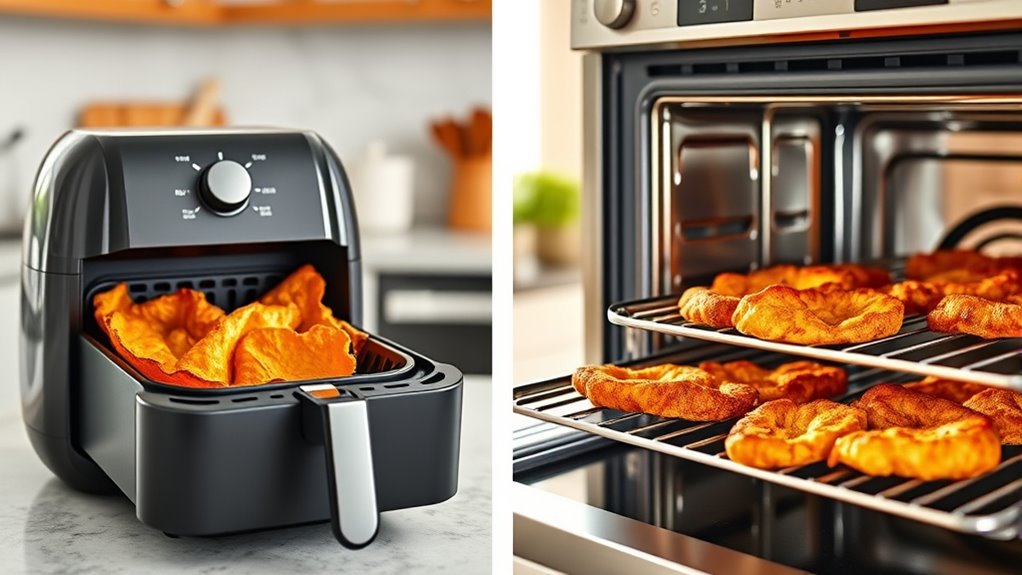

If you want crispiness quickly and efficiently, an air fryer is your best choice. It heats up fast, circulates hot air rapidly, and delivers crispy textures on small batches without much effort. Convection ovens can also crisp food but take longer and are better for larger meals. If you’re after quick, crispy results for small portions, an air fryer saves time and energy. Discover more to find out which option suits your cooking style best.

Get home appliances delivered free — and shop member deals
- Fast, free delivery on millions of items
- Access to Prime Big Deal Days deals on October 6–7
- Prime Video, Amazon Music and more included
Key Takeaways
- Air fryers produce crispier textures faster due to rapid, concentrated air circulation in a smaller chamber.
- Convection ovens can achieve crispiness but typically require more time and may need adjustments for optimal results.
- The smaller size of air fryers makes them ideal for quick, crispy snacks and small servings.
- Larger convection ovens can crisp larger batches but may take longer, affecting overall crispiness speed.
- For consistent crispiness on small portions, air fryers generally outperform convection ovens.
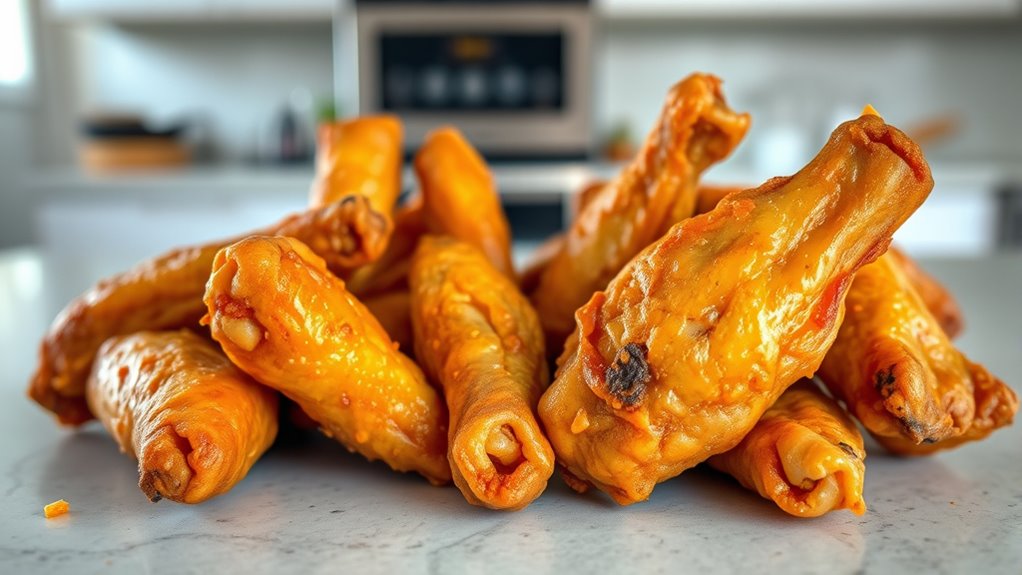
When choosing between an air fryer and a convection oven, understanding their differences can help you make the best decision for your kitchen. Both appliances rely on fans to circulate hot air around food, but they differ markedly in how they deliver crispiness and efficiency. One of the key factors to consider is cooking speed. An air fryer heats up quickly and cooks food faster than a convection oven, mainly because it has a smaller cooking chamber and a more concentrated airflow. This means you can get crispy fries, chicken wings, or vegetables ready in a fraction of the time you’d spend in a traditional oven. If quick results are important to you, especially during busy weeknights, the air fryer’s rapid cooking speed makes it a compelling choice.
Energy efficiency is another vital aspect. Because of its smaller size and faster cooking times, an air fryer generally uses less energy than a convection oven. It heats up rapidly and cooks food quickly, reducing the overall energy consumption. In contrast, convection ovens, especially larger models, take longer to preheat and cook, which can lead to higher energy use over time. If you’re concerned about electricity bills or aiming to reduce your carbon footprint, an air fryer’s efficiency can be advantageous. While convection ovens are still more energy-efficient than traditional ovens, they don’t match the low energy consumption of an air fryer for small, quick meals.
However, it’s worth noting that convection ovens are versatile and larger, making them suitable for cooking bigger batches or multiple dishes at once. They can also handle a wider variety of cooking techniques, from roasting to baking, with more even heat distribution over larger areas. An air fryer excels at producing crisp textures on smaller portions, but for larger meals or when you’re entertaining guests, a convection oven might be more practical despite its longer cooking times and higher energy use.
best air fryer for crispy snacks
As an affiliate, we earn on qualifying purchases.
As an affiliate, we earn on qualifying purchases.
Frequently Asked Questions
Which Appliance Consumes More Energy During Operation?
When considering energy consumption, you’ll find that convection ovens typically use more power because they operate at higher wattages and larger capacities. Air fryers are more power-efficient, using less energy to cook food quickly. If you’re aiming to save on energy, an air fryer is the better choice. Convection ovens consume more energy due to their size and heat output, making them less power-efficient for small, quick meals.
Can Both Appliances Cook Frozen Foods Effectively?
Like a skilled chef handling delicate ingredients, you can cook frozen food effectively in both appliances. The air fryer quickly crisps up frozen snacks, while the convection oven evenly cooks larger portions. Both appliances are compatible with frozen food, making them versatile for your kitchen. Just make certain you adjust cooking times and temperatures accordingly, and you’ll get tasty results no matter which appliance you choose.
Are There Safety Concerns Specific to Air Fryers or Convection Ovens?
When using air fryers or convection ovens, safety precautions are essential to prevent potential hazards. Always read the manufacturer’s instructions, avoid overfilling, and keep the appliances away from water. Be cautious of hot surfaces and hot oil, and make certain proper ventilation. Regularly inspect cords and plugs. By following these safety measures, you reduce risks and enjoy your cooking appliances confidently without worrying about accidents or hazards.
How Easy Is Cleaning and Maintenance for Each Appliance?
Ever wondered how easy it is to keep your appliances clean? Cleaning convenience varies: air fryers usually have non-stick baskets that are simple to wash, needing maintenance after each use. Convection ovens might require more frequent cleaning of the interior and racks but often come with removable parts. Would you prefer quick wipe-downs or more thorough cleaning sessions? Ultimately, your choice depends on how much maintenance frequency you’re comfortable with.
Do They Differ Significantly in Cooking Times for Similar Dishes?
You’ll notice some cooking time differences when using an air fryer versus a convection oven for similar dishes. Air fryers often cook faster due to their compact size and rapid air circulation, but you might need to make temperature adjustments to prevent overcooking. Convection ovens typically take a bit longer, requiring you to monitor and adjust cooking times accordingly to achieve perfect results.
convection oven for large batches
As an affiliate, we earn on qualifying purchases.
As an affiliate, we earn on qualifying purchases.
Conclusion
Ultimately, choosing between an air fryer and a convection oven is like selecting a trusted brush for your culinary painting. Both can craft crispy masterpieces, but the air fryer offers a quicker, more vibrant stroke, while the convection oven provides a broader canvas. Whichever you pick, remember it’s your kitchen’s palette—ready to bring your favorite dishes to life with a satisfying crunch that’s as satisfying as a perfectly finished masterpiece.
As an affiliate, we earn on qualifying purchases.
As an affiliate, we earn on qualifying purchases.
Fall Picks
fall essentials
As an affiliate, we earn on qualifying purchases.