Vacuum sealing slows down food spoilage by removing oxygen and limiting bacterial growth, but it doesn’t stop microbial activity or enzyme actions that cause decay over time. Bacteria and mold can survive and even thrive if seals aren’t perfect, or if storage conditions are poor. Improper sealing or storage mistakes can still lead to spoilage, so knowing the proper techniques is key. Keep exploring how to maximize freshness and prevent waste by mastering these essentials.
Get ready for Prime Big Deal Days — try Prime free
Exclusive member deals on October 6–7, plus fast free delivery. Cancel anytime.
As an affiliate, we earn on qualifying purchases.
Key Takeaways
- Vacuum sealing slows spoilage but doesn’t stop enzymatic activity or oxidation that cause food deterioration over time.
- It cannot eliminate surface bacteria or pre-existing contaminants that may lead to spoilage.
- Moisture, temperature, and storage conditions greatly influence how quickly sealed food spoils.
- Microorganisms can survive in low-oxygen environments or enter through leaks, causing continued spoilage.
- Proper storage, timely use, and correct sealing techniques are essential to maximize shelf life.
vacuum sealer bags for food storage
As an affiliate, we earn on qualifying purchases.
As an affiliate, we earn on qualifying purchases.
Why Does Food Still Spoil Despite Vacuum Sealing?

Even though vacuum sealing removes most of the air around your food, it doesn’t completely prevent spoilage. The type of packaging materials you use plays a vital role. Not all bags or containers are designed for long-term storage, and inferior materials can allow moisture and bacteria to penetrate. Proper sealing techniques are equally important; a weak seal or incomplete closure leaves gaps where air and contaminants can enter. Even with high-quality packaging and careful sealing, some bacteria and enzymes can remain dormant or active, especially if the food was already starting to spoil before sealing. Additionally, proper storage conditions such as temperature and humidity levels significantly influence spoilage rates. Material quality also impacts how well the seal holds over time, preventing contamination. Moreover, certain microorganisms can survive in low-oxygen environments created by vacuum sealing, which means spoilage can still occur if conditions favor bacterial growth. This means vacuum sealing slows spoilage but doesn’t halt it entirely. To maximize freshness, combine good packaging materials with consistent, thorough sealing techniques.
As an affiliate, we earn on qualifying purchases.
How Vacuum Sealing Helps Preserve Food (and Its Limits)
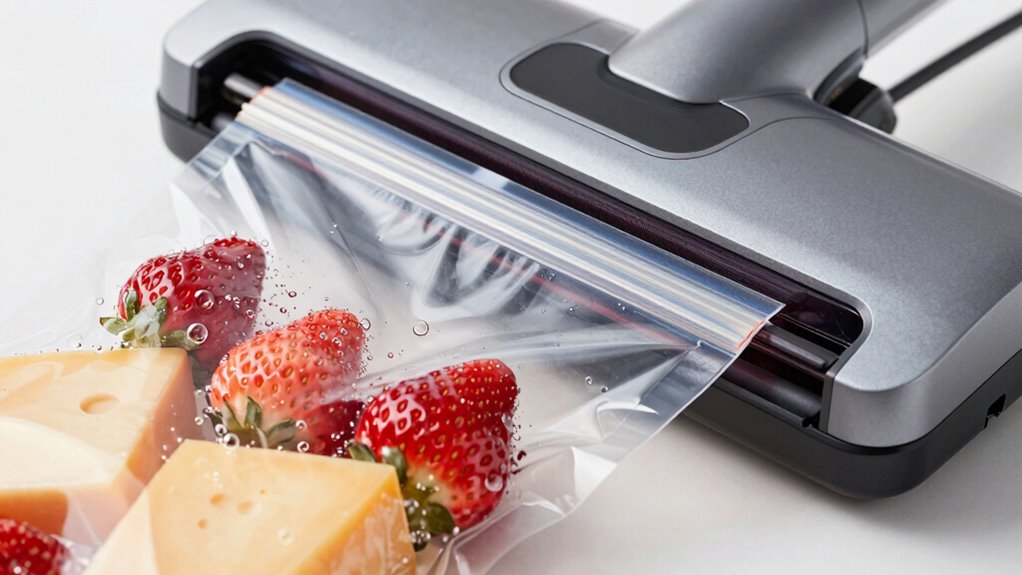
Vacuum sealing effectively slows down food spoilage by removing air, which limits the growth of bacteria, mold, and yeast that rely on oxygen exposure. By eliminating oxygen, you reduce microbial activity that causes spoilage, helping your food stay fresh longer. Additionally, vacuum sealing offers moisture control, preventing excess moisture from promoting mold or bacteria growth. However, it’s important to remember that vacuum sealing isn’t a magic fix. It doesn’t stop enzymatic activity or oxidation, which can still cause spoilage over time. Also, if food is already contaminated or has surface bacteria, sealing won’t eliminate those risks. While vacuum sealing extends shelf life, it’s essential to store food properly and use it within safe timeframes to avoid spoilage. Understanding microbial activity is key to maximizing the benefits of vacuum sealing. Moreover, oxygen exposure plays a significant role in the rate of food deterioration, even when sealed. Recognizing storage conditions can further help in preserving food quality. Proper handling and awareness of food safety practices are vital for maintaining freshness and preventing spoilage over time.
food-grade vacuum sealing containers
As an affiliate, we earn on qualifying purchases.
As an affiliate, we earn on qualifying purchases.
How Bacteria and Mold Cause Spoilage in Vacuum Sealed Food
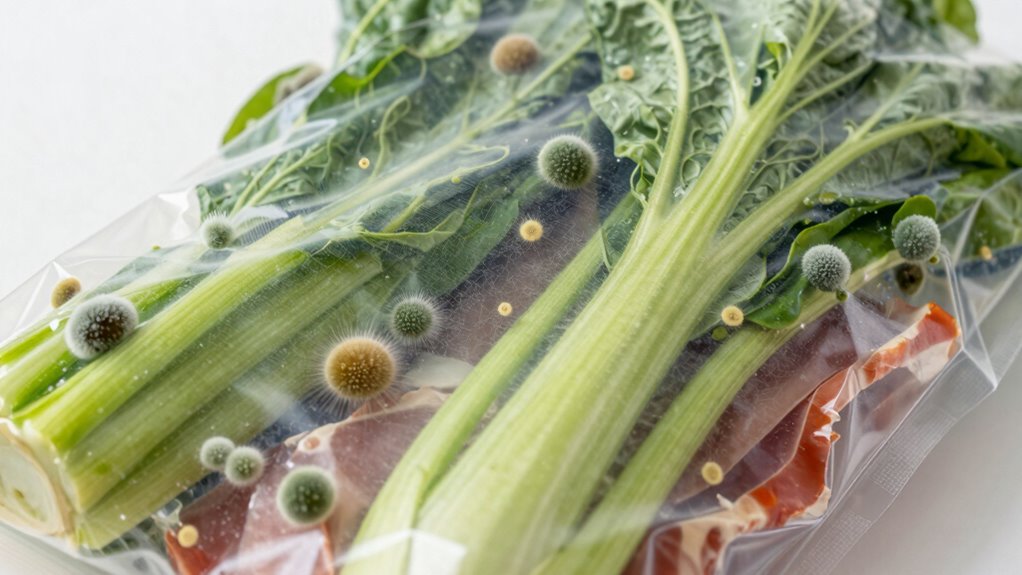
Removing air slows bacterial and mold growth, but it doesn’t stop these microorganisms from causing spoilage. Bacteria growth can still occur if bacteria are present before sealing or enter through tiny leaks, leading to food decay. Mold formation is also possible, especially if spores are already on the food or introduced afterward. Even in a vacuum-sealed environment, some bacteria and mold spores can survive, waiting for favorable conditions to multiply. These microorganisms produce enzymes and toxins that break down food tissues, resulting in off smells, slimy textures, and discoloration. While vacuum sealing reduces oxygen, it doesn’t eliminate microbial presence or activity entirely. Proper storage practices are essential to slow spoilage, even with airtight packaging. Additionally, certain food preservation methods can further inhibit microbial growth and prolong freshness.
Furthermore, maintaining consistent refrigeration or freezing temperatures can significantly delay microbial activity, helping to preserve food longer.
As an affiliate, we earn on qualifying purchases.
Best Packaging and Storage Tips for Vacuum Sealing Success
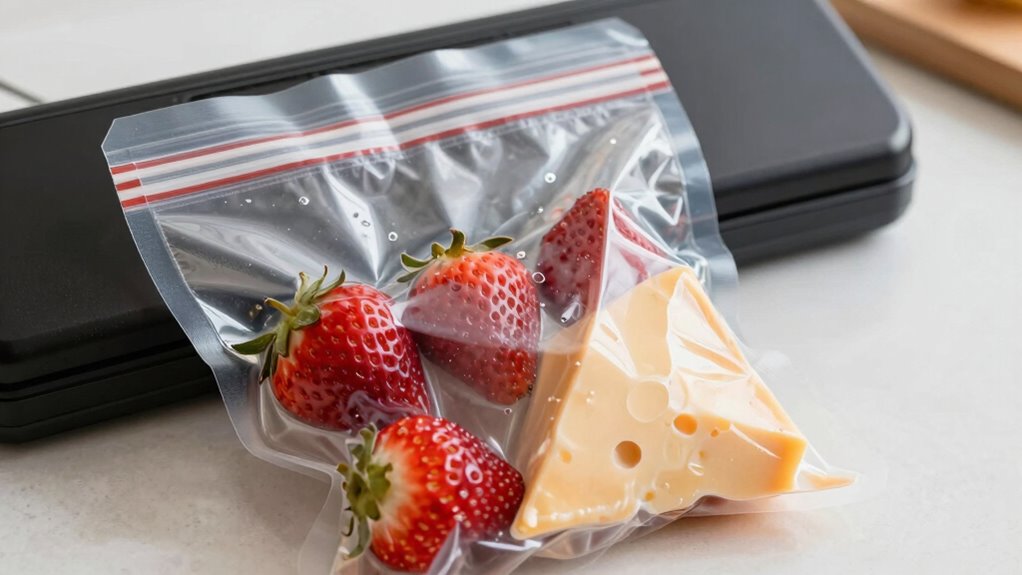
To get the best results from vacuum sealing, you need to choose the right containers that prevent leaks and preserve freshness. Make sure to remove all excess air from bags or containers to maximize shelf life. Keep your sealed items at consistent, proper temperatures to prevent spoilage and maintain quality. For optimal freshness, consider incorporating proper storage techniques to further extend the shelf life of your sealed foods. Additionally, using airtight seals can help prevent microplastic contamination from dust and improve overall food safety.
Choose Proper Container Types
Choosing the right container is essential for a successful vacuum sealing process. The type of container you select affects how well your food stays fresh and prevents spoilage. Opt for durable, airtight containers designed for vacuum sealing, such as specially-rated plastic jars or bags. Make sure your sealing materials are compatible with your device to guarantee a tight seal. Additionally, selecting containers with proper airflow can enhance the efficiency of your vacuum sealing process. Proper container design can also facilitate easier sealing and better preservation. Consider these tips:
- Use containers made from BPA-free, food-grade plastics for safety and durability
- Select containers with flat, smooth surfaces for better sealing efficiency
- Avoid containers with textured or uneven surfaces that can compromise the seal
- Be aware that storage conditions also play a significant role in preventing spoilage, even with proper sealing.
- Proper container maintenance helps ensure the longevity and effectiveness of your vacuum-sealed storage.
- Ensuring airtight seals are maintained is crucial for long-term freshness and preventing contamination.
Remove Excess Air Thoroughly
Ensuring all excess air is thoroughly removed is essential for maximizing the freshness and longevity of your stored food. Air pockets can develop if the sealing process isn’t precise, creating spaces where bacteria and mold can thrive. To prevent this, carefully align the bag or container and run the vacuum cycle slowly, checking for any trapped air. Be mindful of sealing errors—such as incomplete seals or leaks—that can let air seep back in. Take your time to guarantee the seal is secure and free of wrinkles or gaps. Removing as much air as possible reduces oxidation and spoilage, keeping your food fresher longer. Properly eliminating excess air is a simple but critical step in effective vacuum sealing. Additionally, understanding recycling options helps you make informed choices about the products you use for sealing. Paying attention to vacuum sealing techniques can further improve your results and prevent spoilage. Practicing these proper sealing methods can significantly extend the shelf life of your food and prevent waste. Incorporating airtight storage options can also help maintain food quality over time.
Maintain Correct Storage Temperatures
After removing excess air from your vacuum-sealed bags, the next step is to keep your food at the right temperature to preserve freshness. Proper temperature control slows bacterial growth and prevents spoilage. Also, managing humidity levels inside your storage area helps maintain the quality of your sealed food.
To ensure success:
- Store in the refrigerator or freezer at consistent, recommended temperatures
- Avoid fluctuating temperatures that can cause condensation and humidity issues
- Use airtight containers or moisture-absorbing packs to help with humidity management
Maintaining correct storage temperatures and humidity levels is essential. It prevents the growth of mold and bacteria, keeping your food fresher longer and reducing waste. Proper storage is key to making vacuum sealing truly effective. Proper storage conditions are critical for extending shelf life and ensuring food safety.
Common Mistakes That Lead to Spoiled Food Even When Sealed
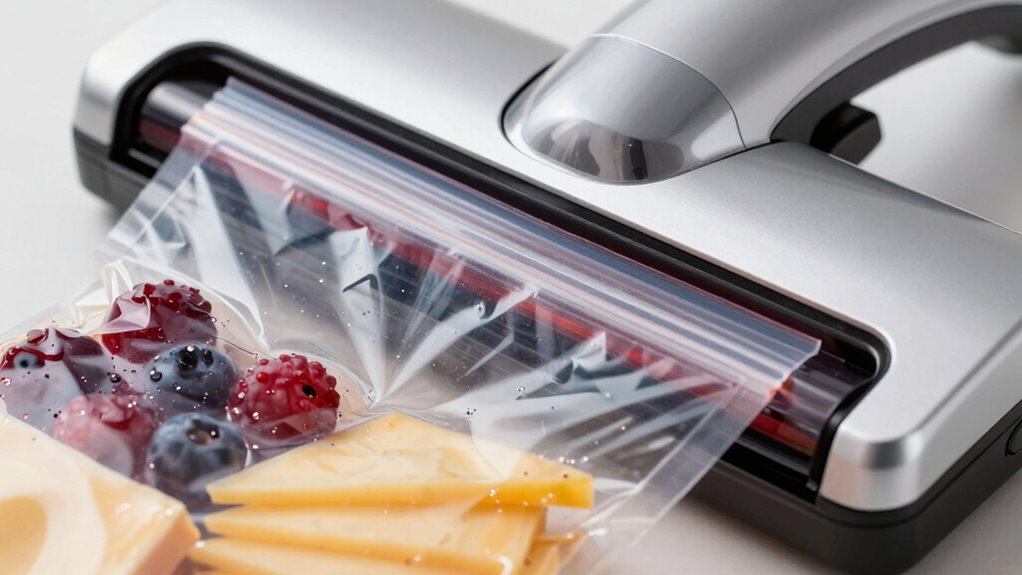
Even if you vacuum seal your food properly, mistakes can still cause spoilage. If you don’t seal tightly or leave air pockets, bacteria can grow, ruining your food. Additionally, storing sealed food in poor conditions, like warm or humid environments, speeds up spoilage.
Improper Sealing Techniques
One common mistake that can cause food to spoil despite sealing is not removing enough air before vacuuming. If you don’t achieve proper seal integrity, air leaks can occur, allowing bacteria and mold to grow. To avoid this, guarantee the bag is properly aligned and sealed without wrinkles or gaps. Also, double-check the seal for any cracks or tears that could compromise the vacuum.
Here are some tips:
- Avoid overfilling bags, which can prevent a tight seal.
- Wipe the edges clean before sealing to ensure no debris interrupts the seal.
- Use the correct vacuum setting for moist or dry foods to prevent leaks.
Inadequate Storage Conditions
Proper sealing is only part of keeping food fresh; the storage environment plays an essential role. Even sealed food can spoil if exposed to poor conditions. Make sure your storage area has good air circulation, which helps prevent moisture buildup and mold growth. Avoid storing sealed items in places with direct sunlight exposure, as UV rays can accelerate spoilage and degrade packaging. Keep your food in a cool, dark, and dry spot, like a pantry or cellar, to maintain ideal freshness. Neglecting proper storage conditions allows bacteria and fungi to thrive, even in vacuum-sealed packages. By controlling airflow and avoiding sunlight, you ensure your sealed food stays fresh longer and reduces waste. Proper storage is key to maximizing your vacuum sealing efforts.
Simple Tips to Keep Your Food Fresh Longer With a Vacuum Sealer
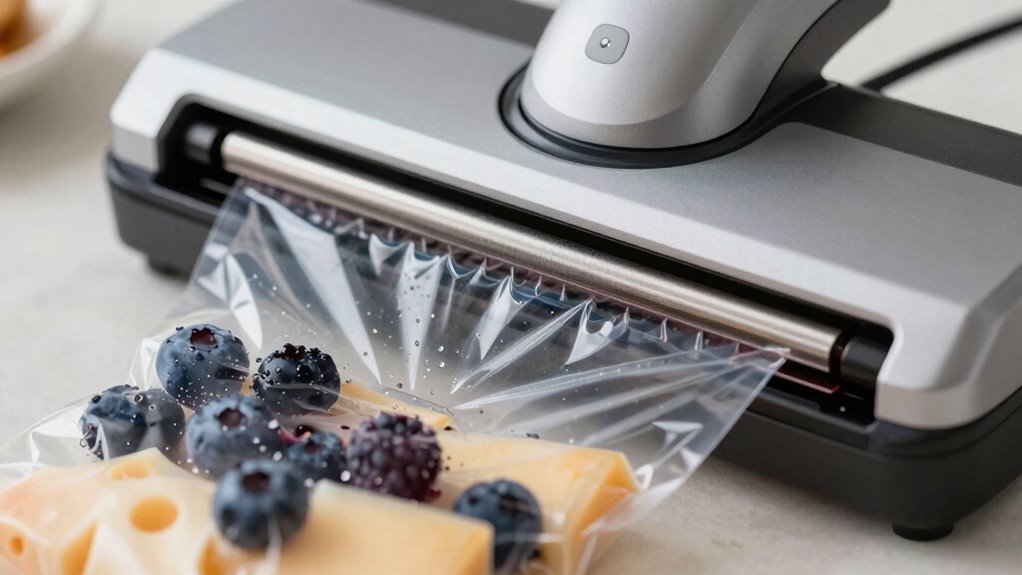
To maximize the freshness of your food with a vacuum sealer, start by removing as much air as possible from the packaging. This helps preserve food flavor and slows spoilage. Use your sealing technology effectively by guaranteeing the bag is properly aligned and the seal is secure. For even better results, follow these simple tips:
Maximize freshness by removing air, sealing properly, and labeling your vacuum-sealed foods.
- Freeze liquids before sealing to prevent spills and ensure proper sealing.
- Remove excess air manually before sealing for an additional layer of freshness.
- Label packages with dates to track storage time and avoid forgetting what’s inside.
Frequently Asked Questions
Can Vacuum Sealing Prevent All Types of Food Spoilage?
Vacuum sealing doesn’t prevent all types of food spoilage. While it slows down aerobic bacteria growth and controls moisture, some bacteria, molds, and yeasts thrive without oxygen, so spoilage can still occur. Plus, if food is already contaminated or not stored properly beforehand, sealing won’t eliminate the risk. To maximize freshness, guarantee proper storage, keep everything dry, and use vacuum sealing as part of a broader preservation approach.
Does Vacuum Sealing Extend the Shelf Life of Cooked Foods?
Vacuum sealing can dramatically extend the shelf life of cooked foods, making it feel like your leftovers last forever. It enhances food safety by slowing bacterial growth and preserves flavors. Proper storage techniques, like keeping sealed foods in the fridge or freezer, are essential. While it doesn’t make cooked foods immortal, vacuum sealing is a powerful tool to keep your meals fresh longer and reduce waste.
Are There Foods That Should Not Be Vacuum Sealed?
You shouldn’t vacuum seal fragile produce or delicate cheeses, as the process can crush or deform them. For fragile produce, the pressure might cause bruising or spoilage, and delicate cheeses can become misshapen or spoil faster if sealed improperly. Instead, store these foods in breathable containers or wrap them gently to prevent damage. Always consider the food’s texture and sensitivity before vacuum sealing to avoid ruining its quality.
How Does Temperature Affect Vacuum-Sealed Food Preservation?
Temperature truly treks through tempting territory. You should store vacuum-sealed foods in consistently cold conditions because temperature fluctuations accelerate bacterial growth, risking spoilage. When temperatures rise, bacteria bounce back, breaking down sealed supplies faster. Keep your food cool and steady, avoiding hot or fluctuating environments. By maintaining a stable, chilly setting, you prolong freshness, prevent spoilage, and preserve your pantry’s perfection.
Is Vacuum Sealing Suitable for Long-Term Food Storage?
Vacuum sealing is suitable for long-term food storage if you prioritize food safety and monitor storage duration. It helps extend freshness by limiting oxygen exposure, but it doesn’t eliminate bacteria or spoilage. To maximize shelf life, keep sealed foods at proper temperatures and consume them within recommended timeframes. Regularly check for signs of spoilage, even when vacuum-sealed, to ensure safe consumption and ideal preservation.
Conclusion
So, next time your vacuum-sealed steak goes moldy or your berries turn mushy, remember: even the best seal isn’t a magic spell. Spoilage still sneaks in like uninvited guests at a party. Keep your seals tight, your fridge cold, and your expectations realistic. Because no matter how fancy your vacuum sealer is, it’s not a superhero—just a tool trying its best. Spoiled food might be inevitable, but at least you’ll be prepared!
NFL season / tailgating Picks
team gear
As an affiliate, we earn on qualifying purchases.