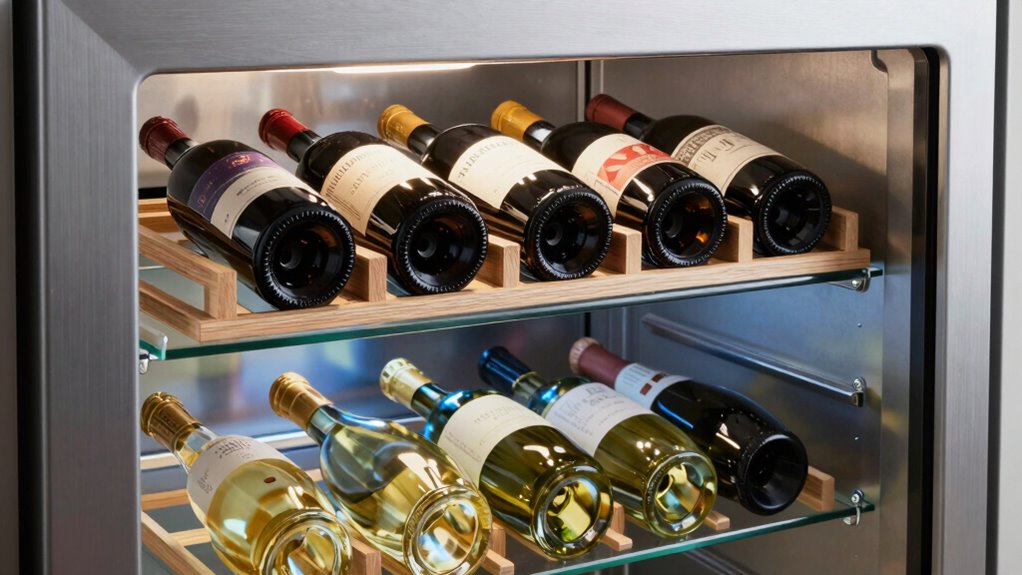

To properly store your wines, you need separate zones for reds and whites because they require different conditions to age well. Reds thrive at around 55°F with higher humidity, while whites prefer cooler temperatures of about 45°F and slightly lower humidity. Proper zoning prevents temperature fluctuations, light damage, and spoilage. Organizing your fridge with dedicated areas guarantees each wine stays in its ideal environment. Keep going to discover how to set up these zones effectively for your collection.
Key Takeaways
- Reds and whites require different temperature zones (55°F vs. 45°F) to preserve their unique flavors and aging processes.
- Proper zoning prevents temperature fluctuations that can spoil wine or hinder its development.
- Separate zones help maintain optimal humidity levels tailored to each wine type, protecting corks and preventing spoilage.
- Organizing storage areas by wine type minimizes light exposure and UV damage, preserving wine quality.
- Tailored zones extend wine lifespan by ensuring each bottle is stored under ideal conditions for its specific characteristics.
As an affiliate, we earn on qualifying purchases.
What Are Wine Fridge Zones and Why Do They Matter?

Wine fridge zones are specific areas within a wine cooler that are set to different temperatures to maximize wine storage. These zones are essential because different wines require varying conditions to age properly and maintain quality. For example, red wines benefit from slightly warmer zones, promoting ideal wine aging, while whites need cooler temperatures to stay fresh and vibrant. By customizing zones, you prevent overexposure to temperature fluctuations that can spoil your wine or hinder its development. Properly segmented zones help you store bottles at their ideal conditions, ensuring they mature gracefully over time. This targeted approach to wine storage enhances the longevity, flavor, and overall enjoyment of your collection, making sure each bottle reaches its full potential. Additionally, understanding the role of temperature control in wine storage helps preserve the wine’s aroma and taste profile over the years. Furthermore, zone configuration allows for more precise management of different wine types within a single fridge, optimizing storage conditions for each variety. Recognizing the importance of proper storage can significantly impact your wine’s aging process and overall quality. Incorporating appropriate humidity levels within each zone can further protect corks and prevent spoilage, ensuring your wines stay in optimal condition.
wine cellar temperature controller
As an affiliate, we earn on qualifying purchases.
As an affiliate, we earn on qualifying purchases.
The Key Factors That Shape Your Wine Fridge Zones (Temperature, Humidity, Light)

To keep your wines tasting their best, you need to regulate key factors like temperature, humidity, and light exposure carefully. Precise temperature control ensures your wines age properly, while maintaining the right humidity prevents corks from drying out. Managing light exposure protects your bottles from damage and spoilage, so paying attention to these elements is essential for ideal wine storage. Additionally, implementing smart home automation can help you monitor and adjust these conditions remotely, ensuring consistent storage conditions at all times. Incorporating environmental sensors can further enhance your ability to maintain optimal storage parameters effortlessly. Properly managing these factors according to storage zone guidelines will help preserve your wine quality over the long term, especially when paired with advanced monitoring systems that provide real-time feedback.
Temperature Control Precision
Achieving precise temperature control is essential for preserving the quality of your wine, as even small fluctuations can affect its aging process. Consistent temperatures guarantee ideal wine preservation, preventing premature aging or spoilage. When your fridge maintains stable temperatures, you support the delicate balance that wines need to develop flavor and aroma over time. Sharp temperature changes can compromise storage consistency, leading to undesirable effects like cork deterioration or spoilage. Look for wine fridges with accurate thermostats and reliable cooling systems that respond quickly to temperature shifts. By prioritizing control precision, you’ll protect your collection’s integrity and enjoy each bottle at its peak. Proper temperature regulation is the backbone of effective wine storage, ensuring your reds and whites age gracefully. Temperature stability is critical for maintaining the optimal environment within your wine fridge. Additionally, incorporating environmental controls such as humidity and light management further enhances storage conditions and preserves wine quality over the long term.
Humidity Level Balance
Maintaining the right humidity levels in your wine fridge is essential for protecting your bottles over time. Proper humidity prevents corks from drying out, which can compromise wine aging and lead to spoilage. Ideally, keep humidity between 50% and 70%, creating a stable environment that preserves the integrity of both reds and whites. This careful balance supports ideal wine pairing, as wines stay in good condition longer, enhancing their flavors. Too low humidity accelerates cork drying, risking oxidation, while too high can cause mold or labels to peel. Adjusting humidity based on your wine collection’s needs ensures consistent aging and quality. Choosing the right battery inverter generator for your needs can also be crucial if you’re powering wine storage or climate control systems during outages. By controlling humidity, you create a reliable climate where your wines develop their full potential, whether for immediate enjoyment or future wine aging. Additionally, monitoring humidity levels regularly ensures that your storage environment remains ideal over time. Proper environmental control is vital for maintaining the optimal conditions necessary for wine preservation, and using humidifiers or dehumidifiers can help fine-tune these levels effectively. Regularly assessing air quality around your wine fridge can prevent issues caused by dust or mold that may affect your stored wines.
Light Exposure Management
Light exposure plays a crucial role in shaping your wine fridge zones because it can profoundly affect the quality and aging process of your wines. Excessive light, especially UV rays, accelerates bottle aging and can compromise cork integrity, leading to spoilage. To protect your wines, keep bottles stored in dark or low-light environments, avoiding direct sunlight or bright LED lighting. Proper light management preserves the wine’s flavors and prevents premature aging caused by light damage. Consider using UV-filtered or tinted glass doors and installing dim lighting inside the fridge. Household products like UV-protected glass and appropriate lighting fixtures can further help in controlling light exposure. Additionally, light exposure management strategies are essential to maintaining optimal storage conditions, as consistent light control ensures your wines age gracefully, maintain their intended character, and stay protected from the damaging effects of light that can shorten their lifespan. Implementing light control techniques can also prevent fluctuations that might occur from inconsistent lighting, thereby reducing light-induced aging risks. Proper placement of bottles away from direct light sources is also a key aspect of wine preservation.
As an affiliate, we earn on qualifying purchases.
Why Do Reds and Whites Need Different Storage Conditions?
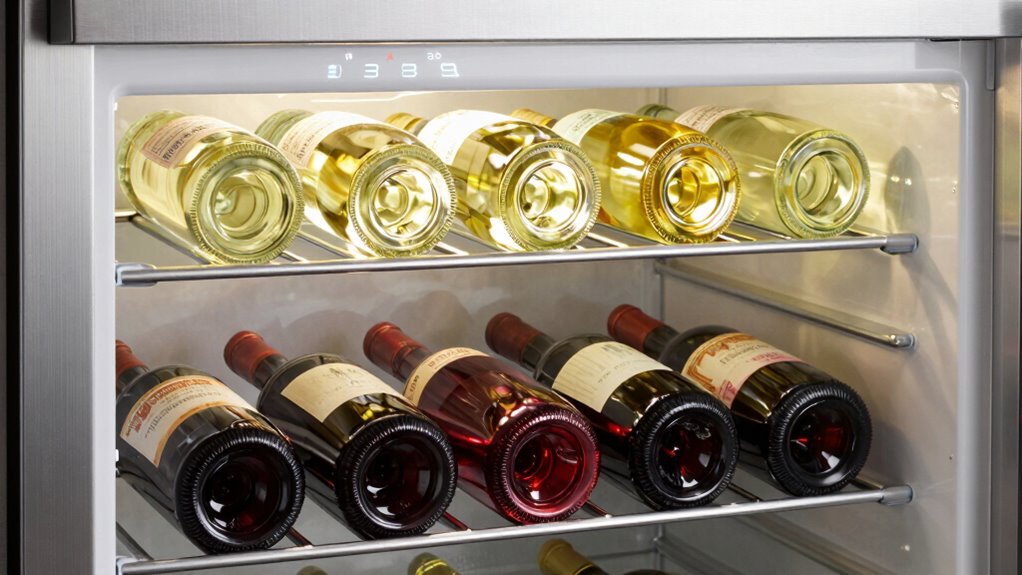
Reds and whites thrive at different temperatures, so you need to set your fridge accordingly. Humidity levels also vary, affecting how well the wines age and stay fresh. Plus, whites are more sensitive to light, requiring darker storage to preserve their quality. Additionally, multi-unit setups can help optimize storage conditions by creating dedicated zones for different wine types. Proper climate control ensures each wine is stored in its ideal environment, preventing spoilage and maintaining flavor.
Optimal Temperature Ranges
Because reds and whites have different ideal serving temperatures, they also require distinct storage conditions to age properly. Red wines generally thrive at slightly warmer temperatures, around 55-65°F, which helps develop complex flavors and smooth tannins. White wines, on the other hand, prefer cooler storage, around 45-55°F, preserving their crispness and fresh acidity. Maintaining these perfect temperature ranges ensures your wine ages gracefully, enhancing your wine tasting experience. Proper storage also supports effective wine pairing, as wines served at the right temperature accentuate their flavors and aromas. Storing reds and whites at their respective temperatures prevents premature aging or spoilage, allowing you to enjoy each bottle at its best for any occasion.
Humidity Level Differences
Since maintaining proper humidity levels is crucial for preserving wine quality, understanding why reds and whites require different storage conditions is essential. Reds benefit from slightly higher humidity, around 70%, which helps keep corks moist and prevents evaporation that could affect the wine aroma. Whites, stored at about 50-60% humidity, are more sensitive to excess moisture, which can cause mold and spoilage. Proper humidity also influences glass selection; a well-maintained environment ensures your glasses stay free of mold and residue. If humidity levels are off, it can compromise the wine’s flavor and aging process. By customizing humidity zones, you protect both the integrity of your wines and the quality of your glassware, ensuring every sip remains perfect.
Light Sensitivity Needs
Different types of wine respond uniquely to light exposure, making it essential to store reds and whites under different lighting conditions. Reds are generally more sensitive to light due to their delicate aromas and aging potential, so they benefit from environments with low light and UV protection. Whites, while also sensitive, tend to be slightly more resilient but still require protection from direct light to prevent premature aging. Light sensitivity can lead to oxidation and spoilage, which is why UV protection is vital in wine fridges. Using tinted glass or UV-filtering coatings helps shield your bottles from harmful rays. Proper lighting conditions preserve your wine’s flavor, aroma, and quality, ensuring they stay perfect until you’re ready to enjoy them.
wine fridge with adjustable zones
As an affiliate, we earn on qualifying purchases.
As an affiliate, we earn on qualifying purchases.
How Can You Set Up Your Wine Fridge Zones for Perfect Storage?

To set up your wine fridge zones for ideal storage, start by identifying the different types of wines you plan to store and their specific temperature needs. Reds often prefer slightly warmer zones around 55°F, while whites thrive at cooler temperatures near 45°F. Allocate separate sections for each to maintain proper cork maintenance, preventing spoilage. Proper zone placement also aids wine aeration, ensuring reds breathe enough without being exposed to excessive humidity or light. Use adjustable shelves or dividers to create distinct areas, and avoid overcrowding, which can hinder airflow. Regularly check temperature settings and keep the fridge steady to preserve your wines’ quality. By customizing your zones, you optimize storage conditions for each wine type, keeping your collection fresh and ready to enjoy.
Common Mistakes When Storing Reds and Whites Side by Side?
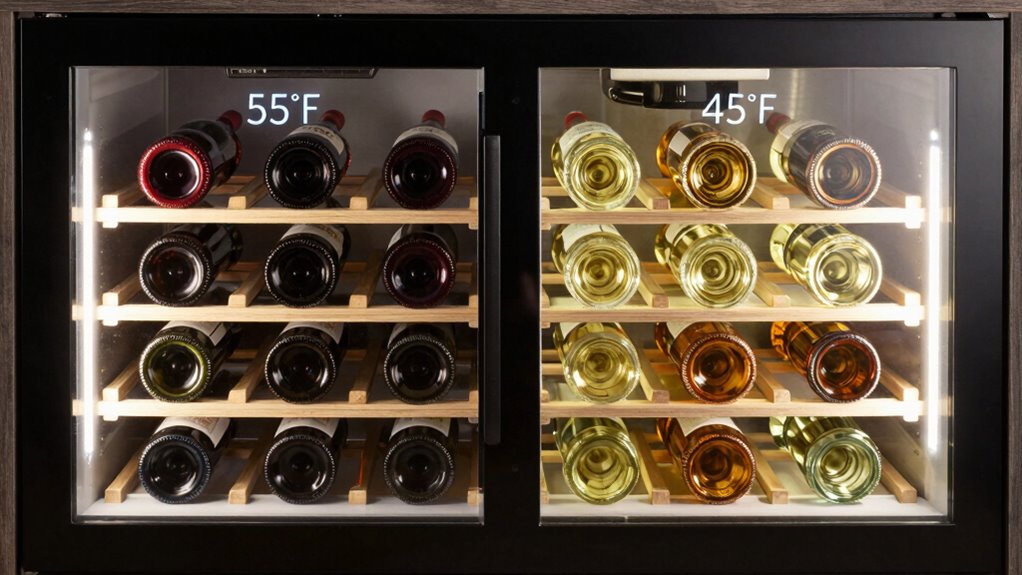
Storing reds and whites side by side can lead to several common mistakes that compromise your wine’s quality. One mistake is ignoring the different needs of wine aging; reds and whites often have distinct ideal storage conditions. Mixing them in the same zone can expose wines to inconsistent temperatures or light, speeding up deterioration. Another issue is improper bottle orientation—reds are typically stored on their side to keep the cork moist, preventing air from entering and spoiling the wine. Whites, however, can sometimes be stored upright if they’re meant for immediate consumption. Failing to separate these storage practices can lead to premature aging or spoilage. By recognizing these mistakes, you help preserve the integrity and flavor of both reds and whites longer.
Practical Tips for Organizing Your Wine Fridge by Zone and Wine Type
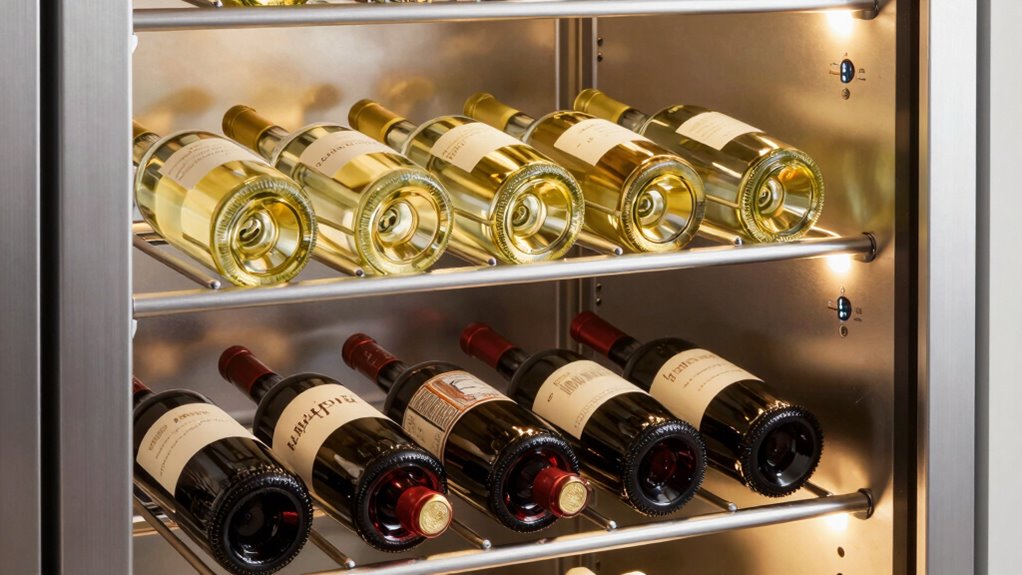
Organizing your wine fridge effectively starts with dividing it into zones tailored to each wine type’s unique needs. For instance, create a zone for reds that benefits from slightly higher temperatures, ideal for wine pairing and immediate enjoyment. Whites and sparkling wines require cooler, more consistent conditions for ideal wine aging and freshness. Use adjustable shelves or dividers to keep bottles separated by type, preventing accidental temperature fluctuations. Label each zone clearly to avoid confusion. Store wines with similar serving temperatures together to streamline your wine selection process. Remember, proper zoning helps preserve your wine’s flavor and quality over time. By maintaining distinct zones, you ensure your reds and whites are always stored in the best environment for their specific wine aging and pairing needs.
How Proper Zoning Preserves Your Wine’s Flavor and Quality
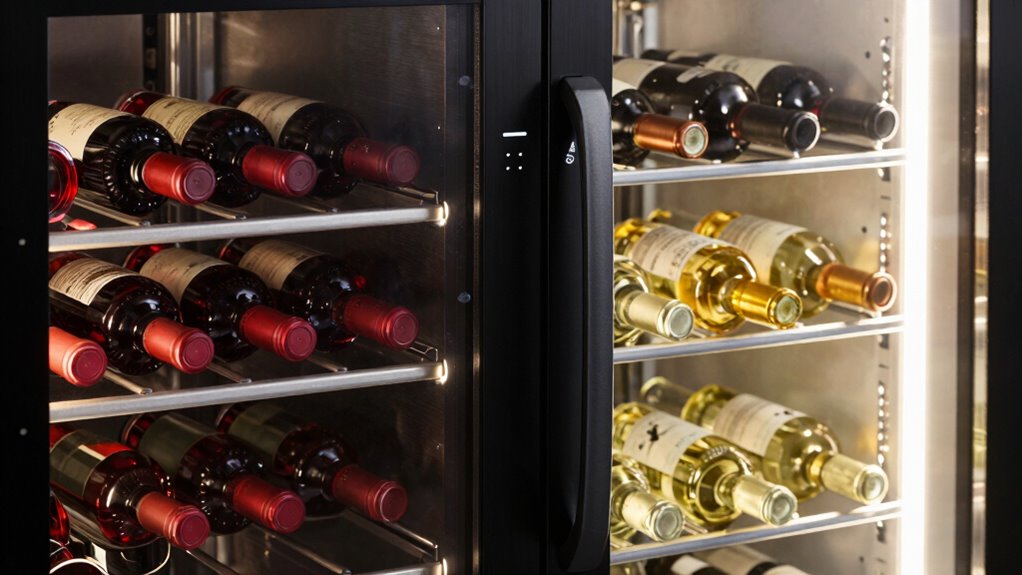
Proper zoning in your wine fridge plays a crucial role in maintaining the wine’s ideal flavor and overall quality. When you assign specific zones for reds, whites, and sparkling wines, you enhance temperature and humidity levels for each type, elevating wine preservation. Proper zoning prevents flavors from mingling and ensures each bottle ages as intended. It also reduces the risk of spoilage caused by improper storage conditions. Think of your wine cellar as a carefully curated environment—each zone is tailored for specific wine styles. This targeted approach helps you enjoy wines at their peak, preserving their unique characteristics. By understanding and implementing proper zoning, you safeguard your investment and elevate your wine experience.
- Maintains precise temperature control for different wine types
- Prevents flavor cross-contamination
- Ensures consistent humidity for perfect preservation
- Extends the lifespan of your wine collection
Frequently Asked Questions
Can I Convert My Wine Fridge Into a Dual-Zone or Multi-Zone Unit?
Yes, you can convert your wine fridge into a dual-zone or multi-zone unit if it has adjustable or separate cooling systems. This allows you to control the temperature in each zone for ideal wine storage. Check your fridge’s specifications and consider adding partitioned shelves or separate cooling vents. Proper temperature control ensures reds and whites are stored at their perfect conditions, enhancing wine quality and longevity.
How Does Ambient Room Temperature Affect Wine Fridge Zones?
Ambient room temperature impacts your wine fridge zones by causing temperature fluctuations that can compromise your wine’s quality. If the room gets too warm or too cold, it strains the fridge’s cooling system, making it harder to maintain consistent temperatures. Proper ventilation requirements help prevent overheating, especially in warmer environments. Guarantee your wine fridge is well-ventilated and placed in a stable temperature room to keep your wine stored at ideal conditions.
Are There Specific Labels or Indicators for Different Wine Zones?
You’ll find that many wine fridges have specific labels or temperature indicators for different zones, making it easy to store reds and whites properly. Look for clear wine labels or color-coded tags that mark each zone’s ideal temperature range. Some units even have digital displays or adjustable thermostats with built-in indicators, helping you maintain perfect conditions without guesswork. Always check these labels and indicators to guarantee your wines stay fresh.
What Is the Ideal Humidity Level for Storing Different Wine Types?
You should aim for a humidity level of around 60-70% for ideal storage of both reds and whites. Proper humidity control prevents corks from drying out and maintains the wine’s quality. Keep your wine fridge’s humidity consistent to avoid mold or evaporation issues. Adjust your fridge’s settings if needed, ensuring the environment stays stable. This helps protect your wine’s flavor and aroma over time, regardless of the type.
How Often Should I Adjust the Zones as My Wine Collection Grows?
Think of your wine collection as a garden that needs tending. As it grows, you should regularly check your zones and adjust the storage frequency accordingly. Every new bottle is a seed, demanding different conditions. Monitor your collection quarterly, making zone adjustments when you notice changes in wine types or quantities. Staying attentive guarantees your wines age gracefully, with the right environment supporting each variety’s unique needs.
Conclusion
By thoughtfully designing your wine fridge zones, you gently guide each bottle to mature gracefully, preserving its unique character. When you respect their subtle preferences, you create an environment where flavors deepen and nuances flourish. With a keen eye for detail, your wine collection can truly blossom, offering every sip a refined experience. In this delicate dance of storage, a little attention goes a long way toward elevating your wine’s journey from bottle to glass.