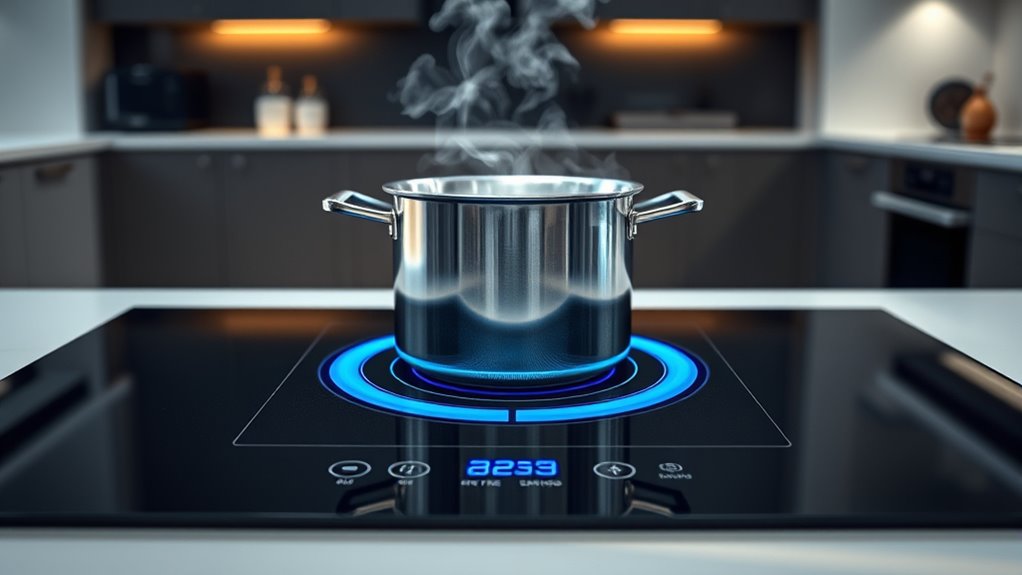

Induction cooking works by generating electromagnetic fields that heat compatible cookware directly, allowing you to control temperature precisely and cook faster. Because heat transfers directly to the pot or pan, it’s more energy-efficient and minimizes heat loss. Plus, the surface stays cooler and safer to touch. With these benefits, induction is both effective and eco-friendly. Keep exploring to discover how this technology can transform your cooking experience even further.
Key Takeaways
- Uses electromagnetic fields to directly heat compatible cookware, providing rapid and precise temperature control.
- Heats cookware directly, minimizing heat loss and increasing overall energy efficiency.
- Surface remains cool during operation, reducing burns and fire hazards.
- Turns off instantly when cookware is removed, preventing energy waste and enhancing safety.
- Focused heat transfer reduces room heating and lowers energy bills compared to traditional stoves.

Induction cooking technology has revolutionized the way you prepare meals by using electromagnetic fields to heat cookware directly. Instead of relying on traditional burners or heating elements, induction stoves generate a magnetic field that induces an electric current within compatible cookware, causing it to heat up rapidly. This method offers precise control over cooking temperatures and reduces heat loss, making your cooking more efficient. However, because the stove surface itself remains relatively cool, you need to be aware of safety precautions. Always keep metallic objects away from the cooktop to prevent accidental heating, and avoid touching the surface immediately after use, as residual heat can still be present. Properly maintaining and cleaning the surface prevents buildup of residues that could interfere with safety and performance. Additionally, the technology’s reliance on electromagnetic fields means that proper safety standards and regulations are essential to prevent unintended exposure. Energy consumption is another significant advantage of induction cooking. Since energy is transferred directly to the cookware with minimal heat loss, induction stoves use less power compared to traditional electric or gas ranges. This efficiency not only shortens cooking times but also reduces your overall energy bills. By focusing heat only where it’s needed and turning off instantly when you remove cookware, induction technology minimizes wasted energy, making it an environmentally friendly choice. Plus, because the cooktop surface stays cooler, it’s less likely to contribute to room heating, helping you save on cooling costs during warmer months. Another aspect to contemplate is safety in terms of energy use. The fact that induction stoves operate only when compatible cookware is detected means you won’t accidentally waste energy heating up a surface with no cookware on it. This feature also prevents the stove from staying hot after cooking, reducing the risk of burns and fire hazards. It’s important, however, to ensure your cookware is compatible—ferrous metals like cast iron or certain stainless steels work best. Using incompatible materials won’t activate the stove and can lead to frustration and energy waste. Furthermore, the integration of AI security in smart induction cooktops can enhance safety by detecting potential hazards and alerting users, thereby reducing accidents. Additionally, the quick response time of induction cooktops allows you to adjust heat levels rapidly, giving you better control over your cooking process and energy use. This responsiveness helps prevent overheating and allows you to cook precisely, which not only saves energy but also helps in achieving better culinary results. Overall, induction cooking offers a safer, more energy-efficient way to prepare meals. By understanding and adhering to safety precautions, you can maximize its benefits while minimizing risks, making your kitchen safer and more eco-friendly.
Amazon Product B0DNL9SDYL
As an affiliate, we earn on qualifying purchases.
Frequently Asked Questions
Can Induction Cooktops Be Used With All Types of Cookware?
You can’t use all types of cookware with induction cooktops because of cookware compatibility and material restrictions. Only magnetic materials like cast iron or stainless steel work effectively, while aluminum, copper, and glass usually won’t heat unless they have a magnetic base. Before using a new pot or pan, check if it’s induction-suitable by seeing if a magnet sticks to its bottom. This ensures efficient heating and prevents damage.
How Safe Are Induction Cooktops Compared to Traditional Stoves?
Think of induction cooktops as guardians armed with electromagnetic safety, making them safer than traditional stoves. They heat only when cookware contacts the surface, reducing burn risks. Child safety locks prevent accidental activation, adding another layer of security. Compared to gas stoves, induction units emit no open flames or harmful fumes, making them safer for your family. Overall, their precise control and safety features make them a smarter, safer choice.
Do Induction Cooktops Work During Power Outages?
During a power outage, your induction cooktop won’t work because it relies on electricity to operate. This means you can’t use it for emergency cooking or meal prep. To stay prepared, keep alternative options like a gas stove, portable butane stove, or camping gear on hand. These tools make certain you can cook safely and efficiently even when there’s no power, helping you manage emergency situations smoothly.
Are Induction Cooktops More Expensive Than Conventional Options?
Induction cooktops are generally more expensive than conventional options, mainly due to advanced technology and sleek design. When considering cost comparison, you’ll find that their higher initial price is balanced by energy efficiency and faster cooking. Affordability factors include long-term savings on energy bills and durability. While the upfront cost may seem steep, many users find the efficiency and modern features worth the investment over time.
How Easy Is It to Clean Induction Cooktop Surfaces?
Cleaning an induction cooktop is quite easy since its smooth surface makes spill cleanup straightforward. You can quickly wipe down the surface with a damp cloth or a specialized cleaner, which helps with cleaning maintenance. Because spills don’t burn onto the surface, you won’t have to scrub hard. Regular wiping keeps it looking new, and you’ll find that maintenance is simple and hassle-free, making it a convenient choice for busy kitchens.
Amazon Product B00KLVY3TW
As an affiliate, we earn on qualifying purchases.
Conclusion
As you explore induction cooking, it’s fascinating how the technology’s efficiency aligns so perfectly with your desire for quick, precise results. Sometimes, it feels like the universe conspired to bring this innovation into your kitchen just when you needed it most. With its seamless energy transfer and safety features, induction cooking isn’t just a coincidence — it’s a perfect fit for your modern lifestyle. Embrace this serendipitous leap toward smarter, faster cooking.
Amazon Product B09KVKJ6BV
As an affiliate, we earn on qualifying purchases.
Amazon Product B00TQIUUWU
As an affiliate, we earn on qualifying purchases.