
Building a smart kitchen ecosystem involves choosing connected appliances compatible with voice assistants like Alexa or Google Assistant and integrating energy monitoring features. You can create automated routines to preheat ovens, adjust lighting, or monitor device usage remotely through smartphone apps. This setup boosts efficiency, saves energy, and simplifies your cooking experience. For seamless control and a cohesive system, focus on ecosystem compatibility—keep exploring to learn how to make your kitchen smarter and more efficient.
Key Takeaways
- Select compatible appliances that support popular voice assistants and built-in energy monitoring features.
- Integrate smart devices through a central hub or ecosystem platform for seamless communication.
- Set up automated routines for tasks like preheating ovens or adjusting lighting via voice commands.
- Monitor energy usage in real-time to optimize appliance operation and reduce energy costs.
- Use smart plugs and apps to remotely control and manage appliances, enhancing convenience and efficiency.
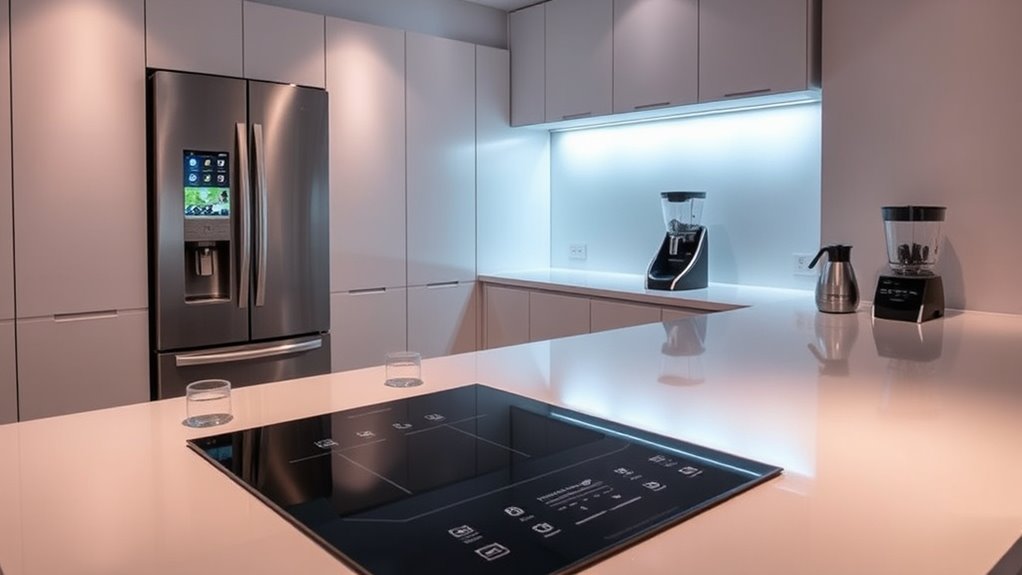
Creating a smart kitchen ecosystem begins with understanding how connected appliances can simplify and enhance your cooking experience. One of the most intuitive features you’ll discover is voice control. With voice-activated devices, you can adjust settings, check on cooking progress, or even turn appliances on and off without lifting a finger. Imagine asking your smart speaker to preheat your oven or brew coffee as you prepare breakfast. Voice control makes multitasking seamless, freeing you from constant manual adjustments and creating a more efficient kitchen environment. It also helps keep your workflow smooth, allowing you to focus on your cooking instead of fiddling with buttons or screens. Incorporating vertical storage solutions can further optimize your space and make your smart kitchen more organized and accessible.
Voice control streamlines cooking, letting you adjust settings and check progress hands-free.
Energy monitoring is another essential aspect of building a smart kitchen. Many connected appliances come equipped with energy monitoring features, giving you real-time data on their power consumption. This insight helps you identify which devices use the most energy and find ways to reduce your overall electricity bill. By tracking energy usage, you can make smarter decisions about when to run certain appliances or whether to replace older, less efficient models. For example, you might notice your refrigerator consumes more power than it should, prompting you to schedule maintenance or upgrade to a more energy-efficient model. This proactive approach not only saves money but also minimizes your carbon footprint, making your kitchen more eco-friendly.
Integrating voice control and energy monitoring features into your appliances allows for a more connected and intelligent ecosystem. You can create routines, such as setting the oven to start at a specific time or having your lights dim automatically when you begin cooking. These routines can be triggered by voice commands, making your kitchen smarter and more responsive. Additionally, many systems allow you to monitor your appliances remotely through smartphone apps, so you can check energy consumption or adjust settings even when you’re away. This level of control ensures you’re always in command, making your kitchen more convenient and energy-efficient.
To maximize these benefits, consider choosing appliances that support popular voice assistants like Alexa or Google Assistant. Look for models with built-in energy monitoring capabilities or those compatible with smart plugs that provide this feature. Creating a cohesive ecosystem means selecting devices that communicate well with each other, allowing for smooth automation and control. By doing so, you’ll transform your kitchen into a space that’s not only smarter but also more sustainable, efficient, and enjoyable to use. With thoughtful integration, your smart kitchen will serve you better every day, simplifying tasks and helping you live more sustainably.
Frequently Asked Questions
How Secure Are Smart Kitchen Appliances Against Hacking?
Smart kitchen appliances are generally secure, but cybersecurity vulnerabilities can exist if you don’t keep software up to date or use weak passwords. Hackers could access your devices, risking data privacy and control over your appliances. To stay safe, regularly update firmware, use strong, unique passwords, and enable security features. Being proactive helps protect your smart kitchen from potential hacking threats and maintains your data privacy.
Can Smart Appliances Be Integrated With Existing Home Systems?
Think of your smart appliances as puzzle pieces waiting to fit into your home’s existing system. You can definitely integrate them, but you’ll need to take into account home integration and device compatibility. Some appliances work seamlessly with popular smart home hubs, while others might require specific apps or protocols. By checking compatibility and using compatible platforms, you can create a cohesive, intelligent kitchen that syncs effortlessly with your entire home.
What Is the Average Cost of Building a Smart Kitchen?
The average cost of building a smart kitchen varies widely, but you should plan for a cost estimation of $5,000 to $20,000 depending on the number of connected appliances and features. To stay within your budget, focus on essential devices first and expand later. Proper budget planning guarantees you cover high-priority items like smart refrigerators, ovens, and lighting, making your kitchen both functional and future-ready without overspending.
How Easy Is It to Update or Repair Connected Appliances?
Updating or repairing connected appliances isn’t as intimidating as assembling furniture without instructions. Thanks to software updates, you can often fix issues remotely, saving time and frustration. Repairability features are increasingly common, making it easier to swap out parts or troubleshoot. So, you’ll find that maintaining your smart kitchen appliances is surprisingly straightforward—just don’t forget to keep your wifi strong, or you’ll be stuck with a very expensive paperweight.
Do Smart Appliances Consume More Energy Than Traditional Ones?
Smart appliances typically don’t consume more energy than traditional ones. In fact, their energy consumption is often lower because of advanced sensors and smarter controls that optimize Appliance efficiency. You might worry about increased energy use, but most smart devices are designed to save power by adjusting their operation based on usage patterns. Overall, they can help you reduce energy costs while maintaining high performance in your smart kitchen.
Conclusion
By integrating connected appliances into your kitchen, you create a seamless, intelligent space that’s as effortless as a well-orchestrated symphony. This smart ecosystem not only simplifies your daily routines but also elevates your culinary experience. Embrace these technologies to transform your kitchen into a hub of innovation and convenience. Just like a conductor guides an orchestra, your connected appliances work together harmoniously, making your kitchen smarter, more efficient, and truly inspiring.